Cotton Paper Rolls for Posters
CN → US| HS Code | Tariff Rate | Origin | Destination | Doc |
|---|---|---|---|---|
| 4811902000 | 35.0% | CN | US | Official Doc |
| 4811904090 | 35.0% | CN | US | Official Doc |
| 4811909010 | 35.0% | CN | US | Official Doc |
| 4911911500 | 17.5% | CN | US | Official Doc |
| 4811904090 | 35.0% | CN | US | Official Doc |
Product Images
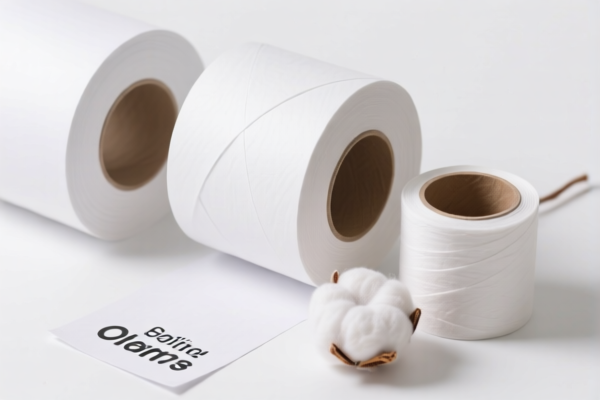
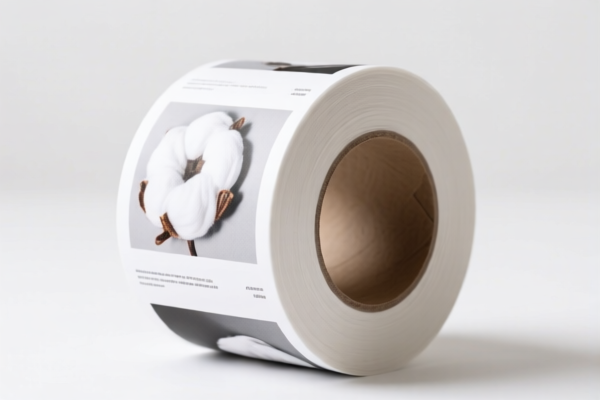

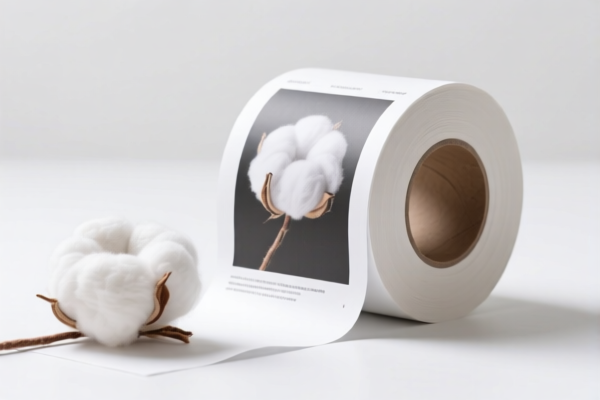
AI Analysis
🎨 Cotton Paper Rolls for Posters (Artistic & Blueprint Grade)
🌐 HS Code Reference & Customs Clearance Guide | 2026 Latest Tariff Analysis | Professional Entry Strategy
📌 I. Product Definition & Classification: What Exactly Are "Cotton Paper Rolls"?
Cotton Paper Rolls, widely used in high-end artistic printing, architectural blueprinting, and design drafting, are defined by their material composition (cellulose fiber/cotton) and form (rolled). In international trade, they are generally categorized under Chapter 48 (Paper and Paperboard) or Chapter 49 (Printed Material), depending on whether they are pre-printed/categorized as specific art supplies or raw printing substrates.
Key Distinctions: * Raw/Unprinted Artistic Paper: Rolled paper made of cotton or cellulose fibers, intended for artistic or technical use (e.g., blueprinting, canvas-like textures). → Generally HS Code 4811 series. * Printed/Specific Design Material: If the paper is specifically categorized as a printed image or design sheet intended for immediate display or specific graphic arts. → Generally HS Code 4911 series.
⚠️ Critical Classification Point:
- If the product is blank, coated, or decorated paper rolls (even if marketed for art) → 4811.90.xxxx
- If the product is explicitly classified as a printed article or design component → 4911.91.xxxx
📦 II. HS Code Classification Details (2026 Latest Tariff Authority Comparison)
Based on the provided data, here is the breakdown of the specific HS Codes applicable to Cotton Paper Rolls:
| HS Code | Product Description | Application Scenario | Tax Rate (Total) | Key Tax Components |
|---|---|---|---|---|
4811.90.20.00 |
Art-grade Cotton Paper Rolls | Material: Cellulose fiber net/cotton; Form: Rolls; Category: Coated/Decorative paper. | 35.0% | Base: 0% + Section 301: 25% + 122 Clause: 10% |
4811.90.40.90 |
Cotton Paper Rolls (General) | Material: Cellulose paper products; Form: Rolls; Category: Other paper products. | 35.0% | Base: 0% + Section 301: 25% + 122 Clause: 10% |
4811.90.90.10 |
Blueprint Cotton Paper Rolls | Material: Paper/Cellulose; Form: Rolls; Category: Other paper descriptions. | 35.0% | Base: 0% + Section 301: 25% + 122 Clause: 10% |
4911.91.15.00 |
Blueprint Cotton Paper Rolls (Design/Printed) | Form: Rolls; Material: Cotton Paper; Use: Design printed products; Category: Printed Images/Designs. | 17.5% | Base: 0% + Section 301: 7.5% + 122 Clause: 10% |
4811.90.40.90 |
Cotton Paper Rolls (Re-confirmed) | Material: Cellulose/Cotton features; Form: Rolls; Category: Printed/Coated paper products. | 35.0% | Base: 0% + Section 301: 25% + 122 Clause: 10% |
🔍 Key Insight:
- 4811 Codes (35% Total): These apply to the raw or semi-processed paper substrates. Even if marketed for "Art," if it's not a pre-printed article, it falls here. The high tax (35%) is due to significant US trade barriers. - 4911 Code (17.5% Total): This lower rate applies if the product is strictly classified under Chapter 49 as a printed/design article. However, note that even this code still carries a 10% "122 Clause" tariff and a 7.5% Section 301 tariff, totaling 17.5%.
💰 III. 2026 Latest Tariff Rate Breakdown (Including Surcharges & Policy Add-ons)
✅ Applicable Market: United States (US)
✅ Origin: China (CN)
✅ Effective Date: Ongoing (including imports after Nov 10, 2025)
🎯 1. 4811.90.20.00 / 4811.90.40.90 / 4811.90.90.10 — Art & Blueprint Paper Rolls (Substrate Category)
| Item | Content |
|---|---|
| Base Tariff Rate | 0.0% (Ad Valorem) |
| USITC Additional Tariff (Section 301) | +25.0% |
| "122 Clause" Tariff | +10.0% |
| Total Effective Tax Rate | 35.0% |
| Tax Calculation | CIF Value × 35% |
| De Minimis Exemption | ❌ Not Eligible (Deny de minimis) |
| Legal Basis Path | USITC:4811.90.20.00 → SECTION_301:25% → CLAUSE_122:10% |
📌 Explanation:
- The 25% USITC tax is part of the ongoing trade war measures against Chinese goods. - The 10% "122 Clause" is a specific additional duty applicable to this category of paper products from China. - Total Cost Impact: For a $10,000 shipment, the duty alone is $3,500. This is a high-cost category.
🎯 2. 4911.91.15.00 — Design/Printed Paper Rolls (Finished Article Category)
| Item | Content |
|---|---|
| Base Tariff Rate | 0.0% |
| USITC Additional Tariff (Section 301) | +7.5% |
| "122 Clause" Tariff | +10.0% |
| Total Effective Tax Rate | 17.5% |
| Tax Calculation | CIF Value × 17.5% |
| De Minimis Exemption | ❌ Not Eligible (Deny de minimis) |
| Legal Basis Path | USITC:4911.91.15.00 → SECTION_301:7.5% → CLAUSE_122:10% |
📌 Note:
- While the rate is half of the 4811 codes, it is still significant. - Classification here requires strict adherence to the definition of "Printed Images" or "Designs." Blank cotton rolls will not qualify for this rate and will be reclassified to 4811 (35%) by US Customs.
🛠️ IV. Customs Clearance Practical Advice (Real-World Pitfall Avoidance)
✅ 1. Documentation Checklist (Non-negotiable)
| Document | Required | Description |
|---|---|---|
| ✅ Product Specification Sheet | ✔️ | Must clearly state: Material (100% Cotton/Cellulose), Weight (GSM), Roll Dimensions, Coating Type (if any). |
| ✅ Commercial Invoice | ✔️ | Description must match HS Code. Use terms like "Cotton Paper Rolls for Artistic Use" or "Blueprint Paper Rolls." |
| ✅ Packing List | ✔️ | Detail inner/outer packaging to prove it's rolled, not folded (which might change classification). |
| ✅ Certificate of Origin | ✔️ | Confirm Chinese origin, as this triggers the additional tariffs. |
| ✅ Technical Data Sheet | ✔️ | Essential to distinguish between "Raw Paper" (4811) and "Printed/Design Article" (4911). |
✅ 2. Declaration Tips (Key Mantra)
🔥 “Material Defines Code, Form Defines Shape, Tax Depends on Status!”
| Scenario | Correct Declaration | Risk of Error |
|---|---|---|
| Blank Cotton Rolls | 4811.90.20.00 or 4811.90.40.90 |
If declared as "Printed," Customs may audit and reassess. |
| Blueprint Paper (Pre-coated) | 4811.90.90.10 |
Ensure "Blueprint" is the primary use. |
| Pre-printed Design Paper | 4911.91.15.00 |
Must be actually printed or classified as a design article. Do not use for blank rolls! |
| Mixed Shipment | Split Declaration | If both blank and printed rolls are in one shipment, split them to avoid blanket high-rate application or customs delays. |
✅ 3. Special Situation Handling
| Situation | Handling Advice |
|---|---|
| OEM Blank Rolls for Artists | Declare as 4811.90.xxxx. Provide artist testimonials or product catalogs showing "blank" status. |
| High-End Art Paper (Museum Grade) | Still 4811.90.20.00. The "Art" label does not exempt it from Chapter 48 if unprinted. |
| Cotton Content Verification | Customs may test fiber content. If not truly cotton/cellulose, it may fall under different, potentially higher-tariff paper codes. |
| 122 Clause Avoidance? | Currently, no standard exemption for 122 Clause on these Chinese-origin paper rolls. Factor this into pricing. |
🌍 V. Global Market Clearance Comparison (2026 Latest)
| Country/Region | Recommended HS Code | Total Tariff (China Origin) | Notes |
|---|---|---|---|
| 🇺🇸 USA | 4811.90.20.00 / 4911.91.15.00 |
35% or 17.5% | High barriers due to Section 301 + 122 Clause. |
| 🇨🇳 China (Import) | 4811.90.20.00 |
~6-13% | Standard MFN rates apply; no trade war surcharges. |
| 🇪🇺 EU | 4811.90.20.00 |
~6.5% | Standard EU tariff; no Section 301 equivalent. |
| 🇬🇧 UK | 4811.90.20.00 |
~6.5% | Post-Brexit UK tariff schedule. |
| 🇦🇺 Australia | 4811.90.20.00 |
~5% | RCEP benefits may apply if from ASEAN members. |
📌 Conclusion:
- The US market is the most expensive for Chinese cotton paper rolls due to layered tariffs. - EU/UK/AU markets offer significantly lower duty costs (~5-7%). - Consider diversifying sourcing if targeting the US heavily, or price-in the 35% duty if shipping directly.
📌 VI. Common Errors & Pitfall Guide (Lessons Learned)
❌ Error 1: Declaring blank cotton paper as 4911.91.15.00 to save tax.
👉 Consequence: Customs will reject, reclassify to 4811, and charge 35% + penalties. The 17.5% rate is only for printed/design articles.
❌ Error 2: Ignoring the "122 Clause" (10%).
👉 Consequence: Underpaying duties. This clause is non-negotiable for these paper products from China.
❌ Error 3: Vague Description ("Paper Rolls").
👉 Consequence: Customs may assign the worst-case HS Code or initiate a full inspection, causing delays.
✅ Correct Approach:
"Cotton Paper Rolls, 100% Cellulose, 300 GSM, Coated for Artistic Printing, Unprinted, Roll Form. HS Code: 4811.90.20.00"
🎯 VII. Conclusion: Professional Declaration, Cost Control
🎯 Key Takeaway:
🔹 "Blank Paper = 4811 (35% Tax); Printed Design = 4911 (17.5% Tax)."
🔹 "122 Clause is mandatory; Section 301 is unavoidable for CN origin."
🔹 "Accurate material and status declaration prevents customs audits and penalties."
📌 Pro Tip:
If your cotton paper rolls are originating from Vietnam, Thailand, or Malaysia, you may be eligible for lower Section 301 tariffs (0-7.5%) under RCEP or local rules of origin.
Recommendation: Apply for an Advance Ruling (Pre-classification) with US Customs (CBP) to confirm the 17.5% vs 35% status if there is any ambiguity about "printed" vs "unprinted."
📣 Immediate Action:
📞 Consult a licensed customs broker + Provide product samples + Verify fiber content
🚀 Optimize your supply chain to navigate the 35% US tariff hurdle efficiently!
✨ Professional Clearance Starts with Accurate Classification!
💼 Every Percentage Point Matters in Global Trade!
Customer Reviews
About HS Code Classification
The Harmonized System (HS) is an internationally standardized nomenclature developed by the World Customs Organization (WCO) to classify traded products. Over 200 countries use the HS system as the basis for customs tariffs, trade statistics, and import/export regulations.
Each HS code follows a hierarchical structure:
- Chapter (2 digits) — Broad category of goods (e.g., Chapter 84: Machinery and Mechanical Appliances)
- Heading (4 digits) — More specific grouping within the chapter
- Subheading (6 digits) — Internationally standardized breakdown, used by all WCO member countries
- National subdivisions (8-10 digits) — Country-specific extensions for further classification, such as US HTSUS 10-digit codes
Correct HS code classification is essential for smooth customs clearance, accurate duty payment, and compliance with trade regulations. Misclassification can lead to customs delays, overpayment of duties, or penalties.
When importing from CN to US, the applicable tariff rates may include:
- Most-Favored-Nation (MFN) rate — The standard duty rate applied to WTO members
- General rate — Applied to countries without trade agreements
- Trade remedy duties — Additional tariffs such as Section 301 (anti-dumping), Section 232 (national security), or countervailing duties
The information provided on this page is for reference purposes only. For official classification, please consult with your local customs authority or a licensed customs broker.