Cotton Paper Yarn Climbing Travel Bag
CN → US| HS Code | Tariff Rate | Origin | Destination | Doc |
|---|---|---|---|---|
| 5311006000 | 37.7% | CN | US | Official Doc |
| 6307909891 | 24.5% | CN | US | Official Doc |
| 4202923131 | 52.6% | CN | US | Official Doc |
| 4202923900 | 52.6% | CN | US | Official Doc |
| 5311003090 | 35.0% | CN | US | Official Doc |
Product Images
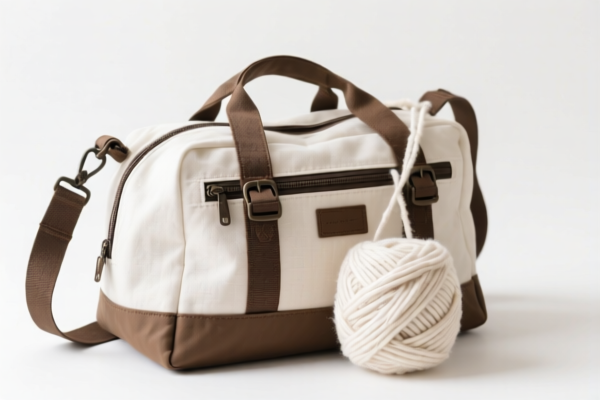
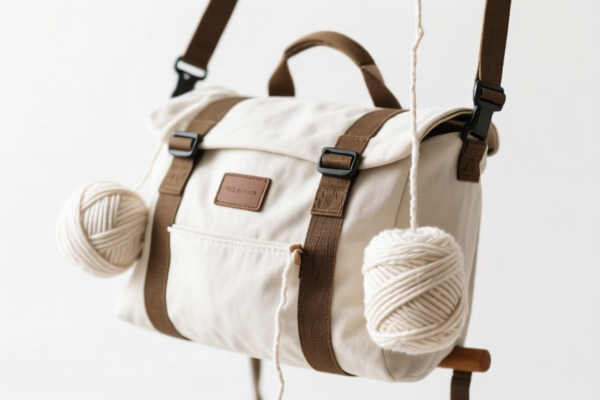
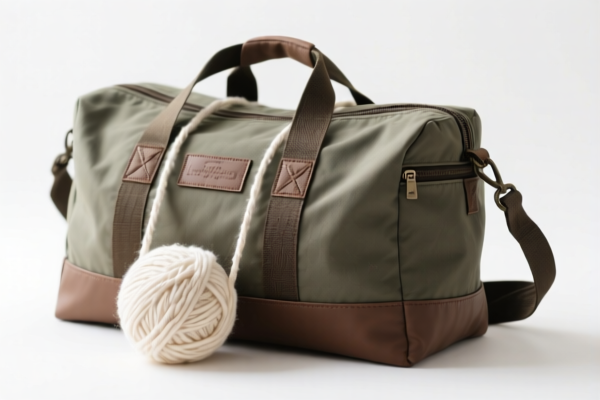
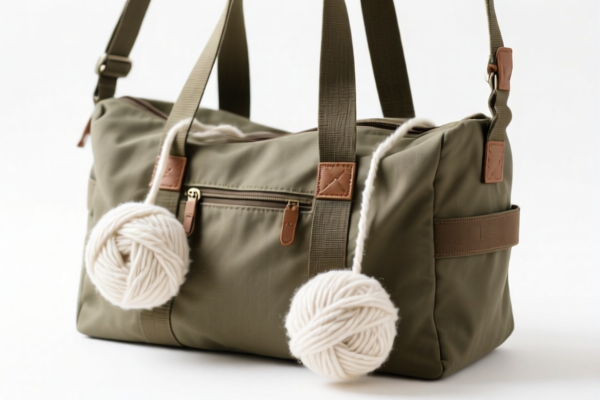
AI Analysis
🧳 Cotton Paper Yarn Climbing Travel Bag: HS Code Classification & Customs Clearance Guide
🌐 HS Code Reference & Clearance Guide | 2026 Latest Tariff Analysis | Professional Customs Strategy
📌 I. Product Definition & Classification: What Exactly is a "Cotton Paper Yarn Climbing Travel Bag"?
This product, described as a "Climbing Travel Bag" made of "Cotton Paper Yarn", is a unique textile item. In international trade, its classification depends heavily on: 1. Material Composition: Is it primarily cotton, synthetic fiber, or a specialized "paper yarn"? 2. Form & Function: Is it a finished bag (Chapter 42) or a fabric/loom-woven good (Chapter 53)? 3. Use Case: "Climbing" implies durability, but "Travel Bag" implies general utility.
⚠️ Key Distinction:
- If classified as a textile fabric or unfinished material → Chapter 53 (Vegetable Textile Fibers).
- If classified as a finished article (bag with handles, zippers, structure) → Chapter 42 (Articles of Leather/Travel Goods).
📦 II. HS Code Classification Details (Based on Provided Data)
| HS Code | Product Description | Applicability Logic | Total Tax Rate |
|---|---|---|---|
5311.00.60.00 |
Cotton Paper Yarn Bag (Fabric/Textile Focus) Defined as a "paper yarn fabric category." Classification leans towards the material nature of "cotton paper yarn" rather than the finished bag structure. |
Focuses on the material definition of paper yarn. | 37.7% |
5311.00.30.90 |
Cotton Paper Yarn Bag (Composite Fiber Focus) Contains cotton and synthetic fiber, fitting the definition of vegetable fiber fabrics containing cotton. |
Focuses on the blend composition (cotton + plant fiber). | 35.0% |
6307.90.98.91 |
Cotton Paper Yarn Bag (Finished Consumer Good) Categorized as a "finished consumer good" in the "other made-up articles" category. |
Uses a fallback/logical deduction for finished goods not elsewhere specified. | 24.5% |
4202.92.31.31 |
Cotton Paper Yarn Bag (Travel Bag - Textile Surface) Specifically for travel bags where the outer surface is made of textile materials. |
Directly matches the "Travel Bag" function with a textile exterior. | 52.6% |
4202.92.39.00 |
Cotton Paper Yarn Bag (Travel Bag - Other) General classification for travel bags made of textile materials under the "other" subheading. |
Broad textile travel bag category. | 52.6% |
🔍 Key Insight:
- Lowest Tax:6307.90.98.91(24.5%) – but relies on "other made-up articles" logic.
- Highest Tax:4202.92.31.31/4202.92.39.00(52.6%) – standard for finished textile travel bags.
- Middle Ground:5311codes (35-38%) – if customs views the item as fabric/semi-finished.
💰 III. 2026 Latest Tariff Rate Breakdown (Including Surcharges)
✅ Applicable Country: United States (US)
✅ Country of Origin: China (CN)
✅ Effective Date: From November 10, 2025 onwards
🎯 1. 5311.00.60.00 & 5311.00.30.90 – Textile/Paper Yarn Focus
| Component | Rate | Explanation |
|---|---|---|
| Base Duty | 0% - 2.7% | Low base tariff for vegetable/plant textile fibers. |
| Section 301 (25%) | +25.0% | Standard USITC 301 tariff on Chinese textiles. |
| IEEPA (10%) | +10.0% | Additional surcharge under International Emergency Economic Powers Act. |
| Total Tax | 35.0% - 37.7% | Sum of all applicable duties. |
| De Minimis Exemption | ❌ Not Eligible | High total tax rate usually blocks $800 de minimis clearance. |
📌 Note:
-5311.00.30.90has 0% base duty, making it slightly cheaper than5311.00.60.00(2.7% base).
- Both are subject to the same surcharges (25% + 10%).
🎯 2. 6307.90.98.91 – "Other Made-Up Articles" (Best for Cost Saving?)
| Component | Rate | Explanation |
|---|---|---|
| Base Duty | 7.0% | Standard duty for other made-up textile articles. |
| Section 301 (7.5%) | +7.5% | Reduced 301 tariff for certain textile articles under this subheading. |
| IEEPA (10%) | +10.0% | Additional surcharge under International Emergency Economic Powers Act. |
| Total Tax | 24.5% | Lowest Total Rate in the provided list. |
| De Minimis Exemption | ❌ Not Eligible | Still high enough to require full clearance. |
📌 Strategic Advantage:
- This classification offers the lowest total tax (24.5%).
- However, it is a "catch-all" category. Customs may challenge if the bag is clearly a "travel bag" (Chapter 42).
🎯 3. 4202.92.31.31 & 4202.92.39.00 – Finished Travel Bags (Standard)
| Component | Rate | Explanation |
|---|---|---|
| Base Duty | 17.6% | Standard duty for travel goods made of textile materials. |
| Section 301 (25%) | +25.0% | Full 301 tariff applies. |
| IEEPA (10%) | +10.0% | Additional surcharge under International Emergency Economic Powers Act. |
| Total Tax | 52.6% | Highest Total Rate. |
| De Minimis Exemption | ❌ Not Eligible | Very high cost barrier. |
📌 Risk Warning:
- If customs determines the item is a finished travel bag, this is the most likely correct classification.
- The 52.6% tax rate is prohibitive for most cost-sensitive shipments.
🛠️ IV. Customs Clearance Practical Advice (Pitfall Avoidance)
✅ 1. Document Preparation Checklist (Mandatory)
| Document | Required | Purpose |
|---|---|---|
| Product Specifications | ✔️ | Detail material: "Cotton Paper Yarn" blend ratio. Is it 100% paper yarn? Or cotton-paper blend? |
| Material Composition Statement | ✔️ | Crucial for distinguishing between Chapter 53 (fabric) and Chapter 42 (finished good). |
| Product Photos | ✔️ | Show structure: Handles, zippers, lining, pockets. Proves it's a "finished bag." |
| Commercial Invoice | ✔️ | Must state: "Travel Bag, Cotton Paper Yarn, Made in China." |
| Certificate of Origin | ✔️ | Required for 301 tariff calculation. |
| Packaging List | ✔️ | Include any accessories (keys, tags, dust bags). |
✅ 2. Classification Strategy & Declaration Tips
🔥 "Material vs. Function: The Great Debate!"
| Scenario | Recommended HS Code | Reasoning |
|---|---|---|
| If the bag is simple/unlined | 6307.90.98.91 (24.5%) |
Argue it's an "other made-up article" rather than a "travel bag." Lower tax. |
| If clearly a travel bag | 4202.92.39.00 (52.6%) |
High risk of being classified here. Prepare for high tax. |
| If sold as fabric/semi-finished | 5311.00.30.90 (35.0%) |
Only if not yet assembled into a bag. |
⚠️ Critical Warning:
- Do not under-declare by using6307if the bag has clear travel features (zippers, shoulder straps, branding). Customs may reclassify to4202and impose penalties.
- Use Pre-Ruling: Apply for an Binding Tariff Information (BTI) or US Customs Advance Ruling before shipment to lock in the classification.
✅ 3. Special Cases
| Case | Handling Advice |
|---|---|
| "Climbing" Labeling | If marketed as "climbing bag," customs may argue it's a specialized technical bag, potentially changing classification. Ensure documentation aligns with "travel bag." |
| Paper Yarn Definition | "Paper yarn" is unusual. Provide technical data sheets proving it's a textile fiber. If deemed non-textile, it might fall under Chapter 39 (Plastics) or 48 (Paper), but this data doesn't cover those. |
| De Minimis ($800) | With taxes ranging from 24.5% to 52.6%, do not rely on de minimis for high-value shipments. Always declare properly. |
🌍 V. Global Market Comparison (2026)
| Market | Recommended HS Code | Est. Tax | Key Requirements |
|---|---|---|---|
| 🇺🇸 USA | 6307.90.98.91 (Best) or 4202.92.39.00 |
24.5% - 52.6% | FCC (if electronic), CPSIA (if for children). |
| 🇪🇺 EU | 4202.92.00 |
~4-12% | CE marking (if applicable), REACH compliance. |
| 🇨🇳 China | 4202.92.00 |
8-10% | No special surcharges. |
| 🇬🇧 UK | 4202.92.00 |
~5-12% | Post-Brexit rules apply. |
📌 Conclusion:
- The US market is the most expensive due to Section 301 and IEEPA surcharges.
- Strategic Recommendation: If possible, classify under6307.90.98.91to save ~28% tax vs. standard travel bag classification. However, this requires strong justification that it is not a "typical" travel bag.
📌 VI. Common Mistakes & Pitfalls
❌ Mistake 1: Using 4202 for a simple pouch
👉 Risk: Overpaying tax if 6307 is applicable.
❌ Mistake 2: Using 6307 for a fully structured travel bag
👉 Risk: Customs reclassification to 4202, leading to back taxes + penalties.
❌ Mistake 3: Ignoring "Paper Yarn" composition
👉 Risk: Customs may classify as plastic (Chapter 39) if paper yarn is deemed non-textile, leading to different duties.
✅ Best Practice:
Declare as:
"Travel Bag, Outer Surface: Cotton Paper Yarn Textile, Lining: Polyester, Used for General Travel"
And Support with:
- Material Test Report
- Product Photos
- Design Blueprint
🎯 VII. Conclusion: Smart Classification for Cost Efficiency
🎯 Key Takeaway:
- Lowest Tax Option:
6307.90.98.91(24.5%) – but risky.- Safest Option:
4202.92.39.00(52.6%) – but expensive.- Balanced Option:
5311.00.30.90(35.0%) – if material-focused.🔹 "Know your material, define your function, choose your HS Code wisely!"
🔹 "24.5% vs 52.6%: A 28% difference is HUGE for profitability!"
📌 Pro Tip:
If you are shipping to the US, always apply for a Customs Ruling for new products. The cost of a ruling is negligible compared to the potential 52.6% tax shock or customs penalties.
📣 Action Item:
📞 Consult a licensed customs broker.
📄 Prepare detailed product specs.
🚀 Clear customs smoothly, avoid surprises, maximize profit!
✨ Professional Classification Starts Here!
💼 Every dollar saved in duty is pure profit!
Customer Reviews
About HS Code Classification
The Harmonized System (HS) is an internationally standardized nomenclature developed by the World Customs Organization (WCO) to classify traded products. Over 200 countries use the HS system as the basis for customs tariffs, trade statistics, and import/export regulations.
Each HS code follows a hierarchical structure:
- Chapter (2 digits) — Broad category of goods (e.g., Chapter 84: Machinery and Mechanical Appliances)
- Heading (4 digits) — More specific grouping within the chapter
- Subheading (6 digits) — Internationally standardized breakdown, used by all WCO member countries
- National subdivisions (8-10 digits) — Country-specific extensions for further classification, such as US HTSUS 10-digit codes
Correct HS code classification is essential for smooth customs clearance, accurate duty payment, and compliance with trade regulations. Misclassification can lead to customs delays, overpayment of duties, or penalties.
When importing from CN to US, the applicable tariff rates may include:
- Most-Favored-Nation (MFN) rate — The standard duty rate applied to WTO members
- General rate — Applied to countries without trade agreements
- Trade remedy duties — Additional tariffs such as Section 301 (anti-dumping), Section 232 (national security), or countervailing duties
The information provided on this page is for reference purposes only. For official classification, please consult with your local customs authority or a licensed customs broker.