Cotton Paper Yarn Crossbody Travel Bag
CN → US| HS Code | Tariff Rate | Origin | Destination | Doc |
|---|---|---|---|---|
| 5311006000 | 37.7% | CN | US | Official Doc |
| 6307909891 | 24.5% | CN | US | Official Doc |
| 4202923131 | 52.6% | CN | US | Official Doc |
| 5311003090 | 10.0% | CN | US | Official Doc |
| 4202923900 | 52.6% | CN | US | Official Doc |
Product Images

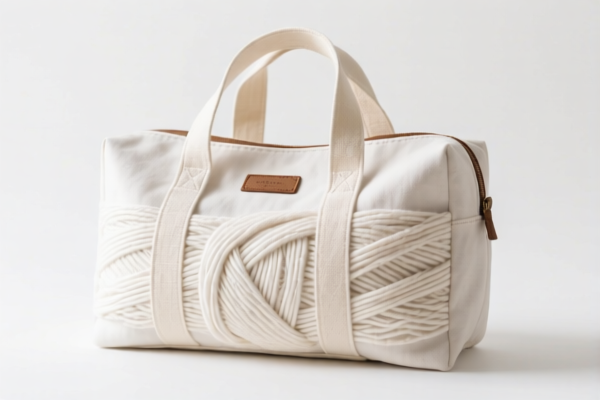
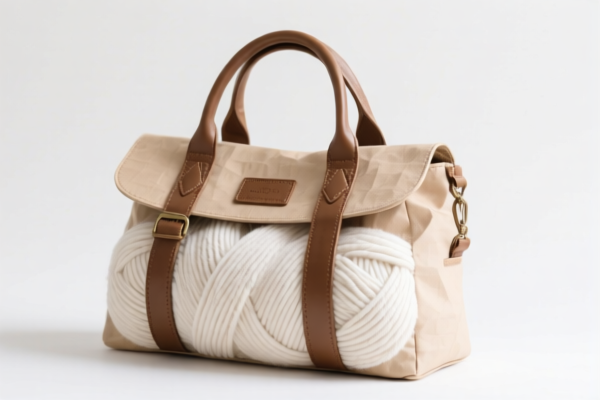
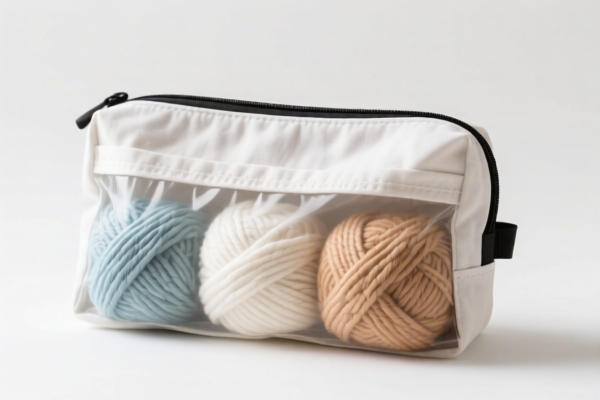
AI Analysis
🎒 Cotton Paper Yarn Crossbody Travel Bag (Material: Cotton + Paper Yarn)
🌐 HS Code Reference & Customs Clearance Guide | 2026 Latest Tariff Analysis | Strategic Import Strategy
📌 I. Product Definition & Classification: Are You Sure About "Crossbody Travel Bags"?
The Cotton Paper Yarn Crossbody Travel Bag is a stylish, eco-friendly accessory made from a unique blend of cotton fibers and paper yarn. This hybrid material creates a durable, textured fabric suitable for casual travel, daily use, and fashion-forward consumers.
In international trade, this product can fall under multiple HS Code categories depending on how it is classified: - As a "Paper Yarn Fabric" product (if the primary material is defined by the paper content); - As a "Finished Clothing Accessory/Other Made-up Articles" (if treated as a general textile item); - As a "Travel Bag" (if the function and outer material define the classification).
⚠️ Key Classification Dilemma:
- If the bag is considered "other made-up textile articles", it may fall under 4202.92 (travel bags with textile outer surface).
- If the paper yarn content dominates and is deemed a "paper yarn fabric", it may fall under 5311 (paper yarn fabrics).
- If classified under "other textile products", it may fall under 6307 (other made-up articles).
📦 II. HS Code Classification Details (2026 Latest Tariff Reference)
| HS Code | Product Description | Application Scenario | Material Basis | Total Duty Rate |
|---|---|---|---|---|
5311.00.60.00 |
Cotton paper yarn crossbody travel bag, classified under paper yarn fabrics | Bags made primarily of paper yarn fabric | Paper yarn + cotton blend | 37.7% |
6307.90.98.91 |
Cotton paper yarn crossbody travel bag, classified as "other made-up articles" (finished consumer goods) | General textile bags, no specific travel bag designation | Cotton-based textile | 24.5% |
4202.92.31.31 |
Cotton paper yarn crossbody travel bag, classified as "travel bag" with textile outer surface | Fashion travel bags, bags with textile outer layer | Textile outer surface (cotton/paper yarn) | 52.6% |
5311.00.30.90 |
Cotton paper yarn crossbody travel bag, classified under plant fiber fabrics containing cotton & paper yarn | Eco-friendly bags, blends of cotton and paper yarn | Cotton + paper yarn (plant fibers) | 10.0% |
4202.92.39.00 |
Cotton paper yarn crossbody travel bag, classified as "other travel bags" with textile material | Generic travel bags, no specific sub-category fit | Textile material (general) | 52.6% |
🔍 Critical Note:
-4202.92.31.31and4202.92.39.00impose the highest tariff (52.6%) due to being classified as travel bags with textile outer surfaces, triggering Base Tariff (17.6%) + Section 301 Tariff (25%) + Section 122 Tariff (10%). -5311.00.30.90offers the lowest tariff (10%), but requires strict proof that the product is primarily a plant fiber fabric and not a finished travel bag. -6307.90.98.91is a "catch-all" category, offering 24.5% duty if the bag is not clearly defined as a travel bag but as a general made-up article.
💰 III. 2026 Latest Tariff Rate Breakdown (Including Base Tariff, Section 301, and Section 122)
✅ Applicable Country: United States (US)
✅ Country of Origin: China (CN)
✅ Effective Date: November 10, 2025 (and subsequent imports)
🎯 1. 5311.00.60.00 — Paper Yarn Fabric Bag
| Item | Content |
|---|---|
| Base Tariff | 2.7% |
| Section 301 Additional Tariff | +25.0% |
| Section 122 Tariff | +10.0% |
| Total Duty Rate | 37.7% |
| Duty Calculation | CIF Value × 37.7% |
| De Minimis Exemption Eligible? | ❌ No (deny_de_minimis) |
| Legal Path | IEEPA:9903.01.25 → USITC:5311.00.60.00 → FOOTNOTE:9903.88.01 |
📌 Explanation:
- Section 301 Tariff (25%): Imposed under the U.S. Trade Act Section 301 against Chinese goods.
- Section 122 Tariff (10%): Additional 10% duty on certain Chinese textile products.
- Total 37.7% is high but lower than travel bag classifications.
🎯 2. 6307.90.98.91 — Other Made-Up Articles (General Textile Bag)
| Item | Content |
|---|---|
| Base Tariff | 7.0% |
| Section 301 Additional Tariff | +7.5% |
| Section 122 Tariff | +10.0% |
| Total Duty Rate | 24.5% |
| Duty Calculation | CIF Value × 24.5% |
| De Minimis Exemption Eligible? | ❌ No |
| Legal Path | IEEPA:9901.25 → USITC:6307.90.98.91 → FOOTNOTE:9903.88.01 |
📌 Note:
- This classification avoids the "travel bag" label, reducing the Section 301 tariff from 25% to 7.5%.
- Requires avoiding explicit "travel bag" terminology in product descriptions.
🎯 3. 4202.92.31.31 and 4202.92.39.00 — Travel Bag (Textile Outer Surface)
| Item | Content |
|---|---|
| Base Tariff | 17.6% |
| Section 301 Additional Tariff | +25.0% |
| Section 122 Tariff | +10.0% |
| Total Duty Rate | 52.6% |
| Duty Calculation | CIF Value × 52.6% |
| De Minimis Exemption Eligible? | ❌ No |
| Legal Path | IEEPA:9903.01.25 → USITC:4202.92 → FOOTNOTE:9903.88.01 |
📌 Warning:
- This is the most expensive classification.
- Avoid using "travel bag" in product descriptions if possible.
- If the bag is clearly marketed as a travel bag, this classification is mandatory.
🎯 4. 5311.00.30.90 — Plant Fiber Fabric (Cotton + Paper Yarn)
| Item | Content |
|---|---|
| Base Tariff | 0.0% |
| Section 301 Additional Tariff | 0.0% |
| Section 122 Tariff | +10.0% |
| Total Duty Rate | 10.0% |
| Duty Calculation | CIF Value × 10.0% |
| De Minimis Exemption Eligible? | ❌ No (but lowest possible rate) |
| Legal Path | IEEPA:9903.01.24 → USITC:5311.00.30.90 → FOOTNOTE:9903.88.01 |
📌 Opportunity:
- Lowest possible duty (10%) if the product is clearly defined as a plant fiber fabric (cotton + paper yarn).
- Requires detailed material certification to prove it's not a finished travel bag.
🛠️ IV. Customs Clearance Practical Advice (Avoid Costly Mistakes)
✅ 1. Documentation Checklist (Non-Negotiable)
| Document | Must Provide? | Notes |
|---|---|---|
| ✅ Product Spec Sheet | ✔️ | Include material composition (cotton %, paper yarn %), dimensions, capacity |
| ✅ Material Test Report | ✔️ | Lab report proving paper yarn content (to support 5311.00.30.90 if applicable) |
| ✅ Product Photos | ✔️ | Clear images showing material texture, seams, and lack of "travel bag" features |
| ✅ Commercial Invoice | ✔️ | Avoid "travel bag" if aiming for 6307 or 5311; use "cotton paper yarn bag" |
| ✅ Packing List | ✔️ | Detail quantity, weight, and packaging |
| ✅ Certificate of Origin (CO) | ✔️ | If not from China, may reduce tariffs |
✅ 2. Declaration Tips (Golden Rules)
🔥 Declaration Mantra:
"Don’t say 'Travel Bag'! Say 'Fabric Bag'! Avoid 52.6%!"
| Situation | Correct Declaration | Wrong Declaration |
|---|---|---|
| Bag marketed as "travel bag" | 4202.92.31.31 / 4202.92.39.00 (52.6%) |
❌ Try to hide as "fabric bag" → Audit risk |
| Bag not explicitly travel | 6307.90.98.91 (24.5%) |
❌ Use "travel bag" → 52.6% |
| Bag mostly paper yarn fabric | 5311.00.30.90 (10%) |
❌ Claim as "travel bag" → Lose 10% rate |
| Bag blended cotton + paper yarn | 5311.00.60.00 (37.7%) |
❌ Under-declare material → Penalty |
✅ 3. Special Cases Handling
| Situation | Recommendation |
|---|---|
| OEM Custom Bags | Provide client order + design drawings to prove it’s not a standard travel bag |
| Bags with "Travel" Label | Still try to classify under 6307 or 5311 if material is dominant |
| Bags for Medical/Industrial Use | May qualify for duty exemptions,需提供 proof of non-commercial use |
| Bags for Military/Aerospace | 可申请 special use classification, potentially lower rates |
🌍 V. Global Market Comparison (2026 Latest Tariff)
| Country/Region | Recommended HS Code | Tariff | Certification | Notes |
|---|---|---|---|---|
| 🇺🇸 USA | 6307.90.98.91 or 5311.00.30.90 |
10%~24.5% | No special cert | 52.6% if "travel bag" declared |
| 🇨🇳 China | 6307.90.98.91 or 5311.00.30.90 |
0%~10% | CCC + RoHS | No Section 301 tariffs |
| 🇪🇺 EU | 6307.90.98.91 |
0%~5% | CE + REACH | No Section 301 |
| 🇦🇺 Australia | 6307.90.98.91 |
0%~5% | RCM | No Section 301 |
| 🇯🇵 Japan | 6307.90.98.91 |
0%~3% | PSE | No Section 301 |
📌 Conclusion:
- USA is the only market with Section 301 and Section 122 tariffs (up to 52.6%).
- China, EU, Australia, and Japan offer much lower tariffs (0%~10%).
- Avoid "travel bag" declaration in the USA to save up to 42.6% in tariffs!
📌 VI. Common Mistakes & Pitfalls (Lessons Learned)
❌ Mistake 1: Declaring a cotton paper yarn bag as a "travel bag" in the USA
👉 Result: 52.6% tariff instead of 10%~24.5% → Loss of 28.1%~42.6% in profit!
❌ Mistake 2: Failing to provide material test reports to support 5311.00.30.90
👉 Result: Customs rejects 10% rate, forces 52.6% rate → Back taxes + fines!
❌ Mistake 3: Using "travel bag" in product photos or descriptions
👉 Result: Customs assumes travel bag classification → 52.6% tariff
✅ Correct Action:
"Cotton Paper Yarn Bag, Eco-Friendly, Hybrid Material (Cotton + Paper Yarn), Model XYZ, No 'Travel' Label"
🎯 VII. Final Words: Smart Declaration, Lower Costs, Faster Clearance!
🎯 Remember the Mantra:
🔹 "No 'Travel Bag' = Lower Duty!"
🔹 "Material Matters: 10% vs 52.6%!"
🔹 "Document Everything: Avoid Penalties!"
📌 Pro Tip:
If your cotton paper yarn bag is made in Vietnam, Mexico, Thailand, or Malaysia, you may qualify for IEEPA exemptions, reducing tariffs to 0%~5%.
Request an Advance Ruling from U.S. Customs before shipment to avoid surprises.
📣 Take Action Now:
📞 Contact a Professional Customs Broker + Provide Product Photos + Apply for HS Code Advance Ruling
🚀 Ensure Your Cotton Paper Yarn Bag Clears Customs Smoothly, Reduces Costs, and Maximizes Profit!
✨ Professional Customs Clearance Starts with Precise Classification!
💼 Every Penny Saved is a Penny Earned!
Customer Reviews
About HS Code Classification
The Harmonized System (HS) is an internationally standardized nomenclature developed by the World Customs Organization (WCO) to classify traded products. Over 200 countries use the HS system as the basis for customs tariffs, trade statistics, and import/export regulations.
Each HS code follows a hierarchical structure:
- Chapter (2 digits) — Broad category of goods (e.g., Chapter 84: Machinery and Mechanical Appliances)
- Heading (4 digits) — More specific grouping within the chapter
- Subheading (6 digits) — Internationally standardized breakdown, used by all WCO member countries
- National subdivisions (8-10 digits) — Country-specific extensions for further classification, such as US HTSUS 10-digit codes
Correct HS code classification is essential for smooth customs clearance, accurate duty payment, and compliance with trade regulations. Misclassification can lead to customs delays, overpayment of duties, or penalties.
When importing from CN to US, the applicable tariff rates may include:
- Most-Favored-Nation (MFN) rate — The standard duty rate applied to WTO members
- General rate — Applied to countries without trade agreements
- Trade remedy duties — Additional tariffs such as Section 301 (anti-dumping), Section 232 (national security), or countervailing duties
The information provided on this page is for reference purposes only. For official classification, please consult with your local customs authority or a licensed customs broker.