Cotton Paper Yarn Hiking Bag
CN → US| HS Code | Tariff Rate | Origin | Destination | Doc |
|---|---|---|---|---|
| 4202923900 | 52.6% | CN | US | Official Doc |
| 9506996040 | 21.5% | CN | US | Official Doc |
| 4202923120 | 52.6% | CN | US | Official Doc |
Product Images
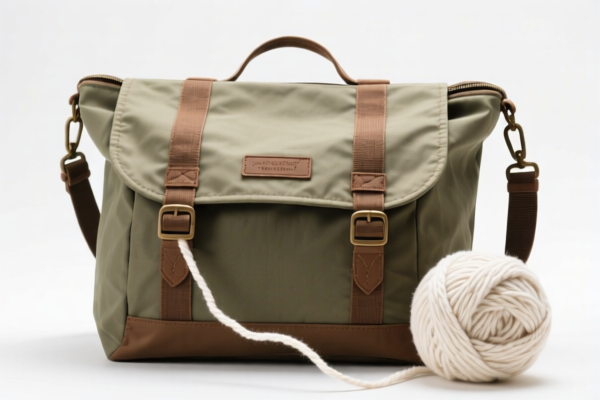
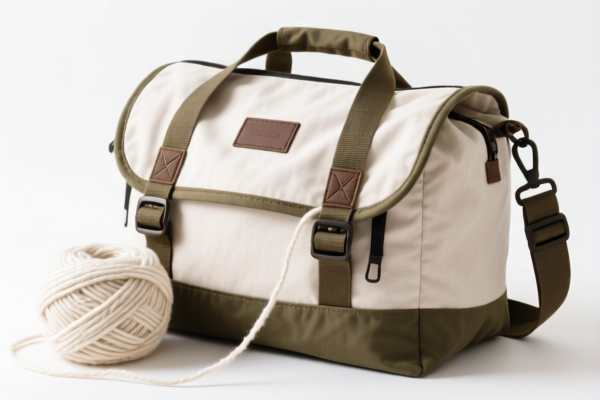
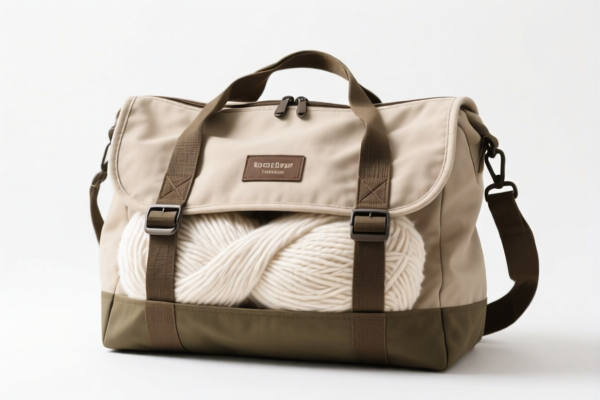
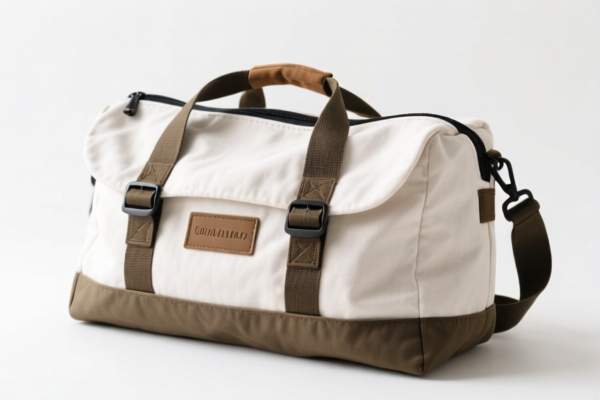
AI Analysis
🎒 Hiking Bag (Made of Cotton Paper Yarn)
🌐 HS Code Reference & Customs Clearance Guide | 2026 Latest Tariff Analysis | Professional Clearance Strategy
📌 I. Product Definition & Classification: Do You Really Understand the "Hiking Bag"?
A Hiking Bag is a specialized luggage item designed for outdoor activities, characterized by durability, ergonomic design, and load-bearing capacity. In international trade, it is primarily classified under Chapter 42 (Articles of Leather; Related Articles) or Chapter 95 (Toys, Games, and Sports requisites), depending on its specific material composition and primary use.
1. Textile-Based Hiking Bags (Nylon/Polyester/Cotton Blends):
Typically classified under Chapter 42 as "backpacks and similar containers." If the main outer material is textile (including synthetic fibers like nylon, polyester, or natural fibers like cotton paper yarn processed into fabric), it falls under heading 4202.
2. Outdoor Sports Equipment:
If the bag is considered a specialized piece of sporting goods equipment rather than general luggage, it might be classified under Chapter 95 (9506.99), specifically for outdoor games or sports requisites. However, this is less common for general-purpose hiking backpacks unless specifically designed for a niche sport (e.g., mountaineering gear sets).
⚠️ Key Distinction Point:
- If the bag’s main outer surface is made of textile materials (even if described as "cotton paper yarn," which usually implies a textile structure), it generally falls under 4202.92 (Articles of leather, of synthetic textile materials, or of plasticized textile materials).
- If it is claimed as a specialized outdoor sports device under 9506, it must demonstrate specific sporting function beyond general carrying, and even then, the tax burden differs significantly due to US trade policies.
📦 II. HS Code Classification Details (2026 Latest Tariff Authority Comparison)
| HS Code | Product Description | Applicable Scenario | Material Conflict? |
|---|---|---|---|
4202.92.39.00 |
Backpacks and similar containers, of textile materials, not elsewhere specified | General hiking bags, travel backpacks, made of nylon/polyester/cotton blends | ✅ No conflict; textile material matches |
9506.99.60.40 |
Sports and outdoor equipment, not elsewhere specified | Hiking bags classified as "outdoor sports requisites" | ✅ No material conflict; categorized under sports |
4202.92.31.20 |
Backpacks, specifically for travel/sports, of synthetic textile materials | Hiking bags made of polyester/nylon, designed for travel/sport | ✅ No conflict; synthetic fiber matches |
🔍 Critical Reminder:
-4202.92.xxcodes are the most common for hiking bags because they are primarily "containers" made of textile materials.
-9506.99.xxcode is a less common but valid alternative if the bag is marketed strictly as "outdoor sports equipment."
- "Cotton Paper Yarn" is interpreted here as a textile material. Since it is not leather or plasticized textile, it falls under the textile subheadings of 4202.
💰 III. 2026 Latest Tariff Rate Breakdown (Including Surcharges & Policy Additions)
✅ Applicable Country: United States (US)
✅ Origin: China (CN)
✅ Effective Date: Ongoing (Including subsequent imports)
🎯 1. 4202.92.39.00 & 4202.92.31.20 —— Backpacks of Textile/Synthetic Materials
| Item | Content |
|---|---|
| Base Tariff Rate | 17.6% (Ad Valorem) |
| Section 301 Surcharge | +25.0% (Additional duty for Chinese origin) |
| 122 Clause Tariff | +10.0% (Specific policy addition for certain goods) |
| Total Tariff Rate | 52.6% |
| Tax Calculation | CIF Value × 52.6% |
| De Minimis Exemption | ❌ Not Applicable (High tariffs disqualify de minimis) |
| Legal Basis Path | USITC:4202.92.39.00 → Section 301: 25% → 122 Clause: 10% |
📌 Explanation:
- Base Rate (17.6%): Standard Most Favored Nation (MFN) rate for backpacks of textile materials.
- Section 301 (25%): The major additional tariff imposed on Chinese goods under US Trade Act Section 301.
- 122 Clause (10%): An additional policy-driven surcharge applicable to specific categories of imports.
- Total (52.6%): A very high effective tariff rate. Importers must factor this into their landed cost.
🎯 2. 9506.99.60.40 —— Outdoor Sports Equipment
| Item | Content |
|---|---|
| Base Tariff Rate | 4.0% (Ad Valorem) |
| Section 301 Surcharge | +7.5% (Reduced additional duty for some sports equipment) |
| 122 Clause Tariff | +10.0% |
| Total Tariff Rate | 21.5% |
| Tax Calculation | CIF Value × 21.5% |
| De Minimis Exemption | ❌ Not Applicable |
| Legal Basis Path | USITC:9506.99.60.40 → Section 301: 7.5% → 122 Clause: 10% |
📌 Note:
- Classifying under 9506 results in a significantly lower total tariff (21.5%) compared to the standard backpack classification (52.6%).
- Justification Required: To use this code, the product must be clearly defined as "outdoor sports equipment" rather than general luggage. The summary in the data confirms: "Hiking bag belongs to outdoor sports equipment, fitting the scope of 9506.99 for outdoor games or sports requisites, with no material conflict."
- Strategic Advantage: This represents a ~31.1% tax savings per unit value.
🛠️ IV. Customs Clearance Practical Advice (Actionable Pitfall Prevention Guide)
✅ 1. Preparation Checklist (Mandatory)
| Document | Required? | Description |
|---|---|---|
| ✅ Product Specification Sheet | ✔️ | Must detail material composition (e.g., "100% Cotton Paper Yarn Textile"), dimensions, capacity, and intended use (Hiking/Travel). |
| ✅ Product Photos | ✔️ | Clear images showing the bag’s structure, zippers, straps, and labels. Must prove it is a "bag" and not a generic "gear." |
| ✅ Material Declaration | ✔️ | Explicitly state the main outer material. If claiming 9506, emphasize "Outdoor Sports Use." |
| ✅ Commercial Invoice | ✔️ | Must describe the goods accurately. Avoid vague terms like "Bag." Use "Hiking Backpack, Textile, Outdoor Sports Equipment." |
| ✅ Packing List | ✔️ | Detail quantities and weights. |
✅ 2. Declaration Strategy (Key Mnemonic)
🔥 "Material Dictates Code, Use Determines Tax!"
| Scenario | Correct HS Code | Risk of Error |
|---|---|---|
| General Travel/Everyday Hiking Bag | 4202.92.39.00 / 4202.92.31.20 |
High tax (52.6%). Safe if used for general purposes. |
| Specialized Outdoor Sports Hiking Bag | 9506.99.60.40 |
Low tax (21.5%). Requires proof of sports equipment status. |
| Bag Made of Leather | 4202.21.00.00 |
Different base rate (usually lower), but material must be genuine leather. |
Key Tip:
- If you declare9506.99.60.40, ensure your product description, marketing materials, and invoices consistently refer to it as "Outdoor Sports Equipment" or "Hiking Gear."
- If Customs disputes the 9506 classification, they may revert it to 4202, resulting in back taxes and penalties.
✅ 3. Special Cases
| Case | Handling Advice |
|---|---|
| Mixed Material Bags | If the bag has significant leather parts (>50% by weight/area), it may fall under a different 4202 subheading. For "Cotton Paper Yarn," it is clearly textile. |
| OEM Custom Bags | Provide design specs showing sports-oriented features (e.g., hydration system compatibility, trekking pole attachments) to support 9506 classification. |
| Samples for Testing | If importing samples, declare as "Samples for Sports Equipment Evaluation" to potentially reduce duties, but ensure compliance with de minimis rules (which do not apply here due to high tariffs). |
🌍 V. Global Market Comparison (2026 Latest)
| Country/Region | Recommended HS Code | Estimated Tariff | Certification | Notes |
|---|---|---|---|---|
| 🇺🇸 USA | 9506.99.60.40 |
21.5% (Best Option) | None Specific | High tariff on 4202 codes (52.6%). 9506 is strategic. |
| 🇨🇳 China | 4202.92.90.00 |
5-10% | CCC (if applicable) | No Section 301 or 122 surcharges. |
| 🇪🇺 EU | 4202.92.55.00 |
~3.5% | CE (if applicable) | No high surcharges. Standard MFN rates apply. |
| 🇬🇧 UK | 4202.92.55.00 |
~3.5% | UKCA | Post-Brexit rules similar to EU for non-sensitive goods. |
| 🇨🇦 Canada | 4202.92.55.00 |
0% (if CUSMA compliant) | None | Free trade under CUSMA for originating goods. |
📌 Conclusion:
- USA is the most critical market due to the drastic tariff difference between 4202 (52.6%) and 9506 (21.5%).
- Strategic Recommendation: For US imports, strongly advocate for 9506.99.60.40 if the product can be legitimately classified as outdoor sports equipment. This saves 31.1% in duties.
📌 VI. Common Errors & Pitfall Guide (Lessons Learned)
❌ Error 1: Declaring a hiking bag as 4202.92.39.00 without justification for sports use.
👉 Consequence: Pay 52.6% instead of 21.5%. Loss of profit margin.
❌ Error 2: Declaring 9506.99.60.40 for a generic school backpack.
👉 Consequence: Customs rejection, reclassification to 4202, back taxes, and potential fines. Risk of audit.
❌ Error 3: Ignoring the "122 Clause" (10%).
👉 Consequence: Underestimating total cost. Even with 9506, the 10% surcharge applies, totaling 21.5%.
❌ Error 4: Vague description "Cotton Paper Yarn Bag."
👉 Consequence: Customs may assign the highest applicable duty code or require additional documentation, causing delays.
✅ Correct Approach:
"Hiking Backpack, Outdoor Sports Equipment, Main Material: Cotton Paper Yarn Textile, Model XYZ, Designed for Trekking/Hiking."
🎯 VII. Conclusion: Precise Classification, Maximum Savings!
🎯 Remember the Strategy:
🔹 "If it's for sports, use 9506. If it's for travel, use 4202."
🔹 "52.6% vs. 21.5%: A 31.1% difference is huge!"
🔹 "Document the 'Sports' aspect to unlock the lower tax rate."
📌 Pro Tip:
If your hiking bags are originating from Vietnam, Mexico, or Malaysia, they may be eligible for preferential tariffs (0%-5%) under USMCA or other FTAs, bypassing the Section 301 and 122 surcharges entirely.
Recommendation: Apply for Advance Rulings (PAP) from US Customs (CBP) to confirm the 9506 classification before shipment.
📣 Immediate Action:
📞 Consult with a customs broker + Provide product photos + Submit for HS Code Pre-Ruling
🚀 Ensure smooth clearance, optimize costs, and maximize your hiking bag export profits!
✨ Professional clearance starts with accurate classification!
💼 Every percentage point saved is pure profit!
Customer Reviews
About HS Code Classification
The Harmonized System (HS) is an internationally standardized nomenclature developed by the World Customs Organization (WCO) to classify traded products. Over 200 countries use the HS system as the basis for customs tariffs, trade statistics, and import/export regulations.
Each HS code follows a hierarchical structure:
- Chapter (2 digits) — Broad category of goods (e.g., Chapter 84: Machinery and Mechanical Appliances)
- Heading (4 digits) — More specific grouping within the chapter
- Subheading (6 digits) — Internationally standardized breakdown, used by all WCO member countries
- National subdivisions (8-10 digits) — Country-specific extensions for further classification, such as US HTSUS 10-digit codes
Correct HS code classification is essential for smooth customs clearance, accurate duty payment, and compliance with trade regulations. Misclassification can lead to customs delays, overpayment of duties, or penalties.
When importing from CN to US, the applicable tariff rates may include:
- Most-Favored-Nation (MFN) rate — The standard duty rate applied to WTO members
- General rate — Applied to countries without trade agreements
- Trade remedy duties — Additional tariffs such as Section 301 (anti-dumping), Section 232 (national security), or countervailing duties
The information provided on this page is for reference purposes only. For official classification, please consult with your local customs authority or a licensed customs broker.