Cotton Pencil Case
CN → US| HS Code | Tariff Rate | Origin | Destination | Doc |
|---|---|---|---|---|
| 4205008000 | 35.0% | CN | US | Official Doc |
| 3926100000 | 15.3% | CN | US | Official Doc |
| 4202329300 | 52.6% | CN | US | Official Doc |
| 3926903500 | 16.5% | CN | US | Official Doc |
| 4202322000 | 55.0% | CN | US | Official Doc |
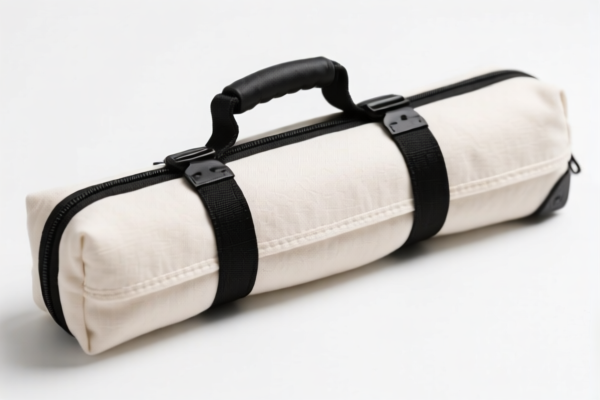
Product Images



AI Analysis
✏️ Cotton Pencil Case (Textile Writing Instrument Containers)
🌐 HS Code Reference & Clearance Guide | 2026 Duty Rates Deep Dive | Expert Customs Strategy
📌 I. Product Definition & Classification: Do You Know What a "Cotton Pencil Case" Is?
A Cotton Pencil Case is a portable container designed to hold writing instruments, stationery, and small office/school supplies. In international trade, its classification depends strictly on material composition and construction:
1. 100% Cotton or Cotton-Dominant Fabric Cases
- If the outer surface is primarily textile (cotton), it often falls under "Other containers, cases..." (Chapter 42 or 95 depending on specifics) or "Plastic/Textile Articles" (Chapter 39/63).
- Crucial Distinction: Is it a soft container (like a bag) or a rigid plastic case?
- If Soft/Fabric: Likely 4202.32 (Textile/Man-made fiber cases).
- If Plastic/Coated: Likely 3926.90 (Plastic articles).
- If Leather/Synthetic Leather: Likely 4205.00 (Leather goods).
⚠️ Key Classification Triggers:
- Material Dominance: Is the outer layer cotton fabric, synthetic fiber, plastic, or leather?
- Function: Is it strictly for pens (Stationery) or general carrying (Bag/Case)?
- Construction: Is it a simple pouch or a rigid box?
📦 II. HS Code Breakdown & Duty Analysis (2026 Data)
Based on the provided dataset, here are the 5 specific HS Codes applicable to Cotton Pencil Cases, depending on their exact material and design:
| HS Code | Product Description | Material Condition | Total Duty Rate | Duty Breakdown |
|---|---|---|---|---|
| 4205.00.80.00 | Leather/Synthetic Leather Cases | If the case is made of Leather or Synthetic Leather (even with cotton lining) | 35.0% | Base: 0% + Add: 25.0% + 122 Clause: 10% |
| 3926.10.00.00 | Office/Plastic School Supplies | If the case is made of Plastic or Textile (cotton) but classified as "Plastic Office/Supply Articles" | 15.3% | Base: 5.3% + Add: 0.0% + 122 Clause: 10% |
| 4202.32.93.00 | Textile/Synthetic Fiber Cases | If the Outer Surface is Artificial/Synthetic Fiber (e.g., Cotton blended with synthetic, or coated textile) | 52.6% | Base: 17.6% + Add: 25.0% + 122 Clause: 10% |
| 3926.90.35.00 | Other Plastic/Synthetic Fiber Articles | If made of Plastic or Synthetic Fiber (general "Other Plastic Articles") | 16.5% | Base: 6.5% + Add: 0.0% + 122 Clause: 10% |
| 4202.32.20.00 | Pocket/Tote Carrying Cases | If made of Plastic Sheet or Textile Material (fits in pocket/handbag) | 55.0% | Base: 20.0% + Add: 25.0% + 122 Clause: 10% |
🔍 Critical Observation:
- Lowest Duty: 3926.10.00.00 at 15.3% (If classified as generic plastic/textile office supplies).
- Highest Duty: 4202.32.20.00 at 55.0% (If classified as a specific textile/plastic carrying case).
- Risk Zone: 4205.00.80.00 (35.0%) applies if the "cotton" case is actually Synthetic Leather or has a leather outer surface.
💰 III. 2026 Duty Rate Deep Dive (Detailed Breakdown)
✅ Applicable Region: US Import (Based on "122 Clause" and "Add-on" structure)
✅ Origin: China (CN)
✅ Effective: Current Trade Policy (2026 Projection)
🎯 1. 3926.10.00.00 — Office/Plastic School Supplies (Best Case)
Scenario: A cotton pencil case treated as a "Plastic/Textile Office Article" under Section 39.
| Item | Detail |
|---|---|
| Base Tariff | 5.3% |
| Section 301 (Add-on) | 0.0% (No heavy 301 penalty) |
| 122 Clause Tariff | 10.0% (Specific Section 122 duty on Chinese goods) |
| Total Rate | 15.3% |
| Calculation | CIF Value × 15.3% |
| De Minimis? | ❌ No (Below threshold applies only to small parcels, not commercial) |
| Legal Path | HTS:3926.10 → Section 301 (Exempt) → 122 Clause |
📌 Interpretation:
This is the most favorable rate. It applies if the product is deemed a generic "plastic/textile office supply" rather than a "bag" or "leather good."
Strategy: Prove the item is a "school supply" first, not a fashion accessory.
🎯 2. 3926.90.35.00 — Other Plastic/Synthetic Fiber Articles (Moderate Case)
Scenario: A plastic-coated cotton case or a synthetic fiber case.
| Item | Detail |
|---|---|
| Base Tariff | 6.5% |
| Section 301 (Add-on) | 0.0% |
| 122 Clause Tariff | 10.0% |
| Total Rate | 16.5% |
| Calculation | CIF Value × 16.5% |
| De Minimis? | ❌ No |
📌 Interpretation:
Similar to #1, but slightly higher base rate. Used when the item doesn't fit the specific "Office Supply" subheading but is still "Plastic/Other."
🎯 3. 4205.00.80.00 — Leather/Synthetic Leather Cases (Medium-High Risk)
Scenario: The "cotton" case has a synthetic leather outer layer.
| Item | Detail |
|---|---|
| Base Tariff | 0.0% |
| Section 301 (Add-on) | 25.0% (Heavy penalty) |
| 122 Clause Tariff | 10.0% |
| Total Rate | 35.0% |
| Calculation | CIF Value × 35.0% |
| De Minimis? | ❌ No |
📌 Interpretation:
Beware! Many "cotton" pencil cases are labeled as "leather-grain" or "synthetic leather." If Customs sees "Synthetic Leather" on the surface, the Base 0% drops to 301 (25%).
🎯 4. 4202.32.93.00 & 4202.32.20.00 — Textile/Carrying Cases (High Risk)
Scenario: The case is explicitly classified as a "Bag/Case" (Chapter 42) with synthetic fibers.
| Item | Detail |
|---|---|
| Base Tariff | 17.6% (for .93) or 20.0% (for .20) |
| Section 301 (Add-on) | 25.0% (Heavy penalty) |
| 122 Clause Tariff | 10.0% |
| Total Rate | 52.6% (for .93) or 55.0% (for .20) |
| Calculation | CIF Value × 52.6% / 55.0% |
| De Minimis? | ❌ No |
📌 Interpretation:
These are the highest tariffs. They apply if the item is classified as a "Carrying Case" (Bag) rather than a "Supply." The 25% Section 301 penalty kicks in immediately.
Avoid: Do not describe the item as a "Bag" or "Pouch" if it can be a "Pencil Case."
🛠️ IV. Clearance & Compliance Strategy (Actionable Advice)
✅ 1. Material Declaration is King
| Component | Correct Description | Risky Description |
|---|---|---|
| Outer Material | "100% Cotton Fabric" or "Textile" | "Synthetic Leather" or "Leather-look" |
| Function | "Writing Instrument Container" | "Pouch" or "Bag" |
| Usage | "School/Office Supply" | "Fashion Accessory" |
⚠️ Warning: If the cotton is blended with plastic or covered in a synthetic coating, Customs may reclassify it to 4202.32 (High Duty).
✅ 2. Shooting the Lowest Duty (15.3% Strategy)
To qualify for 3926.10.00.00 (15.3%): - Do declare it as: "Plastic/Textile Office and School Supplies". - Do NOT declare it as: "Leather Case", "Handbag", or "Carrying Case". - Evidence: Provide a Product Specification Sheet stating: "Not a bag; strictly for pens/pencils; no structural rigidity typical of leather cases."
✅ 3. Documentation Checklist (Must-Haves)
| Document | Requirement |
|---|---|
| Commercial Invoice | Clearly state: "Cotton Pencil Case, School Supply, HTS: 3926.10.00.00" |
| Material Certificate | Proof of "100% Cotton" or "Textile" outer surface (No Leather) |
| Product Photos | Clear view of inner/outer material, no "Leather" logos/patterns |
| Structure Diagram | Show it lacks the rigid structure of a "Case" or "Bag" |
✅ 4. Special Scenario Handling
| Scenario | Recommended HS Code | Why? |
|---|---|---|
| Cotton case with "Leather" label | 4205.00.80.00 (35%) |
Customs will see "Leather" and apply 301 penalty. |
| Cotton case with Plastic lining | 3926.10.00.00 (15.3%) |
If the outer is textile, it's an office supply. |
| Rigid plastic box (looks like bag) | 4202.32.20.00 (55%) |
If it fits in a pocket, it's a "Carrying Case." |
| Synthetic fiber blend (Cotton + Nylon) | 4202.32.93.00 (52.6%) |
If "Artificial Fiber" dominates, it's a "Bag." |
🌍 V. Global Market Comparison (2026)
| Market | Recommended HS Code | Est. Duty | Key Requirement |
|---|---|---|---|
| 🇺🇸 USA | 3926.10.00.00 |
15.3% | Avoid "Leather" or "Bag" classification |
| 🇨🇳 China | 6305.00.00 |
~5% | No 301/122 Clause |
| 🇪🇺 EU | 4202.92 |
~4% | CE/RoHS, No 301 |
| 🇬🇧 UK | 4202.92 |
~5% | Post-Brexit tariffs |
📌 Conclusion:
The US is the highest risk market for Cotton Pencil Cases due to Section 301 (25%) and 122 Clause (10%) penalties on "Bag" and "Leather" classifications.
Strategy: Always aim for 3926.10.00.00 (15.3%) by emphasizing "Office/School Supply" status and avoiding "Bag/Leather" terminology.
📌 VI. Common Mistakes & Pitfalls (Lessons Learned)
❌ Mistake 1: Calling a "Cotton Pencil Case" a "Pouch" or "Bag".
👉 Result: Reclassified to 4202.32.20.00 → Duty jumps from 15.3% to 55.0%.
❌ Mistake 2: Using "Synthetic Leather" terminology in the description.
👉 Result: Reclassified to 4205.00.80.00 → Duty jumps to 35.0% (due to 301 penalty).
❌ Mistake 3: Failing to provide material proof.
👉 Result: Customs assumes worst-case (Leather/Bag) → Delays + Penalties.
✅ Best Practice:
"Cotton Writing Instrument Container (Pencil Case), 100% Cotton Outer, Office Supply, HTS 3926.10.00.00"
🎯 VII. Final Verdict: Strategic Classification
🎯 Rule of Thumb:
🔹 "Supply First, Bag Never" → Aim for 3926.10.00.00 (15.3%).
🔹 "Leather is a Trap" → Avoid "Leather/Synthetic Leather" descriptions → Avoid 35%+.
🔹 "Bag is a Tax Bomb" → Avoid "Bag/Pouch" descriptions → Avoid 52-55%.
📌 Pro Tip:
If your cotton pencil case has any plastic coating or synthetic fiber blend, it might be forced into 4202 (50%+).
Solution: Ensure the outer surface is pure cotton or clearly marketed as a "Plastic Office Supply" (Chapter 39).
📣 Call to Action:
📞 Contact Customs Broker: Verify material composition.
📄 Prepare Specification Sheet: Highlight "Cotton" and "Office Use."
🚀 File Correctly: Use3926.10.00.00to save ~40% in duties!
✨ Precision in Classification = Profit in Pocket!
💼 Every dollar saved on duty is pure margin.
Customer Reviews
About HS Code Classification
The Harmonized System (HS) is an internationally standardized nomenclature developed by the World Customs Organization (WCO) to classify traded products. Over 200 countries use the HS system as the basis for customs tariffs, trade statistics, and import/export regulations.
Each HS code follows a hierarchical structure:
- Chapter (2 digits) — Broad category of goods (e.g., Chapter 84: Machinery and Mechanical Appliances)
- Heading (4 digits) — More specific grouping within the chapter
- Subheading (6 digits) — Internationally standardized breakdown, used by all WCO member countries
- National subdivisions (8-10 digits) — Country-specific extensions for further classification, such as US HTSUS 10-digit codes
Correct HS code classification is essential for smooth customs clearance, accurate duty payment, and compliance with trade regulations. Misclassification can lead to customs delays, overpayment of duties, or penalties.
When importing from CN to US, the applicable tariff rates may include:
- Most-Favored-Nation (MFN) rate — The standard duty rate applied to WTO members
- General rate — Applied to countries without trade agreements
- Trade remedy duties — Additional tariffs such as Section 301 (anti-dumping), Section 232 (national security), or countervailing duties
The information provided on this page is for reference purposes only. For official classification, please consult with your local customs authority or a licensed customs broker.