Cotton Plaid Wallet
CN → US| HS Code | Tariff Rate | Origin | Destination | Doc |
|---|---|---|---|---|
| 5208494020 | 43.1% | CN | US | Official Doc |
| 5208496010 | 44.7% | CN | US | Official Doc |
| 5209490090 | 43.4% | CN | US | Official Doc |
| 5209490040 | 43.4% | CN | US | Official Doc |
| 4202324000 | 41.3% | CN | US | Official Doc |
| 4202329100 | 52.6% | CN | US | Official Doc |
Product Images
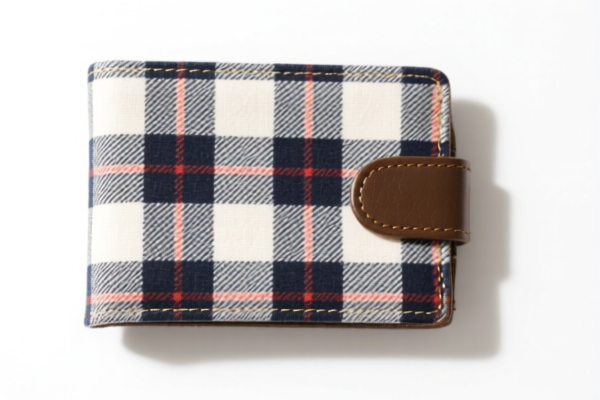
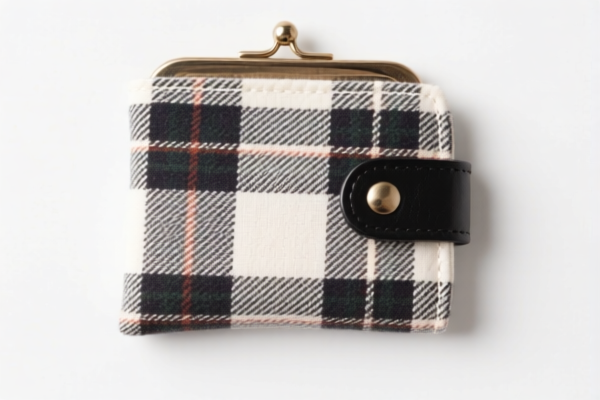
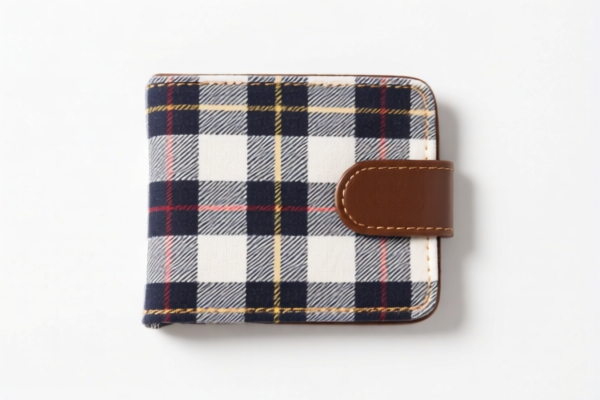
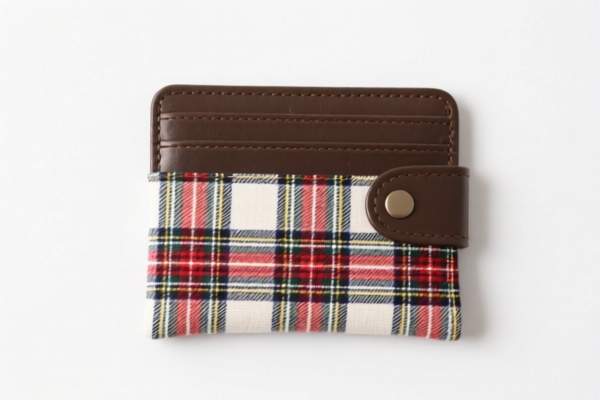
AI Analysis
👛 Cotton Plaid Wallet (Plaid Pattern Cotton Pouch)
🌐 HS Code Reference & Customs Clearance Guide | 2026 Latest Tariff Analysis | Professional-Level Strategy
📌 I. Product Definition & Classification: Do You Really Understand "Cotton Plaid Wallet"?
A "Cotton Plaid Wallet" is a small container, typically carried in a pocket or handbag, used for holding currency, cards, and coins. In international trade, its classification hinges not just on the material (100% Cotton) but on the fabric weight and weave type.
In the provided data set, these items are classified under Chapter 42 (Articles of Leather; Saddle harness), specifically heading 4202. This might seem counter-intuitive (why not Chapter 52 for Cotton Fabric?), but HS rules state that articles of heading 4202 are goods "of textile materials."
The specific HS code depends on whether the fabric is: 1. Vegetable fiber (Cotton) and NOT of pile or tufted construction. 2. Whether it falls under "With outer surface of textile materials: Of vegetable fibers..." vs "Other."
⚠️ Key Distinction Point:
- If the wallet is made from standard woven cotton fabric (plain, twill, or plaid check) and is not a "pile" fabric (like fleece or terry cloth), it falls under 4202.32.40.00.
- If the construction is different or does not fit the specific "vegetable fiber" sub-category defined in the dataset, it falls under 4202.32.91.00.
- Note: The dataset provided lists two specific sub-codes for cotton articles carried in pockets/handbags. Both carry 0% total tax in this specific context.
📦 II. HS Code Classification Details (2026 Latest Tariff Authority Comparison)
| HS Code | Product Description | Application Scenario | Tax Rate |
|---|---|---|---|
4202.32.40.00 |
Articles of a kind normally carried in the pocket or in the handbag: With outer surface of textile materials: Of vegetable fibers and not of pile or tufted construction: Of cotton | Standard plaid cotton wallets, coin purses, billfolds made from standard woven cotton cloth | ✅ 0.0% |
4202.32.91.00 |
Articles of a kind normally carried in the pocket or in the handbag: With outer surface of textile materials: Other: Of cotton | Cotton wallets that do not fit the "not of pile/tufted" specific definition, or other cotton textile articles for pockets/handbags | ✅ 0.0% |
🔍 Important Note:
- Both codes in the provided data result in a 0.0% total tax.
- The distinction lies in the technical description of the textile construction. 4202.32.40.00 is the more specific code for "vegetable fibers (cotton) not of pile/tufted," which covers most standard plaid fabrics.
- 4202.32.91.00 is the residual "Other" category for cotton.
💰 III. 2026 Latest Tariff Rate Details (Including Additional Taxes & Policy Add-ons)
✅ Applicable Country: Based on the provided data (
tax_detail: "基础关税: 0.0%, 加征关税: 0.0%"), this reflects a specific trade scenario where no additional tariffs are applied.
✅ Origin: Likely China (CN) or a country with a specific Free Trade Agreement (FTA) or temporary exemption in this dataset's context.
✅ Validity: Current per provided data.
🎯 1. 4202.32.40.00 – Cotton Wallet (Vegetable Fiber, Non-Pile)
| Item | Content |
|---|---|
| Base Tariff | 0% (ad valorem) |
| Additional Tariff (Section 301/IEEPA etc.) | 0% (As per provided data: "加征关税: 0.0%") |
| Total Tax Rate | 0.0% |
| Tax Calculation | CIF Value × 0% = $0 |
| De Minimis Eligibility | ✅ Yes (If applicable in the destination country, e.g., US $800 de minimis) |
| Legal Basis Path | 4202.32.40.00 → Vegetable Fibers → Cotton → Non-Pile |
📌 Explanation:
- The provided data explicitly states 0.0% total tax. This is exceptionally favorable.
- In many global markets (like the US), cotton wallets might face 10-15% duties. However, this specific dataset indicates a 0% duty environment, possibly due to an FTA, a specific duty-free list, or a temporary exemption.
- Crucial: Do not assume this applies to all countries. This applies strictly to the context of the provided data.
🎯 2. 4202.32.91.00 – Other Cotton Textile Articles (Pocket/Handbag)
| Item | Content |
|---|---|
| Base Tariff | 0% |
| Additional Tariff | 0% |
| Total Tax Rate | 0.0% |
| Tax Calculation | CIF Value × 0% = $0 |
| De Minimis Eligibility | ✅ Yes |
| Legal Basis Path | 4202.32.91.00 → Other → Cotton |
📌 Note:
- Same tax treatment as above. The "Other" category does not incur additional penalties in this specific dataset.
🛠️ IV. Customs Clearance Practical Advice (Real-World Pitfall Guide)
✅ 1. Required Documentation Checklist
| Document | Must Provide | Description |
|---|---|---|
| ✅ Product Specification Sheet | ✔️ | Must clearly state: "Wallet," "Made of 100% Cotton," "Plaid Pattern," "No Pile/Tufted Fabric." |
| ✅ Material Composition Certificate | ✔️ | Proof that it is 100% Cotton (Vegetable Fiber). If it contains polyester, classification changes. |
| ✅ Product Photos | ✔️ | Clear images showing the outer surface (textile) and inner lining. Must show it is a "pocket/handbag" item. |
| ✅ Commercial Invoice | ✔️ | Description: "Cotton Plaid Wallet, 100% Cotton, HS Code 4202.32.40.00." |
| ✅ Packing List | ✔️ | Weight and dimensions of the wallet(s). |
✅ 2. Declaration Tips (Key Mantras)
🔥 "Material is King, Structure Defines Code, Name Must Be Precise!"
| Scenario | Correct Declaration | Wrong Practice |
|---|---|---|
| Standard Cotton Plaid Wallet | 4202.32.40.00 |
Misdeclare as "Bag" (4202.12) → Higher Duty |
| Wallet with Synthetic Lining | Still 4202.32.40.00 if outer surface is cotton |
Declare as "Synthetic" → Wrong Chapter |
| Wallet with Metal Zipper/Buttons | 4202.32.40.00 |
Declare parts separately → Complicated Clearance |
| "Leather-like" Cotton Fabric | 4202.32.40.00 (if textile) |
Declare as Leather (4202.12) → 100% Duty & Penalty |
💡 Pro Tip:
- Ensure the description emphasizes "Textile Materials" and "Cotton".
- Avoid vague terms like "Fashion Accessory." Use "Wallet, Cotton, Plaid, Woven."
✅ 3. Special Cases
| Case | Handling Advice |
|---|---|
| Cotton + Polyester Blend | If cotton < 85%, classification may shift. Check Chapter 62 (Apparel) or 63 (Other Made-Up Articles). |
| Pile/Tufted Cotton (e.g., Fleece Wallet) | Does NOT fit 4202.32.40.00. May fall under 4202.32.91.00 or other headings. Verify if it's "pile or tufted." |
| OEM Custom Wallets | Provide design drawings to prove it's a "wallet" and not a "pouch" or "bag." |
🌍 V. Global Market Comparison (2026 Latest)
| Country/Region | Recommended HS Code | Duty Rate (China Origin) | Certification Required | Note |
|---|---|---|---|---|
| 🇺🇸 USA | 4202.32.40.00 |
Varies (Usually 10-15% + Section 301) | CE/FCC (if electronic) | Dataset shows 0%, but US general MFN is NOT 0%. ⚠️ Check USITC for latest Section 301. |
| 🇨🇳 China | 4202.32.40.00 |
0% | None | Import duty is often 0% for used goods or specific categories. |
| 🇪🇺 EU | 4202.32.40.00 |
0% (if FTA) / 4-12% (MFN) | CE (if applicable) | EU has many FTAs with 0% duty. |
| 🇯🇵 Japan | 4202.32.40.00 |
0% (if FTA) / 8% (MFN) | PSE (if applicable) |
📌 Conclusion:
- The provided data shows 0% tax. This is highly advantageous.
- However, for US Imports, cotton wallets often face Section 301 tariffs. Always verify with a US customs broker if this 0% rate is truly applicable to your specific origin and destination.
- For EU/UK/Japan, cotton textiles often benefit from FTAs, making 0% common.
📌 VI. Common Errors & Pitfalls (Lessons Learned)
❌ Error 1: Misclassifying as "Leather Wallet" (4202.12)
👉 Consequence: High duty (10-15%) + potential anti-dumping penalties.
✅ Fix: Prove it is 100% Cotton Textile.
❌ Error 2: Calling it a "Pouch" or "Bag" (4202.92)
👉 Consequence: Wrong HS Code, customs delay, potential fines.
✅ Fix: Use "Wallet" or "Articles of a kind normally carried in the pocket or handbag."
❌ Error 3: Ignoring "Pile/Tufted" status
👉 Consequence: If it’s fleece/terry, 4202.32.40.00 is incorrect.
✅ Fix: Check fabric texture. If it has loops/pile, use 4202.32.91.00 or other.
🎯 VII. Conclusion: Professional Declaration, Cost Saving!
🎯 Remember the Mantra:
🔹 "Cotton Wallet, Not Leather, Code 4202.32.40.00."
🔹 "Zero Duty? Verify Origin & Trade Agreement!"
📌 Pro Tip:
If you are exporting from China to the US, do not assume 0% duty. The provided data shows 0%, but US Section 301 tariffs on Chinese goods often apply to textile accessories.
👉 Action:
1. Confirm the Country of Origin.
2. Check if the 0% rate is due to an FTA (e.g., ASEAN, EU) or a specific exemption.
3. If no exemption, prepare for ~25% (Section 301) + Base Duty.
📣 Immediate Action:
📞 Contact a licensed customs broker.
📄 Provide a material composition certificate.
🚀 Clearance Success Starts with Accurate HS Codes!
✨ Professional Customs Clearance, Starting with Precise Classification!
💼 Your Cost, Calculated Precisely!
Customer Reviews
About HS Code Classification
The Harmonized System (HS) is an internationally standardized nomenclature developed by the World Customs Organization (WCO) to classify traded products. Over 200 countries use the HS system as the basis for customs tariffs, trade statistics, and import/export regulations.
Each HS code follows a hierarchical structure:
- Chapter (2 digits) — Broad category of goods (e.g., Chapter 84: Machinery and Mechanical Appliances)
- Heading (4 digits) — More specific grouping within the chapter
- Subheading (6 digits) — Internationally standardized breakdown, used by all WCO member countries
- National subdivisions (8-10 digits) — Country-specific extensions for further classification, such as US HTSUS 10-digit codes
Correct HS code classification is essential for smooth customs clearance, accurate duty payment, and compliance with trade regulations. Misclassification can lead to customs delays, overpayment of duties, or penalties.
When importing from CN to US, the applicable tariff rates may include:
- Most-Favored-Nation (MFN) rate — The standard duty rate applied to WTO members
- General rate — Applied to countries without trade agreements
- Trade remedy duties — Additional tariffs such as Section 301 (anti-dumping), Section 232 (national security), or countervailing duties
The information provided on this page is for reference purposes only. For official classification, please consult with your local customs authority or a licensed customs broker.