Cotton Polka Dot Handbag
CN → US| HS Code | Tariff Rate | Origin | Destination | Doc |
|---|---|---|---|---|
| 4202228930 | 52.6% | CN | US | Official Doc |
| 4202929336 | 52.6% | CN | US | Official Doc |
| 6307909891 | 24.5% | CN | US | Official Doc |
| 6307908940 | 17.0% | CN | US | Official Doc |
| 6305200000 | 23.7% | CN | US | Official Doc |
| 4202224020 | 42.4% | CN | US | Official Doc |
Product Images
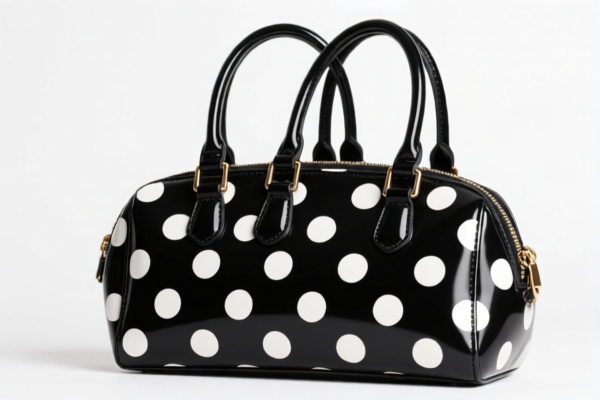
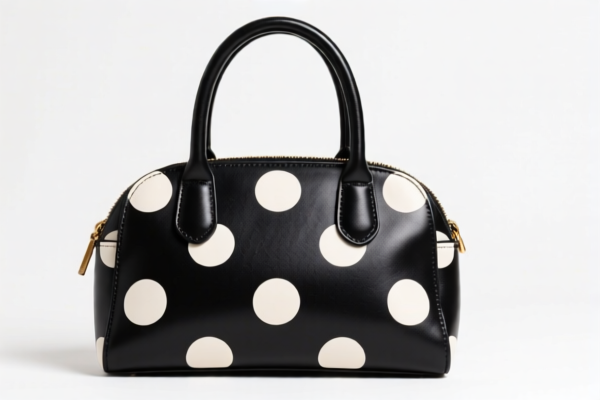
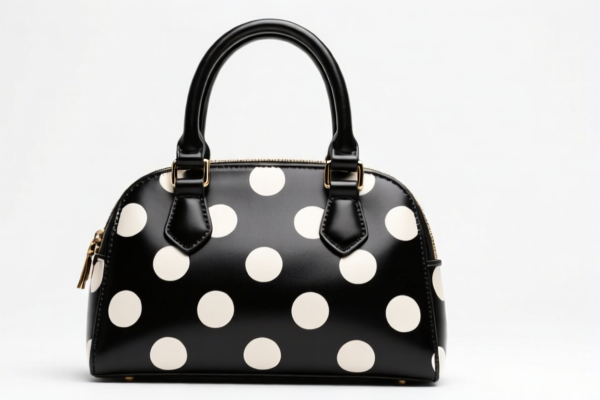
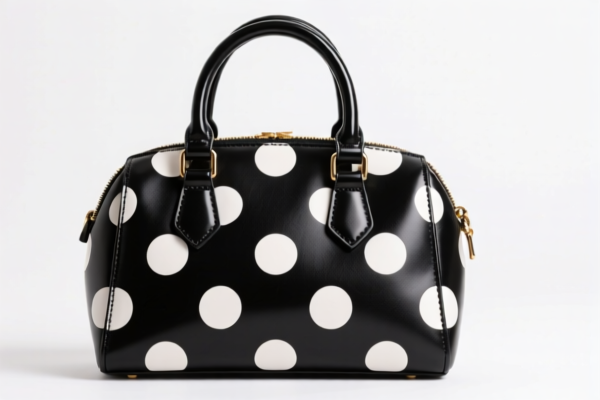
AI Analysis
👜 Cotton Polka Dot Handbag: HS Code Classification & 2026 US Import Tax Guide
🌐 HS Code Reference & Customs Clearance Guide | 2026 Latest Tariff Analysis | Professional Strategy
📌 I. Product Definition & Classification: What Exactly is a "Cotton Polka Dot Handbag"?
A "Cotton Polka Dot Handbag" is a general consumer accessory. However, under US Customs and Border Protection (CBP) rules, "Handbag" is not a single HS Code. The correct classification depends on the specific composition and primary material of the outer surface.
While "Cotton" is the key material, the specific construction (e.g., lined, structured, unstructured) determines whether it falls under Chapter 42 (Articles of Leather/Travel Goods) or Chapter 63 (Other Made Up Textile Articles).
⚠️ Key Distinction Point:
- If the bag is constructed like a leather article (structured, has lining, handles attached in a specific way) and is made primarily of cotton textile, it often falls under 4202.
- If it is a simple textile bag (soft, unstructured, or simple pouch-like) primarily of cotton, it may fall under 6305 or 6307.
- Misclassification Risk: Declaring a structured cotton bag as a simple "textile pouch" (6307) when it fits 4202 can lead to underpayment of duties and penalties, as 4202 rates are significantly higher.
📦 II. HS Code Classification Matrix (2026 US HTS)
Based on the provided data, here are the possible classifications for a "Cotton Polka Dot Handbag":
| HS Code | Product Description | Applicable Scenario | Tax Rate Breakdown |
|---|---|---|---|
| 4202.22.89.30 | Cotton Handbag, Textile Material & Cotton Compliant | Structured handbags where the outer surface is textile (cotton), classified under "Articles with outer surface of textile materials" | 52.6% |
| 4202.92.93.36 | Cotton Handbag, Other Containers (Textile Outer Surface) | Handbags that do not fit other specific 4202 sub-headings but are clearly "handbags" with textile exteriors | 52.6% |
| 6307.90.98.91 | Cotton Handbag, Other Made Up Articles | Loose classification for textile articles not elsewhere specified; often used for less structured bags | 24.5% |
| 6307.90.89.40 | Cotton Handbag, Other Made Up Articles (Specific) | A specific niche under 6307 for other textile articles; Lowest Tax Option | 17.0% |
| 6305.20.00.00 | Cotton Handbag, Bags & Sacks (Cotton Compliant) | Bags primarily of cotton, often used for storage or simple satchels | 23.7% |
| 4202.22.40.20 | Cotton Handbag, Textile Outer Surface (Cotton) | Standard structured handbag with cotton textile exterior | 42.4% |
🔍 Critical Insight:
- The 4202 codes (42.6% - 52.6%) represent the standard duty for "Handbags" with textile exteriors.
- The 6307/6305 codes (17.0% - 24.5%) represent alternative classifications for textile goods that may not be strictly defined as "handbags" under Chapter 42.
- Strategy: If your bag is a simple, unstructured cotton pouch or tote, 6307.90.89.40 (17.0%) is the most beneficial. If it is a structured, fashion handbag with hardware, CBP may insist on 4202.22.89.30 (52.6%).
💰 III. 2026 US Tariff Rate Breakdown (China Origin)
✅ Applicable Country: United States (US)
✅ Country of Origin: China (CN)
✅ Effective Date: 2025/2026 Current Rates
🎯 1. High-Tax Scenarios: HS Codes 4202.22.89.30 & 4202.92.93.36
| Item | Detail |
|---|---|
| Base Duty | 17.6% |
| Section 301 Tariff | 25.0% |
| Section 122 Tariff | 10.0% |
| Total Tax Rate | 52.6% |
| Calculation | CIF Value × 52.6% |
| De Minimis Exemption? | ❌ No (Deny De Minimis) |
📌 Explanation:
- These codes are classified as "Articles of Leather or of Composite Leather or of Textile Materials".
- They attract the full 301 Section 301 tariff (25%) plus Section 122 (10%).
- Total 52.6% is extremely high, significantly impacting profit margins.
🎯 2. Medium-Tax Scenario: HS Code 4202.22.40.20
| Item | Detail |
|---|---|
| Base Duty | 7.4% |
| Section 301 Tariff | 25.0% |
| Section 122 Tariff | 10.0% |
| Total Tax Rate | 42.4% |
| Calculation | CIF Value × 42.4% |
📌 Explanation:
- A slightly lower base duty due to specific sub-heading nuances, but still subject to full 301 (25%) and 122 (10%) tariffs.
🎯 3. Low-Tax Scenarios: HS Codes 6307 & 6305
| HS Code | Base | 301 | 122 | Total |
|---|---|---|---|---|
| 6307.90.89.40 | 7.0% | 0.0% | 10.0% | 17.0% |
| 6305.20.00.00 | 6.2% | 7.5% | 10.0% | 23.7% |
| 6307.90.98.91 | 7.0% | 7.5% | 10.0% | 24.5% |
📌 Explanation:
- 6307.90.89.40 is the most cost-effective option at 17.0%.
- Note: Some 6307 codes may have 0% Section 301 tariff (as seen in 6307.90.89.40), while others have 7.5%.
- 122 Tariff (10%) applies to all China-origin textile goods under these categories.
🛠️ IV. Customs Clearance Practical Advice (Avoid Pitfalls)
✅ 1. Documentation Checklist
| Document | Required? | Purpose |
|---|---|---|
| ✅ Product Specification Sheet | ✔️ | Detail material composition: "100% Cotton, Polka Dot Print" |
| ✅ Technical Drawing/Sketch | ✔️ | Show structure: Lined? Has hardware? Handles attached how? |
| ✅ High-Resolution Photos | ✔️ | Front, back, interior, and detail shots of fabric |
| ✅ Commercial Invoice | ✔️ | Must state: "Cotton Polka Dot Handbag, HS Code [XXXX]" |
| ✅ Packing List | ✔️ | Weight, dimensions, quantity |
| ✅ Origin Certificate | ✔️ | Proves China origin (triggers tariffs) |
✅ 2. Classification Strategy (The "Golden Rule")
🔥 "Structure Defines Chapter, Material Defines Heading, Origin Defines Tariff!"
| Scenario | Recommended HS Code | Tax Rate | Strategy |
|---|---|---|---|
| Structured Handbag (Lined, Rigid Handles, Metal Hardware) | 4202.22.89.30 or 4202.22.40.20 | 42.4% - 52.6% | Declare as "Handbag" (Ch 42). High tax, but accurate. |
| Simple Tote/Sack (Unlined, Soft, No Hardware) | 6307.90.89.40 | 17.0% | Declare as "Other Made Up Textile Article". Best for savings. |
| Standard Cotton Bag | 6305.20.00.00 | 23.7% | Alternative if 6307 is rejected. |
⚠️ Warning:
- Do NOT misdeclare a structured handbag as a simple "textile bag" (6307) if it clearly meets Chapter 42 definitions. CBP audits often catch this, leading to reclassification penalties and back taxes.
- If the bag is simple, unstructured, and made purely of cotton textile, you have a strong case for 6307.90.89.40 (17.0%).
✅ 3. Special Considerations
| Situation | Advice |
|---|---|
| OEM Custom Bag | Provide design specs to justify classification. If it has "fashion handbag" features (metal zippers, structured shape), expect Ch 42. |
| Mixed Materials | If lining is polyester but outer is cotton, outer material (cotton) usually dictates classification. |
| De Minimis (Section 321) | ❌ Not Available: All these HS Codes are excluded from the $800 de minimis exemption for China-origin goods. |
🌍 V. Global Market Comparison (2026)
| Market | Recommended HS Code | Est. Total Duty | Notes |
|---|---|---|---|
| 🇺🇸 USA | 6307.90.89.40 | 17.0% | Best for simple bags. Use 4202 if structured (52.6%). |
| 🇨🇳 China | 6307.90.89.40 | ~5-7% | Lower duties, no 301/122 tariffs. |
| 🇪🇺 EU | 4202.22.00 | ~12% | No Section 301/122. EU uses different classification logic. |
| 🇬🇧 UK | 4202.22.00 | ~12% | Post-Brexit rules apply. |
📌 Conclusion:
- USA is the most challenging market due to Section 301 (25%) and Section 122 (10%) tariffs on China-origin goods.
- Optimization Strategy: If your product is a simple cotton tote, classify under 6307.90.89.40 (17.0%). If it is a fashion handbag, expect 4202 rates (42-52%).
📌 VI. Common Mistakes & Pitfalls (Learn from Others)
❌ Mistake 1: Declaring a structured, lined handbag as "Textile Bag" (6307) to save tax.
👉 Result: CBP reclassifies to 4202 → Back 35%+ in duties + penalties.
❌ Mistake 2: Ignoring Section 122 Tariff.
👉 Result: All these goods are subject to 10% Section 122. Forgetting it leads to underpayment.
❌ Mistake 3: Assuming "Cotton" means low duty.
👉 Result: Cotton Handbags (Ch 42) are taxed heavily due to 301/122. Cotton Textile Articles (Ch 63) are cheaper. Structure matters more than material.
✅ Correct Approach:
"Cotton Polka Dot Structured Handbag with Lining and Metal Hardware" → HS 4202
"Cotton Polka Dot Simple Tote Bag (Unlined, Soft)" → HS 6307.90.89.40
🎯 VII. Conclusion: Professional Classification Saves Money!
🎯 Key Takeaway:
🔹 "Structured = Chapter 42 (High Tax)"
🔹 "Simple/Unstructured = Chapter 63 (Low Tax)"
🔹 "China Origin = Add 35-52% Tariffs"
📌 Action Item:
📞 Consult your customs broker with product photos and specifications.
🚀 Request a Binding Ruling (Pre-Ruling) from CBP if the classification is ambiguous. This provides legal certainty and avoids surprise duties.
✨ Precise Classification. Lower Duties. Smoother Customs.
💼 Don't let misclassification eat your profit margin!
Customer Reviews
About HS Code Classification
The Harmonized System (HS) is an internationally standardized nomenclature developed by the World Customs Organization (WCO) to classify traded products. Over 200 countries use the HS system as the basis for customs tariffs, trade statistics, and import/export regulations.
Each HS code follows a hierarchical structure:
- Chapter (2 digits) — Broad category of goods (e.g., Chapter 84: Machinery and Mechanical Appliances)
- Heading (4 digits) — More specific grouping within the chapter
- Subheading (6 digits) — Internationally standardized breakdown, used by all WCO member countries
- National subdivisions (8-10 digits) — Country-specific extensions for further classification, such as US HTSUS 10-digit codes
Correct HS code classification is essential for smooth customs clearance, accurate duty payment, and compliance with trade regulations. Misclassification can lead to customs delays, overpayment of duties, or penalties.
When importing from CN to US, the applicable tariff rates may include:
- Most-Favored-Nation (MFN) rate — The standard duty rate applied to WTO members
- General rate — Applied to countries without trade agreements
- Trade remedy duties — Additional tariffs such as Section 301 (anti-dumping), Section 232 (national security), or countervailing duties
The information provided on this page is for reference purposes only. For official classification, please consult with your local customs authority or a licensed customs broker.