Cotton Pulp Short Staple
CN → US| HS Code | Tariff Rate | Origin | Destination | Doc |
|---|---|---|---|---|
| 4706100000 | 35.0% | CN | US | Official Doc |
| 3912900010 | 40.2% | CN | US | Official Doc |
| 3912900090 | 40.2% | CN | US | Official Doc |
| 5201001800 | 0.0% | CN | US | Official Doc |
| 5503199000 | 39.3% | CN | US | Official Doc |
| 5201001200 | 35.0% | CN | US | Official Doc |
Product Images
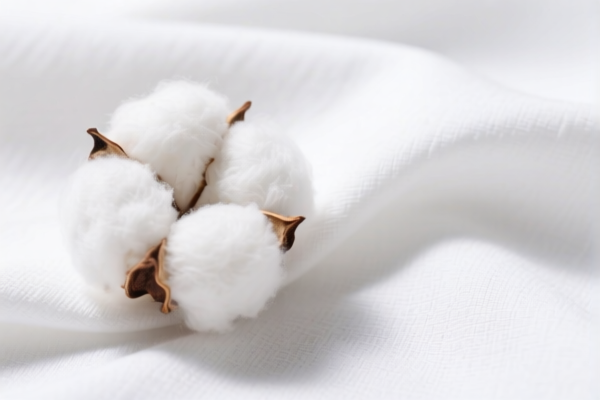
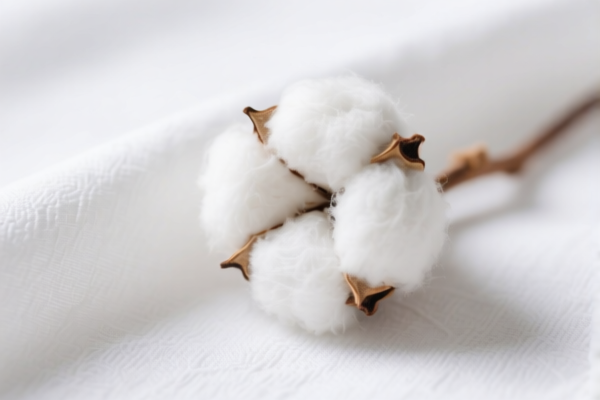
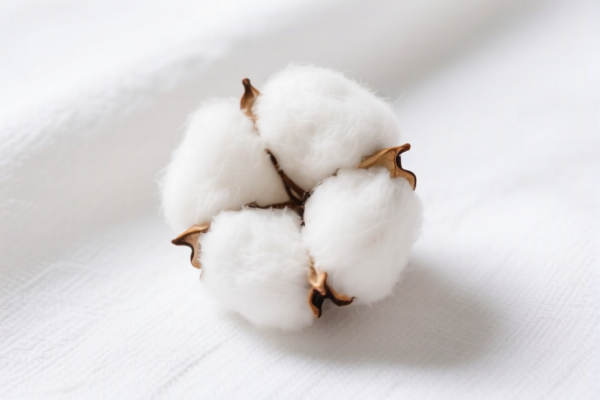
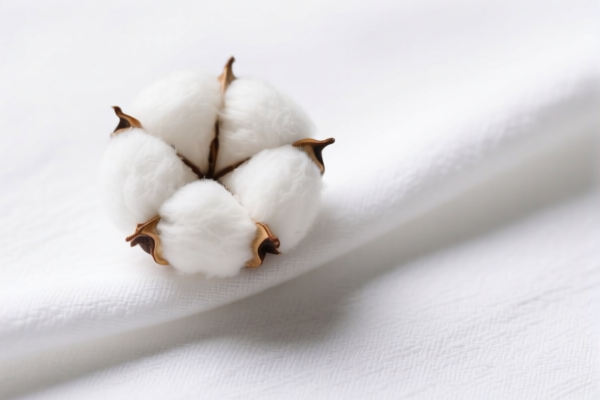
AI Analysis
🧵 Cotton Pulp Short Staple: HS Code Classification & Clearance Guide (2026)
🌐 HS Code Reference & Clearance Guide | 2026 Latest Tariff Analysis | Professional Strategy for "Cotton Pulp Short Staple"
📌 Part 1: Product Definition & Classification: Do You Really Understand "Cotton Pulp Short Staple"?
"Cotton Pulp Short Staple" is a complex trade term that often leads to classification errors because it blends two distinct physical states: Pulp (processed cellulose) and Short Staple (short fiber length). In international trade, the classification depends heavily on the primary characteristic and processing degree.
1. Cotton Linters Pulp (Chemical/Processed Form): * Refers to cellulose derived from cotton linters (short fibers remaining after cottonseed ginning) that has been processed into a pulp state. * Key Feature: It is a semi-finished chemical material, often used as a raw material for derivatives like viscose, cellophane, or pharmaceutical excipients. * Classification Logic: Falls under Chapter 47 (Wood pulp and other fibrous cellulosic pulp) or Chapter 39 (Cellulose derivatives) depending on purity and specific form.
2. Short Staple Cotton Fibers (Physical/Fiber Form): * Refers to short pieces of cotton fiber (staple length < 25mm) that have not been carded or combed. * Key Feature: It is a raw agricultural/industrial fiber, physically short but not chemically processed into pulp. * Classification Logic: Falls under Chapter 52 (Cotton).
⚠️ Critical Distinction Point: * If the material is chemically processed into a pulp/state (浆), it is likely classified under 4706 or 3912. * If the material is physically short fibers (纤维) without chemical pulping, it is classified under 5201. * Do not mix! Misclassification leads to massive tariff differences and customs seizures.
📦 Part 2: Detailed HS Code Classification (2026 Latest Tariff Authority Comparison)
| HS Code | Product Description | Application Scenario | Material/State |
|---|---|---|---|
4706.10.00.00 |
Cotton Linters Pulp (棉短绒浆) | Semi-finished cellulose material for chemical manufacturing | Pulp (浆) |
3912.90.00.10 |
Other Cellulose Derivatives (Powder/Primary Form) | Cellulose derived from cotton, used in pharmaceuticals or coatings | Powder/Primary Form (粉末/初级形态) |
3912.90.00.90 |
Other Cellulose Derivatives (Primary Form) | Raw cellulose derivatives from cotton, no specific chemical modification | Primary Form (原形/初级形态) |
5201.00.18.00 |
Short Staple Cotton, Combed (梳棉短纤维) | High-quality short cotton fibers for spinning high-count yarns | Fiber (纤维, Combed) |
5201.00.12.00 |
Short Staple Cotton, Uncarded (未梳理短纤维) | Raw short cotton fibers, not yet carded or combed | Fiber (纤维, Uncarded) |
5503.19.90.00 |
Other Synthetic Staple Fibers | Potential Mismatch: If "Short Staple" is misinterpreted as synthetic polyamide | Fiber (Fiber, Synthetic) |
🔍 Key Insight: * Pulp (浆) → 4706.10.00.00 or 3912.xxxxxx. * Short Fibers (短纤维) → 5201.xxxxxx (if Cotton) or 5503.xxxxxx (if Synthetic - Note: The data suggests a potential misclassification risk if the material is not actually cotton). * Warning:
5503.19.90.00is listed in the data as "Short Staple," but the summary says "Inferred as Polyamide or Synthetic." If your product is truly Cotton, this HS Code is INCORRECT.
💰 Part 3: 2026 Latest Tariff Rate Breakdown (Including Surtaxes & Policy Add-ons)
✅ Applicable Country: United States (US) ✅ Origin: China (CN) ✅ Effective Time: From November 10, 2025 (Including subsequent imports)
🎯 1. 4706.10.00.00 — Cotton Linters Pulp (Highly Matched for "Pulp")
| Item | Content |
|---|---|
| Base Tariff | 0.0% |
| Section 301 Surtax | +25.0% |
| Section 122 Tariff | +10.0% |
| Total Tariff Rate | 35.0% |
| Tax Calculation | CIF Value × 35.0% |
| De Minimis Eligibility | ❌ No (deny_de_minimis) |
| Legal Basis Path | USITC:4706.10.00.00 → SECTION_301:4706.10.00.00 → SECTION_122:4706.10.00.00 |
📌 Explanation: * "Section 301 Surtax 25%": Additional duty under US Trade Act Section 301 against China. * "Section 122 Tariff 10%": Additional duty under Section 122 of the Trade Act (national security/emergency). * Total 35%: High tariff, requires careful cost planning.
🎯 2. 3912.90.00.10 & 3912.90.00.90 — Cellulose Derivatives (Matched for "Powder/Primary Form")
| Item | Content |
|---|---|
| Base Tariff | 5.2% |
| Section 301 Surtax | +25.0% |
| Section 122 Tariff | +10.0% |
| Total Tariff Rate | 40.2% |
| Tax Calculation | CIF Value × 40.2% |
| De Minimis Eligibility | ❌ No (deny_de_minimis) |
| Legal Basis Path | USITC:3912.90.00.10 → SECTION_301:3912.90.00.10 → SECTION_122:3912.90.00.10 |
📌 Note: * If the "Cotton Pulp" is processed into a cellulose derivative (e.g., methyl cellulose, carboxymethyl cellulose), it may fall here. * Total 40.2%: Even higher than plain pulp due to the 5.2% base tariff. * Material Check: Ensure the product is indeed a "cellulose derivative" and not just raw pulp.
🎯 3. 5201.00.12.00 — Short Staple Cotton, Uncarded (Matched for "Short Fiber")
| Item | Content |
|---|---|
| Base Tariff | 0.0% |
| Section 301 Surtax | +25.0% |
| Section 122 Tariff | +10.0% |
| Total Tariff Rate | 35.0% |
| Tax Calculation | CIF Value × 35.0% |
| De Minimis Eligibility | ❌ No (deny_de_minimis) |
| Legal Basis Path | USITC:5201.00.12.00 → SECTION_301:5201.00.12.00 → SECTION_122:5201.00.12.00 |
📌 Explanation: * If the product is short cotton fibers (not chemical pulp), this is the correct classification. * Total 35%: Same as cotton pulp, but base tariff is 0%.
🎯 4. 5201.00.18.00 — Short Staple Cotton, Combed (Matched for "Short Fiber")
| Item | Content |
|---|---|
| Base Tariff | 31.4¢/kg |
| Section 301 Surtax | +25.0% (Ad Valorem) |
| Section 122 Tariff | +10.0% (Ad Valorem) |
| Total Tariff Rate | 31.4¢/kg + 35.0% |
| Tax Calculation | (CIF Value × 35%) + (Weight in kg × $0.314) |
| De Minimis Eligibility | ❌ No (deny_de_minimis) |
| Legal Basis Path | USITC:5201.00.18.00 → SECTION_301:5201.00.18.00 → SECTION_122:5201.00.18.00 |
📌 Note: * Mixed Tariff: Combines specific duty (per kg) and ad valorem duty (%). * Combed vs. Uncarded:
5201.00.18.00is for combed short staple;5201.00.12.00is for uncarded. Do not mix them up.
🎯 5. 5503.19.90.00 — Other Synthetic Staple Fibers (⚠️ Potential Misclassification)
| Item | Content |
|---|---|
| Base Tariff | 4.3% |
| Section 301 Surtax | +25.0% |
| Section 122 Tariff | +10.0% |
| Total Tariff Rate | 39.3% |
| Tax Calculation | CIF Value × 39.3% |
| De Minimis Eligibility | ❌ No (deny_de_minimis) |
| Legal Basis Path | USITC:5503.19.90.00 → SECTION_301:5503.19.90.00 → SECTION_122:5503.19.90.00 |
📌 Warning: * The summary states: "Inferred as Polyamide or Synthetic Fiber Class, No Material Conflict." * CRITICAL: If your product is Cotton, DO NOT USE THIS HS CODE. * This code is for Synthetic Fibers (e.g., Nylon, Polyester). Using it for cotton is smuggling/fraud.
🛠️ Part 4: Clearance Operational Advice (Practical Pitfall Avoidance Guide)
✅ 1. Preparation Material Checklist (None Missing)
| Material | Must Provide | Description |
|---|---|---|
| ✅ Product Specification Sheet | ✔️ | Must clearly state: Material (100% Cotton), Form (Pulp/Fiber), Length (Staple Length), Processing Degree (Carded/Combed/Uncarded) |
| ✅ Technical Data Sheet (TDS) | ✔️ | For "Pulp" products, show cellulose content. For "Fibers," show staple length and strength. |
| ✅ Product Photos | ✔️ | Clear images of the material state (Powder/Pulp/Short Fibers). Label must show HS Code or product name. |
| ✅ Certificate of Origin (CO) | ✔️ | If claiming any potential FTZ benefits (though US-China has none, it's standard for other routes). |
| ✅ Commercial Invoice | ✔️ | Clearly state: "Cotton Linters Pulp" or "Short Staple Cotton Fiber". Avoid vague terms like "Vegetable Fiber." |
| ✅ Packing List | ✔️ | Specify net weight and gross weight. For 5201.00.18.00, weight is critical for specific duty calculation. |
✅ 2. Declaration Tips (Key Mantra)
🔥 "Material First, Form Second, Name Accurate, Tariff Clear!"
| Scenario | Correct Declaration | Wrong Practice |
|---|---|---|
| Cotton Pulp | 4706.10.00.00 - "Cotton Linters Pulp" |
Misdeclare as "Cellulose Powder" → 3912 (40.2%) |
| Short Cotton Fiber | 5201.00.12.00 or 5201.00.18.00 |
Misdeclare as "Synthetic Staple" → 5503 (39.3%) |
| Cotton Derivative | 3912.90.00.90 - "Cellulose Derivative" |
Misdeclare as "Pulp" → 4706 (35%) |
| Mixed Shipment | Declare each item separately | Bundle Cotton and Synthetic → Seizure |
✅ 3. Special Circumstances Handling
| Situation | Handling Advice |
|---|---|
| "Cotton Pulp" vs. "Cellulose Derivative" | If the product is chemically modified (e.g., carboxymethyl cellulose), use 3912. If it is just pulped cotton, use 4706. |
| Short Staple Length | Ensure the staple length is accurately reported. If < 25mm, it is "Short Staple" (5201). If longer, it may be "Long Staple" (5203). |
| Blended Products | If mixed with synthetic fibers, classify based on weight. If cotton > 50%, likely 5201. If synthetic > 50%, likely 5503. |
| Pre-Arbitration (Advance Ruling) | Highly Recommended. Apply for a US CBP Advance Ruling to confirm the HS Code before shipment. This avoids post-clearance audits and penalties. |
🌍 Part 5: Global Major Market Clearance Comparison (2026 Latest)
| Country/Region | Recommended HS Code | Tariff (China Origin) | Certification Requirements | Remarks |
|---|---|---|---|---|
| 🇺🇸 United States | 4706.10.00.00 / 5201.xxxx |
35% - 40.2% | None specific | High Surtax (301+122). No de minimis. |
| 🇨🇳 China | 4706.10.00.00 / 5201.xxxx |
0% - 5% | None | Low tariff for domestic trade. |
| 🇪🇺 European Union | 4706.10.00 / 5201.90 |
0% - 5% | REACH, GOTS (if organic) | No Section 301 surtax. |
| 🇬🇧 United Kingdom | 4706.10.00 / 5201.90 |
0% - 5% | UKCA, REACH | No Section 301 surtax. |
📌 Conclusion: * US Market is the most expensive due to Section 301 (25%) and Section 122 (10%) tariffs. * Total Tax Burden: 35% to 40.2%. * Risk: High. Customs will strictly check the material (Cotton vs. Synthetic) and form (Pulp vs. Fiber).
📌 Part 6: Common Errors & Pitfall Guide (Blood and Tears Lessons)
❌ Error 1: Calling "Cotton Pulp" a "Chemical Product" and using 3912
👉 Consequence: If it's just pulped cotton, it should be 4706. If it's a derivative, it's 3912. Misclassification leads to audit and penalty.
❌ Error 2: Declaring "Short Staple Cotton" as "Synthetic Fiber" (5503)
👉 Consequence: Fraud. If tested, it will be found to be cotton. Penalty + Seizure + Blacklist.
❌ Error 3: Ignoring "Carded vs. Uncarded" for Short Staple
👉 Consequence: 5201.00.12.00 (Uncarded) vs. 5201.00.18.00 (Combed). Different subheadings may have different scrutiny levels. Be precise.
❌ Error 4: Not declaring Section 122 Surtax 👉 Consequence: Underpayment. The 10% Section 122 tariff is mandatory for China-origin goods since Nov 2025.
✅ Correct Practice:
"Cotton Linters Pulp, 100% Cellulose, Powder Form, for Pharmaceutical Use, HS Code: 4706.10.00.00, Origin: China"
🎯 Part 7: Conclusion: Professional Declaration, Save Time, Cut Costs!
🎯 Remember the Mantra:
🔹 "Pulp is 4706, Derivative is 3912, Fiber is 5201, Synthetic is 5503!" 🔹 "US Tariff is 35%+, No De Minimis, Always Pre-Arbitrate!" 🔹 "Check Material and Form First, Then Declare!"
📌 Pro Tip:
If your "Cotton Pulp Short Staple" is exempt from certain Section 301 tariffs (e.g., specific pharmaceutical ingredients), ensure you have the Exclusion List Number ready. However, based on the data, no exemption is mentioned for these HS Codes.
📣 Immediate Action:
📞 Contact your customs broker + Provide Product Photos + Apply for Advance Ruling from US CBP. 🚀 Let your Cotton Pulp Short Staple pass customs smoothly, efficiently, and profitably!
✨ Professional Clearance Starts with Accurate Classification! 💼 Every cent of your cost is worth precise calculation!
Customer Reviews
About HS Code Classification
The Harmonized System (HS) is an internationally standardized nomenclature developed by the World Customs Organization (WCO) to classify traded products. Over 200 countries use the HS system as the basis for customs tariffs, trade statistics, and import/export regulations.
Each HS code follows a hierarchical structure:
- Chapter (2 digits) — Broad category of goods (e.g., Chapter 84: Machinery and Mechanical Appliances)
- Heading (4 digits) — More specific grouping within the chapter
- Subheading (6 digits) — Internationally standardized breakdown, used by all WCO member countries
- National subdivisions (8-10 digits) — Country-specific extensions for further classification, such as US HTSUS 10-digit codes
Correct HS code classification is essential for smooth customs clearance, accurate duty payment, and compliance with trade regulations. Misclassification can lead to customs delays, overpayment of duties, or penalties.
When importing from CN to US, the applicable tariff rates may include:
- Most-Favored-Nation (MFN) rate — The standard duty rate applied to WTO members
- General rate — Applied to countries without trade agreements
- Trade remedy duties — Additional tariffs such as Section 301 (anti-dumping), Section 232 (national security), or countervailing duties
The information provided on this page is for reference purposes only. For official classification, please consult with your local customs authority or a licensed customs broker.