Cotton Rayon Denim Fabric for Jeans
CN → US| HS Code | Tariff Rate | Origin | Destination | Doc |
|---|---|---|---|---|
| 5516430015 | 35.0% | CN | US | Official Doc |
| 5210392090 | 45.0% | CN | US | Official Doc |
| 5516430010 | 35.0% | CN | US | Official Doc |
Product Images
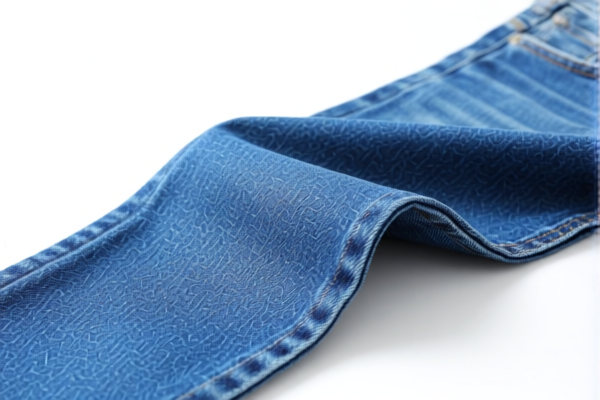
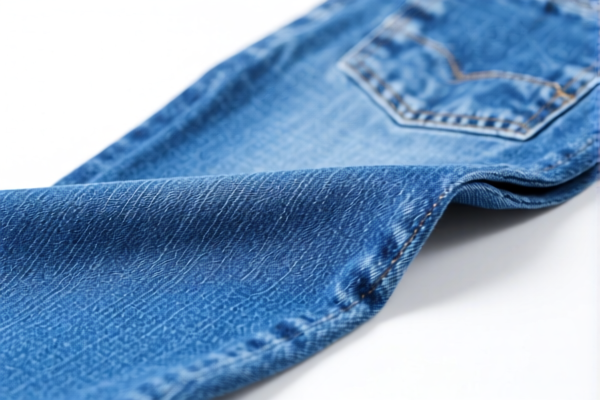
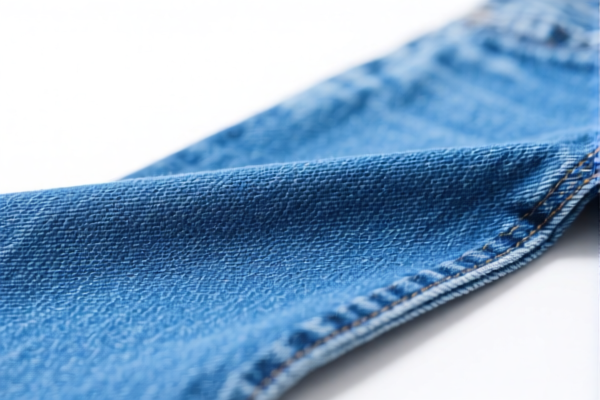

AI Analysis
👖 Cotton-Rayon Denim Fabric for Jeans
🌐 HS Code Reference & Customs Clearance Guide | 2026 Latest Tariff Analysis | Professional Clearance Strategy
📌 I. Product Definition & Classification: Do You Really Understand "Cotton-Rayon Denim"?
Cotton-Rayon denim fabric is a blend of natural cotton fibers and regenerated cellulose fibers (rayon/viscose). In international trade, it is primarily classified under Chapter 55 (Man-made staple fibers) or Chapter 52 (Cotton), depending on the specific composition ratio and weaving characteristics. The key distinction lies in whether the fabric meets the "denim" (twill weave) attribute and the percentage of synthetic vs. natural fibers.
⚠️ Key Distinction Point:
- If the fabric is woven in a twill pattern (denim style) with Rayon (man-made staple fiber) content < 85% and blended with cotton → It falls under Chapter 55.
- If the fabric is considered primarily Cotton with minor synthetic blends, it may fall under Chapter 52.
- Crucial Note: "Denim" is not a separate HS chapter; it is a weaving characteristic. The classification depends on fiber content.
📦 II. HS Code Classification Details (2026 Latest Tariff Authority Comparison)
Based on the provided data, the applicable HS Codes for Cotton-Rayon Denim Fabric are as follows:
| HS Code | Product Description | Applicability Scenario | Fiber Logic |
|---|---|---|---|
5516.43.00.15 |
Cotton/Rayon Mixed Denim Fabric | Meets the attribute of "Man-made staple fiber + Cotton blend" AND "Denim (Twill) fabric" | Rayon + Cotton (Denim Structure) |
5210.39.20.90 |
Cotton/Man-made Fiber Woven Fabric | Broad category for "Cotton + Man-made fiber woven fabric," fits the general blend characteristics if not strictly classified under 55 | Cotton + Rayon (General Weave) |
5516.43.00.10 |
Cotton/Rayon Mixed Fabric | Meets the logic of "Man-made staple fiber < 85%" blended with cotton | Rayon + Cotton (Standard Weave) |
🔍 Focus Reminder:
-5516.43.00.15is the most precise code for Denim fabric containing Rayon, as it explicitly acknowledges the "Denim" attribute alongside the fiber blend.
-5210.39.20.90is a broader category for cotton blends, potentially applying if the fabric does not strictly meet the Chapter 55 definition or if customs interpret the blend differently.
-5516.43.00.10applies to cotton-rayon blends where Rayon content is clearly defined but the "Denim" specific sub-code (.15) might not be applicable due to specific national tariff line variations.
💰 III. 2026 Latest Tariff Rate Breakdown (Including Surcharge & Policy Add-ons)
✅ Applicable Country: United States (US)
✅ Origin: China (CN)
✅ Effective Date: From November 10, 2025 (including subsequent imports)
🎯 1. 5516.43.00.15 —— Cotton/Rayon Mixed Denim Fabric
| Item | Content |
|---|---|
| Base Tariff | 0% (ad valorem) |
| USITC Surcharge (Section 301) | +25% |
| IEEPA Surcharge (Section 122) | +10% |
| Total Tax Rate | 35.0% |
| Tax Calculation | CIF Value × 35% |
| De Minimis Eligibility | ❌ No (deny_de_minimis) |
| Legal Basis Path | IEEPA:9903.01.25 → USITC:5516.43.00.15 → FOOTNOTE:9903.88.01 |
📌 Explanation:
- The 35% total tax is composed of a 0% base rate, a 25% Section 301 surcharge, and a 10% Section 122 tariff.
- This is a high tariff rate for textiles. It is critical to pre-calculate costs to avoid margin erosion.
🎯 2. 5210.39.20.90 —— Cotton/Man-made Fiber Woven Fabric
| Item | Content |
|---|---|
| Base Tariff | 10% |
| USITC Surcharge (Section 301) | +25% |
| IEEPA Surcharge (Section 122) | +10% |
| Total Tax Rate | 45.0% |
| Tax Calculation | CIF Value × 45% |
| De Minimis Eligibility | ❌ No (deny_de_minimis) |
| Legal Basis Path | IEEPA:9903.01.25 → USITC:5210.39.20.90 → FOOTNOTE:9903.88.01 |
📌 Note:
- This code carries a higher total tax (45%) due to the 10% base tariff.
- Misclassification here (e.g., declaring a Denim fabric as general cotton weave) can lead to higher tax liabilities. Ensure the "Denim" attribute is clearly declared to potentially qualify for the lower base rate under Chapter 55 if applicable, though the surcharges remain.
🎯 3. 5516.43.00.10 —— Cotton/Rayon Mixed Fabric
| Item | Content |
|---|---|
| Base Tariff | 0% |
| USITC Surcharge (Section 301) | +25% |
| IEEPA Surcharge (Section 122) | +10% |
| Total Tax Rate | 35.0% |
| Tax Calculation | CIF Value × 35% |
| De Minimis Eligibility | ❌ No (deny_de_minimis) |
| Legal Basis Path | IEEPA:9903.01.25 → USITC:5516.43.00.10 → FOOTNOTE:9903.88.01 |
📌 Attention:
- Same total rate (35%) as.15, but different base classification logic.
- Used when the specific "Denim" sub-code (.15) is not available or applicable in certain customs interpretations, but the fiber blend remains Cotton + Rayon.
🛠️ IV. Customs Clearance Practical Advice (Battle-Tested Pitfall Avoidance)
✅ 1. Required Documentation List (All Are Mandatory)
| Document | Mandatory | Description |
|---|---|---|
| ✅ Product Specification Sheet | ✔️ | Must include fiber content (% Cotton, % Rayon), weave type (Twill/Denim), weight, width. |
| ✅ Weave Structure Diagram/Photo | ✔️ | To prove "Denim" (Twill) structure for HS Code 5516.43.00.15. |
| ✅ Product Photos (with Label) | ✔️ | Clear shots of fabric roll, selvedge, and label showing fiber content. |
| ✅ Commercial Invoice | ✔️ | Must explicitly state "Cotton/Rayon Denim Fabric" and HS Code. |
| ✅ Packing List | ✔️ | Detail weight, dimensions, and number of rolls. |
| ✅ Certificate of Origin (CO) | ✔️ | If applicable, though China origin triggers surcharges. |
✅ 2. Declaration Tips (Key Mnemonic)
🔥 "Fiber Content First, Weave Structure Second, Denim Specific, Tariff Precise!"
| Scenario | Correct Declaration | Wrong Practice |
|---|---|---|
| Denim Fabric (Cotton+Rayon) | 5516.43.00.15 (Denim Specific) |
Declare as 5210.39.20.90 → 45% Tax vs. 35% Tax |
| Non-Denim Cotton/Rayon Woven | 5516.43.00.10 or 5210.39.20.90 |
Declare as Denim → Risk of misclassification penalty |
| High Rayon Content (>85%) | Different HS Code (Chapter 55, higher rayon subheading) | Force into Cotton blend code → Incorrect classification |
| Blended with Polyester | Different HS Code | Declare as "Cotton/Rayon" → Compliance violation |
✅ 3. Special Case Handling
| Situation | Handling Advice |
|---|---|
| OEM Custom Denim | Provide customer orders + design specs. Avoid generic "Denim" declaration; specify fiber ratio. |
| Sample Shipments | Even samples are subject to the 35-45% tariff. No de minimis exemption. |
| Fabric with Elastic Yarn | If elastic content > 5%, reclassify under Chapter 58 or 60 depending on structure. Check fiber % again. |
| Pre-Shrunk/Sanforized | Declare as "Sanforized Denim Fabric." Does not change HS Code, but affects value declaration. |
🌍 V. Global Main Market Clearance Comparison (2026 Latest)
| Country/Region | Recommended HS Code | Tariff (China Origin) | Certification Requirements | Notes |
|---|---|---|---|---|
| 🇺🇸 United States | 5516.43.00.15 |
35% (Base 0% + 25% + 10%) | None specific for fabric | High surcharge due to Section 301 & 122 |
| 🇨🇳 China | 5516.43.00.15 |
5-8% (Import Duty) | None | No Section 301/122 apply to imports INTO China |
| 🇪🇺 European Union | 5516.43.00 |
9% | REACH (Chemical compliance) | No additional US-style surcharges |
| 🇬🇧 United Kingdom | 5516.43.00 |
9% | UKCA (if finished goods) | Post-Brexit tariff regime |
| 🇦🇺 Australia | 5516.43.00 |
5% | None | Free trade agreement may apply if origin is ASEAN |
📌 Conclusion:
- The US market imposes the highest cost due to multiple layers of surcharges (Total 35%).
- EU and UK have stable, lower base tariffs (9%) but require strict chemical compliance (REACH).
- China (importing) has low tariffs but is not the primary export destination for this goods from China.
📌 VI. Common Mistakes & Pitfall Guide (Lessons from Blood)
❌ Mistake 1: Declaring "Denim Fabric" as "Cotton Fabric" (5208.xx.xx)
👉 Consequence: Incorrect classification. If Rayon content is significant, it should be Chapter 55. May face penalties for misdeclaration.
❌ Mistake 2: Ignoring the "Denim" structure for 5516.43.00.15
👉 Consequence: If the fabric is not truly twill (denim), customs may reject .15 and classify under .10 or 5210, leading to back-taxes and delays.
❌ Mistake 3: Not disclosing Rayon content accurately
👉 Consequence: If Rayon content is < 85%, it falls under specific subheadings. Misreporting can lead to different tax rates (e.g., if Rayon > 85%, it moves to a different HS code with potentially different base rates).
❌ Mistake 4: Assuming "De Minimis" applies
👉 Consequence: Textiles from China are explicitly excluded from de minimis exemption for Section 301/122 tariffs. Full duty must be paid on every shipment.
✅ Correct Practice:
"Cotton/Rayon Blended Denim Fabric, Twill Weave, 60% Cotton / 40% Rayon, 14oz Weight, Width 60 inches, Pre-shrunk, Model XYZ, Certified Oeko-Tex"
🎯 VII. Conclusion: Professional Declaration Saves Money!
🎯 Remember the Mnemonic:
🔹 "Denim + Rayon + Cotton = Chapter 55, Code .15, 35% Tax!"
🔹 "No De Minimis! Always Pay Full Duty! Declare Weave Clearly!"
📌 Tips:
- If your fabric is shipped from Vietnam, Mexico, or Thailand, check for IEEPA/Section 301 exemptions.
- Apply for an Advance Ruling from US Customs if the fabric composition is complex or if you have mixed shipments.
- REACH Compliance is mandatory for EU exports. Ensure dyes and finishes meet chemical standards.
📣 Immediate Action:
📞 Contact a licensed customs broker + Provide fabric sample + Request HS Code Pre-classification
🚀 Ensure your denim fabric clears customs smoothly, avoids penalties, and protects your profit margins!
✨ Professional clearance starts with precise classification!
💼 Every percent of tax matters!
Customer Reviews
About HS Code Classification
The Harmonized System (HS) is an internationally standardized nomenclature developed by the World Customs Organization (WCO) to classify traded products. Over 200 countries use the HS system as the basis for customs tariffs, trade statistics, and import/export regulations.
Each HS code follows a hierarchical structure:
- Chapter (2 digits) — Broad category of goods (e.g., Chapter 84: Machinery and Mechanical Appliances)
- Heading (4 digits) — More specific grouping within the chapter
- Subheading (6 digits) — Internationally standardized breakdown, used by all WCO member countries
- National subdivisions (8-10 digits) — Country-specific extensions for further classification, such as US HTSUS 10-digit codes
Correct HS code classification is essential for smooth customs clearance, accurate duty payment, and compliance with trade regulations. Misclassification can lead to customs delays, overpayment of duties, or penalties.
When importing from CN to US, the applicable tariff rates may include:
- Most-Favored-Nation (MFN) rate — The standard duty rate applied to WTO members
- General rate — Applied to countries without trade agreements
- Trade remedy duties — Additional tariffs such as Section 301 (anti-dumping), Section 232 (national security), or countervailing duties
The information provided on this page is for reference purposes only. For official classification, please consult with your local customs authority or a licensed customs broker.