Cotton Shirt
CN → US| HS Code | Tariff Rate | Origin | Destination | Doc |
|---|---|---|---|---|
| 6110202077 | 34.0% | CN | US | Official Doc |
| 6206303011 | 32.9% | CN | US | Official Doc |
| 6110202079 | 34.0% | CN | US | Official Doc |
| 6106100010 | 37.2% | CN | US | Official Doc |
| 6106100030 | 37.2% | CN | US | Official Doc |
Product Images

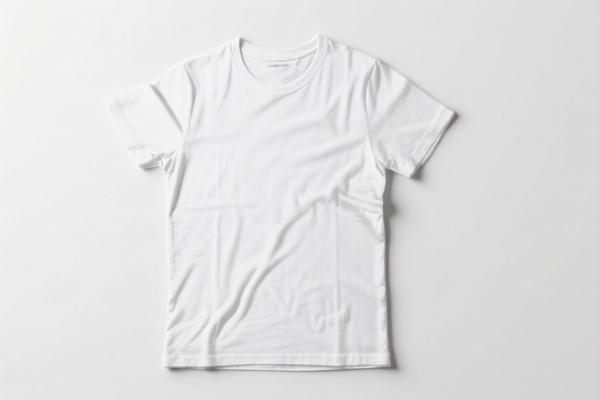


AI Analysis
🧵✨ Cotton Shirt: The Ultimate 2026 HS Code & Duty Survival Guide
🌐 HS Code Reference & Customs Clearance Strategy | 2026 Latest Tariff Breakdown | Female Cotton Shirts Edition
📌 I. Product Definition & Classification: Why "Cotton Shirt" is NOT just ONE HS Code?
"Cotton Shirt" is a generic term, but in international trade, the construction method (Knitted vs. Woven) and the product form are the decisive factors for classification. Getting this wrong means paying 37.2% instead of 32.9% (or vice versa), plus risking customs delays.
In the 2026 tariff landscape, Female Cotton Shirts fall into two distinct worlds:
- Knitted or Crocheted Garments (Chapter 61): Soft, stretchy, jersey-like fabrics (e.g., T-shirt style shirts, polo shirts, sweatshirt shirts).
- Woven Garments (Chapter 62): Crisp, structured fabrics (e.g., button-down dress shirts, blouses).
⚠️ The Golden Rule of Classification:
- Knitted/Crocheted (Stretchy) → HS Code 6110.x or 6106.x (Often taxed at 34.0% - 37.2%)
- Woven (Structured) → HS Code 6206.x (Often taxed at 32.9%)
Note: The specific sub-code (e.g., .10, .20, .30, .45, .77, .79) depends on the specific "form" and "other" categories.
📦 II. Detailed HS Code Breakdown (2026 Female Cotton Shirt Tariff Matrix)
Based on the provided data, here is the precise classification for Female Pure Cotton Shirts:
| HS Code | Product Description (Summary) | Garment Type | Total Duty Rate |
|---|---|---|---|
6110.20.20.77 |
Female Pure Cotton Shirt, Knitted/Crocheted, Made of Cotton, Women's | Knitted (Formal/Shirt Style) | 34.0% |
6110.20.20.79 |
Female Pure Cotton Shirt, Made of Cotton, Women's (Other/Catch-all) | Knitted (Other Forms) | 34.0% |
6106.10.00.10 |
Female Pure Cotton Shirt, Made of Cotton, Women's, Shirt Form | Knitted (Specific Shirt Form) | 37.2% |
6106.10.00.30 |
Female Pure Cotton Shirt, Made of Cotton, Women's Tops (Upper Garment) | Knitted (Tops) | 37.2% |
6206.30.30.11 |
Female Pure Cotton Shirt, Made of Cotton, Women's, Shirt Form | Woven (Structured Shirt) | 32.9% |
6206.30.30.45 |
Female Pure Cotton Shirt, Made of Cotton, Women's, Shirt Form | Woven (Structured Shirt) | 32.9% |
🔍 Key Insight:
- Knitted shirts (61xx) generally carry a higher tariff burden (34.0% - 37.2%) compared to Woven shirts (6206, 32.9%).
-6206.30.30.11/45are your "Woven" sweet spots. If the fabric is woven (button-down, collar), aim for these.
-6106.10.00.10/30are the "Knitted Shirt" traps with the highest rate (37.2%).
💰 III. 2026 Tariff Rate Deep Dive (Base + Surcharges)
✅ Applicable Market: China Exporting to USA (Implied by "122条款" & US-style surcharges)
✅ Product Origin: China (CN)
✅ Tariff Structure: Base Tariff + Section 301 (Additional) + Section 122 (Section 122 Tariff)
The total duty rate is a stacked calculation:
Total Rate = Base Tariff + Section 301 (Add-on) + Section 122 Tariff
🎯 1. The "Knitted" Trap (61xx Series)
| HS Code | Base Tariff | Sec. 301 Add-on | Sec. 122 Tariff | TOTAL DUTY |
|---|---|---|---|---|
6110.20.20.77 / 79 |
16.5% | 7.5% | 10% | 34.0% |
6106.10.00.10 / 30 |
19.7% | 7.5% | 10% | 37.2% |
📌 Explanation:
- Base Tariff (16.5% / 19.7%): Standard MFN duty for cotton garments.
- Sec. 301 Add-on (7.5%): Fixed percentage surcharge on Chinese textiles.
- Sec. 122 Tariff (10%): Additional punitive tariff under Section 122 of the US Trade Act.
- Result: Even "simple" cotton shirts face ~34-37% total duty.
🎯 2. The "Woven" Advantage (6206.30.30)
| HS Code | Base Tariff | Sec. 301 Add-on | Sec. 122 Tariff | TOTAL DUTY |
|---|---|---|---|---|
6206.30.30.11 / 45 |
15.4% | 7.5% | 10% | 32.9% |
📌 Explanation:
- Base Tariff (15.4%): Slightly lower base rate for woven cotton shirts compared to knitted.
- Add-ons: Same 7.5% + 10% surcharges apply.
- Result: 32.9% is the lowest possible rate for female cotton shirts in this dataset. Always prioritize Woven classification if possible!
🛠️ IV. Customs Clearance Practical Guide (Avoiding Costly Mistakes)
✅ 1. Material & Construction Verification (Critical Step)
Before declaring, you MUST know the fabric structure:
* Knitted (Chapter 61): Fabric stretches significantly, made by interlocking loops (like a T-shirt or sweatshirt).
* Risk: Misdeclaring knitted as woven (62xx) will trigger penalties.
* Woven (Chapter 62): Fabric does not stretch, made by weaving threads over/under (like a dress shirt).
* Strategy: If it's a button-down with a collar, check 6206.30.30.
✅ 2. Labeling & Description Strategy
Your commercial invoice and packing list must be precision-engineered:
| Scenario | Correct Description | WRONG Description | Consequence |
|---|---|---|---|
| Knitted Shirt | "Women's Knitted Cotton Polo Shirt" | "Women's Cotton Shirt" (Too vague) | High risk of re-classification by CBP (37.2% or higher) |
| Woven Shirt | "Women's Woven Cotton Dress Shirt" | "Women's Cotton Top" (Too generic) | May trigger 37.2% (Knitted) if ambiguous |
| Fabric Content | "100% Cotton" | "Cotton Blend" | If not 100% cotton, base tariff changes entirely |
🔥 Pro Tip:
Use the phrase "Woven" or "Knitted" explicitly in the description.
Example: "Women's Woven 100% Cotton Shirt, Model #123" → Points to6206.30.30.
✅ 3. Section 122 & 301 Compliance
- Section 122 (10%): This is a specific tariff often applied to Chinese textiles. It is non-negotiable and non-exempt. Ensure your HS Code includes the 122 clause in the database.
- Section 301 (7.5%): This is the standard "China Tariff" surcharge.
- De Minimis: NO small parcel exemption (Section 321). All shipments are subject to these full tariffs.
🌍 V. Global Comparison: Why This Matters
| Market | Typical Rate (Cotton Shirt) | Notes |
|---|---|---|
| 🇺🇸 USA (Current Data) | 32.9% - 37.2% | Highest in world due to Sec 301 + Sec 122. |
| 🇪🇺 EU | ~12% - 16% | No Section 301/122; lower base rates. |
| 🇯🇵 Japan | ~15% | Generally lower than US. |
| 🇨🇦 Canada | ~16% | CUSMA preferential rates possible. |
📌 Conclusion:
The US market is the most expensive for cotton shirts. If you are exporting to the US, minimizing the "Knitted" portion and maximizing "Woven" (6206) classification is the single best way to save 0.3% - 4.3% on every shirt.
📌 VI. Common Pitfalls & "How-To" Fix
❌ Mistake 1: Calling all shirts "Tops" or "Garments"
👉 Fix: Specify "Shirt", "Knitted", or "Woven" in the description.
❌ Mistake 2: Misidentifying Fabric (Knit vs. Woven)
👉 Fix: Send a fabric swatch to your broker. Knitted = Stretchy; Woven = Stiff.
❌ Mistake 3: Ignoring the Sub-code (e.g., .10 vs .77)
👉 Fix: The sub-code determines the exact base tariff.
- If Woven: Check 6206.30.30.11 vs .45.
- If Knitted: Check 6110.20.20.77 vs 6106.10.00.10.
✅ Best Practice Checklist: 1. [ ] Verify Fabric: Knit or Woven? 2. [ ] Select Correct Chapter: 61 (Knit) or 62 (Woven)? 3. [ ] Choose Specific Sub-code: Match the description exactly. 4. [ ] Calculate Duty: Base + 7.5% + 10%. 5. [ ] Invoice Label: "100% Cotton [Woven/Knitted] Women's Shirt".
🎯 VII. Final Verdict: Strategic Action Plan
🔹 "Woven is Lower, Knitted is Higher!"
If your product allows, switch to Woven construction to hit 32.9% instead of 37.2%.
🔹 "Be Specific or Pay More!"
Vague descriptions = 37.2% tax + 21-day delay.
🔹 "Section 122 is Real!"
Do not expect exemptions; the 10% surcharge is mandatory for China-origin cotton shirts.
📣 Immediate Action:
📞 Contact your Broker NOW: Confirm if your sample is Knitted or Woven.
🚀 Update your PCD (Pre-Clearance Data): Ensure6206.30.30.11is selected for woven items.
💰 Cost Calculation: Factor in the 37.2% maximum for knitted items in your pricing model.
✨ Professional Customs Clearance Starts with Precision!
💼 Don't let 4% tax difference eat your profit margin.
👗 Cotton Shirts are simple to classify, but complex to tariff correctly.
Customer Reviews
About HS Code Classification
The Harmonized System (HS) is an internationally standardized nomenclature developed by the World Customs Organization (WCO) to classify traded products. Over 200 countries use the HS system as the basis for customs tariffs, trade statistics, and import/export regulations.
Each HS code follows a hierarchical structure:
- Chapter (2 digits) — Broad category of goods (e.g., Chapter 84: Machinery and Mechanical Appliances)
- Heading (4 digits) — More specific grouping within the chapter
- Subheading (6 digits) — Internationally standardized breakdown, used by all WCO member countries
- National subdivisions (8-10 digits) — Country-specific extensions for further classification, such as US HTSUS 10-digit codes
Correct HS code classification is essential for smooth customs clearance, accurate duty payment, and compliance with trade regulations. Misclassification can lead to customs delays, overpayment of duties, or penalties.
When importing from CN to US, the applicable tariff rates may include:
- Most-Favored-Nation (MFN) rate — The standard duty rate applied to WTO members
- General rate — Applied to countries without trade agreements
- Trade remedy duties — Additional tariffs such as Section 301 (anti-dumping), Section 232 (national security), or countervailing duties
The information provided on this page is for reference purposes only. For official classification, please consult with your local customs authority or a licensed customs broker.