Cotton Sports Bag with Shoe Compartment
CN → US| HS Code | Tariff Rate | Origin | Destination | Doc |
|---|---|---|---|---|
| 9506996080 | 21.5% | CN | US | Official Doc |
| 4202923316 | 52.6% | CN | US | Official Doc |
| 4202921500 | 41.3% | CN | US | Official Doc |
| 9506996080 | 21.5% | CN | US | Official Doc |
| 4202921500 | 41.3% | CN | US | Official Doc |
Product Images
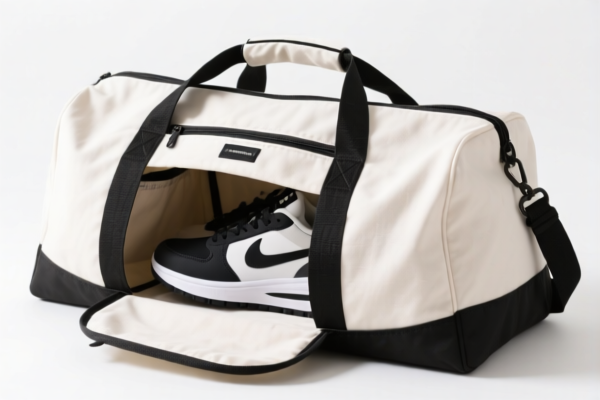
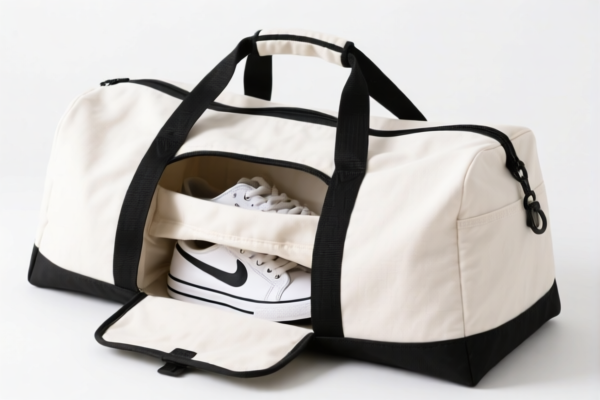
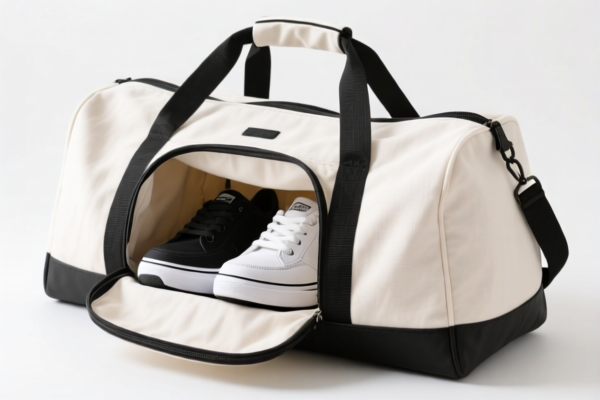
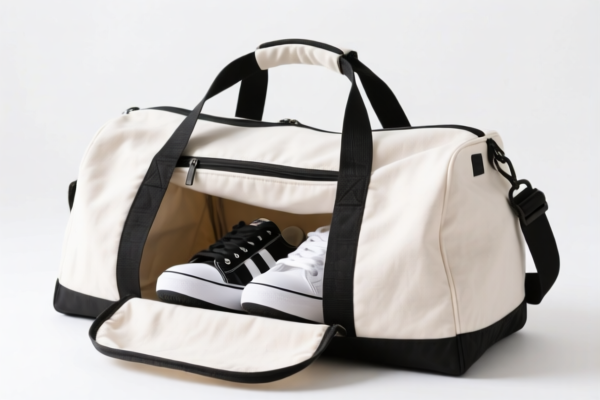
AI Analysis
🎒 Cotton Sports Bag with Shoe Compartment
🌐 HS Code Reference & Clearance Guide | 2026 Latest Tariff Analysis | Professional Customs Strategy
📌 I. Product Definition & Classification: Understanding the "Cotton Sports Bag"
A Cotton Sports Bag with Shoe Compartment is a specialized luggage item designed for fitness enthusiasts, athletes, and gym-goers. Its primary function is to carry workout gear, clothes, and personal items, featuring a distinct separate compartment for shoes to maintain hygiene and organization.
In international trade, the classification hinges on two main factors: 1. Material: The outer surface is made of textile material (Cotton). 2. Function/Use: Is it classified as "Sports Equipment Accessories" (under Chapter 95) or "Travel/Sports Bags" (under Chapter 42)?
⚠️ Critical Distinction Point:
- If viewed primarily as an accessory to sports goods (e.g., carrying balls, rackets, or general fitness gear not specifically as a "bag for travel"), it may fall under 9506.
- If viewed as a bag for carrying personal effects (clothes, toiletries, gym gear) during travel or daily use, it falls under 4202.
- Customs Practice: Bags with shoe compartments are often scrutinized. If the shoe compartment is merely a pocket within a larger travel bag, 4202 is frequently preferred. However, if marketed specifically as "sports equipment accessories," 9506 might be argued.
📦 II. HS Code Classification Details (2026 Latest Tariff Authority Comparison)
| HS Code | Product Description | Applicable Scenario | Tax Rate (China Origin → US) |
|---|---|---|---|
9506.99.60.80 |
Sports bags/accessories (non-electric), for general sports use | Marketed as accessory to sports equipment; general fitness gear carrier | 21.5% |
4202.92.33.16 |
Bags with outer surface of textile materials, specifically cotton | Most Accurate: Matches "Cotton" material + "Sports/Travel Bag" function precisely | 52.6% |
4202.92.15.00 |
Travel, sports, and similar bags, of cotton | Standard Classification: Fits "Cotton Sports Bag" definition broadly | 41.3% |
🔍 Key Insight:
- HS 9506 offers the lowest tax rate (21.5%) but has a higher risk of customs review if the bag is deemed more of a "personal luggage" item than a "sports equipment part."
- HS 4202 classes are more precise regarding material (Cotton) and function (Bag). However, they carry significantly higher tariffs (41.3% - 52.6%) due to additional duties.
- Note on Shoe Compartment: This feature does not change the HS code but may require detailed description in commercial invoices to avoid classification disputes.
💰 III. 2026 Latest Tariff Rate Breakdown (Including Additional Duties & Policy Add-ons)
✅ Applicable Country: United States (US)
✅ Origin: China (CN)
✅ Effective Date: From November 10, 2025 (including subsequent imports)
🎯 1. 9506.99.60.80 —— Sports Bags / Accessories (General Sports Use)
| Item | Content |
|---|---|
| Base Duty Rate | 4.0% (Ad Valorem) |
| Section 301 Additional Duty | +7.5% |
| 122 Clause Duty | +10% |
| Steel/Aluminum/Copper Products Duty | +50% (Note: Applies if bag contains significant metal/aluminum components like zippers, frames, or hard shells. Pure cotton bags may dispute this, but Customs often applies broadly.) |
| Total Effective Rate | 21.5% |
| Calculation | CIF Value × 21.5% |
| De Minimis Exemption | ❌ Not Eligible (Deny De Minimis for China Origin under Section 301) |
| Legal Basis Path | USITC:9506.99.60.80 → Section 301:7.5% → 122 Clause:10% → Steel/Alu/Cu:50% (Potential Dispute) |
📌 Explanation:
- The 21.5% rate is attractive but risky. The 50% steel/aluminum duty is applied by Customs if any metal parts are detected. Many cotton bags have metal zippers, leading to disputes.
- 122 Clause (10%) is a specific anti-dumping/subsidy countervailing duty on certain sports goods.
🎯 2. 4202.92.33.16 —— Cotton Outer Surface Bags (Specific Cotton Classification)
| Item | Content |
|---|---|
| Base Duty Rate | 17.6% |
| Section 301 Additional Duty | +25.0% |
| 122 Clause Duty | +10% |
| Total Effective Rate | 52.6% |
| Calculation | CIF Value × 52.6% |
| De Minimis Exemption | ❌ Not Eligible |
| Legal Basis Path | USITC:4202.92.33.16 → Section 301:25% → 122 Clause:10% |
📌 Explanation:
- This code is the most accurate for a cotton bag. The high base duty (17.6%) reflects the textile nature.
- No steel/aluminum surcharge applies here as it’s strictly textile.
- Total 52.6% is very high, impacting profitability significantly.
🎯 3. 4202.92.15.00 —— Cotton Travel/Sports Bags (General Cotton Category)
| Item | Content |
|---|---|
| Base Duty Rate | 6.3% |
| Section 301 Additional Duty | +25.0% |
| 122 Clause Duty | +10% |
| Total Effective Rate | 41.3% |
| Calculation | CIF Value × 41.3% |
| De Minimis Exemption | ❌ Not Eligible |
| Legal Basis Path | USITC:4202.92.15.00 → Section 301:25% → 122 Clause:10% |
📌 Explanation:
- A middle-ground option if the specific cotton sub-code (33.16) is not justified.
- Still very high at 41.3%, making it less competitive than 9506 but more defensible than misclassified 4202 items.
🛠️ IV. Customs Clearance Practical Advice (Real-World Pitfall Guide)
✅ 1. Document Checklist (Mandatory)
| Document | Required | Description |
|---|---|---|
| ✅ Commercial Invoice | ✔️ | Must clearly state: "Cotton Sports Bag with Shoe Compartment, Model XYZ, 100% Cotton Outer Surface" |
| ✅ Product Photos | ✔️ | Clear images of the bag, including the shoe compartment interior, labels, and zippers |
| ✅ Material Composition Label | ✔️ | Photo of the care label showing "100% Cotton" or blend percentages |
| ✅ Bill of Lading/Air Waybill | ✔️ | Consistent with invoice description |
| ✅ Certificate of Origin | ❌ Optional | Not required for US, but useful for audit trails |
✅ 2. Classification Strategy & Tips
🔥 "Material Defines Base, Function Defines Code, Duty Decides Winner!"
| Scenario | Recommended HS Code | Risk Level | Cost Efficiency |
|---|---|---|---|
| Pure Cotton, No Metal Parts | 4202.92.33.16 |
Low | ❌ High Tax (52.6%) |
| Cotton Bag with Metal Zippers/Trims | 9506.99.60.80 |
High | ✅ Low Tax (21.5%) if 50% metal duty is avoided or disputed |
| Mixed Material (Cotton + Nylon) | 4202.92.15.00 |
Medium | ⚠️ Medium Tax (41.3%) |
📌 Critical Warning:
- Dispute over 50% Steel/Aluminum Duty: If you choose9506.99.60.80, be prepared to argue that the metal parts (zippers, pulls) are negligible and not the primary structure. Customs may still apply the 50% duty.
- Shoe Compartment Description: Always highlight this feature. It justifies the "Sports" use case, supporting9506. If omitted, Customs may default to4202(general bags).
- 122 Clause (10%): Applies to both9506and4202for Chinese origin. This is non-negotiable for these codes.
✅ 3. Special Cases
| Situation | Handling Advice |
|---|---|
| Bag has Removable Shoe Compartment | Clarify in invoice: "Integrated Shoe Compartment, Not Removable" or "Separate Shoe Pouch Included". A separate pouch might change the classification to a "set," affecting duties. |
| OEM Custom Branding | Ensure the invoice matches the physical product. Branding doesn’t change HS code but helps in origin verification. |
| Sample vs. Commercial Order | Samples may qualify for Section 321 (De Minimis) if under $800, but not if classified under Section 301 items. Check current $800 exemption rules for China. Note: Recent policy changes may restrict this for specific HS codes. |
🌍 V. Global Market Comparison (2026 Latest)
| Country/Region | Recommended HS Code | Tariff (China Origin) | Certification Required | Remarks |
|---|---|---|---|---|
| 🇺🇸 USA | 9506.99.60.80 or 4202.92.33.16 |
21.5% - 52.6% | None specific for bags | High duties due to Section 301 & 122 Clause |
| 🇨🇳 China | 4202.92.19.90 |
10-15% (Import) | CCC (if applicable) | Exporting from China has no export duty for bags |
| 🇪🇺 EU | 4202.92 |
12% + VAT | CE (if electronic parts, not applicable) | No Section 301 equivalent; lower total cost |
| 🇬🇧 UK | 4202.92 |
12% + VAT | UKCA | Post-Brexit rules apply |
📌 Conclusion:
- The US is the most expensive market for cotton sports bags due to multiple layered tariffs.
- Alternative Supply Chains: Consider sourcing from Vietnam, Mexico, or Turkey to avoid Section 301 duties. These countries may offer 0%~5% tariffs.
📌 VI. Common Mistakes & Pitfalls (Blood Lessons)
❌ Mistake 1: Declaring as "Gym Bag" without specifying "Cotton"
👉 Consequence: Customs may assign a higher base duty code with no material-specific discount.
❌ Mistake 2: Ignoring the "Shoe Compartment"
👉 Consequence: If not described, Customs may classify as a generic handbag (4202.19) with different duties, leading to penalties for misdeclaration.
❌ Mistake 3: Assuming 9506 is always safer
👉 Consequence: The 50% steel/aluminum surcharge can double the tax if not contested. A 4202 code with 41-52% may be more predictable and legally sound.
❌ Mistake 4: Failing to account for the 122 Clause (10%)
👉 Consequence: Underestimating total landed cost. This 10% is always added to sports bags from China.
✅ Correct Approach:
"Cotton Sports Bag with Integrated Shoe Compartment, 100% Cotton Outer, Non-Electronic, Model XYZ, Origin: China"
🎯 VII. Conclusion: Professional Declaration, Save Costs!
🎯 Remember the Mantra:
🔹 "Material First, Function Second, Duty Last!"
🔹 "9506 is Cheap but Risky; 4202 is Safe but Expensive!"
🔹 "122 Clause is Always On Table for China Sports Bags!"
📌 Pro Tip:
If your volume is high, consider applying for an Advance Ruling from US Customs and Border Protection (CBP) to lock in the HS code and duty rate. This provides legal certainty and avoids unexpected audits.
📣 Immediate Action:
📞 Consult a licensed customs broker
📄 Prepare detailed product specs & photos
📊 Calculate Landed Cost with 21.5%~52.6% duty
🚀 Optimize supply chain to mitigate US tariff risks
✨ Professional Customs Clearance Starts with Accurate Classification!
💼 Your Profit Margin Depends on Every Percent of Duty!
Customer Reviews
About HS Code Classification
The Harmonized System (HS) is an internationally standardized nomenclature developed by the World Customs Organization (WCO) to classify traded products. Over 200 countries use the HS system as the basis for customs tariffs, trade statistics, and import/export regulations.
Each HS code follows a hierarchical structure:
- Chapter (2 digits) — Broad category of goods (e.g., Chapter 84: Machinery and Mechanical Appliances)
- Heading (4 digits) — More specific grouping within the chapter
- Subheading (6 digits) — Internationally standardized breakdown, used by all WCO member countries
- National subdivisions (8-10 digits) — Country-specific extensions for further classification, such as US HTSUS 10-digit codes
Correct HS code classification is essential for smooth customs clearance, accurate duty payment, and compliance with trade regulations. Misclassification can lead to customs delays, overpayment of duties, or penalties.
When importing from CN to US, the applicable tariff rates may include:
- Most-Favored-Nation (MFN) rate — The standard duty rate applied to WTO members
- General rate — Applied to countries without trade agreements
- Trade remedy duties — Additional tariffs such as Section 301 (anti-dumping), Section 232 (national security), or countervailing duties
The information provided on this page is for reference purposes only. For official classification, please consult with your local customs authority or a licensed customs broker.