Cotton Textile Composite Board
CN → US| HS Code | Tariff Rate | Origin | Destination | Doc |
|---|---|---|---|---|
| 5911900080 | 38.8% | CN | US | Official Doc |
| 5911400100 | 43.0% | CN | US | Official Doc |
| 3921902100 | 41.5% | CN | US | Official Doc |
| 3921902900 | 39.4% | CN | US | Official Doc |
Product Images


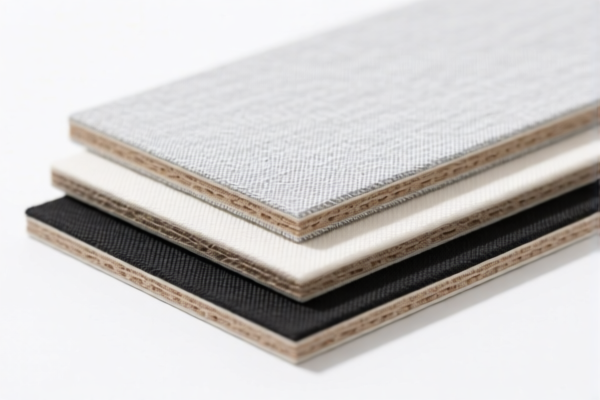

AI Analysis
🧵 Cotton Textile Composite Board (Composite Panels with Cotton Base)
🌐 HS Code Reference & Customs Clearance Guide | 2026 Tariff Analysis | Professional Clearance Strategy
📌 Part 1: Product Definition & Classification: What is a "Cotton Textile Composite Board"?
A "Cotton Textile Composite Board" is not a standard household item but typically refers to technical textile products or plastic-composite panels where cotton acts as a primary substrate or component. In international trade, the classification depends entirely on the dominant material and the specific function.
It generally falls into two distinct categories in the provided dataset:
- Technical Textile Articles (Chapter 59): If the product is primarily a textile fabric/board used for filtering, straining, or other technical purposes (e.g., in oil presses, industrial filtration), it is classified under Chapter 59.
- Plastic Plates/Sheets Combined with Textiles (Chapter 39): If the product is essentially a plastic sheet/panel combined with textile materials (like cotton), especially where the plastic gives the structural rigidity ("board" like appearance) and the weight exceeds specific thresholds, it is classified under Chapter 39.
⚠️ Key Distinction Point:
- If the product is "Filtering or straining cloth" used in industrial machinery (like oil presses) → Go to 5911.40.01.00.
- If the product is a "Plate/Sheet of Plastics" combined with cotton textile materials, weighing > 1.492 kg/m² → Go to 3921.90.21.00 (if cotton predominates) or 3921.90.29.00 (other).
- If it is a general technical textile article not specified elsewhere → Go to 5911.90.00.80.
📦 Part 2: HS Code Classification Details (2026 Latest Tariff Data)
Based on the provided data, here is the breakdown for potential HS Codes for "Cotton Textile Composite Board":
| HS Code | Product Description | Application Scenario | Material Dominance |
|---|---|---|---|
5911.90.00.80 |
Textile products and articles, for technical uses: Other | General technical textile boards, non-specified industrial uses | Textile-based (Other) |
5911.40.01.00 |
Textile products... Filtering or straining cloth... of human hair or similar | Industrial filtration boards, oil press filters | Textile (Filtering type) |
3921.90.21.00 |
Other plates, sheets... of plastics: Combined with textile... >1.492 kg/m²: Cotton predominates | Plastic-cotton composite panels for construction/industrial use | Cotton > Other Fibers |
3921.90.29.00 |
Other plates, sheets... of plastics: Combined with textile... >1.492 kg/m²: Other | Plastic-cotton composite panels where cotton is not dominant or other specific conditions apply | Other / Non-Dominant Cotton |
🔍 Critical Reminder:
- For 3921.90.21.00, the key criteria are:
1. It is a plastic plate/sheet combined with textile.
2. Weight is > 1.492 kg/m².
3. Cotton is the predominant textile fiber by weight.
- For 5911.40.01.00, it must be specifically a filtering/straining cloth used in oil presses or similar applications. If it’s just a "board" for structural use, this code is likely incorrect.
- For 5911.90.00.80, it is a "catch-all" for technical textile articles not specified elsewhere.
💰 Part 3: 2026 Latest Tariff Rate Details (Including Additional Duties)
✅ Applicable Country: United States (US)
✅ Origin: China (CN) (Note: Tax rates vary by origin; these reflect the provided data which shows high additional tariffs for plastics, typical for US-China trade context)
✅ Effective Time: Current applicable rates based on provided data
🎯 1. 5911.90.00.80 —— Textile Products for Technical Uses (Other)
| Item | Content |
|---|---|
| Base Tariff | 0.0% |
| Additional Tariff | 0.0% |
| Total Tax Rate | 0.0% |
| Tax Calculation | CIF Value × 0% = $0 |
| De Minimis Exemption | ✅ Yes (Generally, if value < $800, may be exempt, but check specific trade policies) |
| Legal Basis | Based on provided data: 基础关税: 0.0%, 加征关税: 0.0% |
📌 Explanation:
- This code benefits from zero duty.
- Suitable for general technical textile articles that do not fall under specific filtering (5911.40) or plastic-composite (3921) categories.
- Lowest cost option if the product fits this description.
🎯 2. 5911.40.01.00 —— Filtering/Straining Cloth (Oil Presses, etc.)
| Item | Content |
|---|---|
| Base Tariff | 0.0% |
| Additional Tariff | 0.0% |
| Total Tax Rate | 0.0% |
| Tax Calculation | CIF Value × 0% = $0 |
| De Minimis Exemption | ✅ Yes |
| Legal Basis | Based on provided data: 基础关税: 0.0%, 加征关税: 0.0% |
📌 Explanation:
- Also benefits from zero duty.
- Strict Usage Condition: Must be used as filtering or straining cloth, specifically for oil presses or similar machinery. If used as a structural board, this code is incorrect.
🎯 3. 3921.90.21.00 —— Plastic Plates/Sheets Combined with Textile (Cotton Predominates)
| Item | Content |
|---|---|
| Base Tariff | 6.5% |
| Additional Tariff | 25.0% |
| Total Tax Rate | 31.5% |
| Tax Calculation | CIF Value × 31.5% |
| De Minimis Exemption | ❌ No (Typically, additional tariffs apply regardless of value threshold for Chapter 39) |
| Legal Basis | Based on provided data: 基础关税: 6.5%, 加征关税: 25.0% |
📌 Explanation:
- High Duty Risk: This is a 31.5% total tax rate.
- Conditions:
1. Must be a plastic plate/sheet.
2. Combined with textile materials.
3. Weight > 1.492 kg/m².
4. Cotton is the predominant textile fiber by weight.
- If your product is a rigid "board" made of plastic with a cotton layer, this is likely the correct code, but expect high costs.
🎯 4. 3921.90.29.00 —— Plastic Plates/Sheets Combined with Textile (Other)
| Item | Content |
|---|---|
| Base Tariff | 4.4% |
| Additional Tariff | 25.0% |
| Total Tax Rate | 29.4% |
| Tax Calculation | CIF Value × 29.4% |
| De Minimis Exemption | ❌ No |
| Legal Basis | Based on provided data: 基础关税: 4.4%, 加征关税: 25.0% |
📌 Explanation:
- High Duty Risk: 29.4% total tax rate.
- Conditions: Same as above, but Cotton does not predominate by weight, or other specific conditions apply.
- If your composite board has more plastic or non-cotton textiles than cotton, this code applies.
🛠️ Part 4: Customs Clearance Practical Advice (Real-World Pitfall Guide)
✅ 1. Documentation Checklist (Essential)
| Document | Must Provide | Notes |
|---|---|---|
| ✅ Product Specification Sheet | ✔️ | Clearly state: Is it plastic-based or textile-based? Weight per m²? |
| ✅ Material Composition Report | ✔️ | Confirm if Cotton is the predominant fiber by weight (critical for 3921.90.21.00). |
| ✅ Product Photos | ✔️ | Show structure: Is it a flexible cloth or a rigid board? |
| ✅ Intended Use Statement | ✔️ | Specify if used for filtration (5911.40) or general technical use (5911.90). |
| ✅ Commercial Invoice | ✔️ | Describe accurately: "Cotton-Backed Plastic Composite Board" or "Technical Textile Filter Cloth". |
| ✅ Weight per Square Meter | ✔️ | Must be > 1.492 kg/m² for Chapter 39 codes. |
✅ 2. Declaration Strategy (Key Tips)
🔥 "Know your core material: Textile first, Plastic second?"
| Scenario | Correct HS Code | Wrong Code | Consequence |
|---|---|---|---|
| Product is Flexible Cloth used in Oil Press | 5911.40.01.00 |
3921.90.21.00 |
Avoid 31.5% tax if 0% is possible. |
| Product is Rigid Board, Plastic + Cotton (>1.492 kg/m²), Cotton dominant | 3921.90.21.00 |
5911.90.00.80 |
Avoid under-declaration risk; 31.5% is correct. |
| Product is Rigid Board, Plastic + Cotton (>1.492 kg/m²), Cotton NOT dominant | 3921.90.29.00 |
3921.90.21.00 |
Pay 29.4% instead of 31.5% (if misclassified). |
| Product is General Technical Textile, not filtering | 5911.90.00.80 |
3921.90.29.00 |
Save 29.4% tax if it’s truly textile-based. |
✅ 3. Special Handling Tips
| Situation | Recommendation |
|---|---|
| OEM Custom Board | Provide detailed material breakdown. If it’s >70% plastic by weight, Chapter 39 is likely. |
| Cotton Content < 50% | Do NOT use 3921.90.21.00. Use 3921.90.29.00 if plastic-heavy. |
| Flexible vs. Rigid | If it bends easily, consider Chapter 59. If it’s rigid, consider Chapter 39. |
| Weight Confirmation | Ensure weight is > 1.492 kg/m². If lighter, Chapter 39 may not apply. |
🌍 Part 5: Global Market Comparison (2026 Latest)
| Country/Region | Recommended HS Code | Tariff Rate | Notes |
|---|---|---|---|
| 🇺🇸 USA | 5911.90.00.80 or 5911.40.01.00 |
0% | Best option if textile-based. |
| 🇺🇸 USA | 3921.90.21.00 |
31.5% | High cost. Only if plastic-composite. |
| 🇨🇳 China | 5911.90.00.80 |
~10-14% | Import duties apply. |
| 🇪🇺 EU | 5911.90.00 |
~6.5% | Varies by country. |
| 🇬🇧 UK | 5911.90.00 |
~6.5% | Post-Brexit rates. |
📌 Conclusion:
- 0% Tariff is Available if the product is correctly classified as a technical textile (Chapter 59).
- 31.5% Tariff applies if it’s a plastic composite (Chapter 39).
- Strategy: If possible, design or declare as textile-based technical article to benefit from 0% duty.
📌 Part 6: Common Mistakes & Pitfalls (Lessons Learned)
❌ Mistake 1: Declaring a Plastic-Cotton Board as 5911.90.00.80 to save tax.
👉 Result: Customs may reclassify it as 3921.90.21.00 or 3921.90.29.00, leading to back taxes + penalties (31.5% instead of 0%).
❌ Mistake 2: Using 5911.40.01.00 for a non-filtering product.
👉 Result: Customs may deny the 0% rate if intended use is not oil press filtration. Risk of under-declaration.
❌ Mistake 3: Ignoring Weight per m² for Chapter 39.
👉 Result: If weight is < 1.492 kg/m², 3921.90.21.00 is incorrect. Must use a different plastic code or Chapter 59.
✅ Correct Approach:
"Technical Textile Composite Board, Cotton-Backed, Weight: 1.6 kg/m², For Industrial Filtration Use" →
5911.40.01.00
"Plastic Composite Panel, Cotton-Laminated, Weight: 1.8 kg/m², Cotton Dominant, General Use" →3921.90.21.00
🎯 Part 7: Conclusion: Professional Declaration, Cost Optimization!
🎯 Remember the Golden Rule:
🔹 "Textile First = 0% Duty. Plastic First = 30%+ Duty."
🔹 "Filtering Use = 0%. General Use = 31.5%."
🔹 "Cotton Dominant = 31.5%. Other = 29.4%."
📌 Pro Tip:
If your product is flexible and used in industrial filtration, insist on 5911.40.01.00 (0% duty).
If it’s a rigid plastic board, budget for 31.5% duty (3921.90.21.00).
Pre-clearance Ruling is highly recommended for composite products to avoid surprise tariffs.
📣 Immediate Action:
📞 Contact a customs broker with product samples.
📊 Provide weight per m² and cotton content percentage.
🚀 Optimize your HS Code to save 30% in duties!
✨ Professional Customs Clearance Starts with Accurate Classification!
💼 Every cent counts in global trade!
Customer Reviews
About HS Code Classification
The Harmonized System (HS) is an internationally standardized nomenclature developed by the World Customs Organization (WCO) to classify traded products. Over 200 countries use the HS system as the basis for customs tariffs, trade statistics, and import/export regulations.
Each HS code follows a hierarchical structure:
- Chapter (2 digits) — Broad category of goods (e.g., Chapter 84: Machinery and Mechanical Appliances)
- Heading (4 digits) — More specific grouping within the chapter
- Subheading (6 digits) — Internationally standardized breakdown, used by all WCO member countries
- National subdivisions (8-10 digits) — Country-specific extensions for further classification, such as US HTSUS 10-digit codes
Correct HS code classification is essential for smooth customs clearance, accurate duty payment, and compliance with trade regulations. Misclassification can lead to customs delays, overpayment of duties, or penalties.
When importing from CN to US, the applicable tariff rates may include:
- Most-Favored-Nation (MFN) rate — The standard duty rate applied to WTO members
- General rate — Applied to countries without trade agreements
- Trade remedy duties — Additional tariffs such as Section 301 (anti-dumping), Section 232 (national security), or countervailing duties
The information provided on this page is for reference purposes only. For official classification, please consult with your local customs authority or a licensed customs broker.