Cotton Textile Reinforced Rubber Conveyor Belts
CN → US| HS Code | Tariff Rate | Origin | Destination | Doc |
|---|---|---|---|---|
| 5910009000 | 37.6% | CN | US | Official Doc |
| 5910001070 | 39.0% | CN | US | Official Doc |
| 8431390010 | 35.0% | CN | US | Official Doc |
Product Images
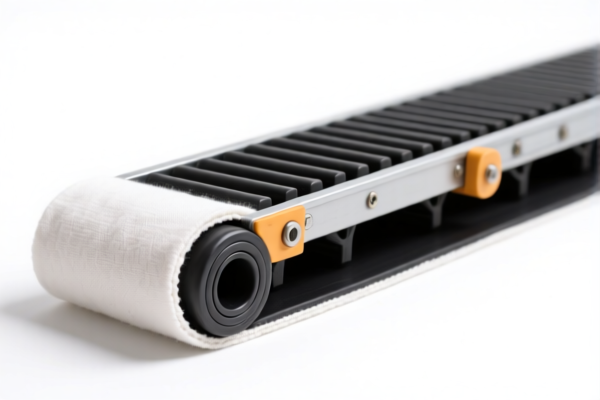
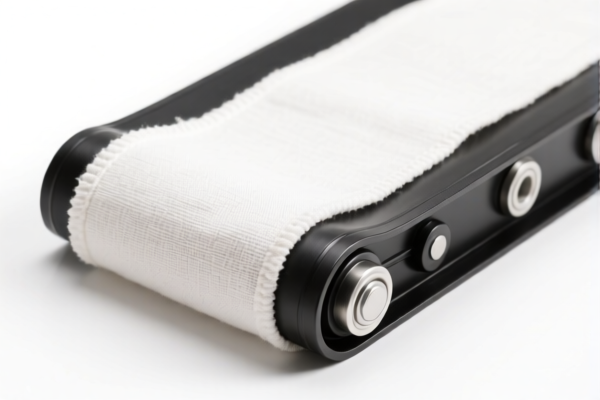
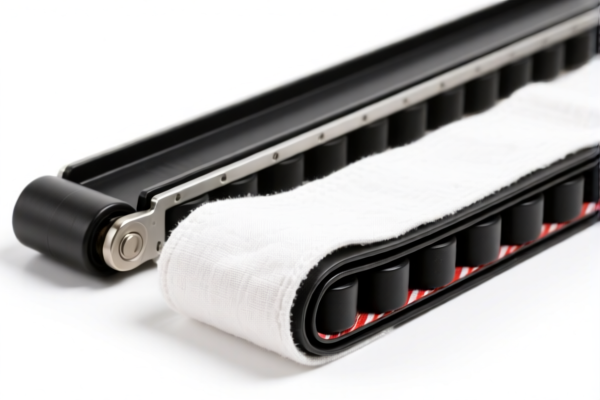

AI Analysis
🏭 Cotton Textile Reinforced Rubber Conveyor Belts (纺织增强输送带)
🌐 HS Code Reference & Customs Clearance Guide | 2026 Latest Tariff Analysis | Professional Clearance Strategy
📌 I. Product Definition & Classification: What Exactly Are "Conveyor Belts"?
Cotton Textile Reinforced Rubber Conveyor Belts are industrial transport components consisting of a rubber cover and core, reinforced with textile materials (specifically cotton or cotton-blend fabrics) to provide tensile strength. They are designed to transport bulk materials or packaged goods in mining, agriculture, logistics, and manufacturing sectors.
In international trade, these belts are categorized based on their primary function and structural composition:
- As Finished Belts (HS 5910): If the belt is a complete, ready-to-use article designed specifically for conveying, it falls under Chapter 59 (Impregated with rubber, plastics, etc.).
- As Machinery Parts (HS 8431): If declared as a spare part or component for a specific machine (e.g., elevator or conveyor system), it may fall under Chapter 84.
⚠️ Key Distinction:
- If it is a complete conveyor belt ready for installation → HS 5910
- If it is a generic mechanical part or spare part for a specific lifting/conveying machine → HS 8431
📦 II. HS Code Classification Details (2026 Latest Tariff Authority Comparison)
Based on the provided data, here are the three possible HS Code classifications with their corresponding tax implications:
| HS Code | Product Description | Applicable Scenario | Total Tax Rate |
|---|---|---|---|
5910.00.90.00 |
Textile reinforced conveyor belts, made of textile materials, used for conveying | Primary Classification: General textile-reinforced conveyor belts | 37.6% |
5910.00.10.70 |
Textile reinforced conveyor belts, form is conveyor belt, material is textile, not chain structure, fits other categories | Alternative Classification: Specific sub-category for non-chain textile belts | 39.0% |
8431.39.00.10 |
Textile reinforced conveyor belts, used for conveyors, textile reinforcement as structural description, fits other elevator/conveyor parts | Secondary Classification: Declared as a spare part for lifting/conveying machinery | 35.0% |
🔍 Key Insight:
- HS 5910 is the standard classification for the belt itself.
- HS 8431 offers a lower base duty (0%) but is only applicable if declared strictly as a "part of a machine."
- Total Tax Rates vary from 35.0% to 39.0% due to additional tariffs.
💰 III. 2026 Latest Tariff Rate Breakdown (Including Surtaxes & Policy Surcharges)
✅ Applicable Country: United States (US)
✅ Origin: China (CN)
✅ Effective Time: Current rates applicable for imports from China
🎯 1. 5910.00.90.00 —— Textile Reinforced Conveyor Belts (General)
| Item | Details |
|---|---|
| Base Duty Rate | 2.6% |
| Additional Surtax (Section 301) | +25.0% |
| 122 Clause Surtax | +10.0% |
| Total Effective Rate | 37.6% |
| Tax Calculation | CIF Value × 37.6% |
| De Minimis Eligibility | ❌ No (High duty rates exclude low-value shipments from exemption) |
| Legal Basis Path | Section 301 → 122 Clause → HS 5910.00.90.00 |
📌 Explanation:
- The 2.6% base duty is the standard Most Favored Nation (MFN) rate.
- The 25% surtax is imposed under U.S. Trade Law Section 301 against Chinese goods.
- The 10% surtax is under the "122 Clause" (likely referring to specific administrative or additional trade measures).
- Total: 37.6%. This is a high-cost classification for standard belts.
🎯 2. 5910.00.10.70 —— Textile Reinforced Conveyor Belts (Specific Sub-category)
| Item | Details |
|---|---|
| Base Duty Rate | 4.0% |
| Additional Surtax (Section 301) | +25.0% |
| 122 Clause Surtax | +10.0% |
| Total Effective Rate | 39.0% |
| Tax Calculation | CIF Value × 39.0% |
| De Minimis Eligibility | ❌ No |
| Legal Basis Path | Section 301 → 122 Clause → HS 5910.00.10.70 |
📌 Note:
- This code has a higher base duty (4.0%) compared to5910.00.90.00.
- Consequently, the total tax rate is 39.0%, which is 1.4% higher than the general classification.
- Recommendation: Avoid this code unless specifically required by product specs, as it increases costs.
🎯 3. 8431.39.00.10 —— Parts of Elevators/Conveyors
| Item | Details |
|---|---|
| Base Duty Rate | 0.0% |
| Additional Surtax (Section 301) | +25.0% |
| 122 Clause Surtax | +10.0% |
| Total Effective Rate | 35.0% |
| Tax Calculation | CIF Value × 35.0% |
| De Minimis Eligibility | ❌ No |
| Legal Basis Path | Section 301 → 122 Clause → HS 8431.39.00.10 |
📌 Critical Advantage:
- Base Duty is 0%, making the total rate the lowest at 35.0%.
- However, this classification is strictly conditional: The belt must be declared as a spare part for a specific conveyor or elevator system, not as a standalone consumer/industrial product.
- Risk: If customs determines the item is a complete belt and not a "part," they may reclassify it to5910(37.6% or 39.0%) and assess back taxes + penalties.
🛠️ IV. Customs Clearance Practical Advice (Pitfall Avoidance Guide)
✅ 1. Document Preparation Checklist (Mandatory)
| Document | Required | Notes |
|---|---|---|
| ✅ Product Specification Sheet | ✔️ | Must detail: Rubber type, textile reinforcement material (cotton), width, thickness, tensile strength. |
| ✅ Technical Diagram | ✔️ | Show structure: Cover rubber + textile core + cover rubber. |
| ✅ Commercial Invoice | ✔️ | Must clearly state: "Conveyor Belt" or "Parts of Conveyor System." Do not use vague terms like "Rubber Sheet." |
| ✅ Certificate of Origin (CO) | ✔️ | Required for determining eligibility for any potential exemptions (though unlikely for China origin under current rules). |
| ✅ Packing List | ✔️ | Specify unit count and total weight. |
✅ 2. Declaration Strategy (Key Mantra)
🔥 "Complete Belt = HS 5910; Spare Part = HS 8431; Choose Wisely!"
| Scenario | Correct HS Code | Reasoning |
|---|---|---|
| Selling a complete belt roll for general use | 5910.00.90.00 |
It is a finished article for conveying. Lowest risk for general sales. |
| Selling as a replacement part for a specific industrial machine | 8431.39.00.10 |
Eligible for 0% base duty. Must provide proof it is a part (e.g., customer PO specifying machine model). |
| Specific non-chain textile belt with unique specs | 5910.00.10.70 |
Only if other 5910 codes don't fit. Avoid due to higher tax. |
✅ 3. Special Case Handling
| Situation | Handling Advice |
|---|---|
| OEM Custom Belts | Clearly label as "Spare Part for [Machine Model]" if using 8431. Provide machine diagrams. |
| Mixed Containers | If mixing with other goods, ensure conveyor belts are segregated and properly documented to avoid misdeclaration. |
| Dispute on Classification | If customs questions 8431, be prepared to prove the belt is not a general-purpose item but a custom-fit part for a specific machine. |
🌍 V. Global Market Comparison (2026 Latest)
| Country/Region | Recommended HS Code | Total Tax Rate (China Origin) | Certification | Notes |
|---|---|---|---|---|
| 🇺🇸 USA | 8431.39.00.10 |
35.0% | None specific | Lowest rate if declared as part. 5910 is 37.6-39.0%. |
| 🇨🇳 China | 5910.00.00.00 |
Varies (Export) | N/A | Export duties may apply. |
| 🇪🇺 EU | 4010.39.00 |
~3% + VAT | CE (if for machinery) | Different chapter (Chapter 40). |
| 🇯🇵 Japan | 4010.39.00 |
~3% | JIS Standards | Similar to EU. |
📌 Conclusion:
- USA imposes high surtaxes (25% + 10%).
- Best Strategy: If you are supplying a replacement part, use HS 8431.39.00.10 to save 2.6%–4.0% in base duties.
- Risk Warning: Misdeclaring a complete belt as a "part" can lead to severe penalties. Only use8431if legally justified.
📌 VI. Common Mistakes & Pitfall Guide (Lessons Learned)
❌ Mistake 1: Declaring a general-purpose conveyor belt as "Rubber Sheet"
👉 Consequence: Customs reclassifies to 5910 or 4010, assesses back taxes + penalties.
❌ Mistake 2: Using 8431 for a belt without proof of being a "part"
👉 Consequence: Customs rejects the 0% base duty, reclassifies to 5910.00.90.00 (37.6%), and demands difference.
❌ Mistake 3: Ignoring the "122 Clause" 10% surtax
👉 Consequence: Underpayment of taxes. This surtax is mandatory for China-origin goods under current regulations.
❌ Mistake 4: Confusing "Chain Conveyor" with "Textile Belt"
👉 Consequence: Chain conveyors may have different HS codes. Ensure description matches "Textile Reinforced."
✅ Correct Practice:
"Textile Reinforced Rubber Conveyor Belt, Cotton Core, 1.5m Width, 10mm Thick, for Mining Machinery, Model XYZ, Spare Part for [Machine Name]"
🎯 VII. Conclusion: Professional Declaration for Cost Efficiency
🎯 Key Takeaways:
🔹 "Complete Belt → 5910 (37.6-39.0%); Spare Part → 8431 (35.0%)."
🔹 "122 Clause & Section 301 are mandatory; total tax is high for China origin."
🔹 "Accuracy is critical; misclassification leads to penalties."
📌 Pro Tip:
If you are the manufacturer, consider structural design or packaging to clearly justify "spare part" status if using
8431.
For large volumes, consult a customs broker for a Pre-Ruling to confirm eligibility for8431.39.00.10.
📣 Immediate Action:
📞 Contact a Licensed Customs Broker
📝 Prepare Technical Docs & Machine Compatibility Proof
🚀 Optimize Your HS Code Choice to Save 2.6%–4.0% on Base Duties!
✨ Expert Clearance Starts with Accurate Classification!
💼 Every Percentage Point Matters in Global Trade!
Customer Reviews
About HS Code Classification
The Harmonized System (HS) is an internationally standardized nomenclature developed by the World Customs Organization (WCO) to classify traded products. Over 200 countries use the HS system as the basis for customs tariffs, trade statistics, and import/export regulations.
Each HS code follows a hierarchical structure:
- Chapter (2 digits) — Broad category of goods (e.g., Chapter 84: Machinery and Mechanical Appliances)
- Heading (4 digits) — More specific grouping within the chapter
- Subheading (6 digits) — Internationally standardized breakdown, used by all WCO member countries
- National subdivisions (8-10 digits) — Country-specific extensions for further classification, such as US HTSUS 10-digit codes
Correct HS code classification is essential for smooth customs clearance, accurate duty payment, and compliance with trade regulations. Misclassification can lead to customs delays, overpayment of duties, or penalties.
When importing from CN to US, the applicable tariff rates may include:
- Most-Favored-Nation (MFN) rate — The standard duty rate applied to WTO members
- General rate — Applied to countries without trade agreements
- Trade remedy duties — Additional tariffs such as Section 301 (anti-dumping), Section 232 (national security), or countervailing duties
The information provided on this page is for reference purposes only. For official classification, please consult with your local customs authority or a licensed customs broker.