Cotton Tool Storage Bag
CN → US| HS Code | Tariff Rate | Origin | Destination | Doc |
|---|---|---|---|---|
| 4202926091 | 41.3% | CN | US | Official Doc |
| 4202923900 | 52.6% | CN | US | Official Doc |
| 6307909891 | 24.5% | CN | US | Official Doc |
| 3923900080 | 38.0% | CN | US | Official Doc |
Product Images
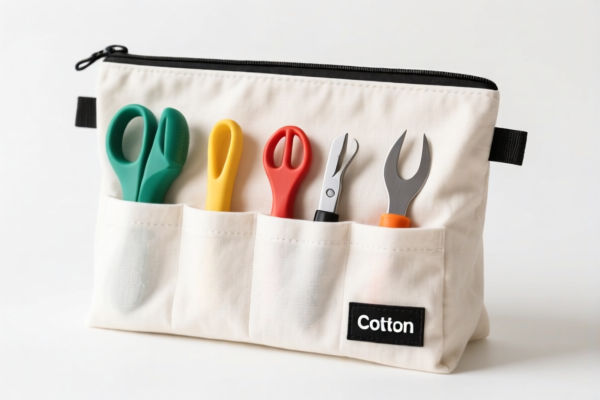
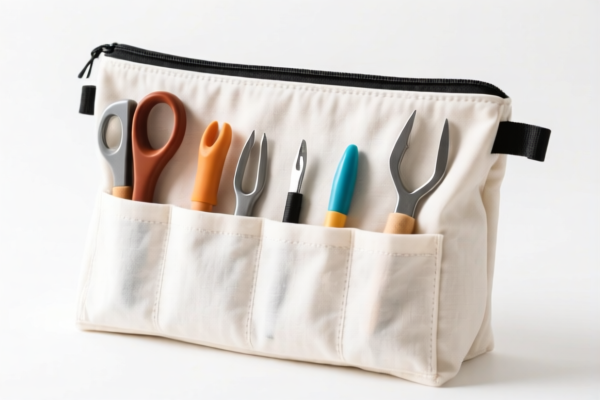
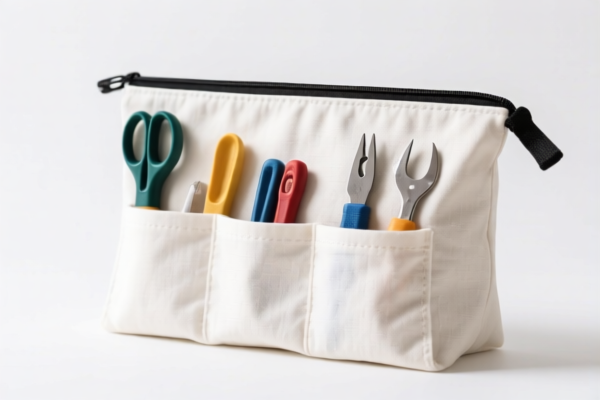
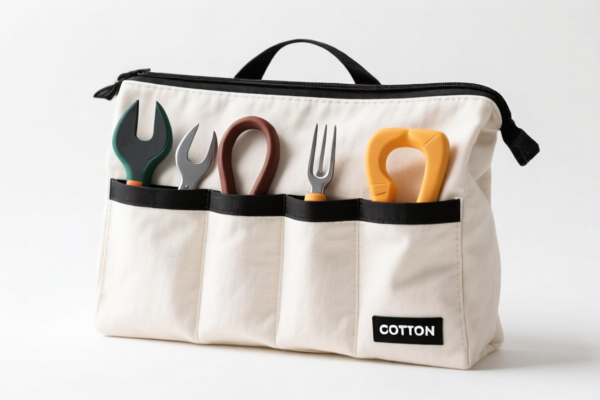
AI Analysis
🛍️ Cotton Tool Storage Bag (Canvas Tool Pouch/Bag)
🌐 HS Code Reference & Customs Clearance Guide | 2026 Latest Tariff Analysis | Professional Clearance Strategy
📌 1. Product Definition & Classification: Do You Really Understand "Canvas Bags"?
A Cotton Tool Storage Bag (often referred to as a canvas tool bag or pouch) is a versatile textile article used for organizing, transporting, and protecting hand tools, gardening equipment, or small hardware. In international trade, its classification is highly sensitive to material composition, shape, and intended use.
Depending on the specific structure and perceived primary function, it can fall into four distinct HS Code categories:
- Chapter 42 (Luggage/Handbags): If viewed as a general-purpose carrier or travel/sports accessory.
- Chapter 63 (Other Made-up Textile Articles): If viewed as a generic finished textile product.
- Chapter 39 (Plastics): If inferred to be made of synthetic fibers/plastic-based canvas.
- Chapter 42 (Cotton-specific): If strictly classified under cotton accessories.
⚠️ Key Distinction Point:
- Is it a dedicated tool organizer with rigid structure? → Potential4202(Bag)
- Is it a simple sack/pouch? → Potential6307(Other Textile)
- Is the material polyester/canvas blend? → Potential3923(Plastic/Packaging) or4202.92(Textile Bag)
📦 2. HS Code Classification Details (2026 Latest Tariff对照)
Based on the provided data, here are the four potential classifications and their rationales:
| HS Code | Product Description | Rationale from DATA | Applicable Scenario |
|---|---|---|---|
4202.92.60.91 |
Other bags (Cotton Category) | Summary: "Canvas material belongs to cotton, meeting the requirements for other categories of bags." | Cotton-heavy canvas bags used for general storage. |
4202.92.39.00 |
Other bags (Textile Category) | Summary: "Canvas is a textile material; tool storage bags fit the shape/use of travel, sports, and similar bags." | Bags marketed as sports/travel accessories or multi-purpose organizers. |
6307.90.98.91 |
Other Made-up Textile Articles | Summary: "Product form is a finished product; material is canvas; fits the catch-all category for other finished goods." | Simple canvas sacks or generic tool pouches not meeting bag definitions. |
3923.90.00.80 |
Plastic Packaging/Transport Articles | Summary: "Inferred material is plastic or synthetic fiber; fits 'other' category for plastic transport/packaging goods." | Synthetic canvas (polyester/nylon blends) treated as plastic packaging. |
🔍 Critical Note:
- "Canvas" is the ambiguity hub. Natural cotton canvas →4202/6307. Synthetic (polyester) canvas →3923/4202.
- Structure matters: If the bag has zippers, handles, and reinforced bottoms, customs may lean toward Chapter 42. If it’s a simple drawstring sack, Chapter 63 is more likely.
💰 3. 2026 Latest Tariff Rate Breakdown (Including Surtaxes & Policy Add-ons)
✅ Applicable Country: United States (US)
✅ Origin: China (CN)
✅ Effective Date: 2025/2026 (Current Trade Policy)
🎯 1. 4202.92.60.91 —— Cotton Tool Bag (General Category)
| Item | Content |
|---|---|
| Base Tariff | 6.3% |
| Section 301 Surtax | +25.0% |
| Section 122 Tariff | +10.0% |
| Total Tax Rate | 41.3% |
| Tax Calculation | CIF Value × 41.3% |
| De Minimis Exemption? | ❌ No (High tariff codes generally excluded) |
| Legal Basis Path | USITC:4202.92.60.91 → Section 301: Footnote 9903.88.01 → Section 122 |
📌 Explanation:
- This classification assumes the bag is primarily cotton.
- The 41.3% rate is significant due to the cumulative impact of Base + 301 + 122 tariffs.
- Suitable for high-quality, durable canvas tool bags marketed as lifestyle/accessory items.
🎯 2. 4202.92.39.00 —— Textile Tool Bag (Travel/Sports Category)
| Item | Content |
|---|---|
| Base Tariff | 17.6% |
| Section 301 Surtax | +25.0% |
| Section 122 Tariff | +10.0% |
| Total Tax Rate | 52.6% |
| Tax Calculation | CIF Value × 52.6% |
| De Minimis Exemption? | ❌ No |
| Legal Basis Path | USITC:4202.92.39.00 → Section 301: Footnote 9903.88.01 → Section 122 |
📌 Warning:
- This is the highest tariff rate among the options.
- It applies if the bag is strictly categorized as a "sports/travel bag" despite being for tools.
- Avoid this code unless your marketing explicitly targets "camping/golf tool storage" rather than "industrial hand tools."
🎯 3. 6307.90.98.91 —— Generic Canvas Tool Sack (Finished Textile)
| Item | Content |
|---|---|
| Base Tariff | 7.0% |
| Section 301 Surtax | +7.5% |
| Section 122 Tariff | +10.0% |
| Total Tax Rate | 24.5% |
| Tax Calculation | CIF Value × 24.5% |
| De Minimis Exemption? | ❌ No |
| Legal Basis Path | USITC:6307.90.98.91 → Section 301: Footnote 9903.88.01 → Section 122 |
📌 Advantage:
- Lowest effective tariff rate (24.5%).
- Recommended for simple, soft-sided canvas pouches that do not have rigid structures or complex accessories.
- Positions the product as a "textile good" rather than a "bag/luggage" item.
🎯 4. 3923.90.00.80 —— Synthetic Canvas Bag (Plastic/Packaging Category)
| Item | Content |
|---|---|
| Base Tariff | 3.0% |
| Section 301 Surtax | +25.0% |
| Section 122 Tariff | +10.0% |
| Total Tax Rate | 38.0% |
| Tax Calculation | CIF Value × 38.0% |
| De Minimis Exemption? | ❌ No |
| Legal Basis Path | USITC:3923.90.00.80 → Section 301: Footnote 9903.88.01 → Section 122 |
📌 Clarification:
- Applies if the "canvas" is actually polyester, nylon, or plastic-coated fabric.
- Customs may view it as "plastic packaging" if it’s a simple sack.
- 38.0% is mid-range but higher than6307due to the high 301 surtax on plastic articles.
🛠️ 4. Customs Clearance Practical Advice (Battle-Tested Pitfall Guide)
✅ 1. Preparation Checklist (Non-Negotiable)
| Document | Required | Notes |
|---|---|---|
| ✅ Product Spec Sheet | ✔️ | Must specify material composition (e.g., "100% Cotton" vs. "65% Polyester/35% Cotton"). This is the #1 driver for HS code selection. |
| ✅ Product Photos | ✔️ | Show handles, zippers, pockets, and lining. If it looks like a backpack, customs will push for 4202. If it’s a sack, 6307 is safer. |
| ✅ Commercial Invoice | ✔️ | Describe as "Tool Pouch" or "Storage Sack," not "Travel Bag" or "Sports Equipment." |
| ✅ Bill of Lading | ✔️ | Ensure weight and dimensions match the declared package type. |
| ✅ Certificate of Origin | ✔️ | Mandatory for determining 301/122 applicability. |
✅ 2. Classification Strategy (The "Golden Rules")
🔥 Rule of Thumb:
"Soft & Simple = 6307 (Lowest Tax). Structured & Labeled = 4202 (High Tax)."
| Scenario | Recommended HS Code | Reasoning |
|---|---|---|
| Simple Canvas Sack with drawstring or zip, no rigid frame | 6307.90.98.91 (24.5%) |
Best tax efficiency. Falls under "Other Made-up Textile Articles." |
| Cotton Bag with multiple pockets, belt loops, or handles | 4202.92.60.91 (41.3%) |
Fits "Other bags" definition. Higher tax but may be necessary for complex designs. |
| Polyester/Nylon Bag (Synthetic) | 3923.90.00.80 (38.0%) or 4202.92.39.00 (52.6%) |
Avoid 4202.92.39.00 (52.6%) if possible. Use 3923 if it’s packaging-like, but verify material. |
| Bag marketed as "Golf/Camping Tool Holder" | RISKY | May trigger 4202.92.39.00 (52.6%). Avoid marketing terms like "Travel" or "Sports" unless prepared for high tax. |
✅ 3. Special Scenarios & Mitigation
| Situation | Action |
|---|---|
| Hybrid Material (Cotton + Polyester) | Clearly declare the primary material. If cotton >50%, aim for 6307 or 4202.92.60.91. |
| Rigid Bottom/Frame | Customs will likely classify as 4202 (Bag). Prepare for higher tax. Consider adding a disclaimer: "Soft-sided organizer." |
| OEM Private Label | Ensure your supplier’s material tags match your invoice. Discrepancies lead to audits and penalties. |
| Section 122 Applicability | All listed codes include 10% Section 122 tariff. This is unavoidable for China-origin goods in this category. |
🌍 5. Global Market Comparison (2026 Snapshot)
| Market | Preferred HS Code | Est. Total Tax (China Origin) | Key Requirement |
|---|---|---|---|
| 🇺🇸 USA | 6307.90.98.91 (if possible) |
24.5% – 52.6% | Strict material declaration; 301 & 122 apply. |
| 🇨🇳 China (Export) | N/A | 0% (Export Duty) | No export duty, but need proper HS for destination. |
| 🇪🇺 EU | 6307.90.98 / 4202.92 |
0% – 12% | No 301/122. Lower base duties. |
| 🇬🇧 UK | 6307.90.98 / 4202.92 |
0% – 12% | Post-Brexit rules; prefer 6307 for simplicity. |
📌 Insight:
The US market is the most challenging due to Section 301 (25%) and Section 122 (10%) tariffs.
Optimization Goal: Try to classify under6307.90.98.91(24.5%) by emphasizing the product as a "finished textile article" rather than a "bag."
📌 6. Common Mistakes & Pitfalls (Learn from Others’ Pain)
❌ Mistake 1: Using "Travel Bag" or "Sports Pouch" in the description
👉 Result: Customs assigns 4202.92.39.00 → 52.6% tax.
💡 Fix: Use "Tool Storage Pouch" or "Canvas Organizer."
❌ Mistake 2: Ignoring material composition on the invoice
👉 Result: Customs defaults to highest reasonable tax or demands a redeclaration.
💡 Fix: Explicitly state "100% Cotton Canvas" or "Polyester Blend."
❌ Mistake 3: Assuming all "canvas" is the same
👉 Result: Misclassification between 3923 (Plastic) and 6307 (Textile).
💡 Fix: Test fabric type. If it’s synthetic, prepare for 3923 (38.0%) or argue for textile classification with lab tests.
✅ Correct Description Example:
"Canvas Tool Storage Pouch, 100% Cotton, Soft-Sided, Multi-Pocket Organizer for Hand Tools, No Rigid Structure."
🎯 7. Conclusion: Smart Classification, Maximize Profit!
🎯 Key Takeaway:
🔹 Best Tax Rate:
6307.90.98.91(24.5%) – Use for simple, soft canvas sacks.
🔹 Safe Rate:4202.92.60.91(41.3%) – Use for structured cotton bags.
🔹 Avoid:4202.92.39.00(52.6%) – Unless specifically marketed as travel/sports gear.
🔹 Synthetic Risk:3923.90.00.80(38.0%) – If made of polyester/nylon.
📌 Pro Tip:
If you have high-volume shipments, consider applying for an Advance Ruling (ACE) from US Customs and Border Protection (CBP) to lock in the 6307 classification. This provides legal certainty and protects against audits.
📣 Call to Action:
📞 Consult a Licensed Customs Broker before shipping.
📄 Verify Material Composition on supplier invoices.
🚀 Optimize Your HS Code to save up to 28% in tariffs!
✨ Precise Classification = Higher Profit Margins
💼 Don’t let tariff complexity eat your margins!
Customer Reviews
About HS Code Classification
The Harmonized System (HS) is an internationally standardized nomenclature developed by the World Customs Organization (WCO) to classify traded products. Over 200 countries use the HS system as the basis for customs tariffs, trade statistics, and import/export regulations.
Each HS code follows a hierarchical structure:
- Chapter (2 digits) — Broad category of goods (e.g., Chapter 84: Machinery and Mechanical Appliances)
- Heading (4 digits) — More specific grouping within the chapter
- Subheading (6 digits) — Internationally standardized breakdown, used by all WCO member countries
- National subdivisions (8-10 digits) — Country-specific extensions for further classification, such as US HTSUS 10-digit codes
Correct HS code classification is essential for smooth customs clearance, accurate duty payment, and compliance with trade regulations. Misclassification can lead to customs delays, overpayment of duties, or penalties.
When importing from CN to US, the applicable tariff rates may include:
- Most-Favored-Nation (MFN) rate — The standard duty rate applied to WTO members
- General rate — Applied to countries without trade agreements
- Trade remedy duties — Additional tariffs such as Section 301 (anti-dumping), Section 232 (national security), or countervailing duties
The information provided on this page is for reference purposes only. For official classification, please consult with your local customs authority or a licensed customs broker.