Cotton Wadding and Cotton Filling
CN → US| HS Code | Tariff Rate | Origin | Destination | Doc |
|---|---|---|---|---|
| 5601210010 | 38.6% | CN | US | Official Doc |
| 5601210090 | 38.6% | CN | US | Official Doc |
Product Images
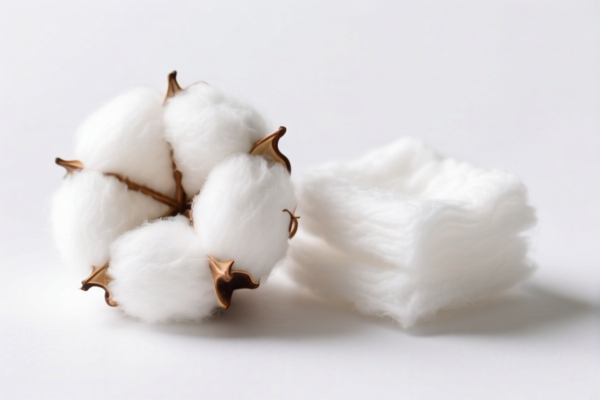
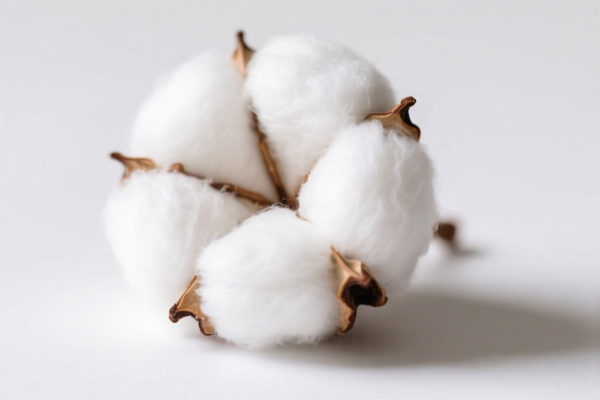
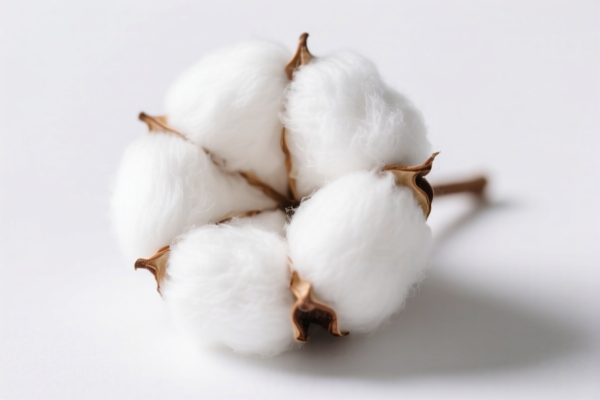
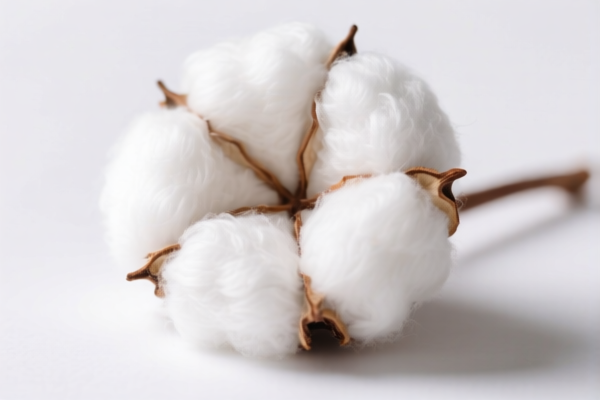
AI Analysis
🧶 Cotton Wadding & Cotton Filling (The Fluffy Essentials)
🌐 HS Code Reference & Customs Clearance Guide | 2026 Latest Tariff Analysis | Professional Entry Strategy
📌 I. Product Definition & Classification: Do You Know Your Cotton Right?
Cotton Wadding and Cotton Filling are foundational textile materials used in mattresses, upholstery, garments, and hygiene products. They are broadly categorized by their physical form and state of manufacture:
Sheet/Formed Wadding (Of the Piece):
- Cotton fibers bonded, stitched, or felted into continuous sheets or rolls.
- Used as a base layer in bedding, clothing linings, or industrial filtration.
- Key Feature: Continuous structure, sold in rolls or pieces.
Other Wadding / Loose Filling:
- Cotton fibers not in sheet form, or finished articles (e.g., quilted batting, stuffed toys, pillow inserts).
- Often loose, batts, or pre-sewn components.
- Key Feature: Not continuous "in the piece," or already fabricated into an article.
⚠️ Critical Distinction:
- If the cotton is in the piece (continuous rolls/sheets, unspecific use) →归入 5601.21.00.10
- If it is other (loose filling, finished articles, non-continuous forms) →归入 5601.21.00.90
📦 II. HS Code Classification Details (2026 Official Tariff Alignment)
| HS Code | Product Description | Application Scenario | Physical Form |
|---|---|---|---|
5601.21.00.10 |
Cotton Wadding, in the piece | Rolls of cotton batting, continuous non-woven cotton sheets, base layers for mattresses | ✅ Continuous |
5601.21.00.90 |
Other Cotton Wading and Articles Thereof | Loose cotton filling, stuffed animal filling, quilted batting, finished cotton pillows | ✅ Discrete/Finished |
🔍 Key Reminder:
- "In the piece" means the product is presented in a continuous form (e.g., large rolls) and has not been cut or assembled into a specific final article.
- "Other" includes loose fibers, pre-cut batts, or finished goods made of cotton wadding.
- Do not misdeclare finished cotton products (e.g., "cotton pillow") as "wadding in the piece" — this is a common customs error leading to reclassification and penalties.
💰 III. 2026 Latest Tariff Rate Breakdown (Including Surcharges & Policy Add-ons)
✅ Applicable Country: United States (US)
✅ Country of Origin: China (CN)
✅ Effective Date: 2025年11月10日起 (Including subsequent imports)
🎯 1. 5601.21.00.10 —— Cotton Wadding, In the Piece
| Item | Details |
|---|---|
| Base Tariff | 0.0% |
| Additional Tariff (Section 301 / IEEPA) | 0.0% |
| Total Tariff | 0.0% |
| Tax Calculation | CIF Value × 0.0% = $0 |
| De Minimis Eligibility | ✅ Yes (if value < $800 and not restricted) |
| Legal Reference Path | HTSUS:5601.21.00.10 → USITC General Note |
📌 Explanation:
- Cotton wadding "in the piece" is currently exempt from additional tariffs under the latest 2026 tariff schedule for this specific classification.
- This makes it a low-cost entry point for raw textile materials.
- However, ensure the product is truly "in the piece" — if it's cut or finished, it falls under .90, which may have different treatment.
🎯 2. 5601.21.00.90 —— Other Cotton Wadding and Articles Thereof
| Item | Details |
|---|---|
| Base Tariff | 0.0% |
| Additional Tariff (Section 301 / IEEPA) | 0.0% |
| Total Tariff | 0.0% |
| Tax Calculation | CIF Value × 0.0% = $0 |
| De Minimis Eligibility | ✅ Yes (if value < $800 and not restricted) |
| Legal Reference Path | HTSUS:5601.21.00.90 → USITC General Note |
📌 Note:
- Like the "in the piece" category, other cotton wadding and finished articles are also tariff-free under the current 2026 framework for Chinese-origin goods.
- This includes loose cotton fill, stuffed toy filling, and pre-quilted batting.
- No additional surcharges apply at this time.
🛠️ IV. Customs Clearance Practical Advice (Real-World Pitfall Avoidance)
✅ 1. Documentation Checklist (Essential Items)
| Document | Required? | Notes |
|---|---|---|
| ✅ Product Specification Sheet | ✔️ | Must specify: Material (100% Cotton), Form (Roll/Bat/Loose), Weight, Dimensions |
| ✅ Commercial Invoice | ✔️ | Clearly state: "Cotton Wadding" or "Cotton Filling," NOT "Textile Waste" or "Non-woven Fabric" |
| ✅ Packing List | ✔️ | Indicate whether goods are in rolls (in the piece) or in bags/boxes (other) |
| ✅ Certificate of Origin (CO) | ✔️ | Confirm China origin to apply for 0% tariff |
| ✅ Mill Test Report / Quality Cert | ✔️ | Proves fiber length, purity, and absence of contaminants |
| ✅ Photo of Goods | ✔️ | Show packaging and product form (roll vs. loose) |
✅ 2. Declaration Tips (Key Mnemonic)
🔥 “Form Determines Code, ‘In the Piece’ is Key, 0% Tariff, Just Be Free!”
| Scenario | Correct HS Code | Common Mistake |
|---|---|---|
| Cotton in large rolls, not cut | 5601.21.00.10 |
Declaring as "Other" → No penalty, but less precise |
| Loose cotton batting, pre-cut squares | 5601.21.00.90 |
Declaring as "In the Piece" → Misclassification Risk |
| Finished cotton pillow | 5601.21.00.90 |
Declaring as "Wadding" → Accepted, but specify "Article" |
| Cotton fibers <5mm (flock) | ❌ Not 5601 | Must go to 5601.22 (flock category) |
📌 Important:
- If the cotton is processed into flock (fibers ≤5mm), it does not belong under 5601.21. It should be classified under 5601.22.
- Ensure your description matches the physical state at the time of import.
✅ 3. Special Cases & Handling
| Situation | Recommendation |
|---|---|
| Cotton Mixed with Synthetic Fibers | If cotton content <85%, may not qualify as "Of Cotton" → Reclassify to mixed fiber category |
| Recycled Cotton Wadding | Must declare as "Recycled" — some markets restrict or impose extra duties |
| Cotton for Hygiene Products (Sanitary Pads, Diapers) | May require FDA/CE certification — consult health regulations |
| Cotton for Industrial Use (Filters, Insulation) | Specify end-use to avoid confusion with textile use |
🌍 V. Global Market Comparison (2026 Latest)
| Country/Region | Recommended HS Code | Tariff (China Origin) | Certification Requirements | Notes |
|---|---|---|---|---|
| 🇺🇸 USA | 5601.21.00.10 / .90 |
0.0% | None specific for wadding | 0% tariff, de minimis applies |
| 🇪🇺 EU | 5601.21.00 |
0.0% (if GSP applies) | REACH, OEKO-TEX | 0% under normal trade |
| 🇨🇳 China | 5601.21.00 |
0.0% | CCC (if for consumer goods) | No extra duties |
| 🇬🇧 UK | 5601.21.00 |
0.0% | UKCA, REACH | Post-Brexit alignment |
| 🇯🇵 Japan | 5601.21.00 |
0.0% | JIS, ISO | 0% under JETEP |
📌 Conclusion:
- Cotton wadding and filling enjoy 0% tariffs globally in 2026 for Chinese-origin goods.
- USA is the most tariff-friendly market with no additional surcharges.
- EU and Japan also have 0% rates, but require stricter safety and chemical certifications (REACH, OEKO-TEX).
📌 VI. Common Errors & Pitfall Avoidance (Lessons Learned)
❌ Error 1: Declaring "Finished Cotton Pillow" as "Wadding in the Piece"
👉 Consequence: Customs may reject or reclassify → Delays, storage fees.
❌ Error 2: Mixing "Cotton Flock" with "Cotton Wadding"
👉 Consequence: Flock ≤5mm belongs to 5601.22, not 5601.21 → Misclassification Fine.
❌ Error 3: Not specifying "100% Cotton" in Description
👉 Consequence: If mixed with polyester, HS Code changes → Tariff Increase.
❌ Error 4: Ignoring "Recycled" Status
👉 Consequence: Some countries restrict recycled textiles → Shipment Rejected.
✅ Correct Practice:
"100% Cotton Wadding, In the Piece, Roll Form, 200gsm, For Mattress Base, Certificate of Origin: China"
🎯 VII. Conclusion: Precise Classification Saves Time & Money
🎯 Key Takeaways:
🔹 “In the Piece” = .10 | “Other” = .90
🔹 Tariff = 0.0% for both categories from China in 2026
🔹 De Minimis Applies for shipments < $800
🔹 Certifications Matter for EU/UK (REACH, OEKO-TEX)
📌 Pro Tip:
If your cotton wadding is blended with synthetic fibers, ensure the cotton content is ≥85% to stay under "Of Cotton" classification. Below that, you risk reclassification to mixed fiber codes with higher duties.
📣 Immediate Action:
📞 Verify Product Form (Roll vs. Loose)
📄 Provide Clear Documentation (Specification, Invoice, CO)
🚀 Leverage 0% Tariff with accurate HS Code declaration
✨ Professional Clearance Starts with Accurate Classification!
💼 Every Cotton Fiber Counts — Get It Right the First Time!
Customer Reviews
About HS Code Classification
The Harmonized System (HS) is an internationally standardized nomenclature developed by the World Customs Organization (WCO) to classify traded products. Over 200 countries use the HS system as the basis for customs tariffs, trade statistics, and import/export regulations.
Each HS code follows a hierarchical structure:
- Chapter (2 digits) — Broad category of goods (e.g., Chapter 84: Machinery and Mechanical Appliances)
- Heading (4 digits) — More specific grouping within the chapter
- Subheading (6 digits) — Internationally standardized breakdown, used by all WCO member countries
- National subdivisions (8-10 digits) — Country-specific extensions for further classification, such as US HTSUS 10-digit codes
Correct HS code classification is essential for smooth customs clearance, accurate duty payment, and compliance with trade regulations. Misclassification can lead to customs delays, overpayment of duties, or penalties.
When importing from CN to US, the applicable tariff rates may include:
- Most-Favored-Nation (MFN) rate — The standard duty rate applied to WTO members
- General rate — Applied to countries without trade agreements
- Trade remedy duties — Additional tariffs such as Section 301 (anti-dumping), Section 232 (national security), or countervailing duties
The information provided on this page is for reference purposes only. For official classification, please consult with your local customs authority or a licensed customs broker.