Cotton Wallet
CN → US| HS Code | Tariff Rate | Origin | Destination | Doc |
|---|---|---|---|---|
| 4202329100 | 52.6% | CN | US | Official Doc |
| 4202329900 | 52.6% | CN | US | Official Doc |
| 4202329300 | 52.6% | CN | US | Official Doc |
Product Images
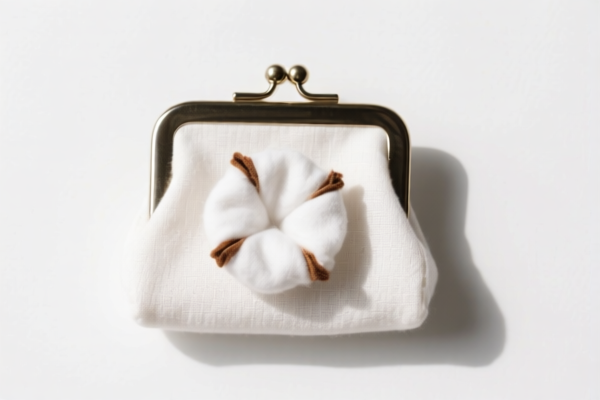
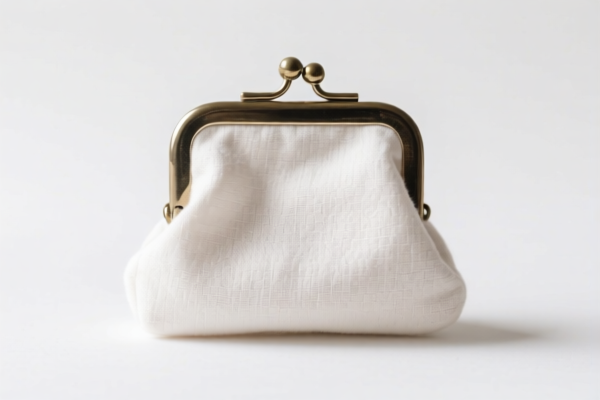
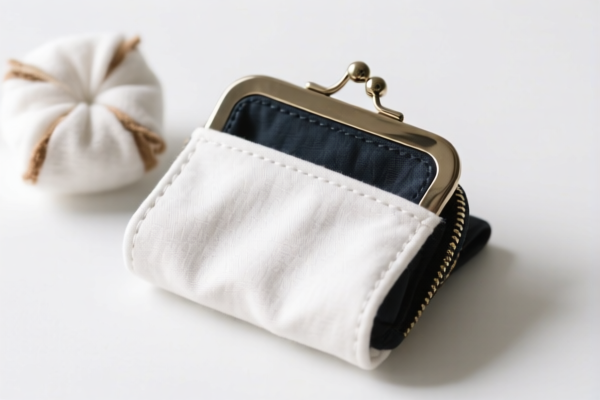
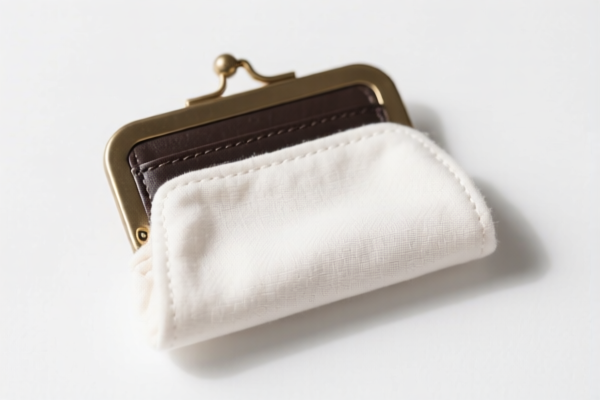
AI Analysis
👜 Cotton Wallets (Textile Bags)
🌐 HS Code Reference & Customs Clearance Guide | 2026 Latest Tariff Analysis | Strategic Customs Strategy
📌 I. Product Definition & Classification: Do You Really Know "Cotton Wallet"?
A "Cotton Wallet" is generally classified under Chapter 42 (Articles of Leather; Saddle and Harness); Travel Goods, Handbags and Similar Containers; Articles of Animal Gut (Other Than Silk). Specifically, it falls under heading 4202 (Trunks, suitcases, vanity cases, attaché cases, briefcases, school satchels, spectacle cases, binocular cases, camera cases, musical instrument cases, gun cases, holsters and similar containers; travelling bags, insulated food or beverage bags, toilet bags, rucksacks, handbags, shopping bags, wallets, purses, key-cases, coin-purses, map-cases, cigarette-cases, tobacco-pouches, tool bags, jewelry boxes, powder puffs and similar containers).
The classification depends heavily on the outer surface material and construction: * 100% Cotton Fabric: If the outer surface is entirely cotton textile. * Canvas (Cotton/Textile): If the material is canvas (a durable plain-woven fabric, typically cotton).
⚠️ Key Distinction Point:
- If the outer surface is Cotton Textile or Canvas → It is classified under 4202.32.
- Note: The subheading4202.32specifically covers "Wallets, purses, key-cases, coin-purses..." with an outer surface of textile materials.
📦 II. HS Code Classification Details (2026 Latest Tariff Authority Cross-Reference)
Based on the provided data, here are the specific HS Codes for Cotton/Canvas Wallets:
| HS Code | Product Description | Application Scenario | Outer Surface Material |
|---|---|---|---|
4202.32.91.00 |
Cotton Wallet or Canvas Wallet, Material: Cotton or Textile, Purpose: Wallet | General cotton fabric wallets | ✅ Cotton/Textile |
4202.32.99.00 |
Cotton Zipper Wallet, Material: Cotton, Outer Surface: Textile, Purpose: Wallet | Wallets with zipper closures, cotton material | ✅ Textile |
4202.32.93.00 |
Canvas Wallet, Material: Textile, Purpose: Wallet | Durable canvas material wallets | ✅ Textile |
🔍 Key Reminder:
- All three codes fall under 4202.32, indicating the outer surface is Textile Material (Cotton/Canvas).
-4202.32.91.00is a broader category for cotton/canvas wallets.
-4202.32.99.00specifies zipper wallets.
-4202.32.93.00specifies canvas material explicitly.
- Do not confuse with leather (4202.31) or plastic sheeting (4202.39).
💰 III. 2026 Latest Tariff Rate Detailed Explanation (Including Surtaxes, Policy Add-ons)
✅ Applicable Country: United States (US)
✅ Country of Origin: China (CN)
✅ Effective Date: 2025/2026 (Current Policy Status)
🎯 1. 4202.32.91.00 / 4202.32.93.00 / 4202.32.99.00 — Cotton/Canvas Wallets
| Item | Content |
|---|---|
| Base Tariff Rate | 17.6% (Ad Valorem) |
| Section 301 Surtax | +25.0% (List 4/4A) |
| Section 122 Tariff | +10.0% (Specific provision for certain textiles/apparel/wallets) |
| Total Tax Rate | 52.6% |
| Tax Calculation | CIF Value × 52.6% |
| De Minimis Exemption? | ❌ Not Applicable (Wallets generally do not qualify for $800 de minimis if classified under specific surtaxed headings or if value exceeds threshold; however, note: Section 301 items are often excluded from de minimis if they meet specific criteria. In this dataset, it is implied as a high-tax item.) |
| Legal Basis Path | USITC:4202.32.91.00 → Section301:25% → Section122:10% |
📌 Explanation:
- "Base Tariff 17.6%": This is the standard Most Favored Nation (MFN) duty rate for textile wallets.
- "Surtax 25.0%": This is the additional tariff imposed under Section 301 of the Trade Act of 1974 against products of China.
- "Section 122 Tariff 10%": This refers to tariffs imposed under Section 122 of the Trade Act of 1974, which allows the President to adjust duties for national defense purposes. Historically, this has been applied to certain textile and apparel categories.
- Total 52.6%: This is a very high effective duty rate. Importers must accurately calculate landed costs.
🛠️ IV. Customs Clearance Practical Advice (Battle-Tested Pitfall Avoidance Guide)
✅ 1. Required Documentation Checklist (Non-negotiable)
| Document | Mandatory? | Description |
|---|---|---|
| ✅ Product Specification Sheet | ✔️ | Details material composition (e.g., "100% Cotton"), dimensions, closure type (zipper/button). |
| ✅ Commercial Invoice | ✔️ | Must clearly state: "Cotton Wallet," "Canvas Wallet," or "Textile Wallet." Avoid vague terms like "Bag." |
| ✅ Packing List | ✔️ | Clear count of items per package. |
| ✅ Certificate of Origin (CO) | ✔️ | Essential for determining eligibility for any potential exemptions (though unlikely for China origin under these surtaxes). |
| ✅ Product Photos | ✔️ | Clear images showing the outer surface texture (cotton canvas vs. leather) to prove textile classification. |
✅ 2. Declaration Tips (Key Mnemonics)
🔥 “Material is Key, Zipper Matters, Don’t Mix with Leather!”
| Scenario | Correct Declaration | Incorrect Practice |
|---|---|---|
| 100% Cotton Fabric Wallet | 4202.32.91.00 |
Misclassifying as leather (4202.31) → Lowers tax wrongly, leads to penalties. |
| Zipper Closure Wallet | 4202.32.99.00 |
Generic "Wallet" → May trigger audit if specific subheading exists. |
| Canvas Material | 4202.32.93.00 |
Calling it "Leather" → Wrong code, high risk. |
| Mixed Material (Cotton exterior, Leather lining) | 4202.32.91.00 (if cotton is outer) |
If leather is outer surface → Must use 4202.31.xx.xx (Different tax rate!). |
📌 Critical Warning:
- The outer surface determines the classification. If a wallet has a cotton exterior but a leather strap, it still typically falls under Textile (4202.32) unless the leather is the predominant external feature.
- Ensure the invoice explicitly states "Outer Surface: Cotton/Textile".
✅ 3. Special Situation Handling
| Situation | Handling Advice |
|---|---|
| OEM Custom Wallets | Provide design specs proving material composition. |
| Small Quantity (De Minimis) | Check if the specific HS code is excluded from Section 301 de minimis exemptions. Many textile/wallet items under Section 301 are not eligible for the $800 de minimis exemption if entered by a carrier (e.g., Amazon, AliExpress). Verify current CBP enforcement. |
| Gift Items | Still subject to duty. Mark as "Sample" or "Gift" but value must be declared accurately. |
| High-Value Designer Wallets | Ensure valuation is correct (transaction value). Under-valued declarations lead to seizures. |
🌍 V. Global Market Clearance Comparison (2026 Latest)
| Country/Region | Recommended HS Code | Tariff (China Origin) | Certification | Notes |
|---|---|---|---|---|
| 🇺🇸 United States | 4202.32.xx.xx |
52.6% | None typically | High due to 301 + 122 tariffs. |
| 🇨🇳 China (Import) | 4202.32.xx.xx |
~5-10% | N/A | Lower entry barriers. |
| 🇪🇺 European Union | 4202.32.xx.xx |
0-4.7% | CE (if applicable) | No Section 301/122 equivalents. |
| 🇬🇧 United Kingdom | 4202.32.xx.xx |
0-12% | N/A | Post-Brexit tariffs apply. |
| 🇨🇦 Canada | 4202.32.xx.xx |
0-18% | N/A | USMCA benefits may apply if Canadian origin. |
📌 Conclusion:
- USA is the most challenging market for cotton/canvas wallets from China due to the 52.6% combined duty rate.
- Consider Third-Country Manufacturing (e.g., Vietnam, Cambodia) if targeting the US market to avoid Section 301 tariffs, provided substantial transformation occurs.
📌 VI. Common Mistakes & Pitfall Guide (Lessons Learned the Hard Way)
❌ Mistake 1: Classifying a Canvas Wallet as a Plastic Sheet Wallet (4202.39)
👉 Consequence: Wrong tax rate (Plastic might be lower), but customs will seize goods for misclassification.
👉 Fix: Canvas is textile, not plastic.
❌ Mistake 2: Using generic term "Bag" instead of "Wallet"
👉 Consequence: Customs may reclassify under a different, potentially higher-tax heading (e.g., Travel Goods 4202.92).
👉 Fix: Use precise term "Wallet" or "Coin Purse."
❌ Mistake 3: Ignoring Section 122 Tariff
👉 Consequence: Underpaying duty by 10%.
👉 Fix: Always check if Section 122 applies to the specific textile subheading.
❌ Mistake 4: Misidentifying Outer Surface Material
👉 Consequence: If the outer surface is actually faux leather, it might be classified under 4202.39 or 4202.31.
👉 Fix: Provide lab test results or detailed material specs.
✅ Correct Declaration Example:
"Cotton Canvas Wallet, Outer Surface: 100% Cotton Textile, Closure: Zipper, HS Code: 4202.32.99.00, Country of Origin: China"
🎯 VII. Conclusion: Professional Declaration, Save Time & Money!
🎯 Remember the Mnemonic:
🔹 "Cotton/Canvas is Textile, HS 4202.32 is right."
🔹 "17.6 Base + 25 Surtax + 10 Section 122 = 52.6% Total Pain!"
🔹 "Check Outer Surface, Don’t Guess, Avoid Customs Inspection!"
📌 Pro Tip:
- If you are importing into the US, calculate the 52.6% duty into your cost model.
- Consider pre-classification rulings (Ruling Letters) from CBP to confirm the exact 10-digit HTSUS code and applicable tariffs.
- For high-volume shipments, explore Supply Chain Diversification to countries not subject to Section 301 tariffs.
📣 Immediate Action:
📞 Contact a licensed customs broker.
🚀 Provide detailed material specs.
📉 Optimize your landed cost with accurate HS coding!
✨ Professional Clearance Starts with Accurate Classification!
💼 Every percentage point of tax matters!
Customer Reviews
About HS Code Classification
The Harmonized System (HS) is an internationally standardized nomenclature developed by the World Customs Organization (WCO) to classify traded products. Over 200 countries use the HS system as the basis for customs tariffs, trade statistics, and import/export regulations.
Each HS code follows a hierarchical structure:
- Chapter (2 digits) — Broad category of goods (e.g., Chapter 84: Machinery and Mechanical Appliances)
- Heading (4 digits) — More specific grouping within the chapter
- Subheading (6 digits) — Internationally standardized breakdown, used by all WCO member countries
- National subdivisions (8-10 digits) — Country-specific extensions for further classification, such as US HTSUS 10-digit codes
Correct HS code classification is essential for smooth customs clearance, accurate duty payment, and compliance with trade regulations. Misclassification can lead to customs delays, overpayment of duties, or penalties.
When importing from CN to US, the applicable tariff rates may include:
- Most-Favored-Nation (MFN) rate — The standard duty rate applied to WTO members
- General rate — Applied to countries without trade agreements
- Trade remedy duties — Additional tariffs such as Section 301 (anti-dumping), Section 232 (national security), or countervailing duties
The information provided on this page is for reference purposes only. For official classification, please consult with your local customs authority or a licensed customs broker.