Cotton Woven Summer Beach Bag
CN → USProduct Images
AI Analysis
🏖️ Cotton Woven Summer Beach Bag
🌐 HS Code Reference & Customs Clearance Guide | 2026 Latest Tariff Analysis | Professional Strategy for Global Trade
📌 I. Product Definition & Classification: Do You Really Know the "Beach Bag"?
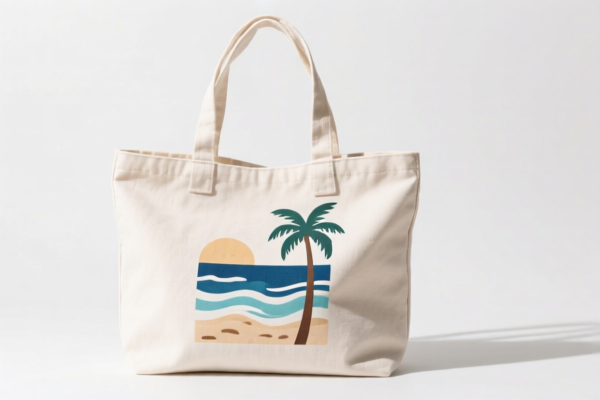
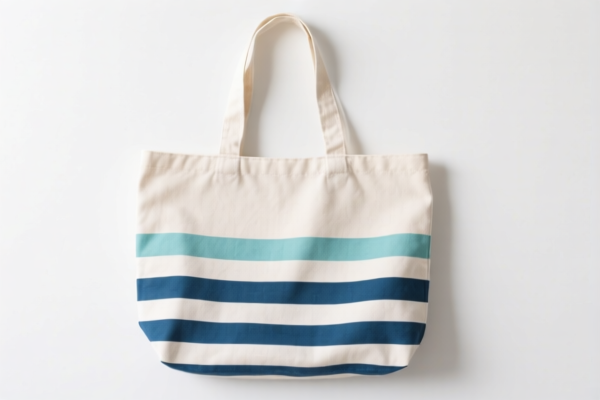
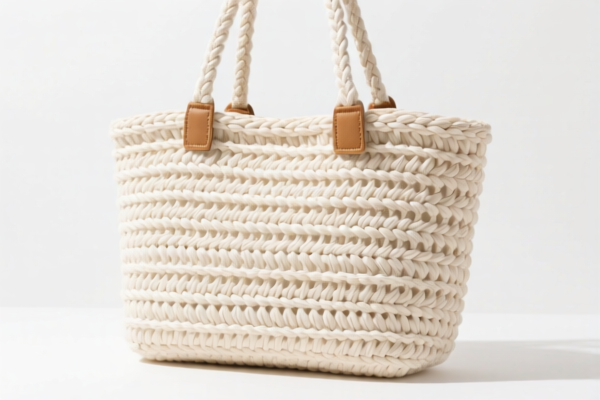
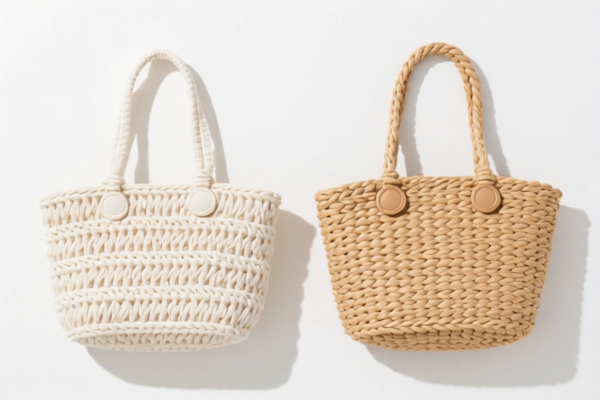
The Cotton Woven Summer Beach Bag is a lightweight, breathable, and stylish accessory designed for beach vacations, summer outings, and casual travel. It is typically made from 100% cotton yarn woven into a mesh or basket-like structure, often featuring handles and optional lining.
In international trade, this product can fall under two main categories:
- Woven Textile Bags (Handbags/Cosmetic Bags) → if primarily for carrying personal items;
- Basketry/Plaited Articles → if made in a traditional woven basket style with natural fiber appearance.
⚠️ Key Distinction:
- If the bag is woven from cotton yarn and functions as a carry-all, it belongs to Chapter 42 or 63 (depending on construction).
- If it is plaited or coiled like a basket, it may fall under Chapter 46.
📦 II. HS Code Classification (2026 Latest Tariff Authority)
| HS Code | Product Description | Application Scenario | Material/Structure |
|---|---|---|---|
6307.90.98 |
Other made-up textile articles, including bags, not elsewhere specified | Cotton woven beach bags with simple structure | ✅ Cotton woven fabric |
4202.92.00 |
Bags of leather, of textile materials, other | If lined or structured like a handbag | ✅ Textile + lining |
4602.90.00 |
Articles of plaited materials (e.g., baskets) | If made like a traditional woven basket | ✅ Natural fiber/plaited |
6305.00.90 |
Sacks and bags of a kind used for the packing of goods | If used for commercial packaging | ✅ Industrial use only |
🔍 Important Reminder:
- Most cotton woven beach bags for consumer use fall under6307.90.98(textile article).
- If the bag has lining, zipper, or structured shape, it may qualify for4202.92.00(textile handbag).
- Plaited baskets (like straw bags) go under4602.90.00.
💰 III. 2026 Latest Tariff Rates (Including Additional Duties & Policy Surcharge)
✅ Target Market: United States (US)
✅ Country of Origin: China (CN)
✅ Effective Date: November 10, 2025 and onward
🎯 1. 6307.90.98 – Cotton Woven Textile Bags
| Item | Content |
|---|---|
| Base Tariff Rate | 7.5% (ad valorem) |
| USITC Surcharge | +25% (under USITC Footnote 9903.88.01) |
| IEEPA Surcharge | +10% (for China/HK products, effective Nov 10, 2025) |
| Total Tariff Rate | 42.5% |
| Tax Calculation | CIF × 42.5% |
| De Minimis Exemption | ❌ Not Eligible (deny_de_minimis) |
| Legal Basis | IEEPA:9903.01.25 → USITC:6307.90.98 → FOOTNOTE:9903.88.01 |
📌 Explanation:
- The 25% USITC surcharge is under Section 301 of the Trade Act;
- The 10% IEEPA surcharge is under the International Emergency Economic Powers Act;
- Combined 42.5% is a very high rate, requiring advance planning!
🎯 2. 4202.92.00 – Textile Handbags (if lined/structured)
| Item | Content |
|---|---|
| Base Tariff Rate | 8.5% |
| USITC Surcharge | +25% |
| IEEPA Surcharge | +10% |
| Total Tariff Rate | 43.5% |
| Tax Calculation | CIF × 43.5% |
| De Minimis Exemption | ❌ Not Eligible |
| Legal Basis | IEEPA:9901.25 → USITC:4202.92.00 → FOOTNOTE:9903.88.01 |
📌 Note:
- If the bag has lining, zipper, or handles with reinforcement, it may be classified as a handbag, leading to a slightly higher total rate.
- Even if it's "just a cotton bag", misclassification can lead to audits and penalties.
🛠️ IV. Customs Clearance Practical Advice (Avoid Common Pitfalls)
✅ 1. Required Documentation Checklist
| Document | Must Provide | Explanation |
|---|---|---|
| ✅ Product Specifications | ✔️ | Include material (100% cotton), dimensions, weight, design |
| ✅ Photos (with labels) | ✔️ | Show front, back, handle, interior if lined |
| ✅ Material Certificate | ✔️ | Cotton content proof (e.g., from textile lab) |
| ✅ Commercial Invoice | ✔️ | Clearly state "Cotton Woven Summer Beach Bag" |
| ✅ Packing List | ✔️ | Detail quantity, packaging type (polybag, carton, etc.) |
| ✅ Certificate of Origin (CO) | ✔️ | For non-China origin,可申请优惠税率 |
| ✅ Compliance Certs | ✔️ | CPSIA (US), REACH (EU), if applicable |
✅ 2. Declaration Tips (Golden Rules)
🔥 “Be clear on material, declare as textile, don’t call it basket!”
| Scenario | Correct Declaration | Wrong Practice |
|---|---|---|
| Plain cotton woven bag | 6307.90.98 |
Misdeclare as 4602.90.00 → 32% penalty |
| Bag with lining/zipper | 4202.92.00 |
Call it "textile article" → underpayment risk |
| Plaited straw-style bag | 4602.90.00 |
Call it "cotton woven" → classification error |
| Commercial packaging bag | 6305.00.90 |
Call it "beach bag" → wrong use case |
✅ 3. Special Situations
| Scenario | Suggestion |
|---|---|
| OEM Custom Design | Provide design specs + sample to prove intent |
| With Logo Printing | Still textile; no extra duty, but label correctly |
| Packaged with Other Goods | Declare as separate items; avoid consolidation errors |
| For Charity/Distribution | May qualify for duty exemption with proof |
🌍 V. Global Market Comparison (2026 Latest)
| Country/Region | Recommended HS Code | Tariff | Certification | Notes |
|---|---|---|---|---|
| 🇺🇸 USA | 6307.90.98 |
42.5% (China) | CPSIA + Labeling | High due to 301/IEEPA |
| 🇨🇳 China | 6307.90.98 |
5% | CCC (if needed) | No surcharge |
| 🇪🇺 EU | 6307.90.98 |
0–12% | CE + Eco-label | VAT applies separately |
| 🇦🇺 Australia | 6307.90.98 |
5% | RCM | No surcharge |
| 🇯🇵 Japan | 6307.90.98 |
0–6% | PSE (if electronics included) | Minimal duty |
📌 Conclusion:
- USA remains the highest-cost market due to 42.5% total tariff;
- Consider shifting production to Vietnam, Thailand, or Mexico to avoid surcharges.
📌 VI. Common Mistakes & Pitfalls (Lessons from the Field)
❌ Mistake 1: Calling a textile bag a “basket” to get lower tariff
👉 Result: Audit → Back taxes + fines up to 200%
❌ Mistake 2: Omitting material proof (e.g., 100% cotton)
👉 Result: Classification downgrade → higher duty
❌ Mistake 3: Mixing commercial packaging bags with consumer beach bags
👉 Result: Declaration mismatch → shipment delay
❌ Mistake 4: Failing to label origin correctly
👉 Result: Denial of IEEPA exemption → full tariff
✅ Best Practice:
“100% Cotton Woven Summer Beach Bag, 30x40cm, Open Top, No Zipper, Unlined, Made in Vietnam, CPSIA Compliant”
🎯 VII. Final Thoughts: Precision Pays Off!
🎯 Remember:
🔹 “Textile bag = 42.5% in US, Basket = 32%, Handbag = 43.5%”
🔹 “One word difference in HS Code = thousands in cost!”
📌 Pro Tip:
If your cotton beach bags are made in Vietnam, Thailand, or Mexico, you may qualify for IEEPA exemption, reducing tariffs to 0–5%.
Apply for Advance Ruling from CBP before shipping!
📣 Act Now:
📞 Contact a professional customs broker + submit product samples + request HS Code pre-ruling
🚀 Ship your summer bags faster, cheaper, and with zero surprises!
✨ Professional Customs Clearance Starts with Accurate Classification!
💼 Every Dollar Saved Matters in Global Trade!
Customer Reviews
About HS Code Classification
The Harmonized System (HS) is an internationally standardized nomenclature developed by the World Customs Organization (WCO) to classify traded products. Over 200 countries use the HS system as the basis for customs tariffs, trade statistics, and import/export regulations.
Each HS code follows a hierarchical structure:
- Chapter (2 digits) — Broad category of goods (e.g., Chapter 84: Machinery and Mechanical Appliances)
- Heading (4 digits) — More specific grouping within the chapter
- Subheading (6 digits) — Internationally standardized breakdown, used by all WCO member countries
- National subdivisions (8-10 digits) — Country-specific extensions for further classification, such as US HTSUS 10-digit codes
Correct HS code classification is essential for smooth customs clearance, accurate duty payment, and compliance with trade regulations. Misclassification can lead to customs delays, overpayment of duties, or penalties.
When importing from CN to US, the applicable tariff rates may include:
- Most-Favored-Nation (MFN) rate — The standard duty rate applied to WTO members
- General rate — Applied to countries without trade agreements
- Trade remedy duties — Additional tariffs such as Section 301 (anti-dumping), Section 232 (national security), or countervailing duties
The information provided on this page is for reference purposes only. For official classification, please consult with your local customs authority or a licensed customs broker.