Cotton fiber base paper for thermal printing paper
CN → US| HS Code | Tariff Rate | Origin | Destination | Doc |
|---|---|---|---|---|
| 4802202000 | 35.0% | CN | US | Official Doc |
| 4802201000 | 35.0% | CN | US | Official Doc |
| 4811908030 | 35.0% | CN | US | Official Doc |
| 4811909030 | 35.0% | CN | US | Official Doc |
| 4911998000 | 17.5% | CN | US | Official Doc |
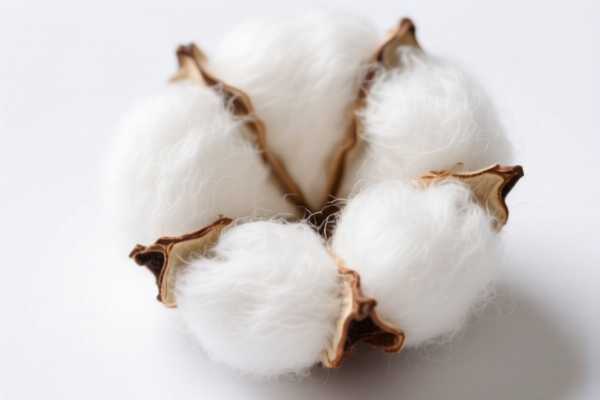
Product Images



AI Analysis
🧻 Thermal Paper (Cotton Fiber Base Paper)
🌐 HS Code Reference & Clearance Guide | 2026 Latest Tariff Analysis | Professional Customs Strategy
📌 I. Product Definition: What is "Thermal Paper Base Paper"?
Thermal paper base paper is the foundational material used in thermal printing technology. It is a high-quality pulp paper that has been coated with a heat-sensitive chemical layer (developer and developer) on one or both sides. When heated by a thermal print head, the coating turns black, creating the printed image.
In international trade, it is critical to distinguish between: 1. Raw Base Paper: The uncoated or primed paper substrate before the thermal coating is applied. 2. Finished Thermal Paper: The coated paper ready for printing (receipts, faxes, labels).
⚠️ Key Classification Distinction:
- If the paper is uncoated (raw substrate) → It falls under Heading 4802 (Paper for writing, printing, etc.).
- If the paper is coated (finished thermal paper) → It falls under Heading 4811 (Paper treated with coatings).
- If it is printed (already has text/images) → It may fall under Heading 4911 (Printed matter).
📦 II. HS Code Classification Details (Based on Provided Data)
The following HS codes are derived from the specific attributes of "Cotton Fiber Base Paper for Thermal Printing Paper" and the provided JSON data.
| HS Code | Product Description | Matching Logic & Summary | Total Tax Rate |
|---|---|---|---|
4802.20.20.00 |
Base Paper for Thermal/Sensitive Paper | Match Success. The product name "Thermal Paper" aligns perfectly with the classification explanation: "Base paper for photosensitive, thermosensitive, or electrosensitive paper/cardboard." The material (cotton fiber pulp) and use (basis for thermal paper) are fully consistent. | 35.0% |
4802.20.10.00 |
Other Base Paper for Thermal Paper | Material/Use Match. Matches the material (thermal nature) and usage. Although specific size specifications are not explicitly confirmed, the consistency of material and name leads to a preliminary judgment that it fits this category. | 35.0% |
4811.90.80.30 |
Thermally Coated Paper (Other) | Match Success. The product name directly corresponds to the core attribute "Thermal." Based on common sense, it is inferred to be paper-based, fitting the definition of thermally coated paper (finished thermal paper). | 35.0% |
4811.90.90.30 |
Other Thermal Coated Paper | Match Success. The name "Thermal Paper" matches the material (paper) and core function (direct thermal coating). This code typically covers thermal papers not specifically listed elsewhere in 4811.90. | 35.0% |
4911.99.80.00 |
Other Printed Matter | Inferred Match. Thermal paper is often considered a "printed item" category. Based on common sense, the material is paper-based, fitting the "Other Printed Matter" attribute, with no conflict in form or use. Note: This applies only if the paper is already printed. | 17.5% |
🔍 Important Note:
- 4802 Codes are for the base substrate (uncoated/primed).
- 4811 Codes are for the finished coated product.
- 4911 Code is for pre-printed thermal paper.
- Misclassification between base paper and finished coated paper can lead to significant duty differences and customs delays.
💰 III. Detailed Tariff Breakdown (2026 Latest Rates)
✅ Applicable Country: United States (US)
✅ Origin: China (CN)
✅ Effective Date: From November 10, 2025 (and subsequent imports)
🎯 1. Base Paper Categories: 4802.20.20.00 & 4802.20.10.00
| Item | Details |
|---|---|
| Base Duty Rate | 0.0% (Ad Valorem) |
| Section 301 Duty | +25.0% (Added Duty on Chinese Goods) |
| Section 122 Duty | +10.0% (Additional Duty under IEEPA for certain Chinese goods) |
| Total Effective Rate | 35.0% |
| Calculation Basis | CIF Value × 35% |
| De Minimis Exemption | ❌ Not Eligible (Section 321 exemption does not apply to these items due to high added duties) |
| Legal Path | USITC:4802.20.20.00 → SECTION301:Footnote9903.48.02 → IEEPA:9903.01.25 |
📌 Explanation:
- The 25% duty stems from the U.S. Trade Act Section 301, targeting specific Chinese imports.
- The 10% duty is an additional layer under the International Emergency Economic Powers Act (IEEPA), specifically targeting certain Chinese products.
- Total 35% is a high tariff, significantly impacting cost margins.
🎯 2. Coated Thermal Paper Categories: 4811.90.80.30 & 4811.90.90.30
| Item | Details |
|---|---|
| Base Duty Rate | 0.0% |
| Section 301 Duty | +25.0% |
| Section 122 Duty | +10.0% |
| Total Effective Rate | 35.0% |
| Calculation Basis | CIF Value × 35% |
| De Minimis Exemption | ❌ Not Eligible |
| Legal Path | USITC:4811.90.90.30 → SECTION301:Footnote9903.48.11 → IEEPA:9903.01.25 |
📌 Explanation:
- Finished thermal paper is subject to the same 35% total duty as the base paper.
- Ensure you declare the correct stage of production (coated vs. uncoated) to avoid customs queries.
🎯 3. Printed Thermal Paper: 4911.99.80.00
| Item | Details |
|---|---|
| Base Duty Rate | 0.0% |
| Section 301 Duty | +7.5% (Note: Lower than base/coated categories) |
| Section 122 Duty | +10.0% |
| Total Effective Rate | 17.5% |
| Calculation Basis | CIF Value × 17.5% |
| De Minimis Exemption | ❌ Not Eligible |
| Legal Path | USITC:4911.99.80.00 → SECTION301:Footnote9903.49.11 → IEEPA:9903.01.25 |
📌 Explanation:
- If the thermal paper is pre-printed (e.g., receipt rolls with logos), it may qualify for this lower rate.
- Savings: 17.5% vs. 35% = 17.5% cost reduction.
- Risk: Must provide proof of pre-printing. If customs inspects and finds unprinted rolls, penalties and back-taxes will apply.
🛠️ IV. Customs Clearance Practical Advice (Pitfall Avoidance Guide)
✅ 1. Essential Documentation Checklist
| Document | Required? | Notes |
|---|---|---|
| ✅ Product Specification Sheet | ✔️ | Must detail: Pulp type (Cotton fiber), basis weight, coating type (thermal), dimensions. |
| ✅ Composition Analysis | ✔️ | Proof of "Cotton Fiber" content if claiming specific base paper codes. |
| ✅ Photographs | ✔️ | Clear images of the roll, label, and cross-section (to show coating if applicable). |
| ✅ Commercial Invoice | ✔️ | Clearly state: "Thermal Paper Base Paper" or "Coated Thermal Paper" – do not use vague terms like "Paper". |
| ✅ Packing List | ✔️ | Include gross/net weight, number of rolls, and carton dimensions. |
| ✅ Certificate of Origin | ✔️ | Essential for proving Chinese origin and applying correct Section 301 duties. |
✅ 2. Declaration Tips (Key Rules)
🔥 "Declare Stage Correctly, Avoid Dual Tax Penalties!"
| Scenario | Correct HS Code | Incorrect Declaration | Consequence |
|---|---|---|---|
| Uncoated Base Paper | 4802.20.20.00 or 4802.20.10.00 |
Declaring as "Thermal Paper" (4811) | May be flagged for misdeclaration; 35% applies anyway, but delays occur. |
| Finished Coated Paper | 4811.90.80.30 or 4811.90.90.30 |
Declaring as "Base Paper" (4802) | High Risk! Customs may suspect undervaluation or misclassification. |
| Pre-Printed Paper | 4911.99.80.00 |
Declaring as Uncoated (4802) | Penalty Risk! If printed, you must prove it. Otherwise, 35% applies + penalties. |
✅ 3. Special Case Handling
| Situation | Recommendation |
|---|---|
| Cotton Fiber Content | If claiming "Cotton Fiber," ensure the specification sheet explicitly states 100% cotton or the percentage. Synthetic blends may fall under different subheadings. |
| Sample vs. Commercial | For samples, declare clearly as "Sample - Not for Resale" to potentially avoid duties, but be aware Section 301 may still apply if not under de minimis. |
| OEM/Custom Printing | If the paper is printed for a specific client, provide the print design proof to justify 4911.99.80.00 for lower duty. |
| Roll Dimensions | Ensure diameter and width are declared accurately. Large rolls may be scrutinized for industrial vs. retail use. |
🌍 V. Global Market Comparison (2026)
| Market | Recommended HS Code | Total Duty (China Origin) | Certification Requirements | Notes |
|---|---|---|---|---|
| 🇺🇸 USA | 4802.20.20.00 / 4811.90.90.30 |
35.0% | No specific FDA/CE needed, but product safety data may be requested. | Highest duty due to Section 301 + 122. |
| 🇨🇳 China | 4802.20.20.00 |
~5-13% | No special import certs. | Domestic production is competitive. |
| 🇪🇺 EU | 4802.20.20 / 4811.90 |
0% (if MFN applies) | REACH compliance (chemical coating). | Thermal coating chemicals must comply with REACH. |
| 🇯🇵 Japan | 4802.20 / 4811.90 |
~2-6% | No specific import certs. | High quality standards expected. |
📌 Conclusion:
- USA is the most expensive market due to 35% total duty.
- Pre-printed thermal paper (4911) offers a 17.5% duty rate in the US, providing a cost-saving opportunity if applicable.
- Cotton fiber is a premium attribute; ensure documentation highlights this to avoid being downgraded to lower-quality pulp papers.
📌 VI. Common Errors & Pitfalls (Lessons Learned)
❌ Error 1: Declaring "Thermal Paper" without specifying if it is base or coated.
👉 Result: Customs may hold the shipment for classification review → Delay of 7-14 days.
❌ Error 2: Ignoring Section 122 (10%) duty.
👉 Result: Underpayment of duties → Back taxes + 25% penalty upon audit.
❌ Error 3: Claiming Pre-Printed status without proof.
👉 Result: Customs rejects 4911 code, reverts to 4811 (35% duty) + fines.
❌ Error 4: Vague description: "Paper for printing."
👉 Result: Lowers clarity, increases risk of misclassification → Higher scrutiny.
✅ Correct Declaration Example:
"THERMAL PAPER BASE, 100% COTTON FIBER, UNCOATED, ROLLED, 80MM X 40M, HS 4802.20.20.00"
OR
"THERMALLY COATED PAPER, WITH BPA-FREE COATING, ROLLED, 80MM X 50M, HS 4811.90.90.30"
🎯 VII. Conclusion: Precise Classification, Cost Optimization
🎯 Key Takeaways:
🔹 Base Paper (
4802) & Coated Paper (4811): Both face 35% total duty in the US.
🔹 Pre-Printed Paper (4911): Only 17.5% duty – utilize this if applicable!
🔹 Documentation is Key: Cotton fiber content and coating status must be explicitly stated.
🔹 Section 122 Matters: The additional 10% duty is non-negotiable for Chinese origins in these categories.
📌 Pro Tip:
If you are a manufacturer, consider pre-printing your thermal paper to leverage the 17.5% duty rate instead of 35%.
For base paper imports, ensure your supplier provides detailed pulp composition to justify the cotton fiber classification.
📣 Immediate Action:
📞 Consult a licensed customs broker to confirm the exact stage of your product (base vs. coated vs. printed).
🚀 Avoid 35% duty traps with accurate classification!
✨ Professional Customs, Starting with Precise Classification!
💼 Every dollar of duty saved is profit earned!
Customer Reviews
About HS Code Classification
The Harmonized System (HS) is an internationally standardized nomenclature developed by the World Customs Organization (WCO) to classify traded products. Over 200 countries use the HS system as the basis for customs tariffs, trade statistics, and import/export regulations.
Each HS code follows a hierarchical structure:
- Chapter (2 digits) — Broad category of goods (e.g., Chapter 84: Machinery and Mechanical Appliances)
- Heading (4 digits) — More specific grouping within the chapter
- Subheading (6 digits) — Internationally standardized breakdown, used by all WCO member countries
- National subdivisions (8-10 digits) — Country-specific extensions for further classification, such as US HTSUS 10-digit codes
Correct HS code classification is essential for smooth customs clearance, accurate duty payment, and compliance with trade regulations. Misclassification can lead to customs delays, overpayment of duties, or penalties.
When importing from CN to US, the applicable tariff rates may include:
- Most-Favored-Nation (MFN) rate — The standard duty rate applied to WTO members
- General rate — Applied to countries without trade agreements
- Trade remedy duties — Additional tariffs such as Section 301 (anti-dumping), Section 232 (national security), or countervailing duties
The information provided on this page is for reference purposes only. For official classification, please consult with your local customs authority or a licensed customs broker.