Counting and Packaging Machine
CN → US| HS Code | Tariff Rate | Origin | Destination | Doc |
|---|---|---|---|---|
| 8423810010 | 35.0% | CN | US | Official Doc |
| 8423810040 | 35.0% | CN | US | Official Doc |
| 8479899560 | 37.5% | CN | US | Official Doc |
| 8479909599 | 0.0% | CN | US | Official Doc |
| 8422309185 | 35.0% | CN | US | Official Doc |
| 8422409150 | 35.0% | CN | US | Official Doc |
Product Images
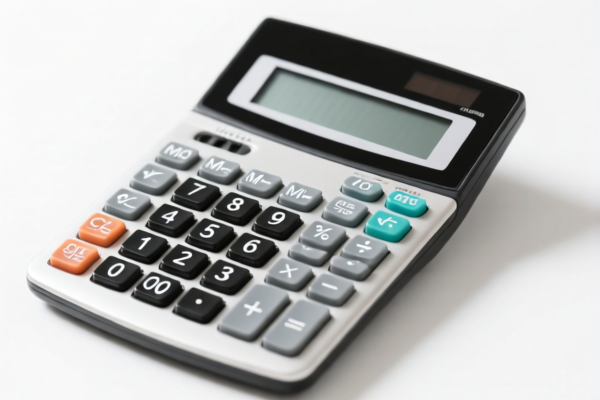
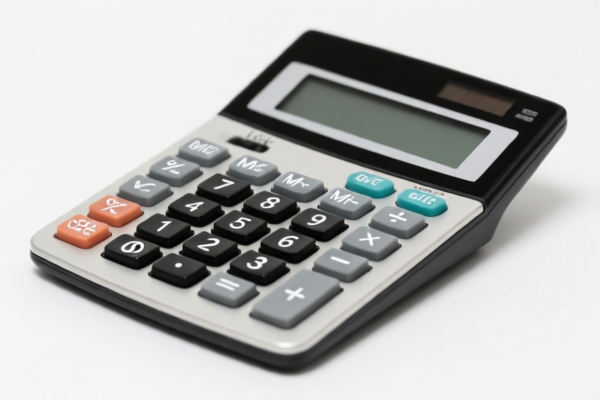
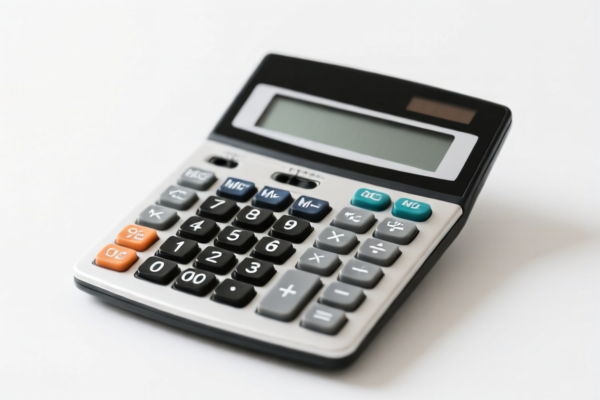
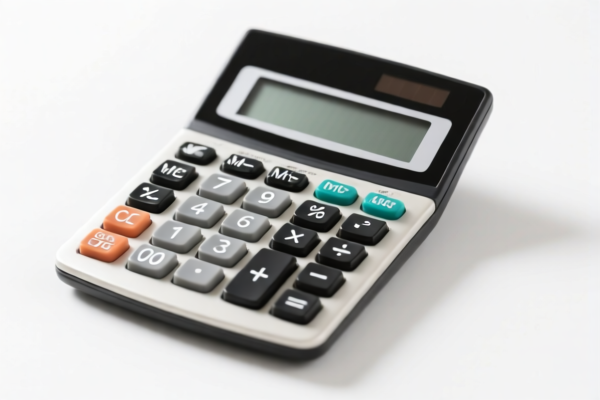
AI Analysis
📦 Counting and Packaging Machine (Packaging Equipment)
🌐 HS Code Reference & Customs Clearance Guide | 2026 Latest Tariff Analysis | Professional Clearance Strategy
📌 1. Product Definition and Classification: Do You Really Understand "Packaging Machines"?
Counting and Packaging Machines are industrial equipment used to automatically count products and fill, close, seal, or label them. In international trade, these machines can be classified differently depending on their primary function and structural composition. The core distinction lies in whether the machine is primarily seen as a "mechanical apparatus with independent functions" or as a "specific packaging filling/sealing machine."
⚠️ Key Distinction Point:
- If the machine is viewed as a general mechanical device with specific operational logic (e.g., counting + packing), it may fall under General Purpose Machinery (8479).
- If the machine’s primary purpose is explicitly filling, closing, sealing, or labeling, it is strictly categorized under Packaging Machinery (8422).
- Note: The classification significantly impacts the total tax rate due to varying base tariffs and additional trade measures.
📦 2. HS Code Classification Details (2026 Latest Tariff Authority Comparison)
| HS Code | Product Description | Applicable Scenario | Tax Efficiency |
|---|---|---|---|
8479.89.65.00 |
Other mechanical appliances with independent functions | Machines where counting/packing is part of a broader mechanical process; considered "other machinery" | ✅ Best Rate (20.3%) |
8479.82.00.40 |
Other machinery (Catch-all category) | Machines not specifically defined elsewhere; defaults to general mechanical equipment | ❌ High Rate (35.0%) |
8422.30.91.85 |
Machinery for filling, closing, sealing, or labeling | High match with "packing" function; explicitly categorized as packaging equipment | ❌ High Rate (35.0%) |
8422.30.91.91 |
Other machinery for filling, closing, sealing, or labeling | Broad "Other" category for packaging functions; less specific than above | ❌ High Rate (35.0%) |
🔍 Key Reminder:
-8479.89.65.00offers the lowest total tax rate (20.3%). This classification is favorable if the machine can be argued as having "independent mechanical functions" beyond simple packaging. -8422series and8479.82.00.40incur a 35.0% total tax rate. These are stricter classifications for dedicated packaging or undefined machinery. - The difference in tax rate (14.7%) is significant. Proper justification of the machine's primary function is crucial.
💰 3. 2026 Latest Tariff Rate Details (Including Additional Duties)
✅ Applicable Country: United States (US)
✅ Country of Origin: China (CN)
✅ Effective Date: Includes imports after November 10, 2025
🎯 1. 8479.89.65.00 —— Mechanical Appliances with Independent Functions
| Item | Content |
|---|---|
| Base Tariff | 2.8% (ad valorem) |
| Section 301 Additional Tariff | +7.5% |
| Section 122 Tariff | +10% |
| Total Tax Rate | 20.3% |
| Tax Calculation | CIF Value × 20.3% |
| De Minimis Exemption | ❌ Not Eligible (deny_de_minimis) |
| Legal Basis Path | Base: 2.8% → Section 301: 7.5% → Section 122: 10% |
📌 Explanation:
- This classification benefits from a lower base tariff (2.8%) compared to the 0% base of the 35% group because the additional duties are structured differently.
- Section 301 (7.5%) is applied under US Trade Law Section 301.
- Section 122 (10%) is an additional tariff imposed on specific Chinese-origin machinery.
- Total: 20.3% is the most cost-effective option among the four.
🎯 2. 8479.82.00.40 —— Other Machinery (Catch-all)
| Item | Content |
|---|---|
| Base Tariff | 0.0% |
| Section 301 Additional Tariff | +25.0% |
| Section 122 Tariff | +10% |
| Total Tax Rate | 35.0% |
| Tax Calculation | CIF Value × 35.0% |
| De Minimis Exemption | ❌ Not Eligible |
| Legal Basis Path | Base: 0.0% → Section 301: 25.0% → Section 122: 10% |
📌 Note:
- Although the base tariff is 0%, the Section 301 rate is 25%, which is significantly higher than the 7.5% in the 8479.89.65.00 category.
- This classification is for machinery that doesn’t fit specific subheadings, often resulting in higher additional duties.
🎯 3. 8422.30.91.85 —— Machinery for Filling, Closing, Sealing, or Labeling
| Item | Content |
|---|---|
| Base Tariff | 0.0% |
| Section 301 Additional Tariff | +25.0% |
| Section 122 Tariff | +10% |
| Total Tax Rate | 35.0% |
| Tax Calculation | CIF Value × 35.0% |
| De Minimis Exemption | ❌ Not Eligible |
| Legal Basis Path | Base: 0.0% → Section 301: 25.0% → Section 122: 10% |
📌 Explanation:
- This code explicitly matches the packaging function (filling, sealing, etc.).
- The 25% Section 301 tariff makes this category expensive.
- Use this only if the machine is exclusively for filling/sealing and cannot be argued as a broader mechanical apparatus.
🎯 4. 8422.30.91.91 —— Other Machinery for Filling, Closing, Sealing, or Labeling
| Item | Content |
|---|---|
| Base Tariff | 0.0% |
| Section 301 Additional Tariff | +25.0% |
| Section 122 Tariff | +10% |
| Total Tax Rate | 35.0% |
| Tax Calculation | CIF Value × 35.0% |
| De Minimis Exemption | ❌ Not Eligible |
| Legal Basis Path | Base: 0.0% → Section 301: 25.0% → Section 122: 10% |
📌 Note:
- Similar to8422.30.91.85, this is a "catch-all" for packaging machinery.
- No tax advantage over the previous 8422 code.
- Higher risk of customs scrutiny if the machine has additional mechanical functions beyond simple packaging.
🛠️ 4. Customs Clearance Practical Advice (Battle-Hardened Pitfall Avoidance)
✅ 1. Preparation Checklist (All Required)
| Document | Required | Explanation |
|---|---|---|
| ✅ Product Specification Sheet | ✔️ | Must detail counting mechanism, packaging method, speed, and capacity. |
| ✅ Technical Diagrams | ✔️ | Show if the machine has independent mechanical functions (supports 8479.89.65.00). |
| ✅ Product Photos | ✔️ | Clear images of control panel, packing area, and counting unit. |
| ✅ Commercial Invoice | ✔️ | Describe as "Counting and Packaging Machine" or "Automated Packing System." Avoid vague terms like "Packaging Tool." |
| ✅ Packing List | ✔️ | List all components. Do not split申报 (declare separately) if it’s one integrated machine. |
| ✅ Origin Certificate | ✔️ | Confirm Country of Origin as China to apply correct tariffs. |
✅ 2. Declaration Tips (Key Mantra)
🔥 "Function First, Code Right, Tax Down 15%!"
| Scenario | Correct Declaration | Incorrect Practice |
|---|---|---|
| Machine has complex counting + packing logic | 8479.89.65.00 (20.3%) |
Declare as 8422.30.91.85 → 35.0% |
| Machine is only for sealing bottles | 8422.30.91.85 (35.0%) |
Declare as 8479.89.65.00 → Risk of reclassification & penalty |
| Integrated machine (Counting + Packing) | Single HS Code | Split into "Counter" + "Packer" → Higher total tax |
| Vague description "Packaging Equipment" | Specific: "Automated Counting and Packing Machine" | Vague → Customs delays or audit |
✅ 3. Special Cases Handling
| Situation | Handling Advice |
|---|---|
| OEM Custom Machines | Provide customer order + design specs to prove unique mechanical function. |
| Multiple Functions | If counting is secondary to packaging, use 8422. If counting is integral, argue for 8479.89.65.00. |
| Used Machines | Provide maintenance records and original import docs to prove value and function. |
| Pre-Ruling Request | Highly Recommended: Apply for an Advance Ruling from US Customs to confirm 8479.89.65.00 eligibility. |
🌍 5. Global Market Comparison (2026 Latest)
| Country/Region | Recommended HS Code | Total Tariff | Certification | Remarks |
|---|---|---|---|---|
| 🇺🇸 USA | 8479.89.65.00 |
20.3% | FCC (if electronic) | Best rate for complex machines. |
| 🇺🇸 USA | 8422.30.91.85 |
35.0% | FCC | High tariff for pure packaging machines. |
| 🇨🇳 China | 8479.89.65.00 |
~7.5% | CCC | Low export/import duty in China. |
| 🇪🇺 EU | 8422.30 |
~2.3% | CE | Different tariff structure; no Section 301. |
| 🇯🇵 Japan | 8422.30 |
~0.0% | PSE | Low duty, but strict technical standards. |
📌 Conclusion:
- USA is the most critical market due to Section 301 and Section 122 tariffs.
- Choice of HS Code directly impacts profit margin by up to 14.7%.
-8479.89.65.00is the optimal code if the machine’s mechanical complexity can be justified.
📌 6. Common Errors & Pitfalls (Blood-Tested Lessons)
❌ Error 1: Declaring a complex counting/packing machine as 8422.30.91.85 when 8479.89.65.00 applies.
👉 Consequence: Pay 35.0% instead of 20.3% → Loss of 14.7% margin.
❌ Error 2: Splitting one integrated machine into "Counter" and "Packer" for declaration.
👉 Consequence: Higher total tax, customs delays, and potential penalties for false declaration.
❌ Error 3: Vague description "Packaging Machine" without technical details.
👉 Consequence: Customs may reclassify to the highest applicable rate or hold goods for audit.
❌ Error 4: Ignoring Section 122 Tariff.
👉 Consequence: Unexpected 10% additional duty on all machinery under certain codes.
✅ Correct Approach:
"Automated Counting and Packing Machine, Model XYZ, 50 units/min, Integrated Control System, FCC Certified, HS Code 8479.89.65.00"
🎯 7. Conclusion: Professional Declaration, Cost Savings, Efficiency!
🎯 Remember the Mantra:
🔹 "Function First, Code Right, Tax Down 15%!"
🔹 "HS Code Decides Profit, 14.7% Difference is Huge, Declaration Matters!"
📌 Pro Tip:
If your machine can be technically justified as having "independent mechanical functions" (e.g., complex counting algorithm + mechanical packing), prioritize 8479.89.65.00.
Apply for an Advance Ruling from US Customs to secure the 20.3% rate and avoid post-import adjustments.
📣 Immediate Action:
📞 Contact a professional customs broker + Provide technical specs + Apply for Advance Ruling
🚀 Let your packaging machine clear smoothly, save costs, and maximize profit!
✨ Professional Clearance Starts with Accurate Classification!
💼 Every cent of your cost deserves precise calculation!
Customer Reviews
About HS Code Classification
The Harmonized System (HS) is an internationally standardized nomenclature developed by the World Customs Organization (WCO) to classify traded products. Over 200 countries use the HS system as the basis for customs tariffs, trade statistics, and import/export regulations.
Each HS code follows a hierarchical structure:
- Chapter (2 digits) — Broad category of goods (e.g., Chapter 84: Machinery and Mechanical Appliances)
- Heading (4 digits) — More specific grouping within the chapter
- Subheading (6 digits) — Internationally standardized breakdown, used by all WCO member countries
- National subdivisions (8-10 digits) — Country-specific extensions for further classification, such as US HTSUS 10-digit codes
Correct HS code classification is essential for smooth customs clearance, accurate duty payment, and compliance with trade regulations. Misclassification can lead to customs delays, overpayment of duties, or penalties.
When importing from CN to US, the applicable tariff rates may include:
- Most-Favored-Nation (MFN) rate — The standard duty rate applied to WTO members
- General rate — Applied to countries without trade agreements
- Trade remedy duties — Additional tariffs such as Section 301 (anti-dumping), Section 232 (national security), or countervailing duties
The information provided on this page is for reference purposes only. For official classification, please consult with your local customs authority or a licensed customs broker.