Counting or Inspection Instrument
CN → US| HS Code | Tariff Rate | Origin | Destination | Doc |
|---|---|---|---|---|
| 9033009000 | 39.4% | CN | US | Official Doc |
| 8473210000 | 35.0% | CN | US | Official Doc |
| 9029908080 | 35.0% | CN | US | Official Doc |
| 9029908040 | 35.0% | CN | US | Official Doc |
| 8473290000 | 35.0% | CN | US | Official Doc |
Product Images
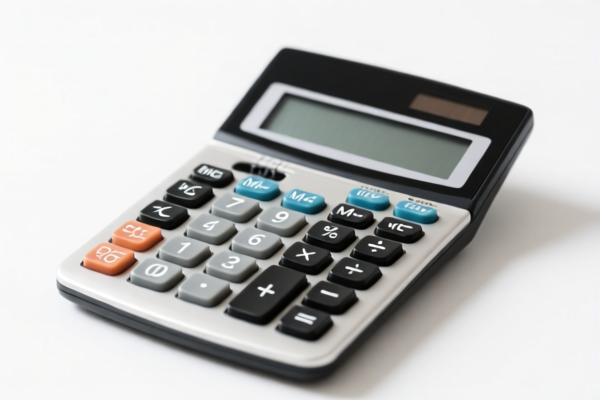
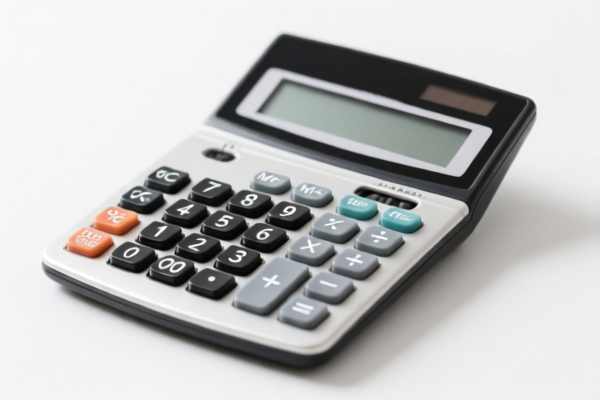
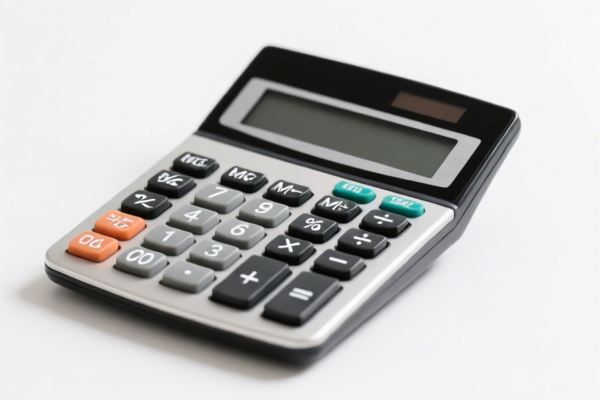
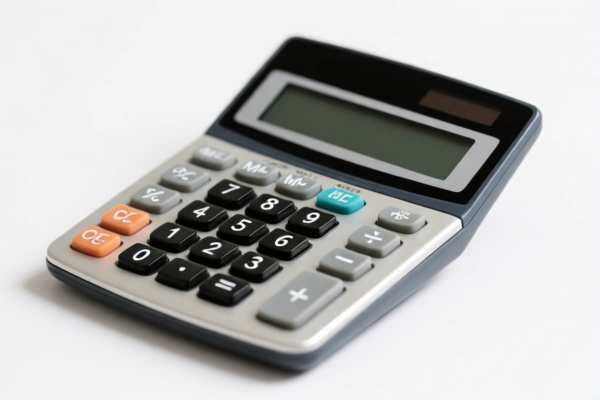
AI Analysis
📊 Counting or Inspection Instruments & Components
🌐 HS Code Reference & Customs Clearance Guide | 2026 Latest Tariff Analysis | Professional Compliance Strategy
📌 I. Product Definition: What Are "Counting/Inspection Instruments"?
Counting and Inspection Instruments are specialized devices used in manufacturing, logistics, and quality control to measure, record, or verify quantities and physical characteristics. In international trade, these goods are typically classified based on their primary function and whether they are complete units or spare parts/components.
Key Distinction:
- Complete Instruments: Devices capable of independent operation (e.g., counters, sensors, inspectors).
- Parts/Components: Specific pieces designed for use exclusively with the main instrument, lacking independent function.
⚠️ Critical Classification Point:
- If the item is a standalone device for counting/inspection → Likely Chapter 90 (9033 or 9029)
- If the item is a component for machinery (e.g., part of a production line counter) → Likely Chapter 84 (8473)
- Misclassification Risk: Declaring a specific machine part as a general instrument can lead to incorrect tax rates (e.g., missing the 25% Section 301 tariff).
📦 II. HS Code Classification Matrix (2026 Latest Tariff Authority)
The following table outlines the five specific HS Codes provided in the data, categorized by their function and tax implications for Chinese-origin goods entering the US market.
| HS Code | Product Description | Function & Usage | Tax Profile |
|---|---|---|---|
9033.00.90.00 |
Parts of counting/recording instruments | Generic parts for instruments defined in Chapter 90 | 39.4% |
8473.21.00.00 |
Parts of Automatic Data Processing (ADP) machines | Components for ADP equipment (e.g., parts of a computerized counter) | 35.0% |
8473.29.00.00 |
Parts of other ADP machines | Components for ADP machines not covered in 8473.21 | 35.0% |
9029.90.80.80 |
Parts of Rotational/Production Counters | Specific parts for rotation counters or production counters | 35.0% |
9029.90.80.40 |
Parts for Specific Purpose Counters | Niche parts for specialized counting equipment | 35.0% |
🔍 Key Insight:
-9033.00.90.00is the only code in this dataset with a 39.4% rate due to a higher base tariff (4.4%).
- All other codes share a 35.0% rate, driven by 0% base tariff + 35% combined surcharges.
- Why 35%? Base (0%) + Section 301 (25%) + IEEPA (10%) = 35%.
- Why 39.4%? Base (4.4%) + Section 301 (25%) + IEEPA (10%) = 39.4%.
💰 III. 2026 Tariff Rate Breakdown (Detailed Analysis)
✅ Applicable Country: United States (US)
✅ Country of Origin: China (CN)
✅ Effective Date: Post-November 10, 2025 (Including subsequent imports)
🎯 1. 9033.00.90.00 – Parts of Counting/Recording Instruments (Highest Risk)
| Item | Details |
|---|---|
| Base Tariff | 4.4% (Ad Valorem) |
| Section 301 Surcharge | +25.0% (USITC Footnote 9903.88.01) |
| IEEPA Surcharge | +10.0% (China-specific, effective Nov 10, 2025) |
| Total Tax Rate | 39.4% |
| Tax Calculation | CIF Value × 39.4% |
| De Minimis Exemption? | ❌ No (Denied for China-origin goods) |
| Legal Path | IEEPA:9903.01.25 → USITC:9033.00.90.00 → FOOTNOTE:9903.88.01 |
📌 Explanation:
This code has the highest tax burden because the base tariff for Chapter 90 parts is 4.4%, not 0%. The 25% Section 301 tariff and 10% IEEPA tariff are added on top.
⚠️ Warning: Many importers mistakenly use this code for generic parts, paying 4.4% more than necessary if the part specifically belongs to an ADP or production counter system.
🎯 2. 8473.21.00.00 & 8473.29.00.00 – Parts of ADP Machines
| Item | Details |
|---|---|
| Base Tariff | 0.0% |
| Section 301 Surcharge | +25.0% |
| IEEPA Surcharge | +10.0% |
| Total Tax Rate | 35.0% |
| Tax Calculation | CIF Value × 35.0% |
| De Minimis Exemption? | ❌ No |
| Legal Path | IEEPA:9903.01.25 → USITC:8473.21.00.00 / 8473.29.00.00 |
📌 Explanation:
-8473.21: Parts for Automatic Data Processing machines (e.g., computers, servers, mainframes). If your "counter" is a software-driven digital counter integrated into an ADP system, use this.
-8473.29: Parts for Other ADP machines. Use if8473.21doesn’t fit but it’s still an ADP component.
- Why 35%? Zero base tariff makes these significantly cheaper than9033.00.90.00.
🎯 3. 9029.90.80.80 & 9029.90.80.40 – Parts of Rotational/Production Counters
| Item | Details |
|---|---|
| Base Tariff | 0.0% |
| Section 301 Surcharge | +25.0% |
| IEEPA Surcharge | +10.0% |
| Total Tax Rate | 35.0% |
| Tax Calculation | CIF Value × 35.0% |
| De Minimis Exemption? | ❌ No |
| Legal Path | IEEPA:9903.01.25 → USITC:9029.90.80.xx |
📌 Explanation:
-9029covers "Indicators and Recorders" (e.g., rotational counters, production counters).
-80.80: Generic rotational/production counter parts.
-80.40: Parts for specific purpose counters (niche industrial applications).
- Key Advantage: Like the ADP codes, these have a 0% base tariff, resulting in the lower 35.0% total rate.
- Critical Note: Ensure the part is specifically for a counter/instrument defined in Chapter 90, not for a general machine.
🛠️ IV. Customs Clearance Best Practices (Avoiding Pitfalls)
✅ 1. Documentation Checklist (Mandatory)
| Document | Required | Notes |
|---|---|---|
| ✅ Product Specification Sheet | ✔️ | Must detail: Function (counting/inspection), Voltage, Interface, Material |
| ✅ Technical Drawing/Schematic | ✔️ | Proves if the item is a "part" or "complete instrument" |
| ✅ Product Photos (Clear) | ✔️ | Show labels, model numbers, and any markings |
| ✅ Commercial Invoice | ✔️ | Must specify: "Parts for [Specific Machine/Instrument]" |
| ✅ Certificate of Origin | ✔️ | Confirm China origin to apply correct IEEPA tariffs |
| ✅ Packing List | ✔️ | List components separately if shipped together |
✅ 2. Classification Strategy (Golden Rules)
| Scenario | Correct HS Code | Incorrect HS Code | Consequence |
|---|---|---|---|
| Part of a Computerized Counter (ADP System) | 8473.21.00.00 (35%) |
9033.00.90.00 (39.4%) |
Overpay 4.4% on base value |
| Part of a Mechanical Rotation Counter | 9029.90.80.80 (35%) |
9033.00.90.00 (39.4%) |
Overpay 4.4% on base value |
| Generic Spare Part (No Specific Instrument) | 9033.00.90.00 (39.4%) |
8473.21.00.00 (35%) |
Underpay 4.4% → Audit Risk |
| Complete Counter/Inspector | Not in Data | N/A | These codes are for parts only |
🔥 Pro Tip:
"ADP and Counter Parts are Cheaper!"
If your part can be defined as a component of an ADP machine or a rotational counter, use8473or9029codes to save 4.4% on the base value compared to the generic9033code.
✅ 3. Special Cases & Mitigation
| Case | Handling Strategy |
|---|---|
| OEM/Custom Parts | Provide a bill of materials (BOM) showing the part’s relationship to the main instrument. |
| Multi-Function Devices | Classify based on the principal function. If it counts, use Chapter 90 or 8473. |
| Mixed Shipments | Do not consolidate different HS codes into one line item. Declare separately. |
| Disputed Classification | Apply for a Customs Ruling from CBP before shipping to avoid penalties. |
🌍 V. Global Market Comparison (2026)
| Country/Region | Recommended HS Code | Tariff (China Origin) | Certification | Notes |
|---|---|---|---|---|
| 🇺🇸 USA | 8473.21.00.00 / 9029.90.80.80 |
35.0% | None | Highest tariff burden due to 301+IEEPA |
| 🇨🇳 China | 8473.21.00.00 / 9029.90.80.80 |
0% - 4.4% | CCC | No surcharges |
| 🇪🇺 EU | 8473.21.00.00 / 9029.90.80.80 |
0% - 3.7% | CE | No surcharges |
| 🇦🇺 Australia | 8473.21.00.00 / 9029.90.80.80 |
0% - 5% | RCM | No surcharges |
📌 Conclusion:
- The USA is the only major market with significant surcharges (35-39.4%).
- Cost Optimization: Ensure accurate classification to avoid the 4.4% premium of9033.00.90.00if a35%code applies.
📌 VI. Common Errors & Pitfalls (Lessons Learned)
❌ Error 1: Declaring a Counter Part as 9033.00.90.00 when it fits 8473.21.00.00 or 9029.90.80.80.
👉 Result: Overpaying 4.4% on the base value unnecessarily.
❌ Error 2: Declaring a Complete Instrument as a "Part".
👉 Result: Customs may reject the declaration for being incomplete or require a different HS code (not listed here).
❌ Error 3: Ignoring IEEPA 10% Surcharge for China-origin goods.
👉 Result: Under-declaring taxes by 10%, leading to penalties, interest, and potential seizures.
❌ Error 4: Using "Generic Parts" description.
👉 Result: CBP may assign a higher duty rate or require a Customs Ruling, causing delays.
✅ Correct Approach:
"Parts for Rotational Counter, Model XYZ, Material: Aluminum, Voltage: 24V DC, Specifically Designed for [Machine Name]"
🎯 VII. Conclusion: Precision Saves Money
🎯 Remember:
🔹 "35% vs 39.4%: The 4.4% Difference is Critical!"
🔹 "ADP & Counter Parts are Cheaper Than Generic Instrument Parts!"
🔹 "Always Declare the Specific Function, Not Just 'Parts'!"
📌 Pro Tip:
If your parts are originating from Vietnam, Mexico, Thailand, or Malaysia, you may be eligible for IEEPA Exemptions, reducing the rate to 0%-5%.
Recommendation: Apply for a Pre-Ruling to confirm the correct HS Code and avoid disputes.
📣 Immediate Action:
📞 Consult a Licensed Customs Broker + Provide Technical Specs + Apply for HS Code Pre-Ruling
🚀 Ensure smooth clearance, cost efficiency, and compliance!
✨ Professional Clearance Starts with Accurate Classification!
💼 Every Percent Counts in Your Bottom Line!
Customer Reviews
About HS Code Classification
The Harmonized System (HS) is an internationally standardized nomenclature developed by the World Customs Organization (WCO) to classify traded products. Over 200 countries use the HS system as the basis for customs tariffs, trade statistics, and import/export regulations.
Each HS code follows a hierarchical structure:
- Chapter (2 digits) — Broad category of goods (e.g., Chapter 84: Machinery and Mechanical Appliances)
- Heading (4 digits) — More specific grouping within the chapter
- Subheading (6 digits) — Internationally standardized breakdown, used by all WCO member countries
- National subdivisions (8-10 digits) — Country-specific extensions for further classification, such as US HTSUS 10-digit codes
Correct HS code classification is essential for smooth customs clearance, accurate duty payment, and compliance with trade regulations. Misclassification can lead to customs delays, overpayment of duties, or penalties.
When importing from CN to US, the applicable tariff rates may include:
- Most-Favored-Nation (MFN) rate — The standard duty rate applied to WTO members
- General rate — Applied to countries without trade agreements
- Trade remedy duties — Additional tariffs such as Section 301 (anti-dumping), Section 232 (national security), or countervailing duties
The information provided on this page is for reference purposes only. For official classification, please consult with your local customs authority or a licensed customs broker.