Cow Decorative Leather
CN → US| HS Code | Tariff Rate | Origin | Destination | Doc |
|---|---|---|---|---|
| 4107118000 | 12.4% | CN | US | Official Doc |
| 4113903000 | 38.3% | CN | US | Official Doc |
| 4113906000 | 36.6% | CN | US | Official Doc |
| 4104114010 | 15.0% | CN | US | Official Doc |
| 4104111020 | 35.0% | CN | US | Official Doc |
Product Images
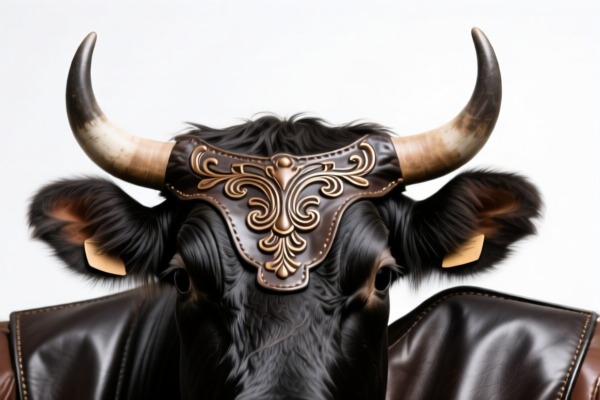
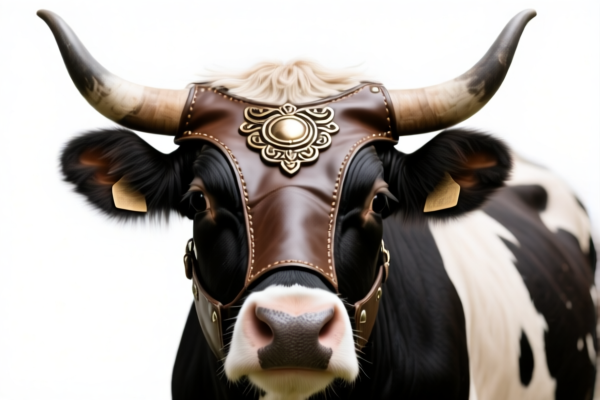
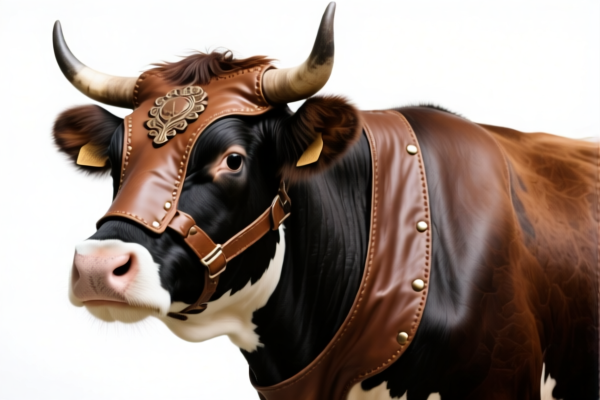

AI Analysis
🐄 Cow Decorative Leather (Handmade Application)
🌐 HS Code Reference & Customs Clearance Guide | 2026 Latest Tariff Analysis | Professional Clearance Strategy
📌 I. Product Definition & Classification: What is "Cow Decorative Leather"?
Cow Decorative Leather refers to processed bovine leather specifically designed for manual craftsmanship, decoration, or non-industrial standard processing. In international trade, its classification depends heavily on the degree of processing, surface treatment, and intended use.
The key distinction lies in whether the leather is considered "standard/unpatterned" (bulk raw material) or "decorative/patterned" (finished aesthetic product), which significantly impacts the duty rate.
⚠️ Critical Classification Point:
- If the leather is processed but lacks specific decorative patterns (used as a general material) → It may fall under general bovine leather categories (4113,4104) with varying degrees of protectionist tariffs.
- If the leather is cut into pieces for decoration or has specific aesthetic finishes → It may qualify for different subheadings (4107) with potentially lower base duties.
📦 II. HS Code Classification Details (2026 Latest Tariff Authority Comparison)
| HS Code | Product Description | Application Scenario | Base Duty | Additional Tariffs | Total Tax Rate |
|---|---|---|---|---|---|
4113.90.30.00 |
Cow leather for handmade use, material: animal leather, form: processed leather, usage: non-patterned leather processing scope. | General processed bovine leather, not specifically patterned for decoration. | 3.3% | 25.0% (Sec. 301) + 10% (Section 122) | 38.3% |
4113.90.60.00 |
Cow leather for handmade use, material: cowhide, form: leather processing, usage: no conflict with patterned leather. | Processed cowhide where patterned classification is not applicable. | 1.6% | 25.0% (Sec. 301) + 10% (Section 122) | 36.6% |
4104.11.40.10 |
Cow leather for handmade use, matching material: cow, form: leather, based on general catch-all principles. | Standard tanned/semi-tanned bovine leather under general provisions. | 5.0% | 0.0% (Sec. 301) + 10% (Section 122) | 15.0% |
4104.11.10.20 |
Cow leather for handmade use, matching material: cowhide, form: tanned/semi-tanned leather, usage: making leather goods. | Tanned bovine leather used for manufacturing final goods. | 0.0% | 25.0% (Sec. 301) + 10% (Section 122) | 35.0% |
4107.11.80.00 |
Decorative cowhide pieces, material: cowhide, form: pieces, usage: corresponds to decorative categories. | Cowhide cut into pieces specifically for decorative purposes. | 2.4% | 0.0% (Sec. 301) + 10% (Section 122) | 12.4% |
🔍 Key Observation:
- The lowest total tax rate (12.4%) applies to4107.11.80.00(Decorative cowhide pieces), provided it is classified as "pieces" for decoration.
- The highest total tax rate (38.3%) applies to4113.90.30.00, which falls under general processed leather without specific decorative exemptions.
- Section 122 (10%) is universally applicable across all listed codes in this dataset.
- Section 301 (25%) is applied to most categories except4104.11.40.10(0%) and4107.11.80.00(0%).
💰 III. 2026 Latest Tariff Rate Breakdown (Including Surtaxes & Policy Add-ons)
✅ Applicable Country: United States (US)
✅ Origin: China (CN)
✅ Effective Date: 2025/2026 Tariff Structure
🎯 1. 4107.11.80.00 —— Decorative Cowhide Pieces (Lowest Tax: 12.4%)
| Item | Content |
|---|---|
| Base Tariff | 2.4% (ad valorem) |
| Section 301 Surcharge | 0.0% (Exempt from 25% penalty) |
| Section 122 Surcharge | +10% (Policy add-on for specific leather categories) |
| Total Rate | 12.4% |
| Tax Calculation | CIF Value × 12.4% |
| De Minimis Eligibility | ❌ No (Deny de minimis for high-value leather goods) |
| Legal Basis Path | Section 122 → USITC:4107.11.80.00 |
📌 Explanation:
- This code is optimal if the leather is cut into pieces and marketed as decorative.
- It avoids the 25% Section 301 tariff, which is the biggest cost driver for other leather codes.
- Recommendation: Ensure product descriptions explicitly state "Decorative Pieces" to qualify.
🎯 2. 4104.11.40.10 —— General Bovine Leather (Medium Tax: 15.0%)
| Item | Content |
|---|---|
| Base Tariff | 5.0% |
| Section 301 Surcharge | 0.0% (Exempt) |
| Section 122 Surcharge | +10% |
| Total Rate | 15.0% |
| Tax Calculation | CIF Value × 15.0% |
| De Minimis Eligibility | ❌ No |
| Legal Basis Path | Section 122 → USITC:4104.11.40.10 |
📌 Note:
- This category uses a "catch-all" principle for standard bovine leather.
- While cheaper than most, it lacks the "decorative" label, which might limit its use for high-end craft goods.
🎯 3. 4104.11.10.20 —— Tanned Cowhide for Goods (High Tax: 35.0%)
| Item | Content |
|---|---|
| Base Tariff | 0.0% |
| Section 301 Surcharge | +25% |
| Section 122 Surcharge | +10% |
| Total Rate | 35.0% |
| Tax Calculation | CIF Value × 35.0% |
| De Minimis Eligibility | ❌ No |
| Legal Basis Path | Section 122 → Section 301 → USITC:4104.11.10.20 |
📌 Warning:
- Despite 0% base tariff, the 25% Section 301 penalty makes it expensive.
- Applicable for tanned leather intended for further manufacturing (e.g., making bags, shoes).
🎯 4. 4113.90.60.00 —— Processed Cowhide (High Tax: 36.6%)
| Item | Content |
|---|---|
| Base Tariff | 1.6% |
| Section 301 Surcharge | +25% |
| Section 122 Surcharge | +10% |
| Total Rate | 36.6% |
| Tax Calculation | CIF Value × 36.6% |
| De Minimis Eligibility | ❌ No |
| Legal Basis Path | Section 122 → Section 301 → USITC:4113.90.60.00 |
📌 Note:
- Similar to above, high due to Section 301.
- Used for general processed leather not fitting other specific categories.
🎯 5. 4113.90.30.00 —— Non-Patterned Processed Leather (Highest Tax: 38.3%)
| Item | Content |
|---|---|
| Base Tariff | 3.3% |
| Section 301 Surcharge | +25% |
| Section 122 Surcharge | +10% |
| Total Rate | 38.3% |
| Tax Calculation | CIF Value × 38.3% |
| De Minimis Eligibility | ❌ No |
| Legal Basis Path | Section 122 → Section 301 → USITC:4113.90.30.00 |
📌 Warning:
- This is the most expensive category.
- Avoid unless the product strictly fits "non-patterned" criteria and cannot be reclassified.
🛠️ IV. Customs Clearance Practical Advice (Actionable Pitfall Avoidance Guide)
✅ 1. Required Documentation Checklist
| Document | Mandatory? | Description |
|---|---|---|
| ✅ Product Specification Sheet | ✔️ | Must detail: Material (Bovine), Processing (Tanned/Decorative), Form (Pieces/Sheets). |
| ✅ Product Photos | ✔️ | Clear images showing surface texture, edges, and any decorative patterns. |
| ✅ Commercial Invoice | ✔️ | Must explicitly state "Decorative Cowhide Pieces" or "Processed Cowhide" matching HS Code. |
| ✅ Packing List | ✔️ | List quantity by weight/area; specify if cut into pieces. |
| ✅ Certificate of Origin (CO) | ✔️ | Required to verify Chinese origin for Section 301/122 applicability. |
| ✅ Third-Party Lab Report | ✔️ | Confirms material is genuine cowhide (not synthetic) to avoid fraud penalties. |
✅ 2. Declaration Strategy (Key Mnemonic)
🔥 “Decorative Pieces Get Relief, General Leather Pays the Fee!”
| Scenario | Correct HS Code | Why? |
|---|---|---|
| Leather cut into shapes/pieces for decoration | 4107.11.80.00 |
Qualifies for 0% Section 301. Total 12.4%. |
| Standard tanned sheets for manufacturing | 4104.11.40.10 |
No Section 301. Total 15.0%. |
| General processed leather, no specific pattern | 4113.90.30.00 |
Subject to 25% Section 301. Total 38.3%. |
| Tanned leather for making goods | 4104.11.10.20 |
Subject to 25% Section 301. Total 35.0%. |
⚠️ Critical Tip:
- If your product is decorative, always describe it as "Pieces" or "Decorative Leather" to aim for4107.11.80.00.
- Do NOT use generic terms like "Raw Leather" if it is processed, as it may lead to misclassification and audits.
✅ 3. Special Circumstances Handling
| Situation | Handling Advice |
|---|---|
| OEM Custom Decorative Leather | Provide design templates and proof of decorative intent to justify 4107.11.80.00. |
| Mixed Shipments (Decorative + Standard) | Separate shipments or clearly itemize to avoid higher duty on entire shipment. |
| Synthetic Leather Misdeclaration | Strictly avoid. If it’s not bovine, it will be reclassified and penalized. |
| Pre-Cutting | If leather is cut into small decorative shapes, emphasize this in the invoice. |
🌍 V. Global Market Clearance Comparison (2026)
| Country/Region | Recommended HS Code | Tariff (China Origin) | Certification | Notes |
|---|---|---|---|---|
| 🇺🇸 USA | 4107.11.80.00 |
12.4% | None specific | Best option for decorative pieces. |
| 🇨🇳 China | 4107.11.80.00 |
Low (Import Duty) | N/A | Export market data shown. |
| 🇪🇺 EU | 4107.11.80.00 |
Varies (Check EU Tariff) | CE (if applicable) | EU has different duty structure. |
| 🇬🇧 UK | 4107.11.80.00 |
Varies | UKCA | Post-Brexit rules apply. |
| 🇯🇵 Japan | 4107.11.80.00 |
Low | PSE (if applicable) | FTA benefits may apply. |
📌 Conclusion:
- USA has unique Section 301 & 122 surcharges, making HS Code selection critical for cost control.
- Decoupling decorative leather into4107category can save ~23-26% in duties compared to other categories.
📌 VI. Common Mistakes & Pitfalls (Blood & Tears Lessons)
❌ Mistake 1: Declaring decorative pieces as "Raw Cowhide" (4104)
👉 Consequence: Might attract 25% Section 301 tariff if not properly argued as decorative → Cost increases by 10-25%.
❌ Mistake 2: Using "General Leather" for highly patterned/decorative items
👉 Consequence: Customs may reject 4107 classification and force 4113 → 38.3% tax.
❌ Mistake 3: Failing to specify "Cut into Pieces"
👉 Consequence: Customs may view it as sheet leather → Higher duty bracket.
❌ Mistake 4: Ignoring Section 122
👉 Consequence: Even with 0% Section 301, Section 122 adds 10%. Budget accordingly.
✅ Correct Declaration Example:
"Decorative Cowhide Pieces, Tanned, Cut into Shape for Craft Use, Material: 100% Bovine Leather, Model: DEC-001"
🎯 VII. Conclusion: Precision Classification Saves Money!
🎯 Key Takeaway:
🔹 "Decorative Pieces = Low Tax (12.4%) | General Leather = High Tax (35-38%)"
🔹 Section 301 is the Enemy, Section 122 is the Friend (10% vs 25%)
🔹 Describe Your Product Accurately: "Pieces" and "Decorative" are Magic Words
📌 Pro Tip:
- If you are importing large volumes, consider applying for Exclusions under Section 301 if available.
- Always pre-clear with a customs broker using product images and detailed descriptions.
- Keep records of all communications with suppliers regarding "decorative" nature.
📣 Immediate Action:
📞 Contact a Licensed Customs Broker
🖼️ Provide Clear Photos of Decorative Features
📝 Request HS Code Pre-Ruling for4107.11.80.00
🚀 Optimize Your Supply Chain to Reduce Duty Costs!
✨ Professional Customs Clearance Starts with Accurate Classification!
💼 Every Percent of Duty Saved is Profit Gained!
Customer Reviews
About HS Code Classification
The Harmonized System (HS) is an internationally standardized nomenclature developed by the World Customs Organization (WCO) to classify traded products. Over 200 countries use the HS system as the basis for customs tariffs, trade statistics, and import/export regulations.
Each HS code follows a hierarchical structure:
- Chapter (2 digits) — Broad category of goods (e.g., Chapter 84: Machinery and Mechanical Appliances)
- Heading (4 digits) — More specific grouping within the chapter
- Subheading (6 digits) — Internationally standardized breakdown, used by all WCO member countries
- National subdivisions (8-10 digits) — Country-specific extensions for further classification, such as US HTSUS 10-digit codes
Correct HS code classification is essential for smooth customs clearance, accurate duty payment, and compliance with trade regulations. Misclassification can lead to customs delays, overpayment of duties, or penalties.
When importing from CN to US, the applicable tariff rates may include:
- Most-Favored-Nation (MFN) rate — The standard duty rate applied to WTO members
- General rate — Applied to countries without trade agreements
- Trade remedy duties — Additional tariffs such as Section 301 (anti-dumping), Section 232 (national security), or countervailing duties
The information provided on this page is for reference purposes only. For official classification, please consult with your local customs authority or a licensed customs broker.