Cow Semi Hide for Clothing
CN → US| HS Code | Tariff Rate | Origin | Destination | Doc |
|---|---|---|---|---|
| 4104495000 | 13.3% | CN | US | Official Doc |
| 4107117040 | 15.0% | CN | US | Official Doc |
| 4107127040 | 15.0% | CN | US | Official Doc |
| 4114207000 | 36.6% | CN | US | Official Doc |
| 4107192000 | 37.4% | CN | US | Official Doc |
Product Images
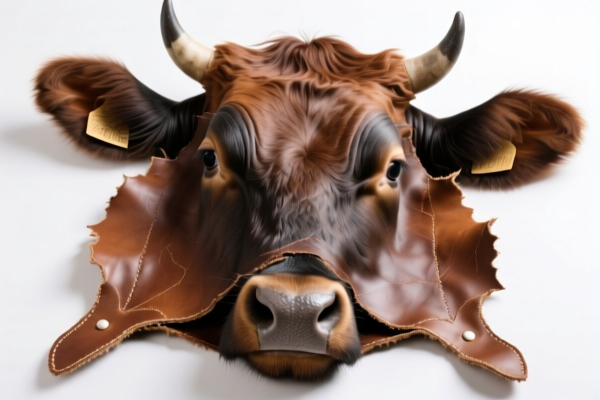
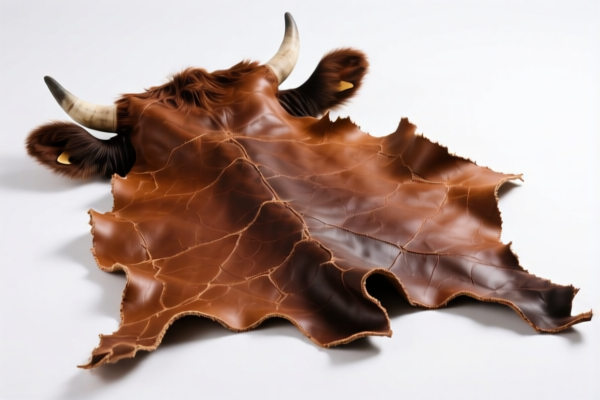
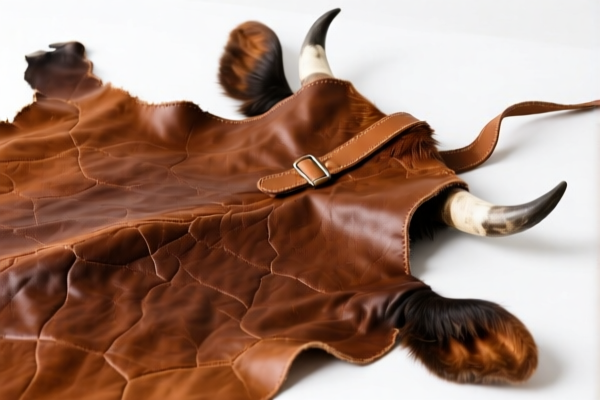
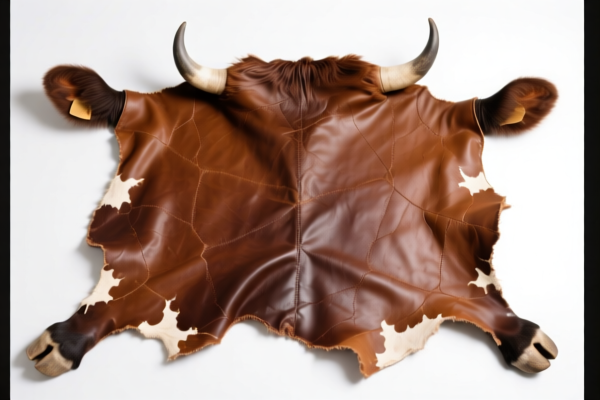
AI Analysis
🐮 Cow Semi-Processed Leather for Garments (Leather Goods)
🌐 HS Code Reference & Customs Clearance Guide | 2026 Latest Tariff Analysis | Professional Clearance Strategy
📌 I. Product Definition & Classification: Do You Truly Understand "Cow Semi-Hides"?
Cow semi-hides, also known as Crust Leather or Shifting Leather, are leather goods that have undergone tanning (usually vegetable or chrome tanning) but have not yet been finished for final use. They are the intermediate product between raw hides and finished leather goods. In international trade, the classification depends heavily on the state of processing, surface treatment, and intended end-use.
⚠️ Key Distinction Points:
- Unfinished/Tanned but Unfinished Surface → Generally falls under Chapter 41, Heading 4107 (Leather further processed than raw but not further than crust).
- Lacquer/Patent Leather → Falls under Heading 4114.
- Specific Garment Use → While "for clothing" is a use description, HS codes are primarily based on physical characteristics. However, specific sub-headings may exist for leather designated for clothing, or it may be classified as general crust leather if no specific "garment" sub-heading applies, leading to different duty rates due to trade war tariffs (Section 301 / IEEPA).
📦 II. HS Code Classification Details (2026 Latest Tariff Authoritative Comparison)
| HS Code | Product Description | Applicable Scenario | Processing State |
|---|---|---|---|
4104.49.50.00 |
Semi-processed cowhide material for clothing, meeting characteristics of semi-tanned and un-further processed | General crust leather, vegetable-tanned or chrome-tanned, no lacquer | ✅ Basic State (Low Duty) |
4107.11.70.40 |
Cowhide semi-processed for clothing, classified under cattle/horse leather and garment use | Full grain or corrected grain crust leather, specific to garment application | ⚖️ Standard Duty |
4107.12.70.40 |
Cowhide semi-processed clothing material, consistent form with garment use | Split leather or similar, intended for garments | ⚖️ Standard Duty |
4114.20.70.00 |
Cowhide semi-processed clothing material, belonging to lacquer and lacquered leather category | Leather with surface coating, lacquer, or patent finish | 🔴 High Duty (Special Treatment) |
4107.19.20.00 |
Semi-processed cowhide (non-premium), meeting non-luxury description | Lower quality crust leather, corrected grain, non-premium | 🔴 High Duty (Trade War Impact) |
🔍 Key Reminder:
- Lacquer/Patent Leather (4114) is taxed significantly higher than standard crust leather.
- "Garment Use" does not automatically exempt you from Section 301/IEEPA tariffs. The physical state (lacquered vs. plain) drives the base rate, but the Origin (China) drives the additional tariffs.
-4104.49.50.00is the most favorable if the leather is truly "un-further processed" and not designated as premium garment leather under specific sub-headings that attract higher base tariffs.
💰 III. 2026 Latest Tariff Rate Details (Including Surcharges & Policy Add-ons)
✅ Applicable Country: United States (US)
✅ Country of Origin: China (CN)
✅ Effective Time: 2025 November 10 (Including subsequent imports)
🎯 1. 4104.49.50.00 —— Semi-Processed Cowhide (Basic/Unfinished)
| Item | Content |
|---|---|
| Base Tariff Rate | 3.3% (Ad Valorem) |
| Trade War Surcharge | +0.0% |
| 122 Clause Tariff | +10% |
| Total Tax Rate | 13.3% |
| Tax Calculation | CIF Value × 13.3% |
| De Minimis Exemption | ❌ Not Applicable (High value, specific commodity) |
| Legal Basis Path | HTSUS:4104.49.50.00 → Trade Act:Section 301/IEEPA |
📌 Explanation:
- This is the lowest tariff option among the listed codes.
- It applies to leather that is semi-processed but does not fit into specific "premium garment" sub-headings that attract higher base duties.
- The 10% 122 Clause tariff is a specific add-on for certain textile/leather goods from China.
- Total 13.3% is significantly lower than the 36-37% rates for other categories.
🎯 2. 4107.11.70.40 & 4107.12.70.40 —— Cowhide Semi-Processed (Standard Garment Use)
| Item | Content |
|---|---|
| Base Tariff Rate | 5.0% (Ad Valorem) |
| Trade War Surcharge | +0.0% |
| 122 Clause Tariff | +10% |
| Total Tax Rate | 15.0% |
| Tax Calculation | CIF Value × 15.0% |
| De Minimis Exemption | ❌ Not Applicable |
| Legal Basis Path | HTSUS:4107.11/12.70.40 → Trade Act:Section 301/IEEPA |
📌 Note:
- These codes apply to cowhides specifically classified for garment use but not lacquered.
- The base rate (5.0%) is higher than4104.49.50.00(3.3%).
- Total 15.0% still includes the 10% 122 Clause tariff.
- Ensure your product description clearly matches "Cattle/Horse Leather" and "Garment Use" to avoid misclassification penalties.
🎯 3. 4114.20.70.00 —— Lacquer/Patent Leather
| Item | Content |
|---|---|
| Base Tariff Rate | 1.6% (Ad Valorem) |
| Trade War Surcharge | +25.0% (Section 301) |
| 122 Clause Tariff | +10% |
| Total Tax Rate | 36.6% |
| Tax Calculation | CIF Value × 36.6% |
| De Minimis Exemption | ❌ Not Applicable |
| Legal Basis Path | HTSUS:4114.20.70.00 → USITC Footnote/Section 301 |
📌 Warning:
- Even though the base rate is low (1.6%), the 25% Section 301 Tariff drastically increases the cost.
- Lacquer/Patent leather is considered a higher-value processed good and attracts the full 25% trade war surcharge.
- Total 36.6% is a major cost driver. Avoid this classification if your leather is not actually lacquered.
🎯 4. 4107.19.20.00 —— Semi-Processed Cowhide (Non-Premium/Other)
| Item | Content |
|---|---|
| Base Tariff Rate | 2.4% (Ad Valorem) |
| Trade War Surcharge | +25.0% (Section 301) |
| 122 Clause Tariff | +10% |
| Total Tax Rate | 37.4% |
| Tax Calculation | CIF Value × 37.4% |
| De Minimis Exemption | ❌ Not Applicable |
| Legal Basis Path | HTSUS:4107.19.20.00 → USITC Footnote/Section 301 |
📌 Note:
- This code often captures leather that does not fit other specific "garment" sub-headings but is still subject to the full 25% trade war tariff.
- Total 37.4% is the highest risk category.
- Ensure the product does not accidentally fall here if it can be classified under4104or4107.11/12.
🛠️ IV. Customs Clearance Practical Advice (Battle-Tested Pitfall Avoidance Guide)
✅ 1. Preparation Checklist (Mandatory)
| Material | Required | Explanation |
|---|---|---|
| ✅ Product Specification Sheet | ✔️ | Must detail tanning method (Chrome/Veg), surface finish (Crust/Lacquer), thickness, and area size. |
| ✅ Process Flow Chart | ✔️ | Proves the leather is "semi-processed" (crust) and not further finished (dyed/painted). |
| ✅ Product Photos (Clear) | ✔️ | Show surface texture, cross-section, and lack of final lacquer/paint. |
| ✅ Commercial Invoice | ✔️ | Must state "Semi-Processed Leather for Garment Use" and specify "Not Lacquered". |
| ✅ Packing List | ✔️ | Detail quantity, weight, and hide sizes. |
| ✅ Origin Certificate | ✔️ | To prove CN origin and apply accurate trade war tariffs. |
✅ 2. Declaration Techniques (Key Mantras)
🔥 “Surface Finish Determines Duty, Lacquer Equals High Tax, Use Precise Descriptions!”
| Scenario | Correct Declaration | Wrong Practice |
|---|---|---|
| Plain Crust Leather | 4104.49.50.00 or 4107.11.70.40 |
Mislabeling as "Finished Leather" → Higher duty |
| Lacquer/Patent Leather | 4114.20.70.00 |
Hiding lacquer → Fraud/Penalty |
| Non-Premium Crust | 4107.19.20.00 |
Claiming premium status → Misclassification |
| Garment-Specific | 4107.11.70.40 / 4107.12.70.40 |
Vague "Leather" description → Audit Delay |
✅ 3. Special Case Handling
| Situation | Handling Advice |
|---|---|
| Mixed Lot (Crust + Lacquer) | Must Separate! Do not mix. Lacquer portion will be taxed at 36.6%. |
| OEM Customization | Provide design specs. If no lacquer is applied, declare as 4104 or 4107. |
| Sample Shipments | Even samples are subject to tariffs. Do not use "Gift" or "Sample" to evade taxes if value exceeds de minimis. |
| Re-export from Vietnam | Check Rules of Origin. Simple tanning in China then assembly in Vietnam may still trigger CN tariffs unless substantial transformation occurs. |
🌍 V. Global Market Clearance Comparison (2026 Latest)
| Country/Region | Recommended HS Code | Tariff (China Origin) | Certification/Remarks |
|---|---|---|---|
| 🇺🇸 USA | 4104.49.50.00 |
13.3% (Lowest) | High scrutiny on "Semi-Processed" definition. |
| 🇨🇳 China | 4104.49.50.00 |
~10-15% (Import) | No Section 301. |
| 🇪🇺 EU | 4104.49.50.00 |
~5-6% (Import) | No Section 301. Check REACH for chemicals. |
| 🇬🇧 UK | 4104.49.50.00 |
~5-6% (Import) | Post-Brexit rules apply. |
| 🇯🇵 Japan | 4104.49.50.00 |
~5-7% (Import) | No additional trade war tariffs. |
📌 Conclusion:
- The USA is the most costly market due to the combination of base tariffs and IEEPA/Section 301 surcharges.
- Classification Accuracy is Critical: A 2.4% vs. 1.6% base rate seems small, but the 25% surcharge on lacquered/non-premium items adds ~$25 on every $100 value.
- Strategy: Aim for4104.49.50.00(13.3%) if possible. Avoid4114and4107.19.20.00unless physically unavoidable.
📌 VI. Common Errors & Pitfall Guide (Blood and Tears Lessons)
❌ Mistake 1: Declaring Lacquer Leather as "Crust Leather"
👉 Consequence: Customs inspection reveals lacquer → Re-classification to 4114 → Back taxes + Penalties (36.6% vs 13.3%).
❌ Mistake 2: Using "Finished Leather" for Semi-Processed Goods
👉 Consequence: Wrong HS Code → Delayed clearance → Demurrage charges at port.
❌ Mistake 3: Ignoring the "122 Clause" (10%)
👉 Consequence: Underpayment → Audit later → Interest on unpaid duties.
❌ Mistake 4: Assuming "Garment Use" Exempts from Trade Wars
👉 Consequence: Misunderstanding tariff structure. Trade wars apply to the product type, not just the end use.
✅ Correct Practice:
"Cowhide, Semi-Processed (Crust), Chrome Tanned, Vegetable Tanned, Unfinished Surface, For Garment Manufacturing, Model XYZ, No Lacquer"
🎯 VII. Conclusion: Professional Declaration, Cost Savings!
🎯 Remember the Mantra:
🔹 "Crust is King, Lacquer is Pain, 13.3% is the Target, 37% is the Trap!"
🔹 "HS Code Saves Money, Misclassification Costs Thousands!"
📌 Pro Tip:
If your leather is not from China (e.g., USA, Brazil, Italy), the Section 301/IEEPA tariffs do not apply.
- US Leather: 0% Base + 0% Surcharge = 0% (Potential duty-free under certain trade agreements).
- EU Leather: Low base rate, no surcharge.
Recommendation:
1. Pre-Ruling: Apply for an Advance Ruling with US Customs (CBP) to confirm 4104.49.50.00 vs 4107 classification.
2. Supply Chain: If possible, source semi-hides from non-China origins to avoid the 10-37% tariff burden entirely.
3. Documentation: Always include a Statement of Processing to prove the leather is "semi-processed" and not "finished/lacquered."
📣 Take Action Now:
📞 Contact a Licensed Customs Broker
📦 Provide Detailed Product Specs + Photos
🚀 Clear Customs Smoothly, Minimize Tariffs, Maximize Profit!
✨ Professional Clearance Starts with Accurate Classification!
💼 Every Percentage Point Saved is Pure Profit!
Customer Reviews
About HS Code Classification
The Harmonized System (HS) is an internationally standardized nomenclature developed by the World Customs Organization (WCO) to classify traded products. Over 200 countries use the HS system as the basis for customs tariffs, trade statistics, and import/export regulations.
Each HS code follows a hierarchical structure:
- Chapter (2 digits) — Broad category of goods (e.g., Chapter 84: Machinery and Mechanical Appliances)
- Heading (4 digits) — More specific grouping within the chapter
- Subheading (6 digits) — Internationally standardized breakdown, used by all WCO member countries
- National subdivisions (8-10 digits) — Country-specific extensions for further classification, such as US HTSUS 10-digit codes
Correct HS code classification is essential for smooth customs clearance, accurate duty payment, and compliance with trade regulations. Misclassification can lead to customs delays, overpayment of duties, or penalties.
When importing from CN to US, the applicable tariff rates may include:
- Most-Favored-Nation (MFN) rate — The standard duty rate applied to WTO members
- General rate — Applied to countries without trade agreements
- Trade remedy duties — Additional tariffs such as Section 301 (anti-dumping), Section 232 (national security), or countervailing duties
The information provided on this page is for reference purposes only. For official classification, please consult with your local customs authority or a licensed customs broker.