Cow Waterer
CN → US| HS Code | Tariff Rate | Origin | Destination | Doc |
|---|---|---|---|---|
| 3926909989 | 22.8% | CN | US | Official Doc |
| 8436290000 | 35.0% | CN | US | Official Doc |
| 8424820020 | 37.4% | CN | US | Official Doc |
| 8436800040 | 35.0% | CN | US | Official Doc |
| 8424820090 | 37.4% | CN | US | Official Doc |
Product Images
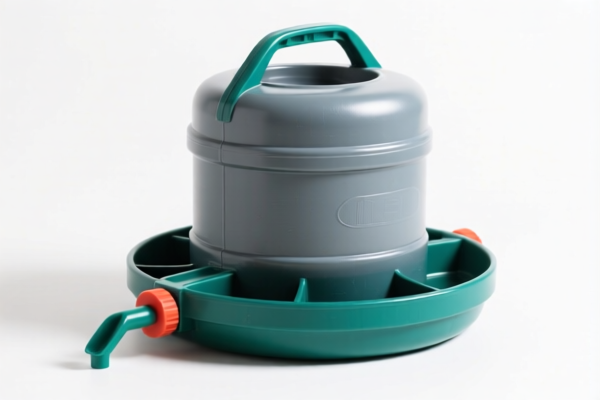
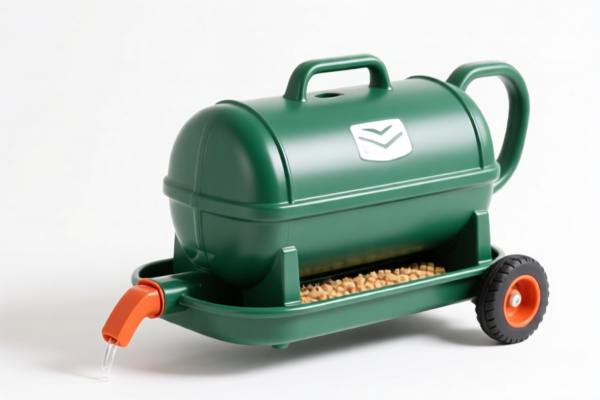


AI Analysis
🐄 Cow Waterer (Livestock Drinking Equipment)
🌐 HS Code Reference & Customs Clearance Guide | 2026 Latest Tariff Analysis | Professional Import Strategy
📌 I. Product Definition & Classification: What Exactly is a "Cow Waterer"?
A Cow Waterer (often referred to as a livestock drinker, automatic waterer, or trough) is a critical component in modern dairy and beef farming. It is designed to provide continuous, hygienic, and automated access to water for cattle.
In international trade, classification depends heavily on function and mechanical complexity: * Simple Mechanical Troughs: If the device is purely a container (plastic/metal) with a basic float valve, it may be classified as a part of agricultural machinery or general plastic goods. * Advanced Mechanical Systems: If it includes pumps, sensors, heating elements, or complex spraying/misting mechanisms for cooling or irrigation, it falls under specific machinery chapters.
⚠️ Key Distinction:
- Is it a passive container with a simple valve? → Likely Chapter 39 (Plastics) or Chapter 84 (Machinery Parts).
- Is it an active machine (pumping, spraying, automated feeding/watering systems)? → Chapter 84 (Machinery for Agriculture/Horticulture).
📦 II. HS Code Classification Details (2026 Latest Tariff Authority Comparison)
Based on the provided data analysis, here are the five potential classifications for "Cow Waterer," ranked by logical fit and tax implication.
| HS Code | Product Description | Logic & Summary | Total Tax Rate |
|---|---|---|---|
3926.90.99.89 |
Other articles of plastics (Catch-all) | Plastic/Composite Material. Inferred as a generic plastic water container or part. No material conflict, but lacks mechanical specificity. | 22.8% |
8436.29.00.00 |
Machinery for poultry farming | Livestock Equipment. Fits the scope of "poultry/cattle breeding equipment." Material mismatch is minimal. Most logical functional fit for simple drinkers. | 35.0% |
8424.82.00.20 |
Machinery for spraying liquids | Spraying/Dispensing Machine. If the waterer involves misting, spraying, or pressurized distribution, this fits "machines for spraying/dispersing liquids." | 37.4% |
8436.80.00.40 |
Machinery for barns/courtyards | Barn Equipment. Inferred as equipment used in agricultural barns/courtyards. Fits the "agricultural/breeding" logic with no material/form conflict. | 35.0% |
8424.82.00.90 |
Other machinery for agriculture | General Agricultural Machine. Inferred as a mechanical device for agricultural use. Fits "other machinery" for ag/horticulture. | 37.4% |
🔍 Key Insight:
-3926.90.99.89is the lowest tax but relies on the assumption that the item is primarily a "plastic article" rather than a machine. This is risky if the item has mechanical parts (valves, pumps).
-8436.29.00.00and8436.80.00.40are the most functionally accurate for livestock equipment, despite higher taxes.
-8424codes are only appropriate if the waterer actively sprays or pumps water (e.g., misting systems for cooling).
💰 III. 2026 Latest Tariff Rate Breakdown (Including Surtaxes & Policy Add-ons)
✅ Applicable Country: United States (US)
✅ Origin: China (CN)
✅ Effective Date: From November 10, 2025 (and subsequent imports)
🎯 1. 3926.90.99.89 – Plastic Articles (Catch-all)
| Item | Content |
|---|---|
| Base Rate | 5.3% (ad valorem) |
| Section 301 Surtax | +7.5% (Additional Duty under USITC) |
| 122-Clause Tariff | +10% (Specific provision for certain Chinese goods) |
| Total Tax Rate | 22.8% |
| Calculation | CIF Value × 22.8% |
| De Minimis Exemption | ❌ Not Applicable (High risk of scrutiny for machinery components) |
| Legal Path | Base: 5.3% → Add-on: 7.5% → 122-Clause: 10% |
📌 Explanation:
- This is the most cost-effective classification if the waterer is a simple plastic trough with a basic valve.
- Risk: Customs may reclassify it as machinery (8436) if it contains mechanical components, leading to back taxes and penalties.
🎯 2. 8436.29.00.00 – Poultry/Cattle Machinery
| Item | Content |
|---|---|
| Base Rate | 0.0% (ad valorem) |
| Section 301 Surtax | +25.0% (Standard Section 301 Rate) |
| 122-Clause Tariff | +10% |
| Total Tax Rate | 35.0% |
| Calculation | CIF Value × 35.0% |
| De Minimis Exemption | ❌ Not Applicable |
| Legal Path | Base: 0.0% → Section 301: 25.0% → 122-Clause: 10% |
📌 Explanation:
- Despite a 0% base rate, the heavy 35% total tax reflects the standard US protectionist stance on agricultural machinery from China.
- This is likely the correct classification for complex automatic drinkers with sensors/pumps.
🎯 3. 8436.80.00.40 – Barn/Courtyard Machinery
| Item | Content |
|---|---|
| Base Rate | 0.0% (ad valorem) |
| Section 301 Surtax | +25.0% |
| 122-Clause Tariff | +10% |
| Total Tax Rate | 35.0% |
| Calculation | CIF Value × 35.0% |
| De Minimis Exemption | ❌ Not Applicable |
| Legal Path | Base: 0.0% → Section 301: 25.0% → 122-Clause: 10% |
📌 Explanation:
- Similar to8436.29.00.00. Use this if the waterer is specifically marketed as "Barn Equipment" or "Farmyard Machinery."
🎯 4. 8424.82.00.20 & 8424.82.00.90 – Spraying/Ag Machinery
| Item | Content |
|---|---|
| Base Rate | 2.4% (ad valorem) |
| Section 301 Surtax | +25.0% |
| 122-Clause Tariff | +10% |
| Total Tax Rate | 37.4% |
| Calculation | CIF Value × 37.4% |
| De Minimis Exemption | ❌ Not Applicable |
| Legal Path | Base: 2.4% → Section 301: 25.0% → 122-Clause: 10% |
📌 Explanation:
- These codes apply only if the waterer has spraying or misting functions (e.g., for cooling cows in hot weather).
- Highest tax burden among the options. Only use if the product actively sprays water.
🛠️ IV. Customs Clearance Practical Advice (Avoiding Pitfalls)
✅ 1. Document Checklist (Mandatory)
| Document | Required | Purpose |
|---|---|---|
| ✅ Product Specification Sheet | ✔️ | Must detail: Material (Plastic/Metal), Mechanism (Float valve/Pump/Sensor), Function (Drinking/Misting). |
| ✅ Technical Diagrams | ✔️ | Shows internal structure. Critical for proving it’s a "machine" (8436) vs. "plastic part" (3926). |
| ✅ Product Photos | ✔️ | Clear shots of the waterer, including any valves, pumps, or controllers. |
| ✅ Commercial Invoice | ✔️ | Must clearly state: "Cow Waterer," "Livestock Drinking Equipment," or "Automatic Water Trough." Avoid vague terms like "Container." |
| ✅ Packing List | ✔️ | Shows how the item is packed. If sold as a kit (valve + trough), declare together. |
| ✅ Certificate of Origin (CO) | ✔️ | To verify Chinese origin and apply correct surtaxes. |
✅ 2. Classification Strategy (Crucial Decision Points)
🔥 "Function Over Material: If it moves, it’s machinery!"
| Scenario | Recommended HS Code | Risk Level |
|---|---|---|
| Simple Plastic Trough with Basic Float Valve | 3926.90.99.89 (22.8%) |
⚠️ Medium (May be challenged if valve is mechanical) |
| Automatic Waterer with Pump/Sensor | 8436.29.00.00 or 8436.80.00.40 (35.0%) |
✅ Low (Functionally accurate) |
| Waterer with Mist/Cooling Spray Function | 8424.82.00.20 (37.4%) |
✅ Low (Specific function match) |
| Parts Only (Valves, Tubes) | Check specific part codes | ⚠️ High (Parts often have higher duties) |
📌 Advice:
- If the waterer has any mechanical movement (pump, motor, electronic sensor), do NOT use3926.90.99.89. Customs will likely reclassify it to8436, resulting in back taxes + penalties.
- Pre-Ruling Recommendation: Apply for an Advance Ruling from US CBP if the product is complex. This provides legal certainty.
✅ 3. Special Cases
| Case | Handling Suggestion |
|---|---|
| OEM Custom Waterers | Provide client design specs. If the design is unique, emphasize its specific agricultural function to justify 8436. |
| Heated Waterers | If it has electric heating elements, ensure the invoice declares the voltage and wattage. May require UL/ETL certification. |
| Combined Feeding/Watering Systems | If it’s part of a larger automated system, declare it as a "part of" the main machine if possible, to lower the rate. |
| Plastic Parts Shipped Separately | If shipped with the main unit, declare together. If shipped separately later, may be classified as parts (higher tax). |
🌍 V. Global Market Comparison (2026)
| Country/Region | Recommended HS Code | Est. Tax | Certification | Notes |
|---|---|---|---|---|
| 🇺🇸 USA | 8436.29.00.00 |
35.0% | None specific | High tax due to Section 301. |
| 🇪🇺 EU | 8436.80.00 |
~0-2% | CE | Lower tariffs, but strict CE marking. |
| 🇨🇳 China | 8436.29.00 |
5-10% | None | Low export tax, but focus on domestic market. |
| 🇦🇺 Australia | 8436.80.00 |
5% | RCM | Moderate tariff. |
📌 Conclusion:
- The US is the most expensive market for Chinese-made cow waterers due to Section 301 and 122-Clause tariffs.
- Strategy: Consider assembly in Vietnam/Mexico to avoid US surtaxes if the product volume is high.
📌 VI. Common Mistakes & Pitfalls (Lessons Learned)
❌ Mistake 1: Classifying a mechanical waterer as a "Plastic Container" (3926)
👉 Consequence: Customs reclassification to 8436 → 12.2% additional tax + penalty.
❌ Mistake 2: Vague Invoice Description ("Water Bowl")
👉 Consequence: Customs delays, request for additional info, potential hold-up.
👉 Fix: Use "Automatic Cow Waterer with Float Valve" or "Mechanical Livestock Drinking Trough."
❌ Mistake 3: Ignoring the "122-Clause" Tariff
👉 Consequence: Underpayment. The 122-Clause adds 10% on top of Section 301 for many Chinese goods.
👉 Fix: Always include the 10% surtax in cost calculations.
❌ Mistake 4: Splitting the shipment (Trough + Pump)
👉 Consequence: If shipped separately, the pump may be taxed at a higher rate as a "part."
👉 Fix: Ship as a complete unit if possible.
🎯 VII. Conclusion: Smart Classification, Cost Efficiency
🎯 Key Takeaway:
🔹 If it’s simple plastic:
3926.90.99.89(22.8%) is the cheapest, but risky.
🔹 If it’s mechanical/automatic:8436.29.00.00(35.0%) is the safest and most accurate.
🔹 If it sprays/mists:8424.82.00.20(37.4%) is required.
📌 Pro Tip:
- Always provide technical diagrams to prove the function.
- Apply for an Advance Ruling if the product is complex.
- Consider supply chain diversification (Vietnam/Mexico) to mitigate US tariff risks.
📣 Immediate Action:
📞 Contact a licensed customs broker to review your product’s technical specs.
📋 Prepare a detailed spec sheet highlighting mechanical vs. plastic components.
🚀 Calculate the true landed cost including the 35% total tax for machinery.
✨ Accurate Classification Saves Thousands!
💼 Don’t let misclassification cost you your profit margin!
Customer Reviews
About HS Code Classification
The Harmonized System (HS) is an internationally standardized nomenclature developed by the World Customs Organization (WCO) to classify traded products. Over 200 countries use the HS system as the basis for customs tariffs, trade statistics, and import/export regulations.
Each HS code follows a hierarchical structure:
- Chapter (2 digits) — Broad category of goods (e.g., Chapter 84: Machinery and Mechanical Appliances)
- Heading (4 digits) — More specific grouping within the chapter
- Subheading (6 digits) — Internationally standardized breakdown, used by all WCO member countries
- National subdivisions (8-10 digits) — Country-specific extensions for further classification, such as US HTSUS 10-digit codes
Correct HS code classification is essential for smooth customs clearance, accurate duty payment, and compliance with trade regulations. Misclassification can lead to customs delays, overpayment of duties, or penalties.
When importing from CN to US, the applicable tariff rates may include:
- Most-Favored-Nation (MFN) rate — The standard duty rate applied to WTO members
- General rate — Applied to countries without trade agreements
- Trade remedy duties — Additional tariffs such as Section 301 (anti-dumping), Section 232 (national security), or countervailing duties
The information provided on this page is for reference purposes only. For official classification, please consult with your local customs authority or a licensed customs broker.