Cowhide Belt
CN → US| HS Code | Tariff Rate | Origin | Destination | Doc |
|---|---|---|---|---|
| 4203406000 | 35.0% | CN | US | Official Doc |
| 4205008000 | 35.0% | CN | US | Official Doc |
| 4203300000 | 37.7% | CN | US | Official Doc |
| 4203403000 | 39.9% | CN | US | Official Doc |
| 4205006000 | 39.9% | CN | US | Official Doc |
Product Images
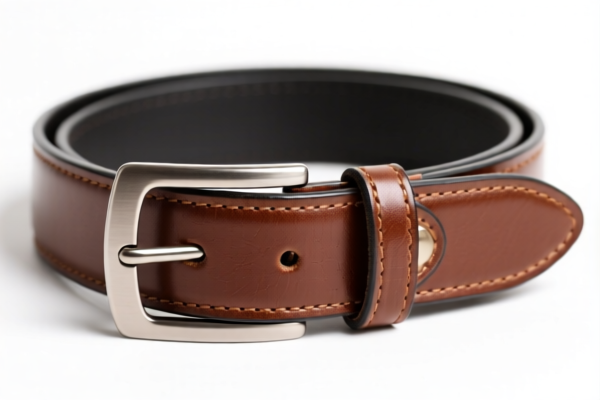
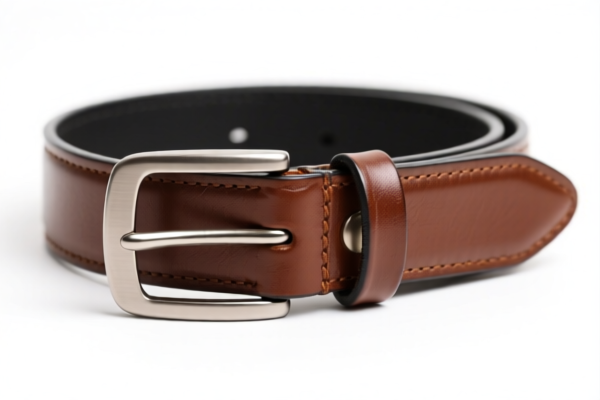
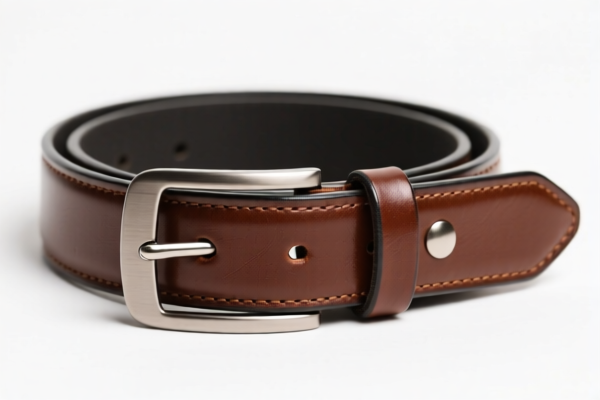
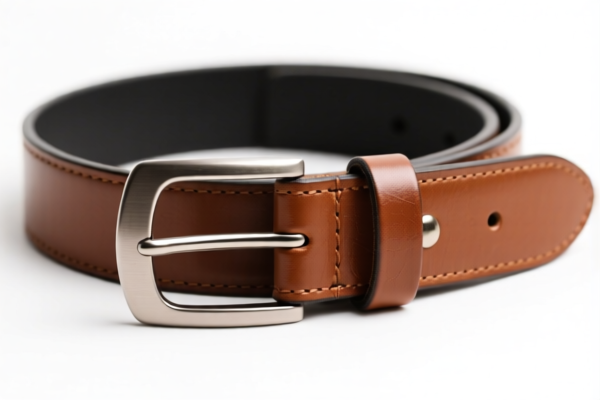
AI Analysis
👖 Cowhide Belt (Leather Belt)
🌐 HS Code Reference & Customs Clearance Guide | 2026 Latest Tariff Analysis | Professional-Level Clearance Strategy
📌 I. Product Definition & Classification: Do You Really Understand the "Cowhide Belt"?
A Cowhide Belt is a standard garment accessory made from bovine leather, primarily used to secure trousers or skirts and as a fashion statement. In international trade, the classification hinges on two critical factors: Material Origin (Standard Cowhide vs. Crocodile/Reptile) and Function (Clothing Accessory vs. General Leather Good).
Standard Cowhide Belts: Made from common cattle leather. Typically classified under "Accessories of Clothing or Dress" (Chapter 42, Heading 4203).
Specialty Belts: If the "cowhide" is actually misrepresented or misidentified as exotic skin (like crocodile), it triggers different codes. However, based on the provided data, we must distinguish between standard leather belts and those potentially flagged as reptile skin due to texture or marketing.
⚠️ Key Distinction Point:
- If the material is standard cattle leather → It falls under "Other clothing accessories" (4203.40).
- If the material is claimed to be crocodile/reptile leather (even if mislabeled as cowhide in some contexts) → It falls under "Reptile skin articles" (4203.40.30.00 or 4205.00.60.00).
- Crucial Note: The data provided includes specific codes for "Crocodile Skin" (4203.40.30.00 and 4205.00.60.00). If your "Cowhide Belt" is actually standard cowhide, it aligns with 4203.40.60.00. If it is reptile skin, it aligns with the other codes. We will analyze all scenarios based on the provided dataset.
📦 II. HS Code Classification Details (2026 Latest Tariff Authority Comparison)
| HS Code | Product Description | Applicable Scenario | Material Specification | Total Tax Rate |
|---|---|---|---|---|
4203.40.60.00 |
Other Clothing Accessories (Leather) | Standard Cowhide Belt | Leather (Non-exotic) | 35.0% |
4205.00.80.00 |
Other Articles of Leather (General) | General Leather Goods (Belt) | Leather (Non-exotic) | 35.0% |
4203.40.30.00 |
Clothing Accessories (Reptile Skin) | Crocodile/Reptile Skin Belt | Reptile Skin (Crocodile) | 39.9% |
4205.00.60.00 |
Other Leather Articles (Reptile Skin) | General Leather Good (Reptile) | Reptile Skin (Crocodile) | 39.9% |
🔍 Key Reminder:
- 4203.40 is the preferred category for belts because they are explicitly defined as "Accessories of Clothing."
- 4205.00 is a catch-all for "Other Articles of Leather." If the belt is not considered a clothing accessory (e.g., a decorative strap), it might fall here, but for standard belts, 4203 is more accurate.
- Critical Distinction: The data explicitly mentions "Crocodile Skin" for codes4203.40.30.00and4205.00.60.00. If your product is standard cowhide, do NOT use these codes. Using reptile codes for cowhide is a misclassification. Conversely, if your product is reptile skin, you MUST use these codes.
💰 III. 2026 Latest Tariff Rate Breakdown (Including Surcharges & Policy Surcharges)
✅ Applicable Country: United States (US)
✅ Origin: China (CN)
✅ Effective Date: November 10, 2025 (and subsequent imports)
🎯 1. 4203.40.60.00 — Leather Clothing Accessories (Standard Cowhide)
| Item | Content |
|---|---|
| Base Duty Rate | 0% (Ad Valorem) |
| USITC Additional Duty (Section 301) | +25% |
| IEEPA Additional Duty | +10% (122 Clause Tariff for China/HK) |
| Total Tax Rate | 35.0% |
| Tax Calculation | CIF Value × 35% |
| De Minimis Exemption Eligible? | ❌ No (deny_de_minimis) |
| Legal Basis Path | IEEPA:9903.01.24 → USITC:4203.40.60.00 → FOOTNOTE:9903.88.01 |
📌 Explanation:
- "USITC Additional Duty 25%": Comes from the Section 301 tariffs under the US Trade Act.
- "IEEPA 10%": The new "122 Clause" tariff targeting Chinese imports under the International Emergency Economic Powers Act.
- Total 35%: This is a high tariff for a leather accessory. Pre-calculation is essential.
🎯 2. 4205.00.80.00 — Other Leather Articles (General Classification)
| Item | Content |
|---|---|
| Base Duty Rate | 0% |
| USITC Additional Duty (Section 301) | +25% |
| IEEPA Additional Duty | +10% |
| Total Tax Rate | 35.0% |
| Tax Calculation | CIF Value × 35% |
| De Minimis Exemption Eligible? | ❌ No |
| Legal Basis Path | IEEPA:9903.01.24 → USITC:4205.00.80.00 → FOOTNOTE:9903.88.01 |
📌 Note:
- Same tariff structure as4203.40.60.00.
- This code is used if the belt is not classified as a clothing accessory but as a general leather good.
- Risk: If Customs determines it is a clothing accessory, they may force reclassification to4203.40.60.00with no tax difference, but it creates compliance risk.
🎯 3. 4203.40.30.00 — Clothing Accessories (Reptile Skin / Crocodile)
| Item | Content |
|---|---|
| Base Duty Rate | 4.9% |
| USITC Additional Duty (Section 301) | +25% |
| IEEPA Additional Duty | +10% |
| Total Tax Rate | 39.9% |
| Tax Calculation | CIF Value × 39.9% |
| De Minimis Exemption Eligible? | ❌ No |
| Legal Basis Path | IEEPA:9903.01.24 → USITC:4203.40.30.00 → FOOTNOTE:9903.88.01 |
📌 Critical Warning:
- Base Rate is 4.9%, not 0%. This is significantly higher than standard leather.
- This code is ONLY for Reptile Skin (e.g., Crocodile, Alligator).
- If you import Cowhide and declare it under this code, you face higher duty (39.9% vs 35%) and legal risk for false declaration of exotic materials.
- If you import Crocodile and declare it as Cowhide (4203.40.60.00), you face under-declaration penalties.
🎯 4. 4205.00.60.00 — Other Leather Articles (Reptile Skin / Crocodile)
| Item | Content |
|---|---|
| Base Duty Rate | 4.9% |
| USITC Additional Duty (Section 301) | +25% |
| IEEPA Additional Duty | +10% |
| Total Tax Rate | 39.9% |
| Tax Calculation | CIF Value × 39.9% |
| De Minimis Exemption Eligible? | ❌ No |
| Legal Basis Path | IEEPA:9903.01.24 → USITC:4205.00.60.00 → FOOTNOTE:9903.88.01 |
📌 Note:
- Same as above: 39.9% Total Rate.
- Only for Reptile Skin non-clothing accessory leather goods.
🛠️ IV. Customs Clearance Practical Advice (Battle-Tested Pitfall Guide)
✅ 1. Documentation Checklist (Non-negotiable)
| Document | Must Provide | Description |
|---|---|---|
| ✅ Product Specification Sheet | ✔️ | Material (Cowhide vs. Crocodile), Dimensions, Buckle Material |
| ✅ Product Photos (Including Label) | ✔️ | Clear view of grain, stitching, brand, and care label |
| ✅ Commercial Invoice | ✔️ | Must accurately describe material: "100% Cattle Leather Belt" or "Crocodile Skin Belt" |
| ✅ Packing List | ✔️ | Quantity, Weight, Packaging Type |
| ✅ Certificate of Origin (CO) | ✔️ | If originating outside China, may qualify for lower duties |
| ✅ Third-Party Test Report | ✔️ | Leather authenticity test (if exotic) |
✅ 2. Declaration Tactics (Key Mantra)
🔥 "Material Accurate, Code Precise, Tax Minimized!"
| Scenario | Correct Declaration | Wrong Action |
|---|---|---|
| Standard Cowhide Belt | 4203.40.60.00 |
Declare as Crocodile → 39.9% + Fraud Risk |
| Standard Cowhide Belt | 4203.40.60.00 |
Declare as General Leather (4205.00) → Possible Rejection/Correction |
| Crocodile Belt | 4203.40.30.00 |
Declare as Cowhide → 35% (Underpaid 4.9%) + Penalties |
| Mix of Cowhide & Fabric | Check Composition | Split declaration if components are separable |
✅ 3. Special Case Handling
| Situation | Handling Advice |
|---|---|
| OEM Custom Belts | Provide design drawings and material specs to avoid "unknown" classification |
| Belt with Metal Buckle | Classify as Leather Belt (4203.40), not hardware. The buckle is considered part of the accessory |
| "Crocodile-Embossed" Cowhide | Must declare as Cowhide (4203.40.60.00). Do NOT declare as Crocodile skin unless it is genuine reptile leather. Misrepresentation leads to severe fines. |
| Sample Imports | Still subject to full tariffs. No de minimis exemption for this HS Code. |
🌍 V. Global Market Comparison (2026 Latest)
| Country/Region | Recommended HS Code | Tariff (China Origin) | Certification Requirements | Notes |
|---|---|---|---|---|
| 🇺🇸 USA | 4203.40.60.00 |
35% | None Specific | High due to 301 + IEEPA tariffs |
| 🇨🇳 China | 4203.40.60.00 |
10-13% | CCC (if applicable) | Lower tariffs for domestic trade |
| 🇪🇺 EU | 4203.29 |
~4.5% | None | No Section 301/IEEPA surcharges |
| 🇬🇧 UK | 4203.29 |
~4.5% | None | Post-Brexit independent tariffs |
| 🇯🇵 Japan | 4203.21 |
~5-10% | None | Varies by leather type |
📌 Conclusion:
- The US is the highest-tariff market for leather belts due to the combined 35% (301 + IEEPA) rate.
- European and Asian markets are significantly cheaper (~4-10%).
- Cost Optimization Strategy: Consider sourcing from countries with FTAs (Free Trade Agreements) if targeting the US.
📌 VI. Common Errors & Pitfall Guide (Lessons Learned)
❌ Error 1: Declaring Crocodile-Embossed Cowhide as Genuine Crocodile
👉 Consequence: 39.9% Tax + Fraud Investigation + Fines!
👉 Solution: Declare accurately as "Cattle Leather with Embossed Pattern."
❌ Error 2: Declaring Cowhide Belt as Crocodile Belt to avoid other restrictions
👉 Consequence: Higher Tax (39.9% vs 35%) + No Benefit!
👉 Solution: Stick to 4203.40.60.00 for standard leather.
❌ Error 3: Ignoring the IEEPA 10% Surcharge
👉 Consequence: Budget shortfall. Many traders only account for 25%.
👉 Solution: Always calculate Base + 25% + 10% = 35% (for cowhide).
❌ Error 4: Using De Minimis (Section 321) for this shipment
👉 Consequence: Shipment Rejected/Detained.
👉 Solution: This HS Code is explicitly denied de minimis status. Full formal entry is required.
✅ Correct Declaration Example:
"Leather Belt, Women's, 100% Cattle Leather, Embossed Pattern, Size 30, Brand XYZ, Made in China"
🎯 VII. Conclusion: Professional Declaration, Time-Saving, Cost-Effective!
🎯 Remember the Mantra:
🔹 "Cowhide is 35%, Crocodile is 39.9%. Don't Mix Them!"
🔹 "IEEPA 10% is Real. Budget for the Full 35%."
🔹 "No De Minimis. Plan Your Logistics Accordingly."
📌 Pro Tip:
If your belts are embossed to look like exotic skin, always declare the actual base material (Cowhide). Customs uses microscopy and chemical tests to verify. Faking exotic status can lead to Section 301/IEEPA fraud penalties.
For genuine crocodile/alligator belts, ensure you have CITES documentation if applicable, though the US tariff data provided does not mention CITES restrictions, only tariff rates.
📣 Immediate Action:
📞 Consult a licensed customs broker.
📄 Prepare detailed material specs.
🚀 Clear Customs Smoothly, Avoid Penalties, Maximize Profit!
✨ Professional Clearance Starts with Accurate Classification!
💼 Every Cent of Duty is Worth Calculating Precisely!
Customer Reviews
About HS Code Classification
The Harmonized System (HS) is an internationally standardized nomenclature developed by the World Customs Organization (WCO) to classify traded products. Over 200 countries use the HS system as the basis for customs tariffs, trade statistics, and import/export regulations.
Each HS code follows a hierarchical structure:
- Chapter (2 digits) — Broad category of goods (e.g., Chapter 84: Machinery and Mechanical Appliances)
- Heading (4 digits) — More specific grouping within the chapter
- Subheading (6 digits) — Internationally standardized breakdown, used by all WCO member countries
- National subdivisions (8-10 digits) — Country-specific extensions for further classification, such as US HTSUS 10-digit codes
Correct HS code classification is essential for smooth customs clearance, accurate duty payment, and compliance with trade regulations. Misclassification can lead to customs delays, overpayment of duties, or penalties.
When importing from CN to US, the applicable tariff rates may include:
- Most-Favored-Nation (MFN) rate — The standard duty rate applied to WTO members
- General rate — Applied to countries without trade agreements
- Trade remedy duties — Additional tariffs such as Section 301 (anti-dumping), Section 232 (national security), or countervailing duties
The information provided on this page is for reference purposes only. For official classification, please consult with your local customs authority or a licensed customs broker.