Cowhide Decorative Lining Leather
CN → US| HS Code | Tariff Rate | Origin | Destination | Doc |
|---|---|---|---|---|
| 4205008000 | 35.0% | CN | US | Official Doc |
| 4113903000 | 38.3% | CN | US | Official Doc |
| 4205001000 | 35.0% | CN | US | Official Doc |
| 4115100000 | 35.0% | CN | US | Official Doc |
Product Images
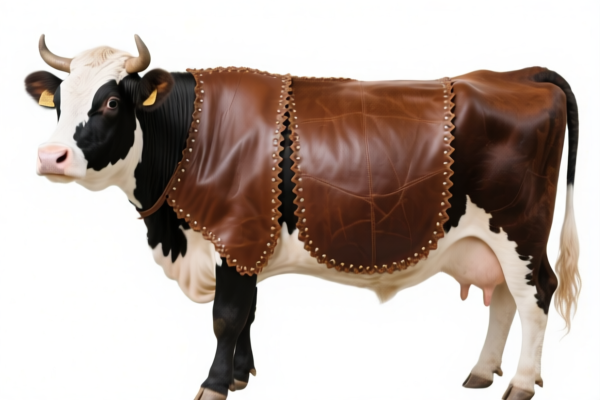
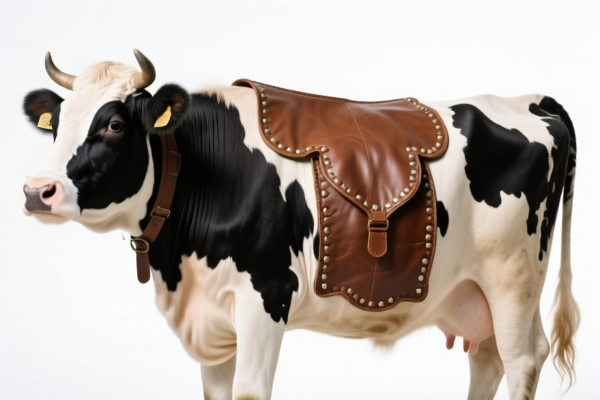
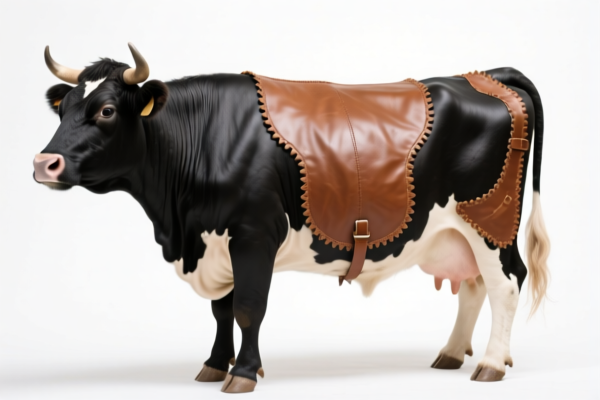

AI Analysis
🐂 Cowhide Decorative Lining Leather: Classification, Taxation & Clearance Strategy
🌐 HS Code Reference & Customs Clearance Guide | 2026 Latest Tariff Analysis | Professional Level Strategy
📌 1. Product Definition and Classification: Do You Really Understand "Cowhide Decorative Lining Leather"?
"Cowhide Decorative Lining Leather" is a versatile material primarily used in automotive interiors, high-end furniture, luggage, and fashion accessories. In international trade, its classification depends heavily on its processing degree and final form. It is generally divided into two main categories:
Further Processed Animal Leather (Section XI): Leather that has undergone significant processing (e.g., full-grain lining, composite base) and is no longer just raw hide but a specialized material.
Other Leather Articles (Section XII): Leather goods or components that are further processed into specific functional articles (e.g., interior trim parts) but are not yet finished consumer goods.
⚠️ Key Distinction Point:
- If the leather serves as a composite base or full-grain lining with specific structural properties → Classified under 4113/4115 (Further Processed Leather).
- If the leather is cut/formulated specifically as an interior trim part (decorative function) → Classified under 4205 (Other Leather Articles).
📦 2. HS Code Classification Details (2026 Latest Tariff Authority Comparison)
| HS Code | Product Description | Application Scenario | Processing Degree |
|---|---|---|---|
4113.90.30.00 |
Further processd animal leather; Other; Other: Leather of Bovines, Full-Grain Lining | High-end automotive interiors, full-grain linings, composite bases | ✅ High (Further Processed) |
4115.10.00.00 |
Further Processed Animal Leather; Other; Other: Composite Leather Basis | Composite leather bases, multi-layer leather structures | ✅ High (Composite Base) |
4205.00.10.00 |
Other Made Up Leather Articles and Articles of Leather Substitute; Other: Leather Trim for Footwear | Interior trim parts, decorative leather components (General) | ✅ Medium (Made-up Article) |
4205.00.80.00 |
Other Made Up Leather Articles and Articles of Leather Substitute; Other: Other | Other decorative leather items, specific trim applications | ✅ Medium (Made-up Article) |
🔍 Key Reminder:
- "Decorative Lining" often triggers Section XI (4113/4115) if it retains the characteristics of "further processed leather" rather than becoming a distinct "article."
- "Interior Trim Parts" (4205) apply when the leather is specifically shaped or treated as a component for automotive/furniture interiors, distinct from general leather goods.
- Misclassification can lead to significant duty differences due to Section XI vs. Section XII tariff structures.
💰 3. 2026 Latest Tariff Rate Breakdown (Including Surcharges & Policy Surcharges)
✅ Applicable Country: United States (US)
✅ Country of Origin: China (CN)
✅ Effective Time: 2025 November 10 onwards (including subsequent imports)
🎯 1. 4113.90.30.00 – Further Processed Animal Leather (Full-Grain Lining)
| Item | Details |
|---|---|
| Base Tariff | 3.3% (ad valorem) |
| USITC Surcharge (Section 301) | +25.0% |
| IEEPA Surcharge (Section 122) | +10.0% |
| Total Effective Rate | 38.3% |
| Tax Calculation | CIF Value × 38.3% |
| De Minimis Exemption? | ❌ Not Eligible (deny_de_minimis) |
| Legal Basis Path | USITC:4113.90.30.00 → IEEPA:9903.01.24 → USITC:Footnote |
📌 Explanation:
- Base Tariff (3.3%): Standard MFN rate for further processed leather.
- Section 301 Surcharge (25%): Applies to Chinese goods in this category.
- Section 122 Surcharge (10%): Specific surcharge for certain leather products under Section 232/122 provisions.
- Total 38.3%: This is a high-duty category. Accurate classification as "Further Processed Leather" is critical.
🎯 2. 4115.10.00.00 – Further Processed Animal Leather (Composite Basis)
| Item | Details |
|---|---|
| Base Tariff | 0.0% (ad valorem) |
| USITC Surcharge (Section 301) | +25.0% |
| IEEPA Surcharge (Section 122) | +10.0% |
| Total Effective Rate | 35.0% |
| Tax Calculation | CIF Value × 35.0% |
| De Minimis Exemption? | ❌ Not Eligible (deny_de_minimis) |
| Legal Basis Path | USITC:4115.10.00.00 → IEEPA:9903.01.24 → USITC:Footnote |
📌 Note:
- Base Tariff (0%): Composite leather bases often have lower base rates.
- Surcharges Apply: Despite 0% base, the 35% total duty remains significant.
- Classification Nuance: "Composite basis" refers to leather combined with other materials (e.g., fabric, foam) where leather is the primary facing. If it’s just leather layers, it may fall under4113.
🎯 3. 4205.00.10.00 – Other Made Up Leather Articles (Interior Trim/General)
| Item | Details |
|---|---|
| Base Tariff | 0.0% (ad valorem) |
| USITC Surcharge (Section 301) | +25.0% |
| IEEPA Surcharge (Section 122) | +10.0% |
| Total Effective Rate | 35.0% |
| Tax Calculation | CIF Value × 35.0% |
| De Minimis Exemption? | ❌ Not Eligible (deny_de_minimis) |
| Legal Basis Path | USITC:4205.00.10.00 → IEEPA:9903.01.24 → USITC:Footnote |
📌 Note:
- Base Tariff (0%): Many made-up leather articles have 0% base rates.
- Application: Used for "decorative lining" if classified as a "made-up article" rather than "further processed leather."
- Risk: Customs may reclassify as4113if the product is deemed "further processed leather" rather than a "made-up article," leading to a 3.3% base increase.
🎯 4. 4205.00.80.00 – Other Made Up Leather Articles (Other)
| Item | Details |
|---|---|
| Base Tariff | 0.0% (ad valorem) |
| USITC Surcharge (Section 301) | +25.0% |
| IEEPA Surcharge (Section 122) | +10.0% |
| Total Effective Rate | 35.0% |
| Tax Calculation | CIF Value × 35.0% |
| De Minimis Exemption? | ❌ Not Eligible (deny_de_minimis) |
| Legal Basis Path | USITC:4205.00.80.00 → IEEPA:9903.01.24 → USITC:Footnote |
📌 Note:
- Base Tariff (0%): Same as4205.00.10.00.
- Catch-All Category: Used for decorative leather items not specifically covered elsewhere in 4205.
- Clarification Needed: Provide detailed product specs to justify "decorative" vs. "functional" classification.
🛠️ 4. Customs Clearance Practical Advice (Combat Pitfall Guide)
✅ 1. Required Documentation Checklist (All are Mandatory)
| Document | Mandatory? | Explanation |
|---|---|---|
| ✅ Product Specification Sheet | ✔️ | Must detail: material composition (cowhide %), processing method (full-grain/composite), finish, and intended use (automotive/furniture). |
| ✅ Technical Data Sheet | ✔️ | Include thickness, weight, flexibility, and any composite layers. |
| ✅ Product Photos | ✔️ | Clear images of the leather surface, cross-section (if composite), and any labels/markings. |
| ✅ Commercial Invoice | ✔️ | Must explicitly state "Cowhide Decorative Lining Leather" and specify HS Code. |
| ✅ Packing List | ✔️ | Detail roll dimensions, weight, and packaging type. |
| ✅ Certificate of Origin | ✔️ | If applicable for other markets, but for US, origin is key for surcharges. |
| ✅ Third-Party Test Report | ✔️ | If claiming composite status, provide proof of material composition. |
✅ 2. Declaration Tips (Key Mantras)
🔥 "Clarify 'Further Processed' vs. 'Made-Up', Specify 'Composite' or 'Full-Grain', Avoid Ambiguity!"
| Scenario | Correct Declaration Approach | Incorrect Practice |
|---|---|---|
| Full-Grain Lining for Autos | 4113.90.30.00 (Further Processed) |
Misdeclare as 4205 (Made-Up) → Risk of reclassification + back taxes |
| Composite Leather Base | 4115.10.00.00 (Composite Basis) |
Declare as general "leather" → Base tariff may increase to 3.3% |
| Decorative Trim Parts | 4205.00.10.00 or 4205.00.80.00 (Made-Up) |
Declare as 4113 → Higher base tariff (3.3% vs 0%) |
| Raw or Lightly Tanned Leather | Not in scope of these codes (Check 4104/4106) |
Force fit into 4205 → Rejection by Customs |
📌 Critical Note:
- "Decorative Lining" is ambiguous. If it’s cut, sewn, or formed into a specific shape for installation, lean towards 4205.
- If it’s still in rolls/sheets but highly processed (e.g., full-grain, composite), lean towards 4113/4115.
- Customs May Challenge: If you declare4205for a product that looks like standard further-processed leather, provide evidence of "made-up" characteristics (e.g., pre-cut shapes, specific functional treatments).
✅ 3. Special Case Handling
| Situation | Handling Advice |
|---|---|
| Composite Leather | Must prove the leather is the "principal material." If fabric is dominant, it may fall under Chapter 59 (Impregnated Textiles). |
| Sample vs. Production | Ensure sample and production goods have identical specifications. Discrepancies can lead to audits. |
| Multi-Material Products | If leather is combined with plastic/fabric, determine if leather is "principal" (Chapter 41/42) or if it’s a "textile base" (Chapter 59). |
| Pre-Cut vs. Rolls | Pre-cut decorative pieces strongly support 4205. Rolls support 4113/4115. |
🌍 5. Global Market Comparison for Leather Lining (2026 Latest)
| Country/Region | Recommended HS Code | Base Tariff | Surcharges (CN) | Total Rate | Remarks |
|---|---|---|---|---|---|
| 🇺🇸 USA | 4113.90.30.00 |
3.3% | 35% (25+10) | 38.3% | Highest duty for further processed leather |
| 🇺🇸 USA | 4205.00.80.00 |
0.0% | 35% (25+10) | 35.0% | Slightly lower if classified as made-up |
| 🇨🇳 China | 4113.90.30.00 |
3.3% | 0% | 3.3% | Low duty for import into China |
| 🇪🇺 EU | 4113.90.30.00 |
3.3% | 0% (Most Favored) | 3.3% | No Section 301/122 equivalent |
| 🇬🇧 UK | 4113.90.30.00 |
3.3% | 0% | 3.3% | Post-Brexit, standard MFN applies |
| 🇦🇺 Australia | 4113.90.30.00 |
5.0% | 0% | 5.0% | Moderate duty, no surcharges |
📌 Conclusion:
- USA is the most challenging market due to Section 301 (25%) + Section 122 (10%) surcharges.
- EU/UK/Australia have significantly lower total duties, making them more cost-effective for exports.
- Classification Strategy: In the US, trying to classify as4205(0% base) vs.4113(3.3% base) saves 3.3% on the base, but the total rate difference is minimal (35% vs 38.3%). However, compliance risk is higher if misclassified.
📌 6. Common Mistakes & Pitfall Guide (Lessons Learned)
❌ Mistake 1: Declaring "Decorative Lining" as 4205 when it’s actually 4113 (further processed leather).
👉 Consequence: Customs reclassifies → Back taxes on the 3.3% base difference + potential penalties.
❌ Mistake 2: Ignoring "Composite" status and declaring as plain leather.
👉 Consequence: If it’s composite, it should be 4115. Misclassification leads to duty discrepancies.
❌ Mistake 3: Using vague descriptions like "Leather Material" on the invoice.
👉 Consequence: Customs delays for clarification → Demurrage charges at the port.
❌ Mistake 4: Assuming "Decorative" automatically means 4205.
👉 Consequence: If the product is in roll form and highly processed, it’s 4113. 4205 is for "made-up" articles (cut/form-shaped).
✅ Correct Practice:
"Full-Grain Cowhide Lining Leather, Roll Form, For Automotive Interiors, Composite Base Not Applicable"
OR
"Pre-Cut Cowhide Decorative Interior Trim Parts, Made-Up Leather Article"
🎯 7. Conclusion: Professional Declaration Saves Cost!
🎯 Remember the Mantra:
🔹 "Rolls & Processing = 4113/4115 (38.3%); Cut & Formed = 4205 (35.0%)."
🔹 "Base Tariff Matters: 3.3% vs 0% – But Surcharges Dominate at 35%+."
🔹 "Document Everything: Photos, Specs, and Composition Prove Your Classification."
📌 Pro Tip:
If your product is composite leather, ensure you provide material composition certificates to justify 4115.10.00.00. For pre-cut decorative items, provide patterns or cut lists to support 4205.
Advance Rulings are highly recommended for new products to avoid clearance delays.
📣 Immediate Action:
📞 Contact a licensed customs broker + Provide product photos + Submit for HS Code Advance Ruling
🚀 Ensure smooth customs clearance, minimize duties, and boost profitability!
✨ Professional Classification Starts with Precision!
💼 Every Percent of Duty Saves Your Bottom Line!
Customer Reviews
About HS Code Classification
The Harmonized System (HS) is an internationally standardized nomenclature developed by the World Customs Organization (WCO) to classify traded products. Over 200 countries use the HS system as the basis for customs tariffs, trade statistics, and import/export regulations.
Each HS code follows a hierarchical structure:
- Chapter (2 digits) — Broad category of goods (e.g., Chapter 84: Machinery and Mechanical Appliances)
- Heading (4 digits) — More specific grouping within the chapter
- Subheading (6 digits) — Internationally standardized breakdown, used by all WCO member countries
- National subdivisions (8-10 digits) — Country-specific extensions for further classification, such as US HTSUS 10-digit codes
Correct HS code classification is essential for smooth customs clearance, accurate duty payment, and compliance with trade regulations. Misclassification can lead to customs delays, overpayment of duties, or penalties.
When importing from CN to US, the applicable tariff rates may include:
- Most-Favored-Nation (MFN) rate — The standard duty rate applied to WTO members
- General rate — Applied to countries without trade agreements
- Trade remedy duties — Additional tariffs such as Section 301 (anti-dumping), Section 232 (national security), or countervailing duties
The information provided on this page is for reference purposes only. For official classification, please consult with your local customs authority or a licensed customs broker.