Cowhide Full Grain Lining Leather
CN → US| HS Code | Tariff Rate | Origin | Destination | Doc |
|---|---|---|---|---|
| 4113906000 | 36.6% | CN | US | Official Doc |
| 4113903000 | 38.3% | CN | US | Official Doc |
| 4115100000 | 35.0% | CN | US | Official Doc |
| 4107191040 | 35.0% | CN | US | Official Doc |
| 4107111040 | 35.0% | CN | US | Official Doc |
Product Images
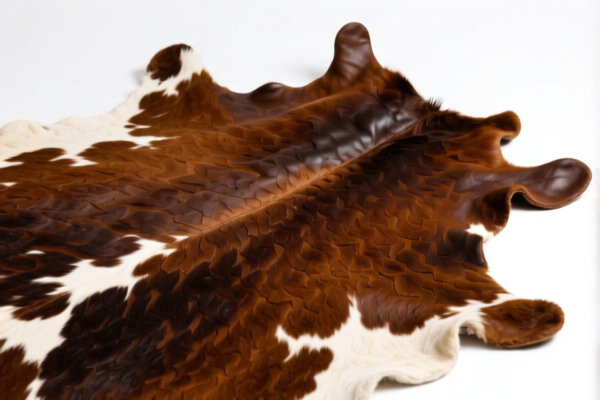
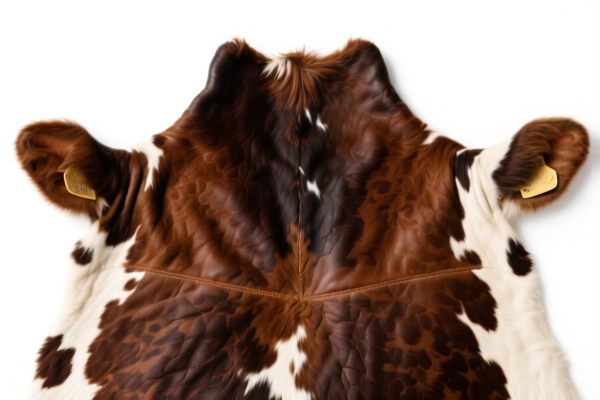
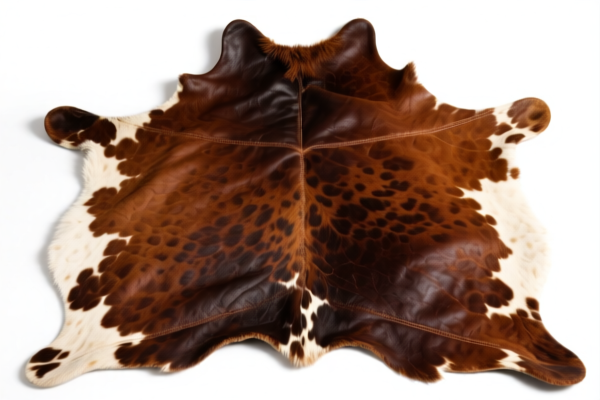
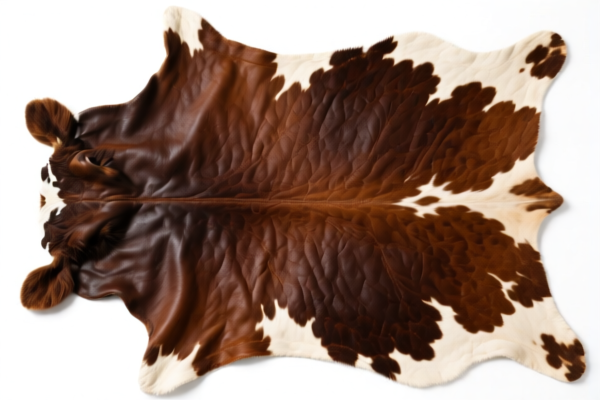
AI Analysis
🐂 Cowhide Full-Grain Lining Leather: HS Code Classification & Tariff Breakdown (USA Import)
🌐 HS Code Reference & Customs Clearance Guide | 2026 Latest Tariff Analysis | Professional Clearance Strategy
📌 I. Product Definition & Classification: Do You Really Understand "Cowhide Full-Grain Lining Leather"?
Cowhide Full-Grain Lining Leather is a premium animal leather product primarily used as an inner lining in high-end shoes, bags, and apparel. In international trade, its classification depends on three critical factors:
1. Animal Origin: Cowhide ( Bovine )
2. Processing Level: Full-grain ( retains natural surface ), tanned/finished
3. Form/Usage: Lining leather vs. composite leather vs. other animal leathers
⚠️ Key Distinction Points:
- If it is pure leather without backing/composite layers → Classified under 4107 or 4113;
- If it is composite leather (leather bonded with fabric/plastic) → Classified under 4115;
- If it is specialty lining leather matching specific usage criteria → Classified under 4107.19.10.40 or 4107.11.10.40.
📦 II. HS Code Classification Details (2026 Latest Tariff Authoritative Comparison)
| HS Code | Product Description | Applicable Scenario | Key Classification Criteria | Total Tax Rate |
|---|---|---|---|---|
4113.90.60.00 |
Cowhide full-grain lining, classified as other animal leather, matches "patterned/reconstituted" features | Reconstituted leather with patterned characteristics | ✅ Patterned/Reconstituted | 36.6% |
4113.90.30.00 |
Cowhide full-grain lining, classified as other animal leather, further processed and non-patterned | Standard further-processed lining leather, no special pattern | ✅ Further Processed, Non-Patterned | 38.3% |
4115.10.00.00 |
Cowhide full-grain lining, classified as composite leather, matches base/layer form | Leather backed with fabric, plastic, or other materials | ✅ Composite Leather | 35.0% |
4107.19.10.40 |
Cowhide full-grain lining, purpose as lining leather, fully matches classification constraints | Pure leather, specifically intended for lining use | ✅ Pure Leather, Lining Purpose | 35.0% |
4107.11.10.40 |
Cowhide full-grain lining, purpose as lining leather, meets key elemental criteria | Pure leather, lining use, matches all specified criteria | ✅ Pure Leather, Lining Purpose | 35.0% |
🔍 Important Reminder:
- Composite leather (4115.10.00.00) and pure lining leather (4107.19.10.40 / 4107.11.10.40) share the lowest total tax rate (35.0%);
- Patterned/reconstituted leather (4113.90.60.00) has a moderate rate (36.6%);
- Non-patterned further-processed leather (4113.90.30.00) has the highest rate (38.3%).
💰 III. 2026 Latest Tariff Rate Details (Including Additional Taxes, Policy Surcharges)
✅ Applicable Country: United States (US)
✅ Country of Origin: China (CN)
✅ Effective Date: From November 10, 2025 (including subsequent imports)
🎯 1. 4113.90.60.00 —— Other Animal Leather (Patterned/Reconstituted)
| Item | Content |
|---|---|
| Base Tariff Rate | 1.6% (ad valorem) |
| USITC Additional Tariff | +25% (Section 301 Tariffs) |
| Section 122 Tariff | +10% (China-specific surcharge) |
| Total Tax Rate | 36.6% |
| Tax Calculation | CIF Value × 36.6% |
| De Minimis Exemption Eligible | ❌ No (deny_de_minimis) |
| Legal Basis Path | Section 301:35.0 → Section 122:10.0 → USITC:4113.90.60.00 → FOOTNOTE:Section 122 |
📌 Explanation:
- "USITC Additional Tariff 25%" comes from Section 301 of the US Trade Act;
- "Section 122 Tariff 10%" is a China-specific surcharge under the International Emergency Economic Powers Act (IEEPA) framework;
- Total 36.6% is a high tariff, requiring advance planning!
🎯 2. 4113.90.30.00 —— Other Animal Leather (Non-Patterned, Further Processed)
| Item | Content |
|---|---|
| Base Tariff Rate | 3.3% |
| USITC Additional Tariff | +25% |
| Section 122 Tariff | +10% |
| Total Tax Rate | 38.3% |
| Tax Calculation | CIF × 38.3% |
| De Minimis Exemption Eligible | ❌ No |
| Legal Basis Path | Section 301:35.0 → Section 122:10.0 → USITC:4113.90.30.00 → FOOTNOTE:Section 122 |
📌 Note:
- This category has the highest base tariff (3.3%) among all options, leading to the highest total rate (38.3%);
- Applies to standard further-processed cowhide lining without special patterns.
🎯 3. 4115.10.00.00 —— Composite Leather (Base/Layer Form)
| Item | Content |
|---|---|
| Base Tariff Rate | 0.0% |
| USITC Additional Tariff | +25% |
| Section 122 Tariff | +10% |
| Total Tax Rate | 35.0% |
| Tax Calculation | CIF × 35.0% |
| De Minimis Exemption Eligible | ❌ No |
| Legal Basis Path | Section 301:35.0 → Section 122:10.0 → USITC:4115.10.00.00 → FOOTNOTE:Section 122 |
📌 Advantage:
- Zero base tariff makes this the most cost-effective option if the product qualifies as composite leather;
- Must provide documentation proving leather backing (e.g., fabric, plastic, or other material).
🎯 4. 4107.19.10.40 & 4107.11.10.40 —— Pure Leather for Lining Purpose
| Item | Content |
|---|---|
| Base Tariff Rate | 0.0% |
| USITC Additional Tariff | +25% |
| Section 122 Tariff | +10% |
| Total Tax Rate | 35.0% |
| Tax Calculation | CIF × 35.0% |
| De Minimis Exemption Eligible | ❌ No |
| Legal Basis Path | Section 301:35.0 → Section 122:10.0 → USITC:4107.xxxx.xx.xx → FOOTNOTE:Section 122 |
📌 Advantage:
- Like composite leather, these codes have zero base tariff, resulting in the lowest total rate (35.0%);
- Critical Requirement: Must prove the leather is specifically intended for lining use (e.g., customer orders, product specifications, design documents).
🛠️ IV. Customs Clearance Practical Advice (Battle-Tested Pitfall Avoidance Guide)
✅ 1. Required Documentation Checklist (All are Mandatory)
| Document | Must Provide | Explanation |
|---|---|---|
| ✅ Product Specifications Sheet | ✔️ | Includes size, thickness, tanning method, finish type, intended use (lining) |
| ✅ Composition/Structure Diagram | ✔️ | Proves whether it is pure leather or composite; for pure leather, shows tanning/finishing process |
| ✅ Product Photos (with Label) | ✔️ | Clear view of texture, grain, label showing "Cowhide Full-Grain Lining Leather" |
| ✅ Third-Party Test Report | ✔️ | Certifications proving leather authenticity, tanning chemicals compliance (e.g., REACH, RoHS) |
| ✅ Commercial Invoice | ✔️ | Must explicitly state "Cowhide Full-Grain Lining Leather" and specify HS code |
| ✅ Certificate of Origin (CO) | ✔️ | Required for origin verification; if non-China origin, may qualify for preferential rates |
| ✅ Packing List | ✔️ | Shows relationship between bulk leather and finished goods; avoid split declarations |
✅ 2. Declaration Strategy (Key Mantra)
🔥 "Composite or Lining, Zero Base Rate; Patterned or Further-Processed, Higher Rate! Name Precisely, Tax Halved!"
| Scenario | Correct Declaration | Incorrect Practice |
|---|---|---|
| Composite Leather (leather + backing) | 4115.10.00.00 → 35.0% |
Misdeclare as "pure leather" → Higher tax or rejection |
| Pure Leather for Lining (specific use) | 4107.19.10.40 or 4107.11.10.40 → 35.0% |
Misdeclare as "general leather" → Higher base tariff |
| Patterned/Reconstituted Leather | 4113.90.60.00 → 36.6% |
Misdeclare as "non-patterned" → Penalty for misclassification |
| Non-Patterned Further-Processed Leather | 4113.90.30.00 → 38.3% |
Last resort if no other criteria met |
✅ 3. Special Case Handling
| Scenario | Handling Advice |
|---|---|
| OEM Custom Lining Leather | Provide customer order + design drawings to prove "lining purpose"; avoid generic descriptions |
| Leather with Special Finish (e.g., embossed, dyed) | Document finish type clearly; if patterned, declare under 4113.90.60.00 |
| Composite Leather with Mixed Materials | Provide composition breakdown (e.g., 70% leather, 30% fabric) to support 4115.10.00.00 |
| Sample Shipments | Even samples are subject to full tariff; no de minimis exemption |
🌍 V. Global Major Market Clearance Comparison (2026 Latest)
| Country/Region | Recommended HS Code | Tariff | Certification Requirements | Notes |
|---|---|---|---|---|
| 🇺🇸 USA | 4115.10.00.00 / 4107.19.10.40 |
35.0% (China origin) | REACH, RoHS, CA Prop 65 | Highest complexity due to Section 301 & 122 tariffs |
| 🇨🇳 China | 4115.10.00.00 / 4107.19.10.40 |
Varies (Check local tariff) | CCC (if applicable), Environmental Compliance | No additional surcharges |
| 🇪🇺 EU | 4115.10.00.00 / 4107.19.10.40 |
0-7% (depending on exact code) | REACH, Ecolabel | No Section 301 equivalent |
| 🇬🇧 UK | 4115.10.00.00 / 4107.19.10.40 |
0-7% | UKCA, RECH | Post-Brexit tariffs may differ |
| 🇯🇵 Japan | 4115.10.00.00 / 4107.19.10.40 |
0-3% | JIS, Chemicals Control Law | Low tariffs, strict chemical compliance |
📌 Conclusion:
- USA is the most challenging market due to Section 301 (25%) and Section 122 (10%) additional tariffs;
- EU, Japan, and UK have lower overall tariffs but stricter chemical/environmental certifications;
- China origin imports to USA face 35-38.3% total tariffs, requiring careful classification optimization.
📌 VI. Common Mistakes & Pitfall Avoidance (Lessons Learned the Hard Way)
❌ Mistake 1: Declaring "Composite Leather" when it is actually Pure Leather
👉 Consequence: Customs may reclassify and impose higher base tariffs + penalties
❌ Mistake 2: Failing to prove Lining Purpose for 4107 codes
👉 Consequence: Rejected as "general leather," leading to higher rates or shipment delays
❌ Mistake 3: Using generic terms like "Leather" or "Skin" in commercial invoice
👉 Consequence: Ambiguous classification → Customs holds shipment for review → Demurrage charges
❌ Mistake 4: Ignoring Section 122 (10%) surcharge in cost calculation
👉 Consequence: Profit margins wiped out by unexpected 10% surcharge
✅ Correct Practice:
"Cowhide Full-Grain Lining Leather, Tanned, Finished, Specific for Footwear/Bag Lining, Model XYZ, REACH Compliant, Country of Origin: China"
🎯 VII. Conclusion: Precise Classification Saves Time, Money, and Headaches!
🎯 Remember the Mantra:
🔹 "Composite or Lining, Zero Base Rate; Patterned or Further-Processed, Higher Rate!"
🔹 "HS Code Determines Destiny, Tariff Difference is Critical, Declaration Error Costs Thousands!"
📌 Pro Tip:
- If your leather originates from Vietnam, Mexico, Thailand, or Malaysia, you may qualify for IEEPA/Section 122 exemptions, reducing total tariff to 0-5%;
- Apply for Advance Ruling (Pre-classification) with US Customs and Border Protection (CBP) to avoid clearance risks.
📣 Take Action Now:
📞 Contact a Professional Customs Broker + Provide Product Photos + Apply for HS Code Advance Ruling
🚀 Let your leather clear smoothly, export efficiently, and maximize profits!
✨ Professional Clearance Starts with Precise Classification!
💼 Every Cent of Cost Deserves to Be Calculated Precisely!
Customer Reviews
About HS Code Classification
The Harmonized System (HS) is an internationally standardized nomenclature developed by the World Customs Organization (WCO) to classify traded products. Over 200 countries use the HS system as the basis for customs tariffs, trade statistics, and import/export regulations.
Each HS code follows a hierarchical structure:
- Chapter (2 digits) — Broad category of goods (e.g., Chapter 84: Machinery and Mechanical Appliances)
- Heading (4 digits) — More specific grouping within the chapter
- Subheading (6 digits) — Internationally standardized breakdown, used by all WCO member countries
- National subdivisions (8-10 digits) — Country-specific extensions for further classification, such as US HTSUS 10-digit codes
Correct HS code classification is essential for smooth customs clearance, accurate duty payment, and compliance with trade regulations. Misclassification can lead to customs delays, overpayment of duties, or penalties.
When importing from CN to US, the applicable tariff rates may include:
- Most-Favored-Nation (MFN) rate — The standard duty rate applied to WTO members
- General rate — Applied to countries without trade agreements
- Trade remedy duties — Additional tariffs such as Section 301 (anti-dumping), Section 232 (national security), or countervailing duties
The information provided on this page is for reference purposes only. For official classification, please consult with your local customs authority or a licensed customs broker.