Cowhide Leather Sheet
CN → US| HS Code | Tariff Rate | Origin | Destination | Doc |
|---|---|---|---|---|
| 4104414010 | 15.0% | CN | US | Official Doc |
| 4104411040 | 35.0% | CN | US | Official Doc |
| 4107113000 | 13.6% | CN | US | Official Doc |
| 4107112000 | 37.4% | CN | US | Official Doc |
| 4107111020 | 35.0% | CN | US | Official Doc |
Product Images
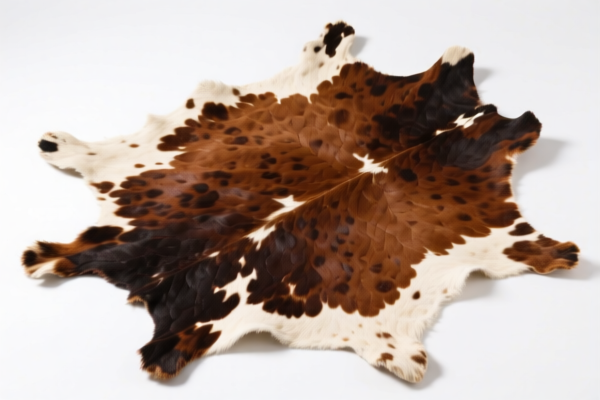
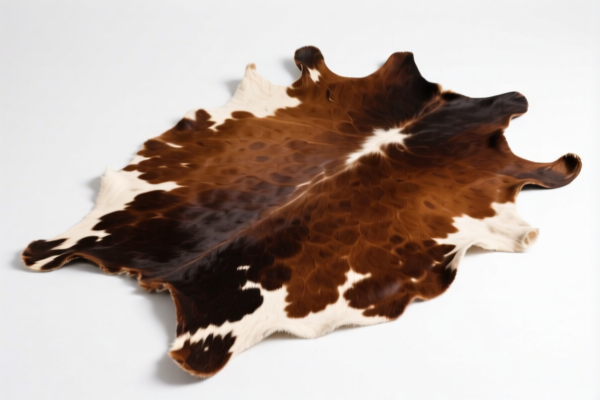
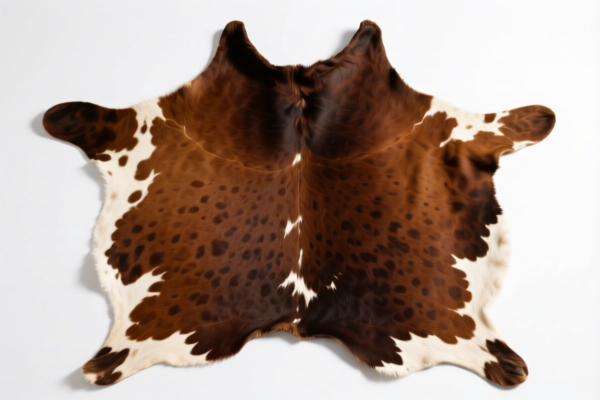
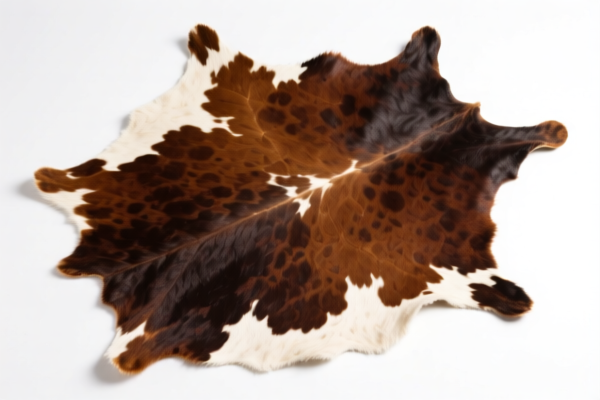
AI Analysis
🐂 Cowhide Leather Sheets (Hard/Unworked Tanned)
🌐 HS Code Reference & Customs Clearance Guide | 2026 Latest Tariff Analysis | Professional Entry Strategy
📌 I. Product Definition & Classification: What Exactly is "Cowhide Leather"?
Cowhide Leather Sheets, specifically "Hard" or "Unworked" leather, represent the raw material stage in the leather manufacturing chain. These are hides from bovine animals that have undergone tanning or semi-tanning processes but have not yet been cut into final goods (like shoes or bags) or further processed into specific finished leather forms (like split leather or heavy-duty upholstery leather).
In international trade, these are classified under Chapter 41 (Leather, leather furskins and other articles; articles of animal gut other than silk). The key distinction lies in the degree of processing:
1. Semi-Tanned or Lightly Tanned ("Hard" Leather):
- Hides that have been preserved to prevent decay but retain much of their natural structure.
- Often used for industrial purposes, tooling, or as a base for further processing.
2. Full-Grain or Top-Grain Raw Leather:
- Hides that have been fully tanned but are not yet finished for specific end-uses.
- The surface grain is intact, distinguishing it from split leather.
⚠️ Critical Distinction Point:
- If the leather is unfinished, uncut, and retains its natural grain structure → Classify under 4104 or 4107.
- If it is cut into specific shapes or heavily finished (dyed, embossed for specific use) → It may move to Chapter 42 (Articles of Leather), which has completely different tariff structures.
- "Hard Leather" (硬皮革) in Chinese customs context often refers to tanned/semi-tanned hides ready for further industrial use, not finished consumer goods.
📦 II. HS Code Classification Details (2026 Latest Authorized Tariff Mapping)
| HS Code | Product Description | Application Scenario | Tax Rate (China-US) |
|---|---|---|---|
4104.41.40.10 |
Cowhide Hard Leather, Tanned/Semi-Tanned | Raw industrial hides, uncut, semi-processed | 15.0% |
4104.41.10.40 |
Cowhide Hard Leather, Tanned/Crust | Unfinished leather, base material for manufacturing | 35.0% |
4107.11.30.00 |
Cowhide Hard Leather, Full-Grain | Top-grain raw hides, natural surface intact | 13.6% |
4107.11.20.00 |
Cowhide Hard Leather, Processed | Tanned hides ready for further dyeing/finishing | 37.4% |
4107.11.10.20 |
Genuine Leather (Cow/Horse), Unspecified Form | General genuine leather hides, no specific end-use defined | 35.0% |
🔍 Key Observation:
- There is a significant tariff variance between 13.6% and 37.4%.
- The difference depends on whether the leather is considered "Full-Grain" (4107) vs. "General Tanned" (4104) and the specific processing stage (semi-tanned vs. fully processed but unfinished).
💰 III. 2026 Latest Tariff Rate Breakdown (Including Additional Duties)
✅ Applicable Country: United States (US)
✅ Origin: China (CN)
✅ Effective Date: Post-November 10, 2025 (including subsequent imports)
🎯 1. 4104.41.40.10 – Cowhide Hard Leather, Tanned/Semi-Tanned
| Item | Detail |
|---|---|
| Base Duty Rate | 5.0% (Ad Valorem) |
| Section 301 Add-on Duty | 0.0% |
| IEEPA Section 122 Add-on Duty | +10.0% (Specific to China-origin goods) |
| Total Effective Rate | 15.0% |
| Tax Calculation | CIF Value × 15% |
| De Minimis Eligibility | ❌ Not Eligible (Leather goods are generally excluded from low-value exemption under current trade policies) |
| Legal Basis Path | HTSUS:4104.41.40.10 → IEEPA:122 → USITC |
📌 Explanation:
- This code attracts the lowest total tariff among the options due to a higher base rate but no Section 301 penalty.
- The 10% IEEPA surcharge is the only additional cost.
- Ideal for semi-processed industrial hides where classification as "semi-tanned" is accurate.
🎯 2. 4104.41.10.40 – Cowhide Hard Leather, Tanned/Crust
| Item | Detail |
|---|---|
| Base Duty Rate | 0.0% |
| Section 301 Add-on Duty | +25.0% |
| IEEPA Section 122 Add-on Duty | +10.0% |
| Total Effective Rate | 35.0% |
| Tax Calculation | CIF Value × 35% |
| De Minimis Eligibility | ❌ Not Eligible |
| Legal Basis Path | HTSUS:4104.41.10.40 → USITC:301 → IEEPA:122 |
📌 Explanation:
- Despite a 0% base duty, this code is hit by the full 25% Section 301 tariff plus the 10% IEEPA fee.
- Total 35% makes this significantly more expensive than Code 1.
- Often misclassified when "crust leather" (wet-blue or white leather) is declared without proper processing details.
🎯 3. 4107.11.30.00 – Cowhide Hard Leather, Full-Grain
| Item | Detail |
|---|---|
| Base Duty Rate | 3.6% |
| Section 301 Add-on Duty | 0.0% |
| IEEPA Section 122 Add-on Duty | +10.0% |
| Total Effective Rate | 13.6% |
| Tax Calculation | CIF Value × 13.6% |
| De Minimis Eligibility | ❌ Not Eligible |
| Legal Basis Path | HTSUS:4107.11.30.00 → IEEPA:122 |
📌 Explanation:
- Lowest Total Tariff (13.6%).
- Applies specifically to Full-Grain Leather where the natural grain is preserved.
- No Section 301 penalty, only base duty + IEEPA 10%.
- Prerequisite: Must prove the product is Full-Grain (not split, not corrected grain).
🎯 4. 4107.11.20.00 – Cowhide Hard Leather, Processed
| Item | Detail |
|---|---|
| Base Duty Rate | 2.4% |
| Section 301 Add-on Duty | +25.0% |
| IEEPA Section 122 Add-on Duty | +10.0% |
| Total Effective Rate | 37.4% |
| Tax Calculation | CIF Value × 37.4% |
| De Minimis Eligibility | ❌ Not Eligible |
| Legal Basis Path | HTSUS:4107.11.20.00 → USITC:301 → IEEPA:122 |
📌 Explanation:
- Highest Total Tariff (37.4%).
- Applies to "processed" cowhide under Chapter 41.
- Suffers both 25% Section 301 and 10% IEEPA surcharges.
- Avoid this classification unless strictly necessary, as it is the most costly.
🎯 5. 4107.11.10.20 – Genuine Leather (Cow/Horse), Unspecified
| Item | Detail |
|---|---|
| Base Duty Rate | 0.0% |
| Section 301 Add-on Duty | +25.0% |
| IEEPA Section 122 Add-on Duty | +10.0% |
| Total Effective Rate | 35.0% |
| Tax Calculation | CIF Value × 35% |
| De Minimis Eligibility | ❌ Not Eligible |
| Legal Basis Path | HTSUS:4107.11.10.20 → USITC:301 → IEEPA:122 |
📌 Explanation:
- Similar to Code 2, 0% base but 35% total due to high add-ons.
- Used for genuine leather where the specific type (full-grain vs. split) is not clearly defined or is a mix.
- Risky classification if audited, as customs may reclassify to a higher-tax code if evidence of "Full-Grain" is found.
🛠️ IV. Customs Clearance Practical Advice (Risk Avoidance Guide)
✅ 1. Required Documentation Checklist (Mandatory)
| Document | Must Provide | Purpose |
|---|---|---|
| ✅ Product Specification Sheet | ✔️ | Details: Animal type (Bovine), Tanning process (Vegetable/Chrome), Moisture content, Weight, Dimensions. |
| ✅ Photos of Hide Surface | ✔️ | To prove Full-Grain vs. Split vs. Corrected Grain. Essential for selecting between 4107.11.30.00 (13.6%) and others (35%+). |
| ✅ Tanning Certificate | ✔️ | Confirms the stage of processing (Semi-tanned vs. Full-tanned vs. Crust). |
| ✅ Commercial Invoice | ✔️ | Must clearly state "Cowhide Leather Sheets, Tanned, Not Cut to Size". Avoid vague terms like "Leather Material". |
| ✅ Packing List | ✔️ | Includes gross/net weight, number of hides, dimensions. |
| ✅ Certificate of Origin | ✔️ | Required for IEEPA determination. |
✅ 2. Declaration Strategy (Key Tactics)
🔥 “Prove Full-Grain, Avoid 301, Save 25%!”
| Scenario | Correct Declaration | Incorrect Declaration | Consequence |
|---|---|---|---|
| Full-Grain, Natural Surface | 4107.11.30.00 |
4107.11.10.20 |
Save 21.4% tax! (13.6% vs 35.0%) |
| Semi-Tanned Industrial Hide | 4104.41.40.10 |
4104.41.10.40 |
Save 20% tax! (15.0% vs 35.0%) |
| Crust/Unfinished Leather | 4104.41.10.40 |
4107.11.30.00 |
Avoid Penalty: Misclassifying crust as full-grain leads to fraud claims. |
| Mixed Species (Cow+Horse) | 4107.11.10.20 |
Specific Cow Code | Acceptable: But attracts 35% tax. Better to separate shipments if possible. |
📌 Critical Tip:
- If your leather is Full-Grain, INSIST on4107.11.30.00. Provide photos showing the natural pore structure. This reduces your tariff from 35% to 13.6%.
- If it is Semi-Tanned (e.g., for tooling), use4104.41.40.10. This reduces tariff from 35% to 15.0%.
- Never declare "Processed Leather" (4107.11.20.00) unless it is explicitly required, as it has the highest rate (37.4%).
✅ 3. Special Case Handling
| Situation | Handling Advice |
|---|---|
| OEM Leather for Footwear | If sold for immediate cutting into shoe uppers, ensure it is still "in the hide" form. If pre-cut, it may fall under Chapter 42 (different HS). |
| Split Leather | Do NOT use Full-Grain codes. Split leather usually falls under different subheadings with different tax treatments. Verify with supplier. |
| Chemical Treatment | If chrome-tanned vs. vegetable-tanned, this affects the "Tanning" description in the invoice. Ensure accuracy to avoid customs queries. |
| Mixed Batches | If a shipment contains both Full-Grain and Split, separate them or declare the higher-risk code for the whole lot to avoid penalties. |
🌍 V. Global Market Customs Comparison (2026 Latest)
| Country/Region | Recommended HS Code | Tariff (China Origin) | Certification Required | Notes |
|---|---|---|---|---|
| 🇺🇸 USA | 4107.11.30.00 |
13.6% (Full-Grain) 35.0% (General) |
N/A | Critical: IEEPA 10% applies to all. Section 301 25% applies to non-Full-Grain. |
| 🇨🇳 China | 4104.41.40.10 |
5.0% | N/A | Lower base rates. No Section 301. |
| 🇪🇺 EU | 4104 41 90 |
0% - 4% | REACH (Chemical Compliance) | EU has stricter environmental regulations on tanning chemicals. |
| 🇬🇧 UK | 4104 41 90 |
0% - 4% | UKCA (Post-Brexit) | Similar to EU, check post-Brexit rules of origin. |
| 🇦🇺 Australia | 4104 41 90 |
5% | N/A | Generally lower tariffs, but check for anti-dumping on specific chemical residues. |
📌 Conclusion:
- The USA is the most complex and costly market due to the layered tariff system (Base + 301 + IEEPA).
- Strategic Classification is Key: Properly identifying "Full-Grain" or "Semi-Tanned" can save 20-25% in tariffs compared to generic classifications.
- EU/UK focus is on chemical compliance (REACH) rather than tariff avoidance.
📌 VI. Common Errors & Pitfalls (Blood & Tears Lessons)
❌ Error 1: Declaring Full-Grain Leather as "Genuine Leather Sheets" (4107.11.10.20)
👉 Consequence: You pay 35% instead of 13.6%. Loss: 21.4% of CIF value.
❌ Error 2: Declaring Semi-Tanned Hides as "Processed Leather" (4107.11.20.00)
👉 Consequence: You pay 37.4% instead of 15.0%. Loss: 22.4% of CIF value.
❌ Error 3: Providing no photos of the leather surface
👉 Consequence: Customs cannot verify Full-Grain status → Default to highest tax bracket (35%+) or delay seizure.
❌ Error 4: Using vague terms like "Leather Material" in the invoice
👉 Consequence: Customs will query the declaration → Delays, storage fees, potential audit.
✅ Correct Practice:
"Cowhide Leather, Full-Grain, Vegetable-Tanned, Unfinished, Natural Grain Surface, 2.0mm Thick, 10 Sqm per Hide, Model: CH-GRN-01"
🎯 VII. Conclusion: Precise Classification Saves Thousands!
🎯 Remember the Mantra:
🔹 "Full-Grain is King: 13.6% only!"
🔹 "Semi-Tanned: 15.0% Safe Haven!"
🔹 "Avoid 'Processed' & 'General': 35-37% Tax Trap!"
🔹 "Photos Prove Grain: Save 25% on 301!"
📌 Pro Tip:
If your leather is originating from Vietnam, Thailand, or India, you may qualify for preferential tariffs under various FTAs, potentially reducing the 10% IEEPA or even the 25% Section 301 if rules of origin are met. However, for China-origin goods, the 10% IEEPA is mandatory.
Immediate Action:
📞 Request High-Resolution Photos of Hide Surface from Supplier
📑 Confirm Tanning Process (Vegetable/Chrome/semi)
📝 Apply for Advance Ruling (Optional but Recommended for Large Batches)
🚀 Declare with Precision: Save 20-25% in Tariffs!
✨ Professional Customs Clearance Starts with Accurate Classification!
💼 Every Percent Saved is Pure Profit!
Customer Reviews
About HS Code Classification
The Harmonized System (HS) is an internationally standardized nomenclature developed by the World Customs Organization (WCO) to classify traded products. Over 200 countries use the HS system as the basis for customs tariffs, trade statistics, and import/export regulations.
Each HS code follows a hierarchical structure:
- Chapter (2 digits) — Broad category of goods (e.g., Chapter 84: Machinery and Mechanical Appliances)
- Heading (4 digits) — More specific grouping within the chapter
- Subheading (6 digits) — Internationally standardized breakdown, used by all WCO member countries
- National subdivisions (8-10 digits) — Country-specific extensions for further classification, such as US HTSUS 10-digit codes
Correct HS code classification is essential for smooth customs clearance, accurate duty payment, and compliance with trade regulations. Misclassification can lead to customs delays, overpayment of duties, or penalties.
When importing from CN to US, the applicable tariff rates may include:
- Most-Favored-Nation (MFN) rate — The standard duty rate applied to WTO members
- General rate — Applied to countries without trade agreements
- Trade remedy duties — Additional tariffs such as Section 301 (anti-dumping), Section 232 (national security), or countervailing duties
The information provided on this page is for reference purposes only. For official classification, please consult with your local customs authority or a licensed customs broker.