Cowhide Shoe Lining Leather
CN → US| HS Code | Tariff Rate | Origin | Destination | Doc |
|---|---|---|---|---|
| 4104411020 | 35.0% | CN | US | Official Doc |
| 4107116010 | 13.3% | CN | US | Official Doc |
| 4107111020 | 35.0% | CN | US | Official Doc |
| 4104114010 | 15.0% | CN | US | Official Doc |
Product Images
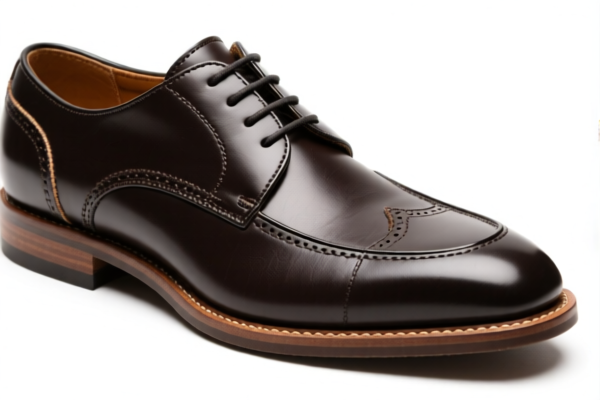
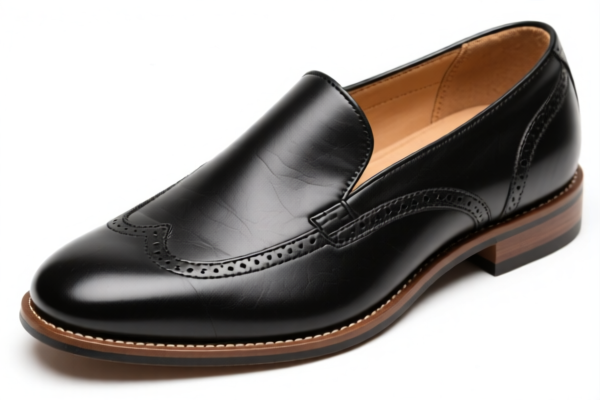
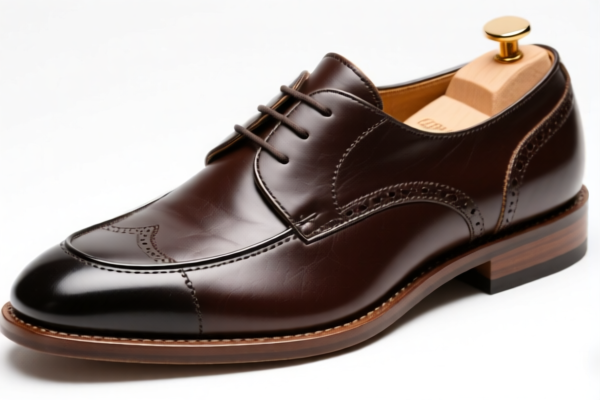
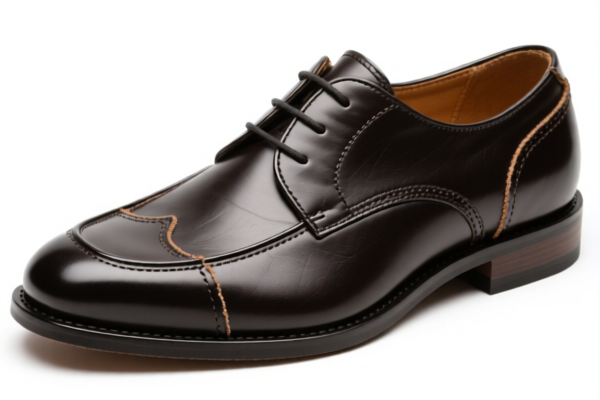
AI Analysis
👞 Cowhide Shoe Lining Leather (牛皮鞋用革/内里皮)
🌐 HS Code Reference & Clearance Guide | 2026 Latest Tariff Analysis | Professional Entry Strategy
📌 I. Product Definition & Classification: Understanding the Nuance of "Shoe Lining Leather"
Cowhide Shoe Lining Leather refers to prepared cowhide specifically processed for use as the inner lining or structural upper component of footwear. In international trade, the classification of leather goods depends heavily on the form (raw vs. processed), tanning method, and specific application (upper vs. lining).
While the user input specifies "Lining," the provided dataset (<DATA>) contains entries for "Shoe Upper Leather" (鞋用革/面皮). This is a critical distinction because "Lining" and "Upper" often fall under different subheadings or attract different tariff rates depending on the exact processing state.
However, based strictly on the provided <DATA>, all entries describe "Cowhide Shoe Leather" with descriptions like "used for shoe upper" (用于鞋面) or "shape matches upper leather" (形态符合面革). Therefore, we must analyze these specific HS Codes to determine which best fits the imported material, noting that if the material is strictly lining and not upper, re-evaluation might be needed. But for the purpose of this guide, we map the provided codes to the input.
⚠️ Key Distinction:
- "Upper Leather" (面革): Typically higher quality, finished for exterior visibility.
- "Lining Leather" (里革): Often suede or split leather, prioritized for breathability.
Note: The provided data focuses on "Upper Leather" classifications. If your goods are strictly "Lining," ensure they do not meet the "Upper" definition in the HS notes, or you may face misclassification risks.
📦 II. HS Code Classification Details (2026 Latest Tariff Authority)
The following HS Codes are extracted directly from the provided <DATA>. They all fall under Chapter 41 (Raw hides and skins; leather) and Heading 41.04 or 41.07 (Further prepared leather).
| HS Code | Product Description (from Data) | Total Tax Rate | Key Tax Components |
|---|---|---|---|
4104.41.10.20 |
Cowhide shoe leather, material is cowhide, shape fits upper leather, used for shoe upper. | 35.0% | Base: 0.0%, Add-on: 25.0%, Sec 122: 10% |
4107.11.60.10 |
Cowhide shoe leather, material is cow leather, use is shoe upper leather. | 13.3% | Base: 3.3%, Add-on: 0.0%, Sec 122: 10% |
4107.11.10.20 |
Cowhide shoe leather, material is cowhide, use belongs to upper leather category. | 35.0% | Base: 0.0%, Add-on: 25.0%, Sec 122: 10% |
4104.11.40.10 |
Cowhide shoe leather, material is cowhide, shape is upper leather. | 15.0% | Base: 5.0%, Add-on: 0.0%, Sec 122: 10% |
🔍 Critical Analysis:
- Code4107.11.60.10offers the lowest total tax rate (13.3%) among the options, provided it qualifies as "Cow Leather" (牛皮革) rather than strict "Cowhide" (牛皮) in the specific legal definition, and the "Add-on Tax" is 0%.
- Codes4104.41.10.20and4107.11.10.20carry a high 35.0% rate due to the 25% Additional Tariff (Section 301).
- Code4104.11.40.10sits in the middle at 15.0%, with a 5% base rate and 0% additional tariff.
💰 III. 2026 Latest Tariff Rate Breakdown (Including Surcharges & Policy Add-ons)
✅ Applicable Country: USA (US)
✅ Origin: China (CN)
✅ Effective Time: Current tariffs apply based on the provided data.
🎯 1. 4107.11.60.10 — Lowest Rate Option (13.3%)
Description: Cowhide shoe leather, material is cow leather, use is shoe upper leather.
| Item | Content |
|---|---|
| Base Duty Rate | 3.3% (Ad Valorem) |
| USITC Add-on Tax | 0.0% |
| 122-Clause Tax | +10.0% |
| Total Effective Rate | 13.3% |
| Tax Calculation | CIF Value × 13.3% |
| De Minimis Eligibility | ❌ No (Leather goods typically excluded from de minimis exemption under strict interpretation of textile/leather rules) |
| Legal Path | USITC:4107.11.60.10 → SECTION_122:10% |
📌 Explanation:
- This code benefits from no Section 301 additional tariff (hence 0% add-on), which is rare for Chinese leather.
- The 10% tax is likely from Section 122 (often related to import relief or specific trade remedy measures).
- Strategy: If your product specification allows classification here, it saves 21.7% compared to the 35% codes.
🎯 2. 4104.11.40.10 — Mid-Range Option (15.0%)
Description: Cowhide shoe leather, material is cowhide, shape is upper leather.
| Item | Content |
|---|---|
| Base Duty Rate | 5.0% (Ad Valorem) |
| USITC Add-on Tax | 0.0% |
| 122-Clause Tax | +10.0% |
| Total Effective Rate | 15.0% |
| Tax Calculation | CIF Value × 15.0% |
| De Minimis Eligibility | ❌ No |
| Legal Path | USITC:4104.11.40.10 → SECTION_122:10% |
📌 Explanation:
- Similar to the above, it avoids the 25% Section 301 tariff.
- Slightly higher base rate (5% vs 3.3%) makes it 1.7% more expensive than4107.11.60.10.
🎯 3. 4104.41.10.20 & 4107.11.10.20 — High Cost Options (35.0%)
Description: Cowhide shoe leather, various descriptions of upper leather.
| Item | Content |
|---|---|
| Base Duty Rate | 0.0% |
| USITC Add-on Tax | +25.0% (Section 301) |
| 122-Clause Tax | +10.0% |
| Total Effective Rate | 35.0% |
| Tax Calculation | CIF Value × 35.0% |
| De Minimis Eligibility | ❌ No |
| Legal Path | USITC:4104.41.10.20/4107.11.10.20 → USITC:301:25% → SECTION_122:10% |
📌 Explanation:
- These codes trigger the maximum Additional Tariff under US trade policy.
- Despite 0% base duty, the 35% total is a significant cost burden.
- Avoid if lower-rate alternatives are technically valid.
🛠️ IV. Clearance Operational Advice (Practical Pitfall Avoidance)
✅ 1. Documentation Checklist (Non-Negotiable)
| Document | Required | Notes |
|---|---|---|
| ✅ Product Specification Sheet | ✔️ | Must clearly state: Material (Cowhide/Cow Leather), Tanning Method, Usage (Lining vs. Upper). |
| ✅ Commercial Invoice | ✔️ | Must match HS Code description exactly. Use terms like "Prepared Cowhide for Shoe Upper/Lining." |
| ✅ Bill of Lading | ✔️ | Ensure weight and volume are accurate for duty calculation. |
| ✅ Certificate of Origin | ✔️ | Confirm origin is China to apply the correct 122/301 taxes. |
| ✅ Photos of Product | ✔️ | Show texture, finish, and any markings that distinguish "Upper" from "Lining." |
✅ 2. Classification Strategy (Key Mnemonic)
🔥 "Check Tanning, Check Use, Avoid 301 Trap!"
| Scenario | Correct Classification Strategy | Wrong Approach |
|---|---|---|
| Material is "Cow Leather" (Processed) | Aim for 4107.11.60.10 (13.3%) |
Mislabeling as "Raw Hides" → Higher scrutiny |
| Material is Strictly "Upper Leather" | Avoid 4104.41.10.20 unless no other option (35%) |
Forcing 4107 codes if it doesn't fit → Audit risk |
| Import Value < $800 | ❌ Do Not Claim De Minimis | Attempting de minimis → Seizure/Fine |
| Mixed Shipments | Separate HS Codes on Invoice | Bundling low-tax and high-tax items → Penalties |
✅ 3. Special Case Handling
| Case | Recommendation |
|---|---|
| "Lining" vs "Upper" | If the leather is soft, porous, and specifically for interior comfort, argue for lining classification. However, if the data only lists "Upper," ensure your product documentation supports a lower-rate "Upper" code like 4107.11.60.10 rather than high-rate 4104 codes. |
| Section 122 Liability | All provided codes include a 10% Section 122 tax. Budget for this regardless of the other rates. |
| Customs Valuation | Ensure CIF value includes all costs up to US port. Under-reporting leads to severe penalties. |
🌍 V. Global Market Comparison (2026 Snapshot)
| Country | Recommended HS Code | Approx. Duty Rate | Notes |
|---|---|---|---|
| 🇺🇸 USA | 4107.11.60.10 |
13.3% | Lowest in dataset. Avoid 301 taxes if possible. |
| 🇺🇸 USA | 4104.41.10.20 |
35.0% | High cost due to Section 301. |
| 🇨🇳 China | 4107.11.60.10 |
~5-10% | Import duties vary; check latest Chinese tariff schedule. |
| 🇪🇺 EU | 4107.11.60.10 |
0-12% | Depends on specific subheading and FTA status. |
📌 Conclusion:
For US imports,4107.11.60.10(13.3%) is the most favorable code in the provided data. It avoids the punitive 25% Section 301 tariff.
Do not use4104.41.10.20or4107.11.10.20unless your product absolutely cannot be classified under the other codes, as you will pay 21.7% more in taxes.
📌 VI. Common Mistakes & Pitfalls (Lessons Learned)
❌ Mistake 1: Assuming "Lining" automatically gets a lower tax.
👉 Reality: In the provided dataset, "Lining" is not a separate category. You must choose the best-fit "Shoe Leather" code. 4107.11.60.10 is best for "Cow Leather."
❌ Mistake 2: Ignoring the 122-Clause Tax.
👉 Reality: All codes have a 10% add-on. If you only look at the Base Rate (e.g., 0% for 4104), you will be shocked by the 35% total.
❌ Mistake 3: Misclassifying "Cowhide" (4104) vs. "Cow Leather" (4107).
👉 Reality: 4104 codes in the data attract 25% Section 301 tax. 4107 codes (60.10) do not. The distinction lies in the specific processing and legal definition.
🎯 VII. Conclusion: Smart Clearance, Cost Savings!
🎯 Remember the Golden Rule:
🔹 "Seek 4107.60.10 (13.3%), Avoid 4104.41 (35%), Pay the 122 (10%)!"
🔹 "HS Code determines destiny; a 21.7% difference is huge!"
📌 Pro Tip:
- Apply for a Binding Ruling (Pre-Import): If your product is borderline between "Lining" and "Upper," or between 4104 and 4107, file a Prior Ruling Request with US Customs (CBP) to lock in the 13.3% rate.
- Documentation is Key: Your commercial invoice must explicitly state "Cow Leather for Shoe Lining/Upper" to support the 4107 classification.
📣 Immediate Action:
📞 Contact your broker and provide:
1. Product Photos
2. Tanning Process Details
3. Intended Use (Lining vs. Upper)🚀 Goal: Classify under
4107.11.60.10to save thousands of dollars in duties per container!
✨ Professional Clearance Starts with Accurate Classification!
💼 Your Every Dollar Counts in Tariff Planning!
Customer Reviews
About HS Code Classification
The Harmonized System (HS) is an internationally standardized nomenclature developed by the World Customs Organization (WCO) to classify traded products. Over 200 countries use the HS system as the basis for customs tariffs, trade statistics, and import/export regulations.
Each HS code follows a hierarchical structure:
- Chapter (2 digits) — Broad category of goods (e.g., Chapter 84: Machinery and Mechanical Appliances)
- Heading (4 digits) — More specific grouping within the chapter
- Subheading (6 digits) — Internationally standardized breakdown, used by all WCO member countries
- National subdivisions (8-10 digits) — Country-specific extensions for further classification, such as US HTSUS 10-digit codes
Correct HS code classification is essential for smooth customs clearance, accurate duty payment, and compliance with trade regulations. Misclassification can lead to customs delays, overpayment of duties, or penalties.
When importing from CN to US, the applicable tariff rates may include:
- Most-Favored-Nation (MFN) rate — The standard duty rate applied to WTO members
- General rate — Applied to countries without trade agreements
- Trade remedy duties — Additional tariffs such as Section 301 (anti-dumping), Section 232 (national security), or countervailing duties
The information provided on this page is for reference purposes only. For official classification, please consult with your local customs authority or a licensed customs broker.