Cowhide Split Leather for Car Interior Accessories
CN → US| HS Code | Tariff Rate | Origin | Destination | Doc |
|---|---|---|---|---|
| 4107125000 | 12.8% | CN | US | Official Doc |
| 4104115070 | 13.3% | CN | US | Official Doc |
| 4104415000 | 13.3% | CN | US | Official Doc |
| 4107925000 | 12.8% | CN | US | Official Doc |
| 4107925000 | 12.8% | CN | US | Official Doc |
Product Images
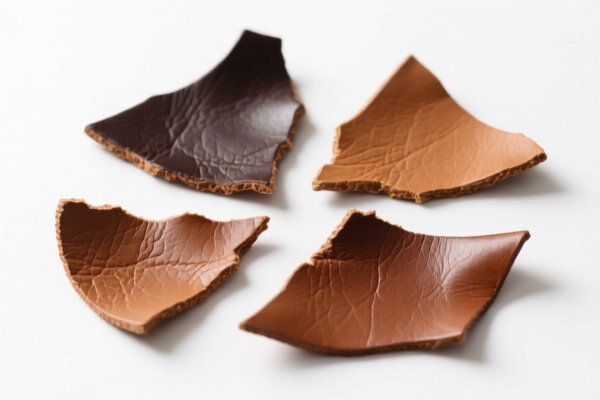
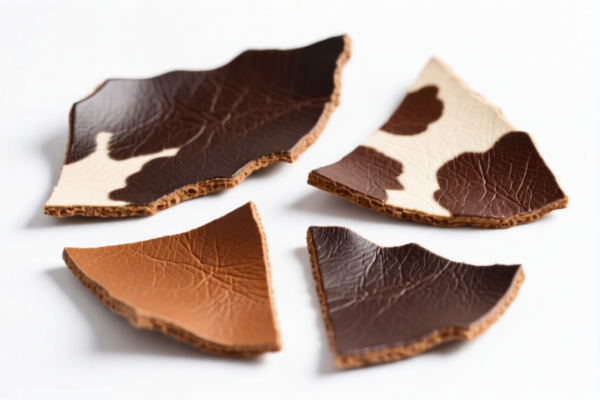
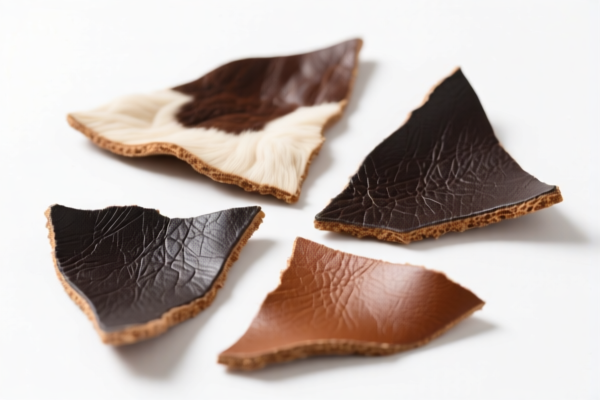
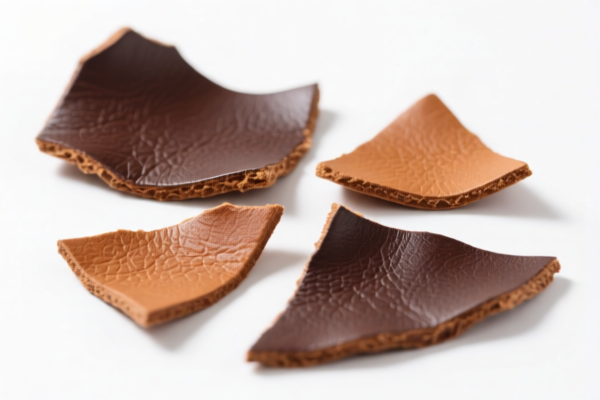
AI Analysis
🚗 Cowhide Split Leather for Car Interior Accessories
🌐 HS Code Reference & Clearance Guide | 2026 Latest Tariff Analysis | Professional Customs Strategy
📌 I. Product Definition & Classification: What is "Cowhide Split Leather"?
Cowhide split leather is a byproduct of the full-grain leather process. When cowhide is horizontally split, the top layer becomes "full-grain" or "top-grain" leather, while the lower layers become split leather.
In the context of car interior accessories, this material is valued for its durability, flexibility, and cost-effectiveness compared to full-grain leather. It is commonly used for:
Car seat covers
Steering wheel wraps
Door panel inserts
Dashboard trim
⚠️ Key Classification Distinction:
- HS Chapter 41 covers raw hides and skins.
- The classification depends on whether the leather is finished for immediate use or requires further processing, and specifically whether it is split (劈层/分层) or full grain (整层).
- Crucial Point: The specific HS codes provided in the data reflect different nuances in "split" vs. "layer" classification and specific usage contexts under US Customs regulations.
📦 II. HS Code Classification Details (2026 Latest Tariff Reference)
Based on the provided dataset, here are the exact HS codes and their corresponding tax implications for Cowhide Split Leather for Car Interior Accessories.
| HS Code | Product Description | Key Characteristics | Total Tax Rate (China Origin) |
|---|---|---|---|
4107.12.50.00 |
Cowhide split leather for car interior | Material: Cowhide Form: Split leather (分层皮) Usage: Car interior accessories |
12.8% |
4104.11.50.70 |
Cowhide split leather for car interior | Material: Cowhide Form: Split (劈层) Usage: Car interior accessories |
13.3% |
4104.41.50.00 |
Cowhide split leather for car interior | Material: Cowhide Form: Split leather (分层皮) Usage: Car interior accessories |
13.3% |
4107.92.50.00 |
Cowhide split leather for car interior | Material: Cowhide Form: Split leather (分层皮) Usage: Car interior accessories |
12.8% |
4107.92.50.00 |
Cowhide split leather for car interior | Material: Cowhide Form: Split leather (分层皮) Usage: Car interior accessories |
12.8% |
🔍 Critical Note:
- Codes4107.12.50.00and4107.92.50.00result in a 12.8% total tax.
- Codes4104.11.50.70and4104.41.50.00result in a 13.3% total tax.
- The difference lies in the specific tariff heading (4107vs.4104) and sub-classification of the leather's treatment. Misclassification can lead to a 0.5% difference in tax burden.
💰 III. 2026 Latest Tariff Rate Breakdown (Including Additional Taxes)
✅ Applicable Country: United States (US)
✅ Origin: China (CN)
✅ Effective Date: Post-November 2025 (Current Policy)
🎯 1. HS Codes 4107.12.50.00 & 4107.92.50.00
Total Tax Rate: 12.8%
| Component | Rate | Details |
|---|---|---|
| Base Tariff | 2.8% | Standard MFN rate for leather products |
| Section 301 / 122 Clause Tariff | +10.0% | "122 Clause": Additional tariff imposed on specific Chinese goods under US trade policy |
| Other Surcharges | 0.0% | No additional 301 tariff or quota charges apply |
| TOTAL EFFECTIVE RATE | 12.8% | Calculated as: Base (2.8%) + 122 Clause (10.0%) |
📌 Explanation:
- The "122 Clause Tariff" (10%) is a specific additional duty applied to certain Chinese leather products.
- These codes benefit from a lower base tariff (2.8%) compared to the 4104 series.
- Total Cost Impact: For every $10,000 CIF value, you pay $1,280 in duties.
🎯 2. HS Codes 4104.11.50.70 & 4104.41.50.00
Total Tax Rate: 13.3%
| Component | Rate | Details |
|---|---|---|
| Base Tariff | 3.3% | Standard MFN rate for this specific leather category |
| Section 301 / 122 Clause Tariff | +10.0% | "122 Clause": Same additional tariff as above |
| Other Surcharges | 0.0% | No additional 301 tariff or quota charges apply |
| TOTAL EFFECTIVE RATE | 13.3% | Calculated as: Base (3.3%) + 122 Clause (10.0%) |
📌 Explanation:
- The base tariff is higher (3.3%) for these codes, likely due to differences in the leather's tanning or classification under Chapter 41 vs. 4107.
- Total Cost Impact: For every $10,000 CIF value, you pay $1,330 in duties.
- Savings Opportunity: If your product specifications allow, aiming for4107.xxxx.50.00codes can save you 0.5% compared to4104.xxxxcodes.
🛠️ IV. Clearance Practical Advice (Avoiding Pitfalls)
✅ 1. Required Documentation Checklist
| Document | Mandatory? | Purpose |
|---|---|---|
| Commercial Invoice | ✔️ Must | Clearly state: "Cowhide Split Leather," "For Car Interior Accessories," and exact HS Code. |
| Product Specification Sheet | ✔️ Must | Detail: Leather type (split/full), thickness, finish, and exact application (e.g., "seat upholstery"). |
| Material Breakdown | ✔️ Must | Confirm that the leather is split (not full-grain) to justify HS 4107/4104 classification. |
| Country of Origin Certificate | ✔️ Recommended | Prove China origin to accurately apply the 122 Clause tariff. |
| Import License (if applicable) | Check | Verify if specific leather import permits are required. |
✅ 2. Declaration Strategy (Key Mnemonic)
🔥 "Split vs. Full, 4107 Beats 4104, 122 Clause Applies to Both!"
| Scenario | Recommended HS Code | Risk |
|---|---|---|
| Split Leather, General Use | 4107.12.50.00 or 4107.92.50.00 |
✅ Lower Tax (12.8%). Preferred if specifications allow. |
| Specific Split Leather Type | 4104.11.50.70 or 4104.41.50.00 |
⚠️ Higher Tax (13.3%). Use only if product strictly matches this description. |
| Full-Grain Leather | NOT COVERED | ❌ Incorrect Declaration. Will lead to penalties if split leather is declared. |
| Synthetic Leather | NOT COVERED | ❌ Incorrect Declaration. Must use Chapter 39 or 59 codes. |
✅ 3. Special Handling Notes
| Issue | Solution |
|---|---|
| "122 Clause" Confusion | This is not the 25% Section 301 tariff. It is a separate 10% surcharge. Ensure your customs broker declares it correctly to avoid overpayment. |
| Split vs. Layer Terminology | Ensure the Chinese term "分层皮" (split/layered) and "劈层" (split) are accurately translated and matched to the HS code definition. Mislabeling can trigger inspections. |
| Car Interior Specificity | Clearly state the end-use is for car interiors. While this doesn't change the HS code directly, it helps customs verify the product's nature and prevents misclassification as raw hides (Chapter 41, heading 4101/4102). |
| Documentation Consistency | The invoice, packing list, and customs declaration must all use the same HS Code and product description. Discrepancies cause delays. |
🌍 V. Global Market Comparison (2026)
| Country/Region | Recommended HS Code | Base Tax | Additional Tax | Total Tax | Notes |
|---|---|---|---|---|---|
| 🇺🇸 USA | 4107.12.50.00 |
2.8% | 10.0% (122 Clause) | 12.8% | Prefer this code over 4104 for lower base rate. |
| 🇨🇳 China | 4107.12.50.00 |
2.8% | 0% | 2.8% | No 122 Clause applies. Low duty for export. |
| 🇪🇺 EU | 4107 12 | ~4.5% | 0% | ~4.5% | EU tariffs differ; no "122 Clause." |
| 🇯🇵 Japan | 4107 12 | ~3.0% | 0% | ~3.0% | Check for EPA benefits. |
📌 Conclusion:
- The 12.8% vs. 13.3% difference is significant for large volumes.
- Prioritize4107.xxxx.50.00codes if your product's physical characteristics (split type, tanning) align with their definitions.
- Always verify the exact split definition with your manufacturer to choose between4107(often finished/processed) and4104(possibly differently processed).
📌 VI. Common Mistakes & Pitfalls (Lessons Learned)
❌ Mistake 1: Using 4104 codes when 4107 is applicable.
👉 Consequence: Paying 0.5% more tax unnecessarily.
Fix: Compare product specs against HS definitions for 4107 vs. 4104.
❌ Mistake 2: Omitting "122 Clause" in declaration.
👉 Consequence: Customs may assess penalties or demand back taxes.
Fix: Explicitly declare the 10% surcharge as per current US trade policy.
❌ Mistake 3: Vague product description ("Leather").
👉 Consequence: Customs may request samples, causing delays.
Fix: Use precise language: "Cowhide Split Leather, Finished, for Automotive Seat Upholstery."
✅ Correct Practice:
"Split Cowhide Leather, Tanned, Cut to Size, for Car Interior Seat Covers, HS 4107.12.50.00, Origin: China, Subject to 122 Clause Tariff."
🎯 VII. Conclusion: Optimize Costs with Precise Classification
🎯 Remember the Rule:
🔹 "Split Leather, 4107 is King, 12.8% Rate, Save Every Thing!"
🔹 "122 Clause 10%, Base 2.8%, Total 12.8%, Don't Forget to Add!"
📌 Pro Tip:
If you are exporting to the US, pre-classify your product with a licensed customs broker. The difference between 4107 and 4104 codes can save hundreds of dollars on large shipments. Always keep detailed photos and specs of the split leather's cross-section to prove it is indeed "split" and not full-grain.
📣 Action Required:
📞 Consult your customs broker to confirm the best HS Code (
4107.12.50.00vs.4104.11.50.70) based on your specific leather finish.
🚀 Streamline your clearance with accurate documentation and avoid costly errors!
✨ Professional Clearance Starts with Accurate Classification!
💼 Every Percent Counts in International Trade!
Customer Reviews
About HS Code Classification
The Harmonized System (HS) is an internationally standardized nomenclature developed by the World Customs Organization (WCO) to classify traded products. Over 200 countries use the HS system as the basis for customs tariffs, trade statistics, and import/export regulations.
Each HS code follows a hierarchical structure:
- Chapter (2 digits) — Broad category of goods (e.g., Chapter 84: Machinery and Mechanical Appliances)
- Heading (4 digits) — More specific grouping within the chapter
- Subheading (6 digits) — Internationally standardized breakdown, used by all WCO member countries
- National subdivisions (8-10 digits) — Country-specific extensions for further classification, such as US HTSUS 10-digit codes
Correct HS code classification is essential for smooth customs clearance, accurate duty payment, and compliance with trade regulations. Misclassification can lead to customs delays, overpayment of duties, or penalties.
When importing from CN to US, the applicable tariff rates may include:
- Most-Favored-Nation (MFN) rate — The standard duty rate applied to WTO members
- General rate — Applied to countries without trade agreements
- Trade remedy duties — Additional tariffs such as Section 301 (anti-dumping), Section 232 (national security), or countervailing duties
The information provided on this page is for reference purposes only. For official classification, please consult with your local customs authority or a licensed customs broker.