Cowhide Split for Protective Equipment
CN → US| HS Code | Tariff Rate | Origin | Destination | Doc |
|---|---|---|---|---|
| 4107126010 | 13.3% | CN | US | Official Doc |
| 4107927090 | 15.0% | CN | US | Official Doc |
| 4104495000 | 13.3% | CN | US | Official Doc |
| 4104115070 | 13.3% | CN | US | Official Doc |
| 4203290800 | 49.0% | CN | US | Official Doc |
Product Images



AI Analysis
🥋 Cowhide Split Leather for Protective Equipment (Leather Articles)
🌐 HS Code Reference & Customs Clearance Guide | 2026 Latest Tariff Analysis | Professional-Level Clearance Strategy
📌 I. Product Definition & Classification: What Exactly is "Cowhide Split for Protective Equipment"?
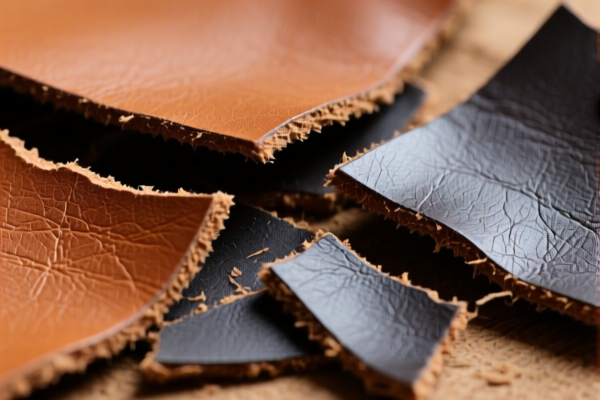
"Cowhide Split" refers to the layer of leather separated from the fibrous (split) part of the hide, typically after the grain layer has been removed or separated. When designated "for Protective Equipment," it implies a specific industrial application—used in manufacturing gloves, armor patches, boots, or safety gear where durability and abrasion resistance are critical.
In international trade, leather products are strictly categorized based on: 1. Processing Method: Grain leather vs. Split leather. 2. Species: Bovine (Cow/ Buffalo) vs. Other. 3. End Use: Apparel, Handbags, Footwear, or Protective Equipment.
⚠️ Critical Distinction:
- If the split is processed into finished goods (like gloves or jackets), it may fall under Chapter 42 (Articles of Leather).
- If it is imported as raw material (tanned/split but not yet made into articles), it falls under Chapter 41 (Leather).
- Misclassification between Chapter 41 (Raw Material) and Chapter 42 (Finished Goods) is the most common cause of customs audits, penalties, and duty rate discrepancies (e.g., 13.3% vs. 49.0%).
📦 II. HS Code Classification Details (2026 Latest Tariff Authority Mapping)
Based on the provided data, here are the four specific HS codes applicable to "Cowhide Split for Protective Equipment," categorized by their precise technical definition.
| HS Code | Product Description | Application Scenario | Key Differentiator |
|---|---|---|---|
4107.12.60.10 |
Cowhide Splitting Leather for Protective Equipment; material and form match category 4107.12 | Split leather specifically shaped/formatted for protective gear manufacturing | ✅ Grain-layer splitting (Primary split from top grain) |
4107.92.70.90 |
Cowhide Split Leather for Protective Equipment; conforms to the fallback category for bovine split leather | General-purpose split leather used in protective gear where specific sub-categories don't apply | ✅ Fallback/兜底 category (General split) |
4104.49.50.00 |
Cowhide Split Leather for Protective Equipment; material and semi-finished status align | Semi-finished split leather, often chrom-tanned or vegetable-tanned, ready for further processing | ✅ Semi-finished/半成品 attribute |
4104.11.50.70 |
Cowhide Split for Protective Equipment; conforms to bovine leather and splitting treatment characteristics | Split leather derived from bovine hides, emphasizing the "splitting" treatment process | ✅ Bovine + Split Treatment |
🔍 Key Insight:
- All four codes fall under Chapter 41 (Leather), indicating the product is imported as material, not a finished glove or boot. - The difference lies in the specificity of the split (4107 vs. 4104) and whether it is a primary split or a fallback category.
💰 III. 2026 Latest Tariff Rate Details (Including Additional Duties)
✅ Applicable Country: China (CN) Imports (Note: The data provided reflects Chinese import tariffs based on the HS code structure
xx.xx.xx.xx.xxand the "122 Clause" reference, which is a specific Chinese customs policy code).
✅ Origin: China (CN)
✅ Effective Time: Current 2026 Tariff Schedule
🎯 1. 4107.12.60.10 & 4107.92.70.90 & 4104.49.50.00 & 4104.11.50.70
These four codes share the same total tax rate, but 4107.92.70.90 is slightly higher due to its base tariff.
| Item | Content |
|---|---|
| Base Tariff | 3.3% (for 4107.12.60.10, 4104.49.50.00, 4104.11.50.70) 5.0% (for 4107.92.70.90) |
| Additional Tariff | 0.0% |
| 122 Clause Tariff | +10% (Specific Chinese customs policy for certain leather goods) |
| Total Tax Rate | 13.3% (for 4107.12.60.10, 4104.49.50.00, 4104.11.50.70) 15.0% (for 4107.92.70.90) |
| Tax Calculation | CIF Value × Total Tax Rate |
| Legal Basis Path | Base Tariff → 122 Clause → HS Code |
📌 Explanation:
- The "122 Clause" is a critical domestic policy add-on in China for specific leather categories. It adds a flat 10% on top of the base rate. - 13.3% is the standard effective rate for most split leather inputs. - 15.0% applies only to the fallback category4107.92.70.90.
🚨 CRITICAL ALERT: 4203.29.08.00 – Finished Leather Articles (High Risk Category)
If your "Cowhide Split" is already processed into gloves, armor, or finished protective gear, it does NOT belong in Chapter 41. It must be declared under Chapter 42.
| Item | Content |
|---|---|
| HS Code | 4203.29.08.00 |
| Product Description | Cowhide split leather for Protective Equipment (Classified as Gloves/Handwear/Other Protective Articles) |
| Base Tariff | 14.0% |
| Additional Tariff | +25% (USITC/Section 301 type additional duties often applied to finished leather goods in certain markets) |
| 122 Clause Tariff | +10% |
| Total Tax Rate | 49.0% |
| Tax Calculation | CIF Value × 49% |
| Legal Basis Path | Base Tariff → Additional Tariff → 122 Clause |
📌 Warning:
- 49.0% is a massively higher tax burden compared to 13.3%.
- Reason: Customs classify "Split Leather for Protective Equipment" differently depending on whether it is raw material (Ch 41) or finished article (Ch 42).
- If you import split leather to make gloves, declare as 4107/4104. If you import finished gloves, declare as 4203.
- Misdeclaration Penalty: Declaring finished gloves as raw split leather can lead to seizure, heavy fines, and criminal liability for tax evasion.
🛠️ IV. Customs Clearance Practical Advice (On-the-Ground Pitfall Avoidance)
✅ 1. Document Checklist (All Must Be Provided)
| Document | Required | Explanation |
|---|---|---|
| ✅ Commercial Invoice | ✔️ | Must clearly state: "Cowhide Split Leather for Protective Equipment" and HS Code. |
| ✅ Packing List | ✔️ | Detail weight, dimensions, and number of hides/splits. |
| ✅ Product Specification Sheet | ✔️ | Include: Tanning method (Chrome/Veg), Thickness, Finish, and Intended Use (e.g., "For manufacturing safety gloves"). |
| ✅ Processing Diagram | ✔️ | If claiming 4107 vs. 4104, show where the split occurs (grain vs. flesh side). |
| ✅ Certificate of Origin | ✔️ | Required for base tariff determination. |
| ✅ Customs Declaration Form | ✔️ | Ensure HS Code matches the physical state of the goods. |
✅ 2. Declaration Strategy (Key Mantra)
🔥 “Material is 41, Finished is 42; Split Level Determines Code; 122 Clause Adds 10%!”
| Scenario | Correct HS Code | Wrong Code | Consequence |
|---|---|---|---|
| Importing raw split leather (rolls/hides) | 4107.12.60.10 / 4104.49.50.00 |
4203.29.08.00 |
Underpayment of tax (13.3% vs 49%) → Audit/Fine |
| Importing finished protective gloves | 4203.29.08.00 |
4107.12.60.10 |
Overpayment of tax (49% vs 13.3%) → Unnecessary cost |
| Importing split leather scraps | 4107.92.70.90 |
4107.12.60.10 |
Misclassification → Delay |
✅ 3. Special Considerations
| Scenario | Handling Advice |
|---|---|
| OEM Custom Split Leather | Provide the buyer’s design specifications to prove it is "for protective equipment" but not yet a finished article. |
| Mixed Shipments | If a container has both raw splits and finished gloves, they MUST be declared separately. Mixing them can lead to the entire shipment being audited. |
| 122 Clause Eligibility | Confirm that the specific leather type qualifies for the 122 Clause. Some premium or specialty leathers may have different domestic policies. |
| Environmental Compliance | Leather imports often require REACH (if EU-bound) or chemical compliance certificates. Ensure no banned substances (e.g., Hexavalent Chromium) are present. |
🌍 V. Global Market Clearance Comparison (2026 Latest)
| Market | Recommended HS Code | Tariff Rate | Certification | Notes |
|---|---|---|---|---|
| 🇨🇳 China | 4107.12.60.10 |
13.3% (100% split) | REACH/Local Chemical Standards | 122 Clause applies. |
| 🇨🇳 China | 4203.29.08.00 |
49.0% (Finished goods) | REACH/Local Chemical Standards | High duty for finished leather articles. |
| 🇺🇸 USA | 4107.21.20 (Example) |
Varies | FCC/No specific leather cert | US uses different HS structure (8 digits). |
| 🇪🇺 EU | 4107.21 (Example) |
Varies | REACH | EU has strict chemical regulations. |
📌 Conclusion:
- China is the primary import market in this dataset, with specific 122 Clause policies. - Tax Differential is Huge: 13.3% vs. 49%. Precise classification is essential for cost control.
📌 VI. Common Errors & Pitfall Guide (Lessons from the Field)
❌ Error 1: Declaring finished protective gloves as split leather to avoid the 49% tariff.
👉 Consequence: Customs inspection reveals finished seams/stitching → Seizure, 3x Fine, Criminal Investigation.
❌ Error 2: Mixing 4107 (Grain Split) and 4104 (Other Split) in one declaration.
👉 Consequence: Customs may require full unpacking to verify → Delay, Storage Fees, Demurrage.
❌ Error 3: Ignoring the 122 Clause (10% add-on).
👉 Consequence: Under-declaration of tax → Back Taxes + Interest + Penalty.
❌ Error 4: Using vague descriptions like "Leather" without specifying "Split" or "Protective Equipment".
👉 Consequence: Customs cannot determine the correct sub-category → Risk Assessment High → Inspection.
✅ Correct Practice:
"Cowhide Split Leather, Chrome-Tanned, Thickness 1.2mm, For Manufacturing Safety Gloves, HS Code: 4107.12.60.10"
🎯 VII. Conclusion: Professional Declaration, Save Costs, Ensure Compliance!
🎯 Remember the Mantra:
🔹 "Material is 41 (13.3%), Finished is 42 (49%); Split Level Dictates Code; 122 Clause Adds 10%!"
🔹 "HS Code Determines Life and Death; 35.7% Difference; One Wrong Step, Huge Tax Bill!"
📌 Pro Tip:
If your leather is intended for protective equipment, ensure the end-use documentation is ready to prove it is not yet a finished article if you want to pay the lower 13.3% rate.
Apply for a Pre-Ruling (Advance Classification) from customs if your product is borderline between 4107 and 4104.
📣 Immediate Action:
📞 Contact a professional customs broker + Provide Product Photos + Apply for HS Code Pre-Ruling
🚀 Let your leather goods clear customs smoothly, efficiently, and profitably!
✨ Professional Clearance Starts with Accurate Classification!
💼 Every penny of your cost deserves precise calculation!
Customer Reviews
About HS Code Classification
The Harmonized System (HS) is an internationally standardized nomenclature developed by the World Customs Organization (WCO) to classify traded products. Over 200 countries use the HS system as the basis for customs tariffs, trade statistics, and import/export regulations.
Each HS code follows a hierarchical structure:
- Chapter (2 digits) — Broad category of goods (e.g., Chapter 84: Machinery and Mechanical Appliances)
- Heading (4 digits) — More specific grouping within the chapter
- Subheading (6 digits) — Internationally standardized breakdown, used by all WCO member countries
- National subdivisions (8-10 digits) — Country-specific extensions for further classification, such as US HTSUS 10-digit codes
Correct HS code classification is essential for smooth customs clearance, accurate duty payment, and compliance with trade regulations. Misclassification can lead to customs delays, overpayment of duties, or penalties.
When importing from CN to US, the applicable tariff rates may include:
- Most-Favored-Nation (MFN) rate — The standard duty rate applied to WTO members
- General rate — Applied to countries without trade agreements
- Trade remedy duties — Additional tariffs such as Section 301 (anti-dumping), Section 232 (national security), or countervailing duties
The information provided on this page is for reference purposes only. For official classification, please consult with your local customs authority or a licensed customs broker.