Cowhide for Bags
CN → US| HS Code | Tariff Rate | Origin | Destination | Doc |
|---|---|---|---|---|
| 4107127050 | 15.0% | CN | US | Official Doc |
| 4202110090 | 43.0% | CN | US | Official Doc |
| 4202110030 | 43.0% | CN | US | Official Doc |
| 4107117050 | 15.0% | CN | US | Official Doc |
| 4205008000 | 35.0% | CN | US | Official Doc |
Product Images
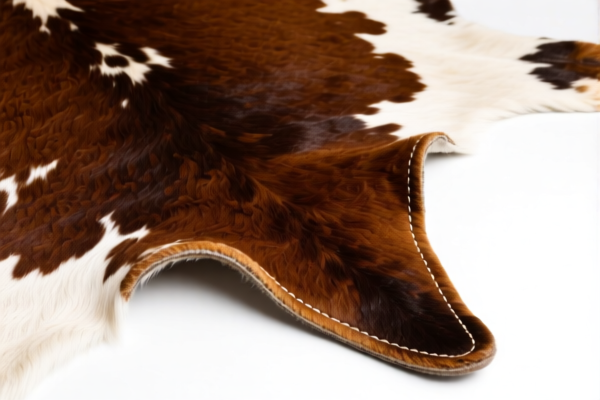
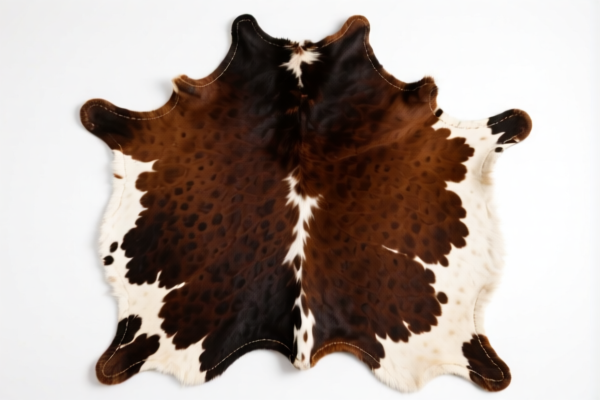
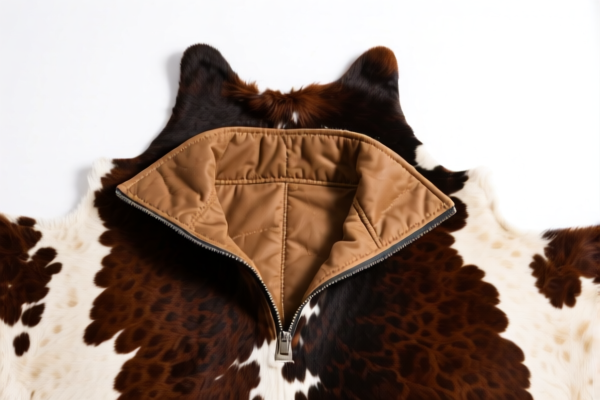
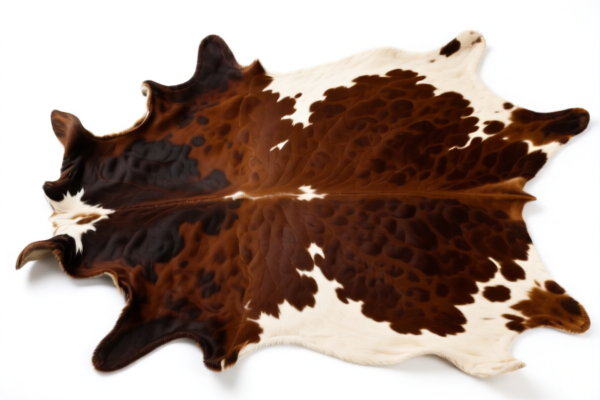
AI Analysis
👜 Cowhide for Bags: Premium Leather Classification & Customs Clearance Strategy
🌐 HS Code Reference & Customs Guide | 2026 Latest Tariff Rates | Professional Entry Strategy
📌 I. Product Definition & Classification: Is It "Raw Material" or "Finished Good"?
Cowhide intended for bags sits at a critical intersection in international trade: is it classified as raw leather (Chapter 41) or finished leather goods (Chapter 42)? The distinction hinges on whether the hide has been tanned, processed, and shaped into its final form.
1. Tanned Cowhide (Raw Material / Chapter 41):
- Full-grain cowhide, split cowhide, or other tanned hides intended for further manufacturing.
- Not yet cut or sewn into bags; simply processed leather sheets/skins.
2. Finished Leather Bags (Finished Goods / Chapter 42):
- Completed handbags, suitcases, backpacks, or luggage made from leather.
- Includes handles, zippers, linings, and structural components.
⚠️ Key Distinction Point:
- If the item is only tanned leather (even if cut to size) → Chapter 41
- If the item is a complete bag or suitcase → Chapter 42
📦 II. HS Code Classification Details (2026 Latest Tariff Authority Reference)
| HS Code | Product Description | Application Scenario | Material Type |
|---|---|---|---|
4107.12.70.50 |
Tanned cowhide, full-grain, for bag manufacturing | Raw material supply, cut-to-size leather | ✅ Cowhide (Raw) |
4202.11.00.90 |
Handbags, suitcases, briefcases, etc., of leather | Finished consumer bags | ✅ Leather (Finished) |
4202.11.00.30 |
Suitcases, vanity cases, etc., of leather | Luggage and travel goods | ✅ Leather (Finished) |
4107.11.70.50 |
Full-grain cowhide, tanned, for bag use | High-grade raw material | ✅ Cowhide (Raw) |
4205.00.80.00 |
Other leather articles (e.g., belts, straps, parts) | Non-bag leather accessories | ✅ Leather (Finished/Other) |
🔍 Critical Reminder:
- Chapter 41 (4107...): Only applies to tanned hides not yet made into articles.
- Chapter 42 (4202..., 4205...): Applies to finished goods like bags, suitcases, or other leather items.
- Misclassification Risk: Declaring finished bags as raw leather (4107) can lead to severe penalties due to tariff evasion (15% vs. 43%).
💰 III. 2026 Latest Tariff Rate Breakdown (Including Surtaxes & Policy Add-ons)
✅ Applicable Country: United States (US)
✅ Origin: China (CN)
✅ Effective Date: November 10, 2025 (and subsequent imports)
🎯 1. 4107.12.70.50 & 4107.11.70.50 —— Tanned Cowhide (Raw Material)
| Item | Detail |
|---|---|
| Base Tariff | 5.0% (ad valorem) |
| USITC Surtax (Section 301) | 0.0% (Exempt from 301 tariffs for certain raw leather) |
| IEEPA Surcharge (Section 122) | 10.0% (Targeted Chinese imports) |
| Total Tariff Rate | 15.0% |
| Tax Calculation | CIF Value × 15% |
| De Minimis Exemption? | ❌ No (deny_de_minimis) |
| Legal Basis Path | IEEPA:9903.01.24 → USITC:4107.11.70.50 / 4107.12.70.50 → FOOTNOTE:122 |
📌 Explanation:
- Base 5%: Standard MFN rate for tanned bovine leather.
- 0% Section 301: Raw leather often enjoys exemptions from US-China trade war tariffs.
- 10% IEEPA: New surcharge under Section 122 for specific Chinese-origin goods.
- Total: 15% – This is a moderate tariff, significantly lower than finished goods.
🎯 2. 4202.11.00.90 & 4202.11.00.30 —— Finished Leather Bags & Suitcases
| Item | Detail |
|---|---|
| Base Tariff | 8.0% (ad valorem) |
| USITC Surtax (Section 301) | 25.0% (High penalty on Chinese consumer goods) |
| IEEPA Surcharge (Section 122) | 10.0% |
| Total Tariff Rate | 43.0% |
| Tax Calculation | CIF Value × 43% |
| De Minimis Exemption? | ❌ No (deny_de_minimis) |
| Legal Basis Path | IEEPA:9903.01.24 → USITC:4202.11.00.30/90 → FOOTNOTE:301 & 122 |
📌 Explanation:
- Base 8%: Standard rate for leather bags/suitcases.
- 25% Section 301: Aggressive tariff on Chinese-made finished goods.
- 10% IEEPA: Additional surcharge.
- Total: 43% – This is a very high tariff, drastically increasing landing costs.
🎯 3. 4205.00.80.00 —— Other Leather Articles (e.g., straps, non-bag items)
| Item | Detail |
|---|---|
| Base Tariff | 0.0% |
| USITC Surtax (Section 301) | 25.0% |
| IEEPA Surcharge (Section 122) | 10.0% |
| Total Tariff Rate | 35.0% |
| Tax Calculation | CIF Value × 35% |
| De Minimis Exemption? | ❌ No |
| Legal Basis Path | IEEPA:9903.01.24 → USITC:4205.00.80.00 → FOOTNOTE:301 & 122 |
📌 Note:
- Even if base duty is 0%, the 35% total is prohibitive.
- Applies to items like leather belts, wallets, or straps not classified as bags.
🛠️ IV. Customs Clearance Practical Advice (Battle-Tested Pitfall Avoidance)
✅ 1. Document Checklist (Non-Negotiable)
| Document | Required | Notes |
|---|---|---|
| ✅ Product Specification Sheet | ✔️ | Must specify tanning process, grain type, thickness, and intended use. |
| ✅ Material Composition Certificate | ✔️ | Confirm 100% cowhide vs. synthetic blends. |
| ✅ Photos (Front/Back/Label) | ✔️ | Show texture, stitching, and any brand labels. |
| ✅ Commercial Invoice | ✔️ | Clearly state “Tanned Cowhide for Bag Manufacturing” OR “Finished Leather Handbag”. |
| ✅ Packing List | ✔️ | Detail gross/net weight, dimensions, and package count. |
| ✅ Bill of Lading/Air Waybill | ✔️ | Standard shipping docs. |
✅ 2. Declaration Tips (Key Mantra)
🔥 “Raw vs. Finished: One Line Matters! If it’s a bag, declare 4202. If it’s hide, declare 4107. Don’t guess!”
| Scenario | Correct HS Code | Mistake to Avoid |
|---|---|---|
| Tanned cowhide sheets | 4107.12.70.50 or 4107.11.70.50 |
Misdeclaring as bags → 15% vs. 43% |
| Finished handbag | 4202.11.00.90 |
Misdeclaring as raw leather → Penalty + Back Taxes |
| Suitcase | 4202.11.00.30 |
Misdeclaring as bag parts → Complexity |
| Leather strap/belt | 4205.00.80.00 |
Misdeclaring as bag → Wrong Rate |
✅ 3. Special Cases Handling
| Scenario | Recommendation |
|---|---|
| OEM Custom Bags | Provide design blueprints and sample approvals to prove finished status. |
| Mixed Shipment (Hides + Bags) | Separate lines on commercial invoice. Do not combine. |
| Leather Parts (e.g., handles) | Classify under 4205.00.80.00, not as bags. |
| Synthetic Leather Blends | If >50% leather, may still fall under Chapter 42. Verify composition. |
🌍 V. Global Market Comparison (2026 Latest)
| Country/Region | Recommended HS Code | Total Tariff (China Origin) | Notes |
|---|---|---|---|
| 🇺🇸 USA | 4107.12.70.50 (Raw) |
15% | Low risk, moderate tax |
| 🇺🇸 USA | 4202.11.00.90 (Bag) |
43% | High cost, consider supply chain shift |
| 🇨🇳 China | 4107.12.70.50 |
5% | No surtaxes |
| 🇪🇺 EU | 4107.12.70.50 |
6.5% | Standard rate |
| 🇪🇺 EU | 4202.11.00.90 |
4% | Lower than US, but VAT applies |
📌 Conclusion:
- USA is the most expensive market for finished leather goods due to 301 + IEEPA surtaxes.
- Raw leather (4107) is far more tax-efficient (15% vs. 43%).
- Consider importing raw hides and manufacturing in third countries (e.g., Vietnam, Mexico) to avoid US surtaxes on finished goods.
📌 VI. Common Mistakes & Pitfall Guide (From Real Cases)
❌ Mistake 1: Declaring finished bags as “tanned leather” to save taxes
👉 Result: Customs audit, 43% vs. 15% difference, fines, and seizure.
❌ Mistake 2: Ignoring the “122 Clause” (IEEPA)
👉 Result: Unexpected 10% surcharge on all listed HS codes.
❌ Mistake 3: Combining raw hides and finished bags on one line
👉 Result: Customs rejects mixed valuation, delays shipment, increases inspection risk.
❌ Mistake 4: Using vague descriptions like “Leather Goods”
👉 Result: Customs assigns highest possible rate (43%) due to ambiguity.
✅ Correct Approach:
“Tanned Full-Grain Cowhide, Unstitched, for Bag Manufacturing, 2.0mm Thickness, HS 4107.12.70.50”
OR
“Finished Leather Handbag, Brown, with Zipper & Handle, HS 4202.11.00.90”
🎯 VII. Conclusion: Smart Classification, Lower Costs, Smoother Clearance!
🎯 Remember These Rules:
🔹 “Raw Hide = 15%. Finished Bag = 43%. The 28% Gap is Huge!”
🔹 “If it’s not a bag, don’t call it a bag. Use ‘Other Leather Articles’ (4205) if applicable.”
🔹 “Always declare the true nature of the goods. Customs AI flags mismatches instantly.”
📌 Pro Tip:
If you are importing raw cowhide, ensure it’s clearly documented as “for further manufacturing” to qualify for 15%.
If you are importing finished bags, consider supply chain diversification to countries with lower US tariffs (e.g., Mexico, Vietnam) to avoid the 43% burden.
📣 Immediate Action:
📞 Consult with a licensed customs broker
📄 Prepare detailed product descriptions and specs
🚀 Minimize duty, maximize profit, ensure compliance!
✨ Professional Classification Starts with Precision!
💼 Every percent of duty saved is pure profit earned!
Customer Reviews
About HS Code Classification
The Harmonized System (HS) is an internationally standardized nomenclature developed by the World Customs Organization (WCO) to classify traded products. Over 200 countries use the HS system as the basis for customs tariffs, trade statistics, and import/export regulations.
Each HS code follows a hierarchical structure:
- Chapter (2 digits) — Broad category of goods (e.g., Chapter 84: Machinery and Mechanical Appliances)
- Heading (4 digits) — More specific grouping within the chapter
- Subheading (6 digits) — Internationally standardized breakdown, used by all WCO member countries
- National subdivisions (8-10 digits) — Country-specific extensions for further classification, such as US HTSUS 10-digit codes
Correct HS code classification is essential for smooth customs clearance, accurate duty payment, and compliance with trade regulations. Misclassification can lead to customs delays, overpayment of duties, or penalties.
When importing from CN to US, the applicable tariff rates may include:
- Most-Favored-Nation (MFN) rate — The standard duty rate applied to WTO members
- General rate — Applied to countries without trade agreements
- Trade remedy duties — Additional tariffs such as Section 301 (anti-dumping), Section 232 (national security), or countervailing duties
The information provided on this page is for reference purposes only. For official classification, please consult with your local customs authority or a licensed customs broker.