Cowhide for Leather Tanning
CN → US| HS Code | Tariff Rate | Origin | Destination | Doc |
|---|---|---|---|---|
| 4107111020 | 35.0% | CN | US | Official Doc |
| 4107113000 | 13.6% | CN | US | Official Doc |
| 4107111040 | 35.0% | CN | US | Official Doc |
| 4107111020 | 35.0% | CN | US | Official Doc |
| 4107113000 | 13.6% | CN | US | Official Doc |
Product Images
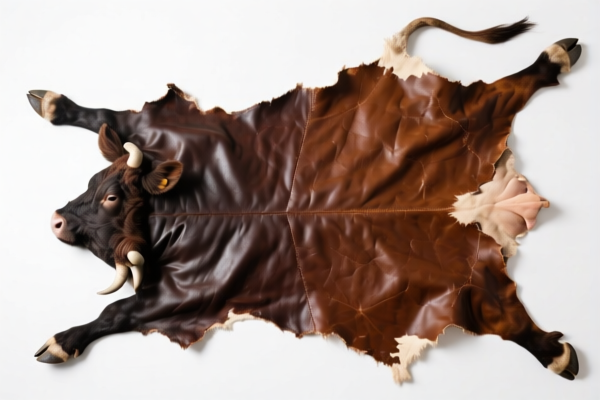
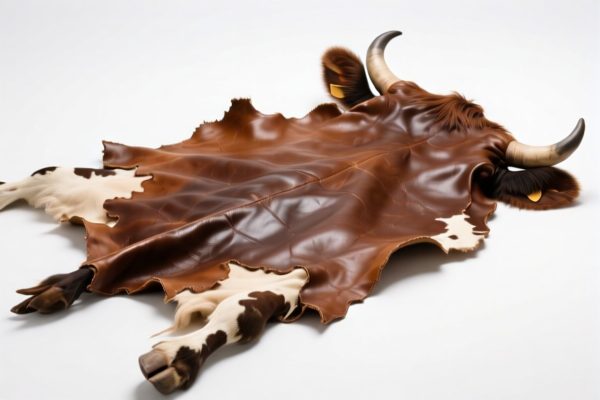
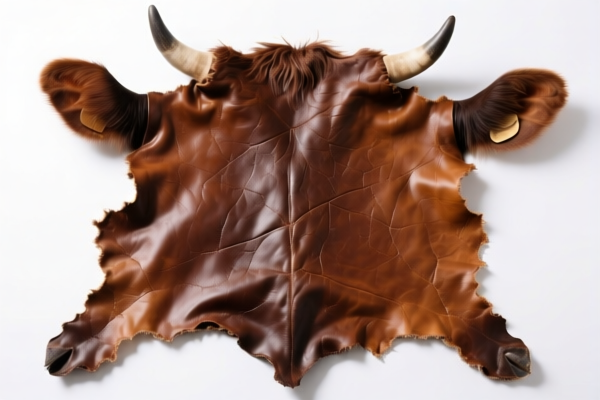
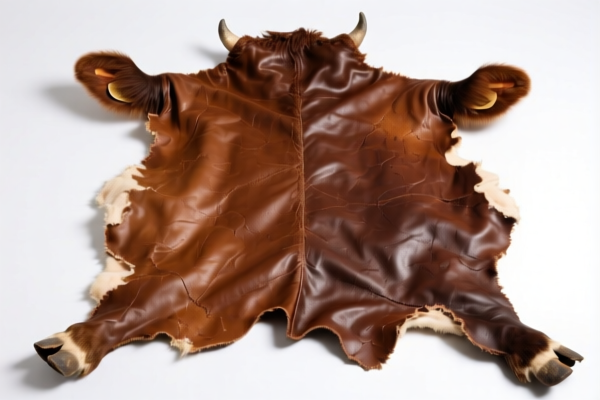
AI Analysis
🐂 Cowhide for Leather Tanning (Raw Hides & Skins)
🌐 HS Code Reference & Customs Clearance Guide | 2026 Latest Tariff Analysis | Professional Clearance Strategy
📌 Part 1: Product Definition & Classification: Do You Understand "Cowhide"?
Cowhide intended for leather tanning is not a single commodity but varies significantly based on tanning method (Vegetable vs. Chrome) and physical state (Whole vs. Split). In international trade, misclassifying these leads to massive tariff discrepancies (up to 21.4% difference).
1. Vegetable-Tanned Cowhide (植物鞣制牛皮):
Processed using natural tannins (e.g., oak, chestnut). Commonly used for belts, saddles, and premium bags.
- Classification: Generally falls under 4107.11.30.00.
- Key Characteristic: Low additional duties compared to chrome-tanned hides.
2. Chrome-Tanned Cowhide (铬鞣牛皮):
Processed using chromium salts. Faster, more flexible, and widely used for footwear and upholstery.
- Classification: Generally falls under 4107.11.10.20 or 4107.11.10.40.
- Key Characteristic: Subject to significantly higher tariffs (Section 301 + IEEPA) due to trade policies.
⚠️ Critical Distinction Point:
- If the hide is Chrome-Tanned (especially in raw/primary processed form) → Tariff is 35.0% (High Risk).
- If the hide is Vegetable-Tanned → Tariff is 13.6% (Lower Risk).
- Note: The "122 Clause" (10% additional duty) applies to ALL these categories from China.
📦 Part 2: HS Code Classification Details (2026 Latest Tariff Authority)
Based on the provided data, here are the specific HS Codes for Cowhide:
| HS Code | Product Description | Tanning Method | Total Tax Rate | Tax Breakdown |
|---|---|---|---|---|
| 4107.11.30.00 | Vegetable-tanned cowhide, fitting the classification of leather made from bovine animals | Vegetable (植物鞣制) | 13.6% | Base: 3.6% Add-on: 0.0% Clause 122: 10% |
| 4107.11.30.00 | Vegetable-tanned cowhide, manufactured from bovine animals, tanned | Vegetable (植物鞣制) | 13.6% | Base: 3.6% Add-on: 0.0% Clause 122: 10% |
| 4107.11.10.20 | Chrome-tanned cowhide, whole hide or split, in primary processed form | Chrome (铬鞣) | 35.0% | Base: 0.0% Add-on: 25.0% Clause 122: 10% |
| 4107.11.10.20 | Chrome-tanned cowhide, whole hide or split, fitting primary processed form | Chrome (铬鞣) | 35.0% | Base: 0.0% Add-on: 25.0% Clause 122: 10% |
| 4107.11.10.40 | Chrome-tanned cowhide, explicitly including material and processing method of primary processed leather | Chrome (铬鞣) | 35.0% | Base: 0.0% Add-on: 25.0% Clause 122: 10% |
🔍 Key Reminder:
- 4107.11.10.20 and 4107.11.10.40 are functionally similar but may differ in specific sub-category descriptions regarding "material composition" vs. "processing state." Both incur the 35.0% total tax.
- 4107.11.30.00 is the only low-tariff option (13.6%) available in this dataset, strictly for Vegetable-Tanned hides.
- Chrome-tanned hides attract a 25% Add-on Tariff (likely Section 301) + 10% Clause 122, totaling 35%.
💰 Part 3: 2026 Latest Tariff Rate Explanation (Including Surcharges & Policy Add-ons)
✅ Applicable Market: United States (US)
✅ Origin: China (CN)
✅ Effective Time: Current active rates as per data
🎯 1. 4107.11.10.20 & 4107.11.10.40 —— Chrome-Tanned Cowhide (Primary Processed)
| Item | Detail |
|---|---|
| Base Tariff | 0.0% |
| Add-on Tariff (Section 301) | +25.0% |
| Clause 122 Tariff | +10.0% |
| Total Effective Rate | 35.0% |
| Calculation Basis | CIF Value × 35.0% |
| De Minimis Exemption | ❌ Not Applicable (High-value raw materials usually not eligible for small package exemptions in bulk trade) |
📌 Explanation:
- The 25% Add-on is the standard punitive tariff on many Chinese leather goods/raw materials.
- The 10% Clause 122 is an additional policy-driven surcharge.
- Total Cost Impact: For every $10,000 of goods, you pay $3,500 in duties alone. This is a high-cost category.
🎯 2. 4107.11.30.00 —— Vegetable-Tanned Cowhide
| Item | Detail |
|---|---|
| Base Tariff | 3.6% |
| Add-on Tariff (Section 301) | 0.0% |
| Clause 122 Tariff | +10.0% |
| Total Effective Rate | 13.6% |
| Calculation Basis | CIF Value × 13.6% |
| De Minimis Exemption | ❌ Not Applicable |
📌 Explanation:
- Vegetable-tanned hides enjoy a lower base rate (3.6% vs. 0.0% but with 25% add-on).
- Crucially, they are exempt from the 25% Add-on Tariff.
- Only the 10% Clause 122 applies on top of the base.
- Savings: 21.4% lower than Chrome-tanned hides. This is a significant cost advantage.
🛠️ Part 4: Customs Clearance Practical Advice (Avoid Pitfalls)
✅ 1. Documentation Checklist (Non-negotiable)
| Document | Required? | Purpose |
|---|---|---|
| ✅ Tanning Certificate | ✔️ Critical | Must explicitly state Vegetable or Chrome method. Customs will verify this to apply correct tax (13.6% vs 35.0%). |
| ✅ Technical Data Sheet | ✔️ | Describe physical state: "Whole Hide" (整张) vs. "Split" (面皮/半张). |
| ✅ Commercial Invoice | ✔️ | Must match HS Code description exactly. Avoid vague terms like "Leather"; use "Chrome-Tanned Cowhide, Primary Processed." |
| ✅ Packing List | ✔️ | Weight and dimensions to calculate CIF accurately. |
| ✅ Original Photographs | ✔️ | Show texture, markings, and any chrome/vegetable treatment labels. |
✅ 2. Declaration Strategy (Key Rules)
🔥 Golden Rule: "Tanning Method Dictates Tax! Do Not Guess!"
| Scenario | Correct Declaration | Wrong Declaration | Consequence |
|---|---|---|---|
| Chrome-Tanned Hides | 4107.11.10.20 or 4107.11.10.40 |
Misclassified as Vegetable | Under-declaration penalty + Back taxes + Interest |
| Vegetable-Tanned Hides | 4107.11.30.00 |
Misclassified as Chrome | Over-declaration → You pay 35% instead of 13.6%. Loss of profit! |
| Primary Processed Only | Specify "Primary Processed" (初级加工) | Claiming "Finished Leather" | May lead to different HS Code (e.g., 4104/4105) with different rates. |
✅ 3. Special Handling Tips
| Situation | Advice |
|---|---|
| Mixed Hides (Chrome & Veg) | Do NOT mix in one container if possible. If mixed, you must declare the higher rate (35%) for the entire shipment unless separated by license number. |
| OEM/Custom Tanning | Provide a letter from the tannery confirming the tanning agent used (Chromium Salts vs. Plant Tannins). |
| Transshipment | If transshipped through a third country, ensure the Certificate of Origin still proves China origin to avoid surprise tariffs. |
| Pre-Ruling | For large shipments, consider an Advance Ruling from CBP to confirm the 13.6% rate for vegetable-tanned goods. |
🌍 Part 5: Global Market Comparison (2026)
| Country/Region | Recommended HS Code | Effective Tax Rate (China Origin) | Key Requirement |
|---|---|---|---|
| 🇺🇸 USA | 4107.11.30.00 (Veg) or 4107.11.10.x (Chrome) |
13.6% (Veg) / 35.0% (Chrome) | Strict Tanning Method Verification |
| 🇨🇳 China | 4107.11.30.00 / 4107.11.10.x |
Standard MFN Rate (Lower than US) | No Additional Clause 122 |
| 🇪🇺 EU | 4104.41 / 4104.42 (Similar Structure) |
Varies (Usually 6-9%) | No Section 301-type surcharges |
| 🇬🇧 UK | 4104.41 / 4104.42 |
Varies (Usually 6-9%) | Post-Brexit Rules of Origin Apply |
📌 Conclusion:
- The US market is the most expensive for Chrome-tanned cowhide due to the 25% Add-on Tariff.
- Vegetable-tanned hides offer a strategic tariff advantage (13.6% vs 35.0%).
- For US imports, prioritize Vegetable-Tanned supply chains if cost is a primary concern.
📌 Part 6: Common Mistakes & Pitfalls (Blood & Tears Lessons)
❌ Mistake 1: Calling all "Cowhide" the same.
👉 Consequence: If you declare Chrome hides as Vegetable to save tax, Customs will inspect and find Chromium residues → Fine + Seizure.
❌ Mistake 2: Ignoring the "Primary Processed" (初级加工) requirement.
👉 Consequence: If the hide is further processed (e.g., drum-dyed, finished), it may fall under 4105 or 4107 subcategories with different rules. Be precise about the stage of processing.
❌ Mistake 3: Assuming "Split" (面皮) is different from "Whole" (整张) in tax rate.
👉 Consequence: In the provided data, both 4107.11.10.20 (Whole/Split) and 4107.11.10.40 (Chrome/Tanned) have the same 35.0% rate. The distinction is for classification accuracy, not tax saving.
✅ Correct Practice:
"Vegetable-Tanned Cowhide, Primary Processed, Whole Hide, For Belt Manufacturing. HS: 4107.11.30.00."
vs.
"Chrome-Tanned Cowhide, Primary Processed, Whole Hide, For Shoe Upper. HS: 4107.11.10.20."
🎯 Part 7: Conclusion: Precise Classification, Cost Control!
🎯 Remember the Mantra:
🔹 "Chrome is 35%, Vegetable is 13.6%!"
🔹 "Check the Tanning Certificate! Do not assume!"
🔹 "Clause 122 is 10% on ALL!"
📌 Pro Tip:
If your business relies on Chrome-Tanned Cowhide for the US market, consider:
1. Supply Chain Diversification: Source from countries exempt from Section 301 tariffs (e.g., Vietnam, Mexico, if applicable rules allow).
2. Product Mix Shift: Increase proportion of Vegetable-Tanned products to leverage the 13.6% rate.
3. Advance Rulings: Always get CBP pre-approval for complex shipments.
📣 Take Action Now:
📞 Contact a licensed customs broker.
📄 Request the Tanning Certificate from your supplier.
🚀 Classify correctly to protect your profit margin!
✨ Professional Clearance, Starting with Precise Classification!
💼 Every 21.4% Tax Difference Matters!
Customer Reviews
About HS Code Classification
The Harmonized System (HS) is an internationally standardized nomenclature developed by the World Customs Organization (WCO) to classify traded products. Over 200 countries use the HS system as the basis for customs tariffs, trade statistics, and import/export regulations.
Each HS code follows a hierarchical structure:
- Chapter (2 digits) — Broad category of goods (e.g., Chapter 84: Machinery and Mechanical Appliances)
- Heading (4 digits) — More specific grouping within the chapter
- Subheading (6 digits) — Internationally standardized breakdown, used by all WCO member countries
- National subdivisions (8-10 digits) — Country-specific extensions for further classification, such as US HTSUS 10-digit codes
Correct HS code classification is essential for smooth customs clearance, accurate duty payment, and compliance with trade regulations. Misclassification can lead to customs delays, overpayment of duties, or penalties.
When importing from CN to US, the applicable tariff rates may include:
- Most-Favored-Nation (MFN) rate — The standard duty rate applied to WTO members
- General rate — Applied to countries without trade agreements
- Trade remedy duties — Additional tariffs such as Section 301 (anti-dumping), Section 232 (national security), or countervailing duties
The information provided on this page is for reference purposes only. For official classification, please consult with your local customs authority or a licensed customs broker.