Cowhide for Shoe Uppers
CN → US| HS Code | Tariff Rate | Origin | Destination | Doc |
|---|---|---|---|---|
| 4107121020 | 35.0% | CN | US | Official Doc |
| 4107111020 | 35.0% | CN | US | Official Doc |
| 4104111020 | 35.0% | CN | US | Official Doc |
| 4104114010 | 15.0% | CN | US | Official Doc |
| 4104411020 | 35.0% | CN | US | Official Doc |
Product Images
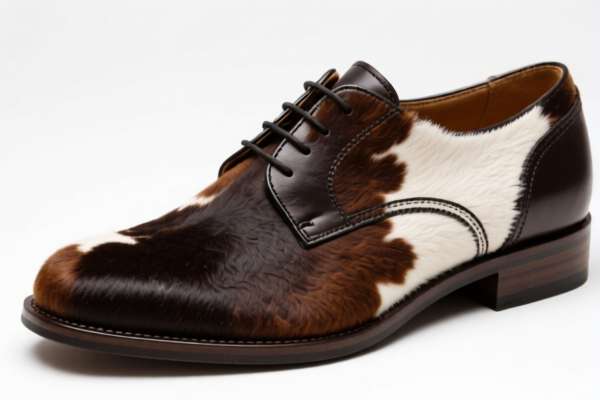
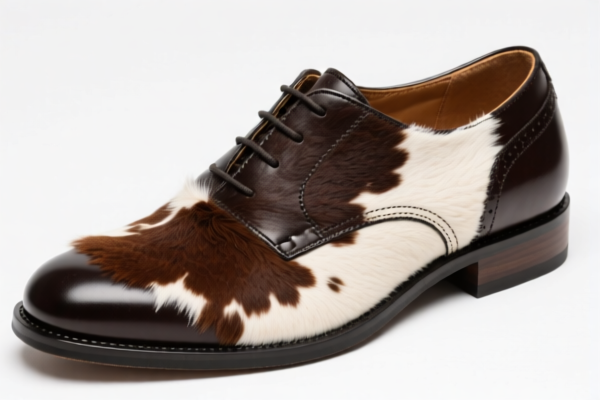
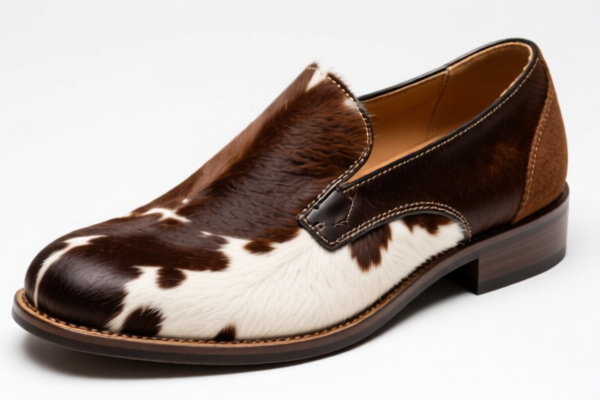

AI Analysis
👞 Cowhide for Shoe Uppers (Leather for Footwear)
🌐 HS Code Reference & Customs Clearance Guide | 2026 Latest Tariff Analysis | Professional Clearance Strategy
📌 I. Product Definition & Classification: Do You Really Understand "Cowhide for Shoe Uppers"?
Cowhide for shoe uppers, in international trade, refers to processed leather specifically intended for the upper part of footwear. The classification depends heavily on the processing method, form (full grain vs. split), and specific sub-category defined in the Harmonized System (HS).
Key Distinction:
- Tanned/Preserved Leather vs. Raw Hides: Must be clearly defined as processed leather suitable for immediate use.
- Full Grain/Corrected Grain vs. Split Leather: Determines whether it falls under Chapter 41 headings 4107 or 4104.
- Purpose: Specifically for "shoe uppers" (not soles, linings, or other articles).
⚠️ Critical Identification Point:
- If it is vegetable-tanned or chrome-tanned cowhide prepared for shoes, it generally falls under 4107 (Leather further prepared) or 4104 (Wrought leather).
- Full-grain or split leather intended for shoe uppers has distinct tariff implications.
📦 II. HS Code Classification Matrix (2026 Latest Tariff Authority Comparison)
| HS Code | Product Description | Application Scenario | Material/Form |
|---|---|---|---|
4107.12.10.20 |
Cowhide leather for shoe uppers; material is cowhide; purpose is shoe upper leather; belongs to the category of upper leather | High-quality full-grain or corrected grain cowhide for premium footwear | ✅ Upper Leather |
4107.11.10.20 |
Cowhide leather for shoe uppers; material is cowhide; form is leather; purpose is for shoes; belongs to upper leather/processed leather | Processed leather specifically designated for shoe manufacturing | ✅ Processed Leather |
4104.11.10.20 |
Cowhide leather for shoe uppers; material is cowhide; form is leather material; purpose is for shoes; conforms to basic material of upper/lining leather | General cowhide leather used for shoe uppers or linings | ✅ Basic Leather Material |
4104.11.40.10 |
Cowhide leather for shoes; material is cow (including buffalo); purpose is shoe upper leather; fully consistent with classification explanations | Specific high-grade cowhide for shoe uppers | ✅ Dedicated Shoe Upper Leather |
4104.41.10.20 |
Cowhide leather for shoes; material is cowhide; form conforms to upper leather; meets characteristics of full-grain/split leather | Full-grain or split cowhide suitable for durable footwear | ✅ Full-Grain/Split |
🔍 Key Reminder:
- 4107 codes typically apply to leather that has undergone further preparation (e.g., re-tanning, dyeing, finishing) beyond standard tanning.
- 4104 codes often refer to leather that has been vegetably tanned or processed into specific forms like splits or full-grain sheets.
- All listed HS codes are for Chinese-origin cowhide imported into the US, subject to additional tariffs.
💰 III. 2026 Latest Tariff Rate Details (Including Surtaxes & Policy Add-ons)
✅ Applicable Country: United States (US)
✅ Origin: China (CN)
✅ Effective Date: November 10, 2025 onwards (including subsequent imports)
🎯 1. 4107.12.10.20 & 4107.11.10.20 & 4104.11.10.20 & 4104.41.10.20 — High-Tariff Categories
For HS Codes 4107.12.10.20, 4107.11.10.20, 4104.11.10.20, and 4104.41.10.20, the tariff structure is as follows:
| Item | Content |
|---|---|
| Base Tariff Rate | 0.0% (ad valorem) |
| Section 301 Surtax | +25.0% (from USITC Footnote) |
| Section 122 Tariff | +10.0% (Targeting Chinese Products) |
| Total Tariff Rate | 35.0% |
| Tax Calculation | CIF Value × 35% |
| De Minimis Exemption | ❌ Not Eligible (deny_de_minimis) |
| Legal Basis Path | Section 301: Footnote → Section 122: 10% → HS Code |
📌 Explanation:
- 301 Surtax (25%): Imposed under US Trade Act Section 301 for goods from China.
- Section 122 Tariff (10%): Additional duty under Section 122 of the Trade Expansion Act, often applied to specific categories or as a broad measure.
- Total 35%: A very high tariff rate, significantly impacting cost structures. Must be factored into pricing strategies.
🎯 2. 4104.11.40.10 — Lower-Tariff Category
| Item | Content |
|---|---|
| Base Tariff Rate | 5.0% (ad valorem) |
| Section 301 Surtax | 0.0% |
| Section 122 Tariff | +10.0% |
| Total Tariff Rate | 15.0% |
| Tax Calculation | CIF Value × 15% |
| De Minimis Exemption | ❌ Not Eligible (deny_de_minimis) |
| Legal Basis Path | Base Tariff: 5% → Section 122: 10% → HS Code |
📌 Note:
- This HS Code (4104.11.40.10) offers a significantly lower total tariff (15%) compared to others (35%).
- Strategy: If the product specifications allow, classifying under this code can save 20% in duties.
- Ensure the leather strictly meets the definition of "cowhide for shoes" with material "cow (including buffalo)" to qualify.
🛠️ IV. Customs Clearance Practical Advice (Real-World Pitfall Avoidance)
✅ 1. Required Documentation Checklist (Mandatory)
| Document | Required | Description |
|---|---|---|
| ✅ Commercial Invoice | ✔️ | Must clearly state "Cowhide for Shoe Uppers," material, and processing type |
| ✅ Packing List | ✔️ | Detail weight, dimensions, and package count |
| ✅ Certificate of Origin | ✔️ | Essential for proving Chinese origin and applying (or avoiding) surtaxes |
| ✅ Product Specification Sheet | ✔️ | Include tanning method (vegetable/chrome), thickness, grain type, and intended use |
| ✅ Processing Description | ✔️ | Detail if it is full-grain, split, corrected, or re-tanned |
| ✅ Customs Broker Authorization | ✔️ | To facilitate smooth clearance |
✅ 2. Declaration Tips (Key Mnemonics)
🔥 “Classify Precisely, Avoid 35%!”
| Scenario | Correct Declaration | Incorrect Practice |
|---|---|---|
| High-end full-grain cowhide | 4107.12.10.20 or 4107.11.10.20 |
Misdeclare as general leather → 35% |
| Standard processed cowhide | 4104.11.10.20 |
Declare as raw hide → Delay/Rejection |
| Specific cow/buffalo hide for shoes | 4104.11.40.10 |
Fail to specify "cow (including buffalo)" → 35% |
| Split/Full-grain leather | 4104.41.10.20 |
Vague description → 35% |
📌 Warning:
- Do not use generic terms like "leather sheets" without specifying animal origin (cow), processing stage, and end-use (shoe uppers).
- Incorrect classification can lead to back taxes, penalties, and shipment delays.
✅ 3. Special Case Handling
| Situation | Handling Advice |
|---|---|
| Mixed Shipments | Separate HS codes on the invoice to avoid blanket high tariffs |
| Origin Shift | If processed in a third country, ensure rules of origin are met for potential tariff reductions |
| Sample vs. Commercial | Samples may still be subject to duties if declared as commercial goods; declare accurately |
| Disputes on Classification | Apply for an Advance Ruling from US CBP before shipment |
🌍 V. Global Market Clearance Comparison (2026 Latest)
| Country/Region | Recommended HS Code | Tariff Rate | Certification | Notes |
|---|---|---|---|---|
| 🇺🇸 USA | 4104.11.40.10 |
15% | None | Best option for cost savings if specs allow |
| 🇺🇸 USA | 4107.* / 4104.* (other) |
35% | None | High cost due to 301 + 122 tariffs |
| 🇨🇳 China | 4107.12.10.20 etc. |
5-10% | N/A | Lower tariffs for domestic production |
| 🇪🇺 EU | 4107.12 etc. |
6-12% | REACH | No equivalent of US 301/122 |
| 🇬🇧 UK | 4107.12 etc. |
6-12% | UKCA | Post-Brexit rules apply |
📌 Conclusion:
- The US market imposes the highest barriers due to combined 301 (25%) and Section 122 (10%) tariffs.
- Classify under4104.11.40.10if possible to reduce the rate from 35% to 15%.
- No de minimis exemption applies; all shipments are taxable.
📌 VI. Common Mistakes & Pitfall Guide (Lessons Learned)
❌ Mistake 1: Using "Leather" without specifying "Cowhide for Shoe Uppers"
👉 Consequence: CBP may assign a generic code with 35% tariff or request additional info → Delay
❌ Mistake 2: Ignoring Section 122 Tariff (10%)
👉 Consequence: Unexpected 10% additional duty → Cost Overrun
❌ Mistake 3: Assuming De Minimis Applies
👉 Consequence: Shipments under $800 still taxed at 15-35% → Surprise Bill
❌ Mistake 4: Misclassifying Split Leather as Full Grain
👉 Consequence: Duty rate mismatch → Audit Risk & Penalties
✅ Correct Practice:
"Cowhide Leather, Chrome-Tanned, Full Grain, for Shoe Uppers, Origin: China, HS: 4104.11.40.10"
🎯 VII. Conclusion: Professional Declaration Saves Money!
🎯 Remember the Mnemonic:
🔹 "Classify Smart, Save 20%: 15% vs. 35%"
🔹 "No De Minimis, Pay Full Price"
🔹 "Specify Cow, Specify Shoes, Avoid 35%"
📌 Tips:
- If your cowhide can be classified under 4104.11.40.10, ensure the documentation explicitly states "cow (including buffalo)" and "for shoe uppers".
- Apply for an Advance Ruling if uncertain about classification to mitigate risk.
- Consider supply chain diversification if tariffs exceed profit margins.
📣 Take Action Now:
📞 Contact a licensed customs broker
📄 Prepare precise product descriptions
🚀 Optimize HS Code selection to reduce tariffs by up to 20%!
✨ Professional Customs Clearance Starts with Accurate Classification!
💼 Every dollar saved in duties is pure profit!
Customer Reviews
About HS Code Classification
The Harmonized System (HS) is an internationally standardized nomenclature developed by the World Customs Organization (WCO) to classify traded products. Over 200 countries use the HS system as the basis for customs tariffs, trade statistics, and import/export regulations.
Each HS code follows a hierarchical structure:
- Chapter (2 digits) — Broad category of goods (e.g., Chapter 84: Machinery and Mechanical Appliances)
- Heading (4 digits) — More specific grouping within the chapter
- Subheading (6 digits) — Internationally standardized breakdown, used by all WCO member countries
- National subdivisions (8-10 digits) — Country-specific extensions for further classification, such as US HTSUS 10-digit codes
Correct HS code classification is essential for smooth customs clearance, accurate duty payment, and compliance with trade regulations. Misclassification can lead to customs delays, overpayment of duties, or penalties.
When importing from CN to US, the applicable tariff rates may include:
- Most-Favored-Nation (MFN) rate — The standard duty rate applied to WTO members
- General rate — Applied to countries without trade agreements
- Trade remedy duties — Additional tariffs such as Section 301 (anti-dumping), Section 232 (national security), or countervailing duties
The information provided on this page is for reference purposes only. For official classification, please consult with your local customs authority or a licensed customs broker.