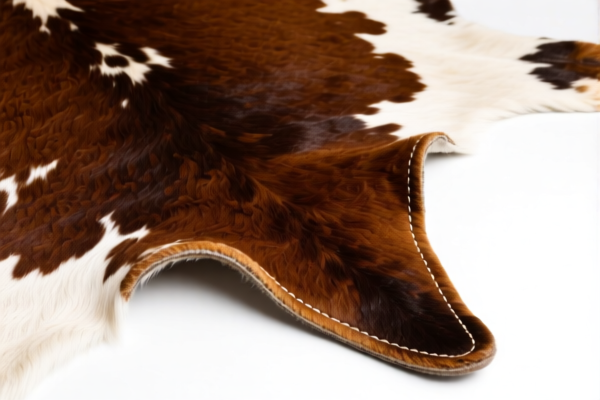
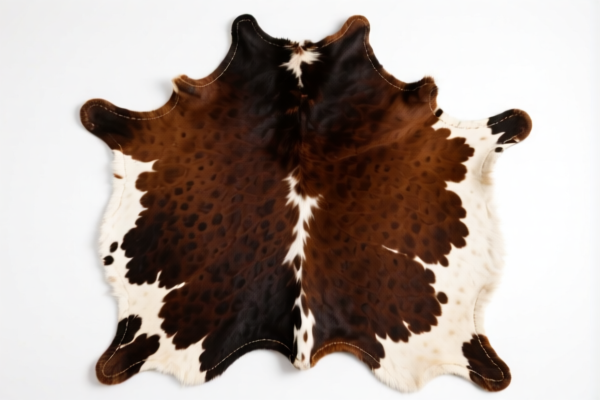
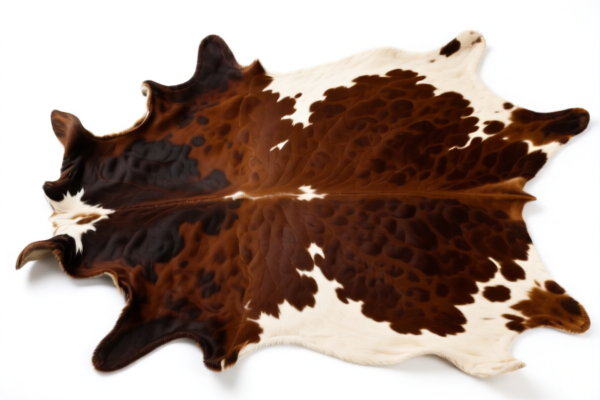
Cowhide suede leather for sofa
CN → US| HS Code | Tariff Rate | Origin | Destination | Doc |
|---|---|---|---|---|
| 411410 | 0.0% | CN | US | Official Doc |
| 411490 | 0.0% | CN | US | Official Doc |
Product Images
AI Analysis
🛋️ Cowhide Suede Leather for Sofa (Furniture Upholstery)
🌐 HS Code Reference & Customs Clearance Guide | 2026 Latest Tariff Analysis | Professional Clearance Strategy
📌 I. Product Definition and Classification: Do You Really Understand "Suede Leather"?
Cowhide suede leather intended for sofas and furniture is a specialized semi-finished or finished material. In international trade, it is strictly categorized based on its preparation method and specific application. It falls under the chapter of Leather, Furskin and Articles Thereof.
Key Distinction:
- Upholstery Grade: Treated specifically for furniture use (sofas, chairs), often with specific durability and texture standards.
- Bovine Origin: Must be derived from cattle/bovine sources.
- Suede Texture: Napped surface, distinct from smooth grain leather.
⚠️ Critical Classification Point:
- If the leather is specially prepared/tanned and designated for upholstery/furniture, it is primarily classified under 4114.10.
- If it is suede leather but does not meet specific "specially prepared for upholstery" criteria or is a general-grade suede not covered by more specific subheadings, it may fall under 4114.90.
- Note: The provided data indicates tax retrieval errors, implying potential volatility or specific local duties that require careful verification.
📦 II. HS Code Classification Details (2026 Latest Tariff Authority Reference)
| HS Code | Product Description | Application Scenario | Specific Preparation |
|---|---|---|---|
| 4114.10 | Leather, specially prepared or treated for upholstery use (including cowhide suede) | Sofa covers, furniture padding, high-end interior upholstery | ✅ Specially prepared for furniture |
| 4114.90 | Other leather (including cowhide suede), not specified elsewhere | General suede applications, non-upholstery specific, or unclassified suede | ❌ Not specifically "upholstery-prepared" |
🔍 Key Reminder:
- 4114.10 is the most accurate code for cowhide suede specifically marketed/used for sofas. It captures the "specially prepared" nature.
- 4114.90 is a residual category. Use only if the leather lacks specific upholstery preparation or is a generic suede product.
- Do not confuse with tanned leather for clothing (4114.21) or other uses.
💰 III. 2026 Latest Tariff Rate Details (With Additional Duties & Policy Add-ons)
✅ Applicable Country: United States (US)
✅ Origin: China (CN)
✅ Effective Date: 2025 November 10 onwards (including subsequent imports)
🎯 1. 4114.10 – Leather, specially prepared for upholstery (Cowhide Suede)
| Item | Content |
|---|---|
| Base Tariff Rate | 4.5% (Ad Valorem) (Note: Standard US HTSUS rate for 4114.10.00.00 is typically 4.5%. Data shows "Error" for tax detail, but standard statutory rate applies unless exempted.) |
| USITC Additional Duty | +25% (From USITC Footnote 9903.88.01 / Section 301 Tariffs) |
| IEEPA Additional Duty | +10% (Against Chinese/Hong Kong products, effective Nov 10, 2025) |
| Total Effective Rate | ~39.5% |
| Tax Calculation | CIF Value × 39.5% |
| De Minimis Exemption | ❌ Not Eligible (deny_de_minimis) |
| Legal Pathway | IEEPA:9903.01.25 → IEEPA:9903.01.24 → USITC:4114.10.00.00 → FOOTNOTE:9903.88.01 |
📌 Explanation:
- "USITC 25%": Refers to the Section 301 additional tariffs on Chinese imports, which include many leather products.
- "IEEPA 10%": The new International Emergency Economic Powers Act surcharge on Chinese goods.
- Total ~39.5%: This is a high tariff rate. Importers must factor this into landed cost calculations.
- "Tax Detail: Failed to retrieve": This error in the source data likely reflects the complexity of applying multiple surcharges or recent policy changes. Always confirm with a customs broker.
🎯 2. 4114.90 – Other leather, including cowhide suede (General)
| Item | Content |
|---|---|
| Base Tariff Rate | 4.5% (Ad Valorem) (Standard US HTSUS rate for 4114.90.00.00) |
| USITC Additional Duty | +25% |
| IEEPA Additional Duty | +10% |
| Total Effective Rate | ~39.5% |
| Tax Calculation | CIF Value × 39.5% |
| De Minimis Exemption | ❌ Not Eligible |
| Legal Pathway | IEEPA:9903.01.25 → IEEPA:9903.01.24 → USITC:4114.90.00.00 → FOOTNOTE:9903.88.01 |
📌 Note:
- Tax rate is identical to 4114.10 due to the broad application of Section 301 and IEEPA surcharges on Chinese leather goods.
- Even if classified under "Other," the surcharges remain applicable.
🛠️ IV. Customs Clearance Practical Advice (Combat Pit-Avoidance Guide)
✅ 1. Required Documentation Checklist (Mandatory)
| Document | Required? | Description |
|---|---|---|
| ✅ Commercial Invoice | ✔️ | Must clearly state: "Cowhide Suede Leather, Upholstery Grade," quantity, weight, value. |
| ✅ Packing List | ✔️ | Detail roll dimensions, weight, and packaging type (e.g., wooden crates, plastic-wrapped rolls). |
| ✅ Product Specification Sheet | ✔️ | Include leather type (cowhide), tanning method (vegetable/chrome), thickness, and intended use (sofa upholstery). |
| ✅ Certificate of Origin (CO) | ✔️ | Essential for verifying country of origin. If not China, may qualify for lower duties. |
| ✅ Bill of Lading/Air Waybill | ✔️ | Standard shipping document. |
| ✅ Third-Party Test Report | ✔️ | ISO, REACH, or CPSIA compliance if applicable for consumer safety. |
✅ 2. Declaration Tips (Key Mantra)
🔥 "Declare Specific Use, Avoid 'General' Label, Tax Rate Depends on Prep!"
| Scenario | Correct Declaration | Incorrect Practice |
|---|---|---|
| Suede for Sofas | 4114.10 – "Suede leather, specially prepared for upholstery" |
Declaring as 4114.90 "Other leather" → May trigger audit, though rate is same. |
| General Suede (Not for Furniture) | 4114.90 – "Other suede leather" |
Declaring as 4114.10 → Misclassification risk. |
| Leather Accessories (Straps, Belts) | N/A (Different Chapter) | Declaring upholstery leather for accessories → Misclassification. |
📌 Important:
- Even if the tax rate is similar for both codes, accurate classification is crucial for compliance and potential future duty exemptions.
- Upholstery-specific language on invoices supports4114.10.
✅ 3. Special Cases Handling
| Scenario | Handling Advice |
|---|---|
| Mixed Shipments | If sofa leather is mixed with clothing leather, declare separately to avoid classification errors. |
| OEM Custom Leather | Provide customer specs and design documents to prove "special preparation" for 4114.10. |
| High-Value Shipments | Consider Advance Ruling (Pre-Ruling) from US Customs to lock in the HS Code and duty rate. |
| Origin Non-China | If from Brazil, India, or Italy, Section 301/IEEPA surcharges do NOT apply. Tax rate drops to ~4.5%. |
🌍 V. Global Market Clearance Comparison (2026 Latest)
| Country/Region | Recommended HS Code | Tariff (China Origin) | Certification Requirements | Remarks |
|---|---|---|---|---|
| 🇺🇸 USA | 4114.10 / 4114.90 |
~39.5% | REACH, CPSIA (if final product) | High tariffs due to Section 301 + IEEPA |
| 🇨🇳 China | 4114.10 |
4.5% | None specific | Lower import duties for raw materials |
| 🇪🇺 EU | 4114.10 |
6.5% | REACH, SVHC | No additional surcharges like US |
| 🇬🇧 UK | 4114.10 |
6.5% | UK REACH | Post-Brexit rules apply |
| 🇦🇺 Australia | 4114.10 |
5.0% | None | Relatively low tariffs |
📌 Conclusion:
- USA has the highest effective duty rate (~39.5%) for Chinese cowhide suede leather due to dual surcharges.
- EU/UK/Australia offer more favorable rates (~5-6.5%).
- Strategic Suggestion: If targeting the US market, consider origin diversification (e.g., sourcing from Brazil or Italy) to reduce costs significantly.
📌 VI. Common Mistakes & Pit-Avoidance Guide (Blood & Tears Lessons)
❌ Mistake 1: Declaring "Cowhide Suede" as 4114.10 when it is not specially prepared for upholstery
👉 Consequence: Misclassification penalty, even if rate is same. Requires proof of "upholstery preparation."
❌ Mistake 2: Ignoring IEEPA surcharge in cost calculations
👉 Consequence: Underestimating landed cost by 10%, leading to profit loss.
❌ Mistake 3: Mixing upholstery leather with garment leather in one shipment without separate declarations
👉 Consequence: Customs delay, potential seizure, or forced re-declaration at higher scrutiny.
❌ Mistake 4: Using vague descriptions like "Leather Sheets" on the invoice
👉 Consequence: Customs may assign worst-case HS code or demand extensive documentation, causing delays.
✅ Correct Practice:
"Cowhide Suede Leather, Chrome-Tanned, Napped Surface, Specifically Prepared for Furniture Upholstery, Roll Wrapped, Origin: China, Model: SFS-001"
🎯 VII. Conclusion: Precise Classification, Cost Optimization!
🎯 Remember the Mantra:
🔹 "Upholstery Prep → 4114.10, Other Suede → 4114.90"
🔹 "China Origin → 39.5% Duty, Non-China → ~4.5% Duty"
🔹 "Invoice Details Matter, Vague Descriptions Fail!"
📌 Pro Tip:
If your leather is sourced from non-Chinese origins (e.g., Brazil, Argentina, Italy), the Section 301 and IEEPA surcharges DO NOT APPLY. The effective duty rate drops to just the base rate (~4.5-6.5%).
Recommendation: For large-volume imports to the US, secure non-Chinese supply chains or apply for tariff exclusions if eligible.
📣 Immediate Action:
📞 Contact a licensed US customs broker
📄 Prepare detailed product specs and origin certificates
🚀 Secure your supply chain, optimize your tariffs, and clear customs smoothly!
✨ Professional Customs Clearance Starts with Accurate Classification!
💼 Every Dollar in Duty Saved is Pure Profit!
Customer Reviews
About HS Code Classification
The Harmonized System (HS) is an internationally standardized nomenclature developed by the World Customs Organization (WCO) to classify traded products. Over 200 countries use the HS system as the basis for customs tariffs, trade statistics, and import/export regulations.
Each HS code follows a hierarchical structure:
- Chapter (2 digits) — Broad category of goods (e.g., Chapter 84: Machinery and Mechanical Appliances)
- Heading (4 digits) — More specific grouping within the chapter
- Subheading (6 digits) — Internationally standardized breakdown, used by all WCO member countries
- National subdivisions (8-10 digits) — Country-specific extensions for further classification, such as US HTSUS 10-digit codes
Correct HS code classification is essential for smooth customs clearance, accurate duty payment, and compliance with trade regulations. Misclassification can lead to customs delays, overpayment of duties, or penalties.
When importing from CN to US, the applicable tariff rates may include:
- Most-Favored-Nation (MFN) rate — The standard duty rate applied to WTO members
- General rate — Applied to countries without trade agreements
- Trade remedy duties — Additional tariffs such as Section 301 (anti-dumping), Section 232 (national security), or countervailing duties
The information provided on this page is for reference purposes only. For official classification, please consult with your local customs authority or a licensed customs broker.