Cowhide waste for automotive interior
CN → US| HS Code | Tariff Rate | Origin | Destination | Doc |
|---|---|---|---|---|
| 6309000010 | 17.5% | CN | US | Official Doc |
| 4115200000 | 17.5% | CN | US | Official Doc |
| 4115100000 | 35.0% | CN | US | Official Doc |
| 6309000020 | 17.5% | CN | US | Official Doc |
| 3214905000 | 38.25% | CN | US | Official Doc |
Product Images
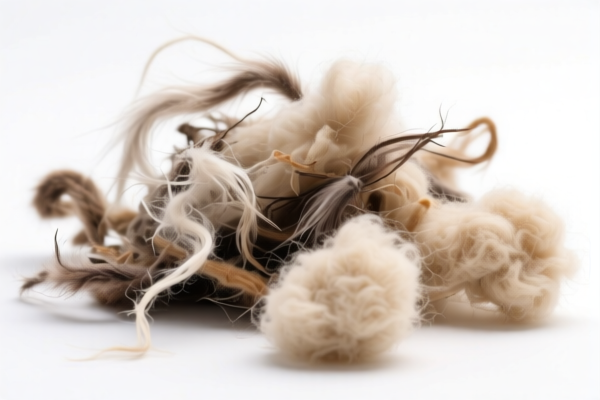
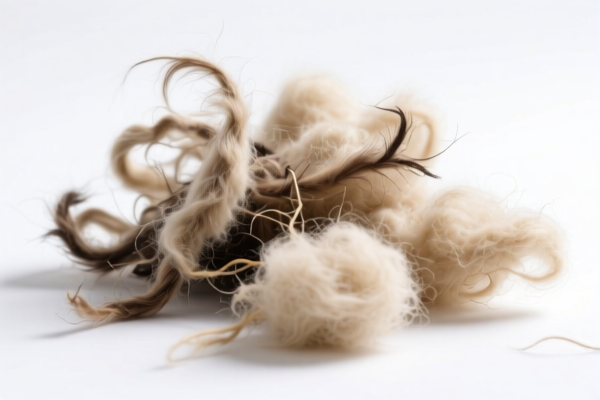
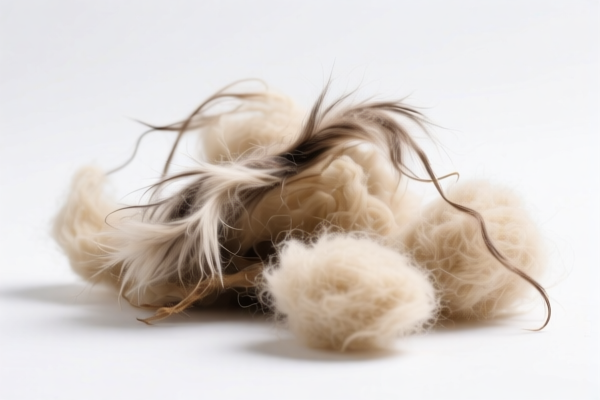
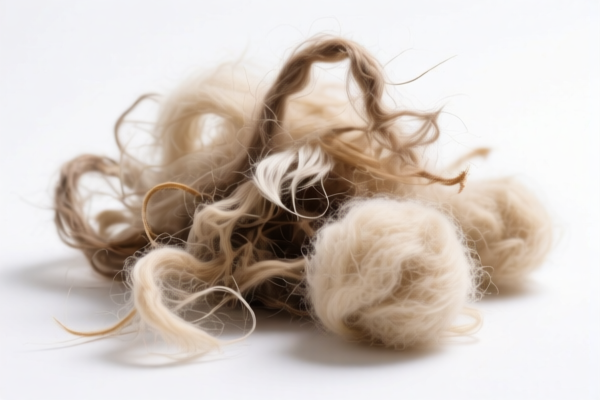
AI Analysis
🚗 Cowhide Waste for Automotive Interiors (Leather Offcuts)
🌐 HS Code Reference & Customs Clearance Guide | 2026 Latest Tariff Analysis | Professional Entry Strategy
📌 I. Product Definition: What is "Cowhide Waste"?
Cowhide waste (often referred to as leather offcuts, scraps, or trimmings) refers to the residual pieces of leather remaining after the initial cutting of hides for automotive seat upholstery, dashboards, or door panels.
In international trade, the classification of these offcuts is critical because: 1. Material State: Are they raw, tanned, or processed further? 2. Usage: Are they sold as-is for reprocessing, or are they "old goods" (second-hand)? 3. Chemical Treatment: Have they been treated with repair materials or sealants?
⚠️ Key Distinction:
- Raw/Tanned Offcuts: Direct results of the cutting process → Classified under Chapter 41 (Leather).
- Repaired/Processed Offcuts: Mixed with fillers or adhesives → Classified under Chapter 32 (Chemicals).
- Old/Used Goods: Previously used in vehicles → Classified under Chapter 63 (Other made-up articles).
📦 II. HS Code Classification Details (2026 Latest Tariff Authority)
Based on the provided data, here are the five possible HS Codes for "Cowhide Waste for Automotive Interior" and the logic behind each:
| HS Code | Product Description | Application Scenario | Key Classification Logic |
|---|---|---|---|
6309.00.00.10 |
Leather Offcuts (Auto Interior) | Leather scraps, primary/semi-finished state | Classified as "Other Old Goods" or specific leather offcuts not fully aligned with Chapter 41 definitions for raw waste. |
4115.20.00.00 |
Leather Offcuts (Auto Interior) | Tanned leather scraps, raw form | Best Fit: Fully meets material (leather) and form (offcuts/scrap) requirements for Chapter 41. |
4115.10.00.00 |
Leather Offcuts (Auto Interior) | Composite leather scraps | Classified as "Composite Leather" because the offcuts may include bonded layers or synthetic backings. |
6309.00.00.20 |
Leather Offcuts (Auto Interior) | Other used goods/offcuts | Classified specifically as "Other Old Goods" (used/second-hand leather waste). |
3214.90.50.00 |
Cowhide Repair Materials | Offcuts treated with repair compounds | Not just waste, but "Repair Material" used for surface treatment or sealing. Includes chemical fillers. |
🔍 Critical Reminder:
-4115.20.00.00is generally the standard for clean, tanned leather offcuts from automotive manufacturing.
-4115.10.00.00applies if the waste is composite leather (leather + fabric/synthetic backing).
-6309.xx.xxcodes apply if the goods are considered "Old Goods" (used) or if the specific national tariff structure categorizes them outside Chapter 41.
-3214.90.50.00applies ONLY if the "waste" is actually a repair paste or compound derived from cowhide, not the physical leather scrap itself.
💰 III. 2026 Latest Tariff Rate Breakdown (US Market)
✅ Applicable Country: USA
✅ Origin: China (CN)
✅ Effective Date: November 10, 2025 (and subsequent imports)
🎯 1. 4115.20.00.00 & 6309.00.00.10 & 6309.00.00.20
(Standard Leather Offcuts / Old Goods)
| Item | Content |
|---|---|
| Base Duty | 0% (Ad Valorem) |
| Section 301 Additional Duty | +7.5% |
| IEEPA Additional Duty | +10% (Against China/HK products) |
| Total Duty Rate | 17.5% |
| Calculation Method | CIF Value × 17.5% |
| De Minimis Exemption | ❌ Not Eligible (Denied) |
| Legal Basis Path | IEEPA:9903.01.25 → IEEPA:9903.01.24 → USITC:4115.20.00.00 / 6309.00.00 |
📌 Explanation:
- Base 0%: Raw leather waste often has low base tariffs.
- 301 Duty 7.5%: Part of the ongoing Section 301 tariffs on Chinese goods.
- IEEPA 10%: New/additional tariffs under the International Emergency Economic Powers Act targeting Chinese imports.
- Total 17.5%: This is the minimum effective rate for standard leather offcuts.
🎯 2. 4115.10.00.00
(Composite Leather Offcuts)
| Item | Content |
|---|---|
| Base Duty | 0% |
| Section 301 Additional Duty | +25.0% |
| IEEPA Additional Duty | +10% |
| Total Duty Rate | 35.0% |
| Calculation Method | CIF Value × 35.0% |
| De Minimis Exemption | ❌ Not Eligible (Denied) |
| Legal Basis Path | IEEPA:9903.01.25 → IEEPA:9903.01.24 → USITC:4115.10.00.00 |
📌 Explanation:
- Why Higher?: Composite leather is often classified under a different subheading that attracts a 25% Section 301 tariff instead of 7.5%.
- Total 35%: This is a high-risk classification. Misclassifying clean leather offcuts (4115.20) as composite (4115.10) will double your duty cost.
🎯 3. 3214.90.50.00
(Cowhide Repair Materials / Chemicals)
| Item | Content |
|---|---|
| Base Duty | 3.25% |
| Section 301 Additional Duty | +25.0% |
| IEEPA Additional Duty | +10% |
| Total Duty Rate | 38.25% |
| Calculation Method | CIF Value × 38.25% |
| De Minimis Exemption | ❌ Not Eligible (Denied) |
| Legal Basis Path | IEEPA:9903.01.25 → IEEPA:9903.01.24 → USITC:3214.90.50.00 |
📌 Explanation:
- Why Highest?: If the product is classified as a chemical repair material (even if made from cowhide), it falls under Chapter 32.
- Base 3.25%: Chemicals often have a base tariff.
- 301 Duty 25%: Standard 25% Section 301 rate for many chemical/industrial goods.
- Warning: Do not use this code for physical leather scraps. It is for repair pastes, glues, or sealants.
🛠️ IV. Customs Clearance Practical Advice
✅ 1. Required Documentation Checklist
| Document | Mandatory? | Purpose |
|---|---|---|
| ✅ Product Specification Sheet | ✔️ | Must state: "Leather Offcuts," Material (Cowhide), Form (Scrap/Trim), Usage (Recycling/Repair). |
| ✅ Commercial Invoice | ✔️ | Clearly describe as "Leather Offcuts/Scrap" or "Composite Leather Offcuts." Avoid vague terms like "Auto Parts." |
| ✅ Packing List | ✔️ | Specify weight (Net/Gross) and number of bags/bundles. |
| ✅ Certificate of Origin (CO) | ✔️ | Essential for proving Chinese origin to apply/add accurate 301/IEEPA duties. |
| ✅ Photos of Goods | ✔️ | Show texture, edges, and any labels. Proves it is "waste/scrap" and not finished seats. |
| ✅ Material Safety Data Sheet (MSDS) | ✔️ | Critical for 3214.90.50.00. Only needed if shipping as repair material/chemical. |
✅ 2. Declaration Tips (Key Phrases)
🔥 "Accurate Description Saves Money: Don't Guess the HS Code!"
| Scenario | Correct Declaration | Incorrect Declaration | Consequence |
|---|---|---|---|
| Clean Tanned Leather Scraps | "Leather Offcuts, Tanned Cowhide, for Recycling" | "Leather Waste" or "Auto Parts" | Risk of misclassification to 4115.10 (35%) or 6309 (17.5%). Stick to 4115.20 if possible. |
| Composite Leather Scraps | "Composite Leather Offcuts, Cowhide/Fabric Blend" | "Leather Offcuts" | Must declare composite nature. Avoids penalty for misdeclared material. |
| Repair Paste/Cream | "Cowhide-based Leather Repair Compound" | "Leather Scrap" | If declared as scrap, it will be rejected or re-classified as 3214 (38.25%). |
| Used/Second-hand Scraps | "Old Leather Goods, Offcuts" | "New Leather Waste" | Triggers 6309 classification. Ensure "Old" is declared to avoid fraud allegations. |
✅ 3. Special Handling for High-Tariff Items
| Scenario | Recommendation |
|---|---|
| Minimizing Duty | If your offcuts are clean, tanned, and single-material, insist on 4115.20.00.00 (17.5%). This is the lowest risk and lowest cost for pure leather waste. |
| Composite Leather | If the waste includes synthetic backing or bonded layers, you must use 4115.10.00.00 (35%). Do not try to force 4115.20 as it will lead to audits and back-taxes. |
| Chemical Repairs | If you are selling repair paste made from cowhide, use 3214.90.50.00 (38.25%). Ensure you provide an MSDS and correct chemical description. |
| De Minimis (Section 321) | ❌ Never rely on De Minimis ($800) for these codes. All listed HS codes are explicitly denied De Minimis exemption for Chinese goods. Full formal entry is required. |
🌍 V. Global Market Comparison (2026)
| Country/Region | Recommended HS Code | Duty Rate | Key Requirement | Notes |
|---|---|---|---|---|
| 🇺🇸 USA | 4115.20.00.00 |
17.5% | CO, Invoice | Lowest US Duty. Use for pure leather offcuts. |
| 🇺🇸 USA | 4115.10.00.00 |
35.0% | CO, Invoice | Higher duty for composite leather. |
| 🇪🇺 EU | 4115.10.00 |
Varies (0-5%) | CE, REACH | EU often has lower base duties but stricter REACH compliance for chemicals. |
| 🇨🇳 China | 4115.10.00 |
5-10% | CCC (if applicable) | Import duty may be lower, but check for environmental taxes. |
📌 Conclusion:
- For US Imports,4115.20.00.00is the optimal code for clean cowhide offcuts (17.5% total).
- Avoid3214.90.50.00unless you are literally shipping repair paste (38.25% is very high).
- Never assume De Minimis applies; all these codes require full customs entry.
📌 VI. Common Errors & Pitfalls (Lessons Learned)
❌ Error 1: Declaring "Leather Offcuts" as "Auto Interior Parts"
👉 Result: Misclassification. "Auto Parts" may have different duty rates (e.g., 2.5%-10% base + 25% 301 = ~27.5%). If correctly classified as 4115.20 (17.5%), you overpaid. If misclassified as 3214, you underpaid and face fines.
❌ Error 2: Using 3214.90.50.00 for physical leather scraps
👉 Result: Customs will reject the declaration. It is not a chemical. You will need to re-export or re-declare, causing delays and storage fees.
❌ Error 3: Ignoring "Composite" nature
👉 Result: If offcuts are bonded with fabric, declaring 4115.20 (pure leather) is fraud. Expect a 25% penalty and audit.
✅ Correct Approach:
"Leather Offcuts, Tanned Cowhide, Cut from Automotive Seat Production, 100% Leather, No Composite Backing, For Recycling" →
4115.20.00.00
🎯 VII. Conclusion: Precise Classification, Lower Costs
🎯 Remember:
🔹 "Pure Leather = 17.5% | Composite = 35% | Chemical = 38.25%"
🔹 "No De Minimis! Full Entry Required!"
🔹 "Describe the Material, Not Just the Use!"
📌 Pro Tip:
If your supplier provides mixed batches (some pure, some composite), separate the shipments. Classify pure leather under 4115.20.00.00 (17.5%) and composite under 4115.10.00.00 (35%). Blending them may force Customs to audit the entire lot or apply the higher rate.
📣 Immediate Action:
📞 Contact Your Customs Broker: Provide photos of the offcuts (texture, edges, backing).
📝 Request an Advance Ruling: If your volume is high, apply for a binding ruling on4115.20.00.00vs4115.10.00.00.
🚀 Optimize Your Supply Chain: Choose suppliers who can provide clean, single-material leather offcuts to save 17.5% in duties.
✨ Professional Clearance Starts with Accurate Classification!
💼 Every percentage point saved is pure profit!
Customer Reviews
About HS Code Classification
The Harmonized System (HS) is an internationally standardized nomenclature developed by the World Customs Organization (WCO) to classify traded products. Over 200 countries use the HS system as the basis for customs tariffs, trade statistics, and import/export regulations.
Each HS code follows a hierarchical structure:
- Chapter (2 digits) — Broad category of goods (e.g., Chapter 84: Machinery and Mechanical Appliances)
- Heading (4 digits) — More specific grouping within the chapter
- Subheading (6 digits) — Internationally standardized breakdown, used by all WCO member countries
- National subdivisions (8-10 digits) — Country-specific extensions for further classification, such as US HTSUS 10-digit codes
Correct HS code classification is essential for smooth customs clearance, accurate duty payment, and compliance with trade regulations. Misclassification can lead to customs delays, overpayment of duties, or penalties.
When importing from CN to US, the applicable tariff rates may include:
- Most-Favored-Nation (MFN) rate — The standard duty rate applied to WTO members
- General rate — Applied to countries without trade agreements
- Trade remedy duties — Additional tariffs such as Section 301 (anti-dumping), Section 232 (national security), or countervailing duties
The information provided on this page is for reference purposes only. For official classification, please consult with your local customs authority or a licensed customs broker.