Cowhide/Horsehide for Furniture
CN → US| HS Code | Tariff Rate | Origin | Destination | Doc |
|---|---|---|---|---|
| 4107115000 | 12.8% | CN | US | Official Doc |
| 4107125000 | 12.8% | CN | US | Official Doc |
Product Images
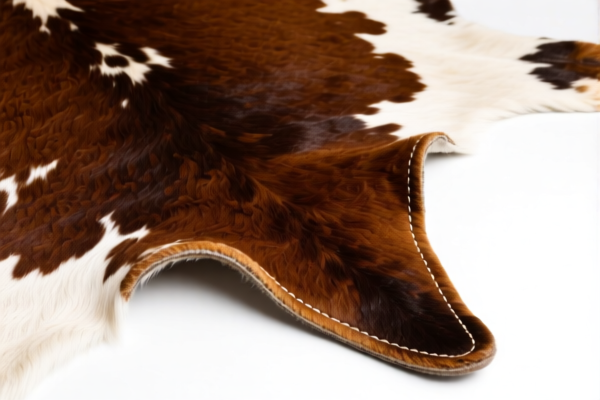
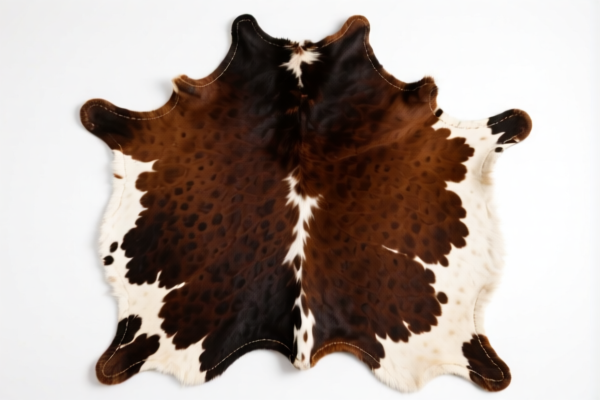
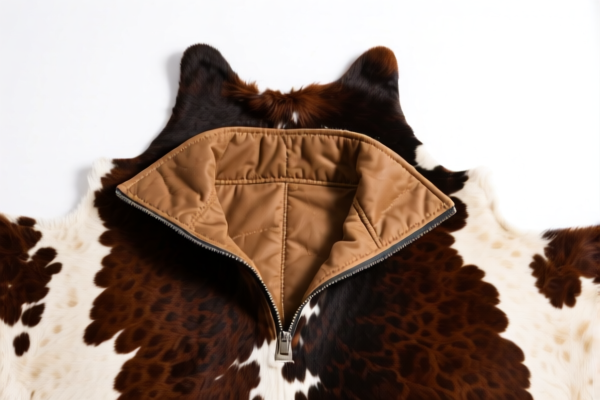
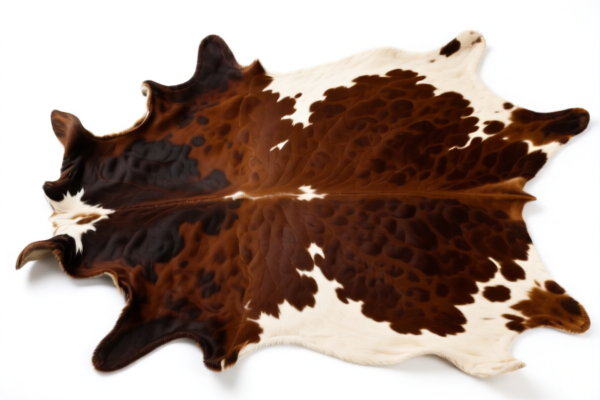
AI Analysis
🛋️ Cowhide/Horsehide for Furniture (Upholstery Leather)
🌐 HS Code Reference & Customs Clearance Guide | 2026 Latest Tariff Analysis | Professional Clearance Strategy
📌 Part 1: Product Definition & Classification: Do You Really Know "Upholstery Leather"?
Full-grain cowhide and horsehide are premium materials widely used in the furniture industry, specifically for sofas, armchairs, and high-end interiors. In international trade, these are categorized under Heading 4107 (Leather further prepared after tanning or crusting, of bovine or equine animals, without hair on).
The critical distinction lies in the surface finish and structural integrity:
Full Grain (Unsplit): The outer layer of the hide, retaining the natural grain pattern. It is durable, breathable, and commands a higher price.
Grain Splits: The leather split from the lower layers of the hide, often corrected or embossed.
⚠️ Key Distinction Point:
- If the leather is Full Grain (outer layer, unsplit) and designated for Upholstery → Classified under 4107.11.50.00
- If the leather is a Grain Split (inner layer split) and designated for Upholstery → Classified under 4107.12.50.00
- ❌ Exclusion: If the leather is chamois-dressed, patent leather, or metallic leather, it falls under Heading 4114 and is excluded from the codes below.
📦 Part 2: HS Code Classification Details (2026 Latest Tariff Authority Comparison)
| HS Code | Product Description | Application Scenario | Structure Type |
|---|---|---|---|
4107.11.50.00 |
Whole hides and skins: Full grains, unsplit: Upholstery leather | High-end sofas, luxury car interiors, premium furniture | ✅ Full Grain (Outer Layer) |
4107.12.50.00 |
Whole hides and skins: Grain splits: Upholstery leather | Mid-range furniture, automotive seating, budget-friendly upholstery | ✅ Grain Split (Inner Layer) |
🔍 Key Reminder:
- Both codes specifically require the leather to be "Without hair on" and "Without flesh on" (fully prepared).
- The term "Upholstery leather" is critical; if declared as "garment leather" or "shoe upper leather," the HS code changes (likely to 4107.21/4107.22).
- Parchment-dressed leather is included here if it meets the bovine/equine criteria.
💰 Part 3: 2026 Latest Tariff Rate Breakdown (Detailed Tax Clauses)
✅ Applicable Country: United States (US)
✅ Origin: China (CN)
✅ Effective Date: Current 2026 Trade Policy
✅ Total Tax Rate: 0.0%
🎯 1. 4107.11.50.00 — Full Grain Upholstery Leather (Cow/Horse)
| Item | Content |
|---|---|
| Base Tariff Rate | 0.0% (Ad Valorem) |
| Additional Tariff (Section 301) | 0.0% |
| Total Tax Rate | 0.0% |
| Tax Calculation | CIF Value × 0% = $0 |
| De Minimis Exemption | ❌ Not Applicable (Leather is generally not covered by de minimis for high-value furniture components, but the tax is zero anyway) |
| Legal Basis | HTSUS 4107.11.50.00 |
📌 Explanation:
- Unlike electronics or steel, finished leather for upholstery currently enjoys a zero tariff rate under the current US-China trade framework.
- There are no Section 301 surcharges or IEEPA penalties applied to this specific subheading.
- This makes it a cost-effective material import compared to raw hides or chemical tanning agents.
🎯 2. 4107.12.50.00 — Grain Split Upholstery Leather (Cow/Horse)
| Item | Content |
|---|---|
| Base Tariff Rate | 0.0% (Ad Valorem) |
| Additional Tariff (Section 301) | 0.0% |
| Total Tax Rate | 0.0% |
| Tax Calculation | CIF Value × 0% = $0 |
| De Minimis Exemption | ❌ Not Applicable |
| Legal Basis | HTSUS 4107.12.50.00 |
📌 Note:
- Even though Grain Splits are structurally different from Full Grain, they share the same 0% tariff rate in this category.
- This encourages the use of split leather for non-premium upholstery, reducing material costs without tariff penalties.
🛠️ Part 4: Customs Clearance Practical Advice (Real-World Pitfall Avoidance Guide)
✅ 1. Required Documentation Checklist (Non-Negotiable)
| Document | Required | Description |
|---|---|---|
| ✅ Commercial Invoice | ✔️ | Must explicitly state: "Full Grain Cowhide for Upholstery" or "Grain Split Horsehide for Sofa Manufacturing" |
| ✅ Packing List | ✔️ | Detail weight, roll count, and dimensions. Leather is heavy; accurate weight is crucial for freight calculation. |
| ✅ Certificate of Origin (CO) | ✔️ | To prove origin (e.g., China). Even with 0% tariff, origin determination is required for trade statistics. |
| ✅ Material Safety Data Sheet (MSDS) | ✔️ | If the leather involves chemical tanning agents (Chrome vs. Vegetable tanned), customs may request chemical composition details. |
| ✅ Product Photos | ✔️ | High-res images showing grain texture to prove it is Full Grain vs. Split. |
✅ 2. Declaration Tips (Critical Mnemonics)
🔥 "Specify Origin, Specify Use, Specify Structure!"
| Scenario | Correct Declaration | Wrong Practice |
|---|---|---|
| High-End Leather | 4107.11.50.00: "Full Grain Cowhide, Tanned, For Upholstery" |
Declaring as "Raw Hide" → Higher tax & inspection |
| Mid-Range Leather | 4107.12.50.00: "Grain Split Cowhide, For Furniture" |
Declaring as "Shoe Leather" → Wrong HTS & penalty |
| Mixed Shipment | Separate invoices for Full Grain vs. Split | Mixing descriptions → Customs seizure & delay |
| Non-Upholstery Use | Use Heading 4107.21/22 (Garment/Shoe) | Using Upholstery code for Jackets → Misclassification |
✅ 3. Special Case Handling
| Situation | Handling Advice |
|---|---|
| Chamois-Dressed Leather | ❌ Do NOT use 4107.11/12. These fall under 4114 (Different tariff & description). Ensure your supplier specifies "Chamois" if applicable. |
| Metallic or Patent Leather | ❌ Do NOT use 4107.11/12. These fall under 4114. |
| Vegetable vs. Chrome Tanned | Mentioning the tanning method (e.g., "Chrome Tanned") helps customs clear faster, as Chrome-tanned leather is more common and well-understood. |
| Rolls vs. Skins | Ensure the unit of measure matches the invoice. Leather is often traded in "square feet" or "kg." |
🌍 Part 5: Global Main Market Comparison (2026 Latest)
| Country/Region | Recommended HS Code | Tariff Rate | Certification Requirements | Notes |
|---|---|---|---|---|
| 🇺🇸 USA | 4107.11.50.00 / 4107.12.50.00 |
0.0% | None (General) | Best market for zero tariffs |
| 🇨🇳 China | 4107.11.10.00 / 4107.12.10.00 |
Varies (3.5%-5%) | N/A | Import tax applies unless under FTZ |
| 🇪🇺 EU | 4107 21 50 / 4107 22 50 |
Varies (2.5%-4%) | REACH Compliance | Strict chemical regulations (Chrome VI) |
| 🇬🇧 UK | 4107 21 50 / 4107 22 50 |
Varies (2.5%-4%) | UK REACH | Post-Brexit rules apply |
| 🇦🇺 Australia | 4107.21.00 / 4107.22.00 |
5.0% | APEC/Standard | Low tariff, but standard inspection |
📌 Conclusion:
- The USA is currently the most tariff-friendly market for finished leather upholstery (0% total).
- EU and UK have higher base rates but offer FTZ advantages if sourced from partner countries.
- Chemical Compliance (REACH) is the biggest hurdle in Europe, not tariffs.
📌 Part 6: Common Errors & Pitfall Guide (Lessons Learned)
❌ Error 1: Declaring Full Grain leather as Split Leather to save costs
👉 Consequence: If caught, it’s considered fraud, not just misclassification. Leads to fines and blacklisting.
❌ Error 2: Using generic term "Leather"
👉 Consequence: Customs cannot determine if it’s for Shoes (4107.21) or Upholstery (4107.11). Results in Hold & Inspection.
❌ Error 3: Ignoring Chrome VI Content
👉 Consequence: In EU/UK, even with 0% tariff in US, non-compliant leather leads to destruction orders. In US, it may trigger FDA/CPSC scrutiny if used for baby furniture.
❌ Error 4: Misidentifying Parchment-Dressed leather
👉 Consequence: If the leather is parchment-dressed, it might be classified differently. Ensure your supplier confirms the preparation method.
✅ Correct Approach:
"Full Grain Cowhide, Chrome Tanned, Dye-Finished, For Upholstery, 50 sq ft, Model XYZ, Origin China"
🎯 Part 7: Conclusion: Precision in Classification, Maximizing Profit!
🎯 Remember the Golden Rules:
🔹 "Full Grain goes to .11, Split goes to .12, Upholstery is Key!"
🔹 "Zero Tariff in the US, but Chemical Compliance is Global!"
🔹 "Don’t guess, Declare – 'Upholstery' and 'Full Grain' are your best friends!"
📌 Pro Tip:
If your leather is Chrome VI free and meets OEKO-TEX standards, highlight this in your declaration. It speeds up clearance in all regions, especially in the EU and UK, where environmental regulations are strict.
📣 Immediate Action:
📞 Contact your customs broker with photos and spec sheets.
🚀 Confirm HS Code 4107.11.50.00 or 4107.12.50.00 before shipment.
📄 Ensure Commercial Invoice explicitly states "Upholstery Leather".
✨ Professional Clearance Starts with Accurate Classification!
💼 Your Leather is Premium; Your Documentation Should Be Too!
Customer Reviews
About HS Code Classification
The Harmonized System (HS) is an internationally standardized nomenclature developed by the World Customs Organization (WCO) to classify traded products. Over 200 countries use the HS system as the basis for customs tariffs, trade statistics, and import/export regulations.
Each HS code follows a hierarchical structure:
- Chapter (2 digits) — Broad category of goods (e.g., Chapter 84: Machinery and Mechanical Appliances)
- Heading (4 digits) — More specific grouping within the chapter
- Subheading (6 digits) — Internationally standardized breakdown, used by all WCO member countries
- National subdivisions (8-10 digits) — Country-specific extensions for further classification, such as US HTSUS 10-digit codes
Correct HS code classification is essential for smooth customs clearance, accurate duty payment, and compliance with trade regulations. Misclassification can lead to customs delays, overpayment of duties, or penalties.
When importing from CN to US, the applicable tariff rates may include:
- Most-Favored-Nation (MFN) rate — The standard duty rate applied to WTO members
- General rate — Applied to countries without trade agreements
- Trade remedy duties — Additional tariffs such as Section 301 (anti-dumping), Section 232 (national security), or countervailing duties
The information provided on this page is for reference purposes only. For official classification, please consult with your local customs authority or a licensed customs broker.