Crab Claw
CN → US| HS Code | Tariff Rate | Origin | Destination | Doc |
|---|---|---|---|---|
| 7326190080 | 87.9% | CN | US | Official Doc |
| 7326908688 | 87.9% | CN | US | Official Doc |
| 8214203000 | 14.0% | CN | US | Official Doc |
| 8214909000 | 0.0% | CN | US | Official Doc |
| 8203202000 | 39.0% | CN | US | Official Doc |
| 8203206030 | 0.0% | CN | US | Official Doc |
Product Images
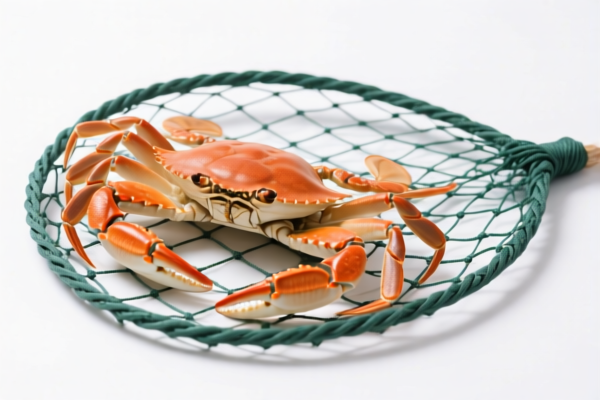
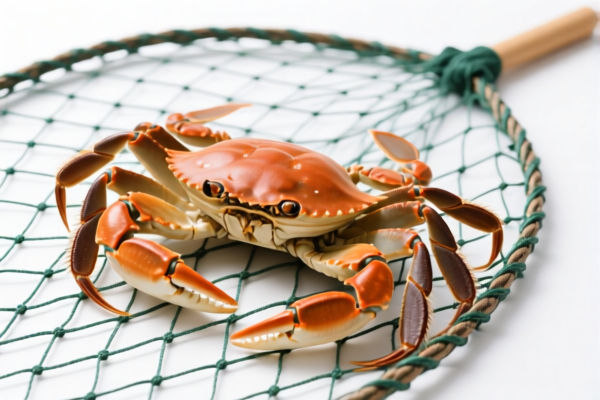
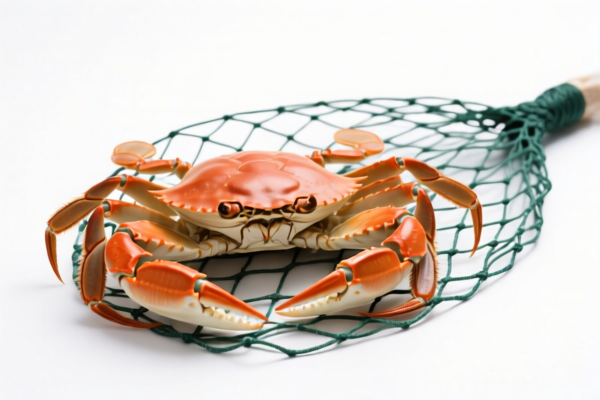
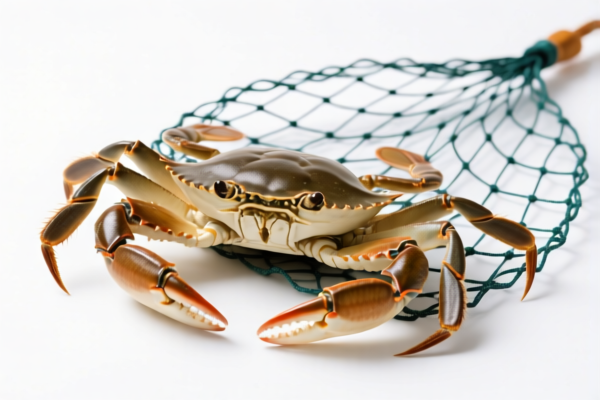
AI Analysis
🦀 Crab Claw (Manual Tools/Instruments)
🌐 HS Code Reference & Clearance Guide | 2026 Latest Tariff Analysis | Professional Customs Strategy
📌 I. Product Definition & Classification: What Exactly is a "Crab Claw"?
In the context of international trade and customs classification, "Crab Claw" typically refers to manual tools resembling a crab claw. These are generally categorized into two main types based on material and specific use:
- Metal Hand Tools (Pliers/Clips): Made of steel/iron, used for gripping, cutting, or shaping. Common in hardware, fishing, or industrial settings.
- Manicure/Pedicure Tools: Small metal instruments used for grooming nails or cuticles.
⚠️ Key Distinction:
- If the item is a heavy-duty metal tool (e.g., for gripping, cutting wire, or fishing), it falls under Chapter 73 (Articles of Iron/Steel) or Chapter 82 (Tools/Blades).
- If the item is a personal care tool (e.g., nail clipper, cuticle pusher, small pincer), it falls under Chapter 82 (Articles of Base Metal, Hand Tools).
- Material Matters: Steel/Iron items have high tariff burdens due to Section 301 and Section 232 tariffs.
📦 II. HS Code Classification Details (2026 Latest Tariff Reference)
| HS Code | Product Description | Application Scenario | Material/Type |
|---|---|---|---|
7326.19.00.80 |
Other articles of iron or steel, stamped or forged (non-specific tools) | Generic steel clips, stamped metal parts, non-specific steel tools | ✅ Steel/Iron |
7326.90.86.88 |
Other articles of iron or steel (Catch-all for steel goods) | Industrial steel components, non-classified steel fittings | ✅ Steel/Iron |
8214.20.30.00 |
Manicure or pedicure sets/tools | Nail clippers, cuticle pushers, small grooming pincers | ✅ Base Metal (Often Nickel-plated) |
8214.90.90.00 |
Other articles (Knives, blades, shavers) | Small cutting tools, specialized bladed clippers | ✅ Base Metal (Bladed) |
8203.20.20.00 |
Tweezers, pincers, and similar hand tools | General-purpose pliers, heavy-duty gripping claws | ✅ Base Metal (Steel) |
8203.20.60.30 |
Pliers and pincers (Specific classification) | Standard household or industrial pliers | ✅ Base Metal (Steel) |
🔍 Key Insight:
- "Crab Claw" fishing tools or heavy metal grips usually fall under 8203 (Pliers/Tweezers) or 7326 (Other Steel Articles).
- "Crab Claw" manicure tools fall under 8214.20.30.00.
- Misclassification Risk: Declaring a steel tool as "Manicure Tool" (8214) to avoid tariffs is illegal and risky. Declaring a manicure tool as "Industrial Steel Part" (7326) may incur unnecessary high duties.
💰 III. 2026 Latest Tariff Rate Breakdown (Including Surcharge & Policy Add-ons)
✅ Applicable Country: United States (US)
✅ Origin: China (CN)
✅ Effective Time: November 10, 2025 onwards (for subsequent imports)
🎯 1. 7326.19.00.80 & 7326.90.86.88 — Other Articles of Iron/Steel
| Item | Content |
|---|---|
| Base Duty | 2.9% (ad valorem) |
| Section 301 Surcharge | +25.0% (301 Tariff List 3/4) |
| Section 232 Surcharge | +50.0% (Steel/Aluminum Products under Section 122) |
| Total Tax Rate | 87.9% |
| Tax Calculation | CIF Value × 87.9% |
| De Minimis Eligibility | ❌ No (deny_de_minimis) |
| Legal Basis | Section 232: Steel/Aluminum → Section 301: China → USITC:7326 |
📌 Explanation:
- These codes cover general steel articles.
- The 50% Section 232 tariff applies to steel products originating from China.
- The 25% Section 301 tariff applies to many Chinese industrial goods.
- Combined: 87.9%. This is an extremely high cost. Consider alternative sourcing or reclassification if legally permissible.
🎯 2. 8214.20.30.00 — Manicure or Pedicure Tools
| Item | Content |
|---|---|
| Base Duty | 4.0% (ad valorem) |
| Section 301 Surcharge | 0.0% (Many personal care tools are exempt or lower listed) |
| Section 122 Surcharge | +10.0% (Specific section for certain metal articles, check exact ruling) |
| Total Tax Rate | 14.0% |
| Tax Calculation | CIF Value × 14.0% |
| De Minimis Eligibility | ❌ Check specific ruling (Often no de minimis for Section 301 goods, but here Section 301 is 0%) |
| Legal Basis | USITC:8214.20.30.00 → Section 122: 10% |
📌 Explanation:
- If your "Crab Claw" is a manicure tool, this is the most favorable rate.
- 14% is significantly lower than the 87.9% for steel articles.
- Crucial: Ensure the product is genuinely for personal care (nails/cuticles), not industrial gripping.
🎯 3. 8203.20.20.00 & 8203.20.60.30 — Pliers, Tweezers, Pincers
| Item | Content |
|---|---|
| Base Duty | 4.0% (8203.20.20) or 12¢/doz + 5.5% (8203.20.60) |
| Section 301 Surcharge | +25.0% |
| Section 122 Surcharge | +10.0% (Note: Data shows 10% for 8214, but 8203 often has 25% Section 301) |
| Total Tax Rate | 39.0% (8203.20.20) or 5.5% + 12¢/doz + 35% (8203.20.60) |
| Tax Calculation | CIF Value × 39.0% |
| De Minimis Eligibility | ❌ No |
| Legal Basis | Section 301: 25% → USITC:8203 |
📌 Explanation:
- For general pliers/claws, the rate is 39%.
- This is lower than the 87.9% for general steel (7326) but higher than manicure tools (8214).
- If the tool is specifically designed as "pincers," it may fall under8203.20.60.30with a complex rate (12¢/doz + 5.5% base + 25% Sec 301 + 10% Sec 122? Data shows 35% total surcharge for this code).
🎯 4. 8214.90.90.00 — Other Articles (Bladed/Cutting Tools)
| Item | Content |
|---|---|
| Base Duty | 1.4¢ each + 3.2% |
| Section 301 Surcharge | 0.0% (Data shows 0.0% for this specific subheading) |
| Section 122 Surcharge | +10.0% |
| Total Tax Rate | 1.4¢ each + 13.2% |
| Tax Calculation | Per unit fee + CIF × 13.2% |
| De Minimis Eligibility | ❌ No (If Section 301 applies, but data says 0% Sec 301) |
| Legal Basis | USITC:8214.90.90.00 → Section 122: 10% |
📌 Explanation:
- If the crab claw has a blade or is used for cutting/shucking, this code may apply.
- 13.2% is a very competitive rate.
- Verify if the tool is "bladed" to justify this classification.
🛠️ IV. Customs Clearance Practical Advice (Field Avoidance Guide)
✅ 1. Required Documentation Checklist (All or Nothing)
| Document | Must Provide | Description |
|---|---|---|
| ✅ Product Specifications | ✔️ | Material (Steel/Nickel-plated), Size, Weight |
| ✅ Product Photos | ✔️ | Clear images showing the "Crab Claw" shape, handles, and tip |
| ✅ Intended Use Statement | ✔️ | Critical: Is it for fishing? Manicuring? Industrial gripping? |
| ✅ Commercial Invoice | ✔️ | Accurate description: e.g., "Stainless Steel Manicure Pincers" or "Steel Fishing Grip" |
| ✅ Country of Origin Certificate | ✔️ | Required for Section 232/301 determination |
| ✅ Packing List | ✔️ | Item count, gross/net weight |
✅ 2. Declaration Strategy (Key Mnemonics)
🔥 “Use Defines Code, Material Defines Rate!”
| Scenario | Correct Declaration | Incorrect Declaration |
|---|---|---|
| Manicure Tool | 8214.20.30.00 (14%) |
Declare as "Steel Tool" → 87.9% |
| Industrial Grip/Plier | 8203.20.20.00 (39%) |
Declare as "Manicure Tool" → Risk of fraud/seizure |
| Fishing Tool (Steel) | 7326.90.86.88 (87.9%) or 8203 (39%) |
Declare as "Part of Boat" → High Risk |
| Bladed Shucking Tool | 8214.90.90.00 (~13.2%) |
Declare as "General Steel" → 87.9% |
📌 Warning:
- Do NOT misclassify steel industrial tools as manicure tools to save taxes. Customs uses AI and physical inspection to detect this.
- Section 232 (50%) applies to steel. If you import steel crab claws, expect 87.9% unless you find a specific exemption or correct Chapter 82 code.
✅ 3. Special Situations Handling
| Situation | Handling Advice |
|---|---|
| OEM Custom Tools | Provide design drawings to prove specific use (e.g., medical/manicure vs. industrial) |
| Mixed Containers | Separate declaration for Chapter 73 and Chapter 82 items to optimize tax |
| Origin Fraud | Ensure no transshipment via Vietnam/Mexico to evade Section 232/301. US Customs tracks this strictly. |
| High-Value Industrial Claws | Consider Advanced Ruling (POR) from CBP to confirm HS code before shipment |
🌍 V. Global Market Comparison (2026 Latest)
| Country/Region | Recommended HS Code | Estimated Tariff | Certification | Notes |
|---|---|---|---|---|
| 🇺🇸 USA | 8214.20.30.00 (Manicure) |
14% | FDA (if cosmetic) | Low tariff for personal care |
| 🇺🇸 USA | 7326.90.86.88 (Steel) |
87.9% | N/A | Very high due to Section 232 |
| 🇨🇳 China | 8203.20.20.00 |
~4-10% | CCC (if applicable) | Low import duty |
| 🇪🇺 EU | 8203.20.20.00 |
~0-4% | CE (if tool) | No Section 301 equivalent |
| 🇬🇧 UK | 8203.20.20.00 |
~0-4% | UKCA | Post-Brexit rules apply |
📌 Conclusion:
- The US is the most expensive market for steel tools due to Section 232 and 301 tariffs.
- Manicure tools (8214) are relatively low-tax (14%) compared to general steel articles (87.9%).
- Strategy: If possible, classify strictly as personal care tools if applicable. Otherwise, factor in the 87.9% cost for general steel items.
📌 VI. Common Mistakes & Pitfalls (Blood & Tears Lessons)
❌ Mistake 1: Declaring a steel fishing grip as a manicure tool
👉 Consequence: Customs seizure, fines, and retroactive tax of 87.9% + penalties.
❌ Mistake 2: Ignoring Section 232 for steel items
👉 Consequence: Missing the 50% tariff, leading to underpayment and audit issues.
❌ Mistake 3: Vague Description: "Crab Claw Tool"
👉 Consequence: Customs officer assigns the highest possible tariff code (87.9%) due to lack of clarity.
✅ Correct Practice:
"Stainless Steel Manicure Cuticle Nipper, Model XYZ, for Personal Use Only"
OR
"Heavy-Duty Steel Grip Plier, Industrial Use, 8-inch, Forging Quality"
🎯 VII. Conclusion: Precise Classification Saves Money!
🎯 Remember Mnemonics:
🔹 "Manicure is 14%, Steel is 88%, Pliers are 39%, Don't Lie or Pay Plenty!"
🔹 "HS Code is King, Tariff Difference is Huge, Misclassification is Ruin!"
📌 Pro Tip:
If you are importing steel crab claws (e.g., for fishing or industrial use), the 87.9% tariff is significant. Consider:
1. Supplier Negotiation: Who pays the tariff (DDP vs. DDU)?
2. Alternative Materials: Are there non-steel components that might change the classification?
3. Pre-Ruling: Apply for a Binding Tariff Information (BTI) or CBP Ruling before shipment to confirm the 39% vs. 87.9% status.
📣 Immediate Action:
📞 Contact a licensed US Customs Broker
📄 Provide Photos + Intended Use Description
🚀 Ensure Accurate HS Code to avoid 87.9% shocks!
✨ Professional Clearance Starts with Precise Classification!
💼 Every Cent Saved is a Cent Earned!
Customer Reviews
About HS Code Classification
The Harmonized System (HS) is an internationally standardized nomenclature developed by the World Customs Organization (WCO) to classify traded products. Over 200 countries use the HS system as the basis for customs tariffs, trade statistics, and import/export regulations.
Each HS code follows a hierarchical structure:
- Chapter (2 digits) — Broad category of goods (e.g., Chapter 84: Machinery and Mechanical Appliances)
- Heading (4 digits) — More specific grouping within the chapter
- Subheading (6 digits) — Internationally standardized breakdown, used by all WCO member countries
- National subdivisions (8-10 digits) — Country-specific extensions for further classification, such as US HTSUS 10-digit codes
Correct HS code classification is essential for smooth customs clearance, accurate duty payment, and compliance with trade regulations. Misclassification can lead to customs delays, overpayment of duties, or penalties.
When importing from CN to US, the applicable tariff rates may include:
- Most-Favored-Nation (MFN) rate — The standard duty rate applied to WTO members
- General rate — Applied to countries without trade agreements
- Trade remedy duties — Additional tariffs such as Section 301 (anti-dumping), Section 232 (national security), or countervailing duties
The information provided on this page is for reference purposes only. For official classification, please consult with your local customs authority or a licensed customs broker.