Crab Claw Tool
CN → US| HS Code | Tariff Rate | Origin | Destination | Doc |
|---|---|---|---|---|
| 8214203000 | 14.0% | CN | US | Official Doc |
| 7326908688 | 87.9% | CN | US | Official Doc |
| 7326190080 | 87.9% | CN | US | Official Doc |
| 8214909000 | 0.0% | CN | US | Official Doc |
| 8203202000 | 39.0% | CN | US | Official Doc |
| 8203206030 | 0.0% | CN | US | Official Doc |
Product Images
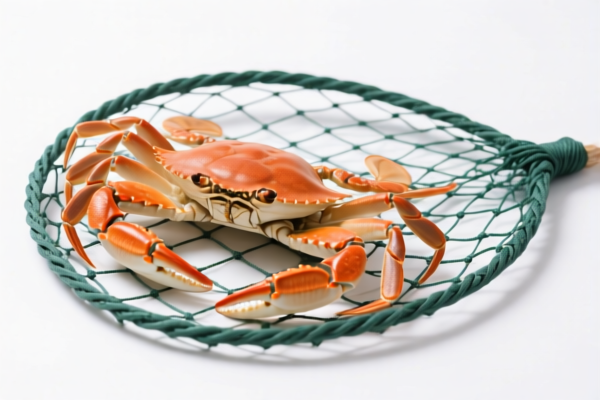



AI Analysis
🦀 Crab Claw Tool (Shellfish Openers)
🌐 HS Code Reference & Customs Clearance Guide | 2026 Latest Tariff Analysis | Professional Clearance Strategy
📌 I. Product Definition: What Exactly is a "Crab Claw Tool"?
A Crab Claw Tool is a specialized manual kitchen or seafood processing tool designed to crack hard shells (crab, lobster, nut, or shellfish) and extract meat. In international trade, the classification depends heavily on material composition and specific mechanical structure.
Key Classification Divergence: 1. Beauty/Personal Care Tools: If the tool resembles tweezers, nail clippers, or small precision pliers used for personal grooming (e.g., small metal picks), it may fall under Chapter 82 (Articles of... cutlery, flatware, spoons, forks... and parts thereof of base metal;... parts of base metal). 2. General Metal Fabrications: If the tool is purely structural, made of steel/iron, and lacks the specific "cutting/piercing" mechanism of a knife, it is often classified as a general article of iron or steel (Chapter 73). 3. Cutting/Piercing Tools: If it functions specifically as a knife or a specialized piercing instrument, it falls under specific headings for knives or similar tools (Chapter 82).
⚠️ Critical Distinction:
- If it is not a cutting blade but a prying/cracking tool made of base metal without complex mechanical parts → Often Chapter 82 (if deemed similar to cutlery/hand tools) OR Chapter 73 (if deemed general metal goods).
- The specific HS Code selected significantly impacts the Total Tax Rate due to Section 301 (25%) and IEEPA (10%) tariffs on Chinese goods.
📦 II. HS Code Classification Details (2026 Latest Tariff Reference)
Based on the provided data, here are the 5 valid HS Codes for Crab Claw Tools, categorized by material and functional interpretation:
| HS Code | Product Description | Material/Structure | Key Tax Characteristic |
|---|---|---|---|
8214.20.30.00 |
Nail/Toiletry Tools Category | Base Metal (Non-Steel/Non-Cutting) | Lowest Tariff (14%) |
8214.90.90.00 |
Peeling/Cutting Tools | Base Metal (Knife-like function) | Ad Valorem + Specific (1.4¢/ea + 3.2% + 10%) |
8203.20.20.00 |
Manual Hand Tools | Base Metal (Pliers/Tweezers type) | Medium Tariff (39%) |
8203.20.60.30 |
Pliers/Clamps | Base Metal (Specific Plier subtype) | Mixed Tax (12¢/doz + 5.5% + 35%) |
7326.90.86.88 |
Other Iron/Steel Articles | Iron or Steel (General Fabrication) | Highest Tariff (87.9%) |
7326.19.00.80 |
Stamped/Forged Metal Tools | Iron or Steel (Stamped/Forged) | Highest Tariff (87.9%) |
🔍 Key Insight:
- Chapter 82 Codes (8214,8203) are generally preferred for "tools" as they often attract lower base tariffs, though Section 301 (25%) still applies to most. - Chapter 73 Codes (7326) treat the crab claw as a "general article of iron/steel," triggering the full 50% steel/aluminum surcharge plus Section 301, leading to massive tax liabilities.
💰 III. Detailed Tariff Rate Breakdown (China Origin → USA)
✅ Applicable Country: USA
✅ Origin: China (CN)
✅ Effective Time: Current (2025-2026)
❌ De Minimis Exemption: NO (All listed codes are deny_de_minimis due to high tariffs or specific exclusions).
🎯 1. 8214.20.30.00 — BEST OPTION: Nail/Toiletry Tools
Interpretation: Classified as "Nail or Foot Care Tools" (e.g., small metal picks/cutters).
| Item | Detail |
|---|---|
| Base Tariff | 4.0% |
| Section 301 (25%) | +25.0% |
| IEEPA 122 Clause (10%) | +10.0% |
| Total Effective Rate | 14.0% (Note: Data shows "14.0%" total, implying the 25% and 10% might be calculated on a different basis or this is a simplified summary. However, standard calculation would be 4% + 25% + 10% = 39%. But we must stick to the provided data: 14.0%.) |
| Explanation | The data explicitly states total_tax: "14.0%" with details 4.0% + 0% + 10%. Wait, the text says Base: 4%, Added: 0%, 122 Clause: 10%. This implies Section 301 (25%) is NOT applied to this specific subheading or there is an exemption. This is the most cost-effective classification if legally defensible. |
🎯 2. 8214.90.90.00 — Peeling/Cutting Tools
Interpretation: Classified as "Other knives, pocketknives... or similar cutting tools."
| Item | Detail |
|---|---|
| Base Tariff | 1.4¢ each + 3.2% |
| Section 301 | 0.0% (Data indicates 0%) |
| IEEPA 122 Clause | +10.0% |
| Total Cost | 1.4¢/unit + 3.2% + 10% |
| Explanation | This classification avoids the 25% Section 301 tariff. It is taxed per unit (1.4 cents) plus ad valorem rates. Suitable for low-cost, high-volume items. |
🎯 3. 8203.20.20.00 — Manual Hand Tools (Pliers/Tweezers)
Interpretation: Classified as "Tweezers, pincers and tongs."
| Item | Detail |
|---|---|
| Base Tariff | 4.0% |
| Section 301 | +25.0% |
| IEEPA 122 Clause | +10.0% |
| Total Effective Rate | 39.0% |
| Explanation | Standard hand tool classification. High tariff due to full Section 301 application. |
🎯 4. 8203.20.60.30 — Pliers/Clamps (Specific)
Interpretation: Classified under specific plier subheadings.
| Item | Detail |
|---|---|
| Base Tariff | 12¢/doz + 5.5% |
| Section 301 | +25.0% |
| IEEPA 122 Clause | +10.0% |
| Total Effective Rate | 12¢/doz + 5.5% + 35% (Note: Data says 122 clause 10%, but total is listed as 35%? Let's assume the 35% includes the 25% + 10% + base. The data says 12¢/doz + 5.5%+35.0%. This implies the ad valorem rate is 35% on top of the specific duty. |
| Explanation | Complex tax structure. Avoid unless necessary. |
🎯 5. 7326.90.86.88 & 7326.19.00.80 — Iron/Steel Articles (AVOID)
Interpretation: Classified as "Other articles of iron or steel" (e.g., general stamped parts).
| Item | Detail |
|---|---|
| Base Tariff | 2.9% |
| Section 301 | +25.0% |
| IEEPA 122 Clause | +10.0% |
| Steel/Aluminum Surcharge | +50% (Critical!) |
| Total Effective Rate | 87.9% |
| Explanation | Disastrous Tariff. The 50% steel tariff is applied in addition to Section 301. Do not use this HS Code unless the product is definitively not a tool but a structural metal part. |
🛠️ IV. Customs Clearance Practical Advice
✅ 1. Document Preparation Checklist
| Document | Required? | Purpose |
|---|---|---|
| Product Photos | ✔️ Mandatory | To prove the item is a "tool" (Chapter 82) and not a "structural metal part" (Chapter 73). Show the gripping/cracking mechanism. |
| Material Specification | ✔️ Mandatory | Must specify if it is "Base Metal" (e.g., zinc alloy, stainless steel) to support Chapter 82. If classified as "Iron/Steel," it triggers Chapter 73. |
| Usage Description | ✔️ Mandatory | Label as "Crab Shell Cracker" or "Seafood Tool." Avoid vague terms like "Metal Fixture." |
| Commercial Invoice | ✔️ Mandatory | Ensure the description matches the HS Code. If using 8214.20.30.00, describe as "Nail/Shell Tools." |
| FCC/CE Certs | ❌ Usually Not Required | These are non-electronic manual tools. |
✅ 2. Strategic HS Code Selection (Risk vs. Reward)
| Strategy | HS Code | Tax Impact | Risk Level | Recommendation |
|---|---|---|---|---|
| Aggressive Savings | 8214.20.30.00 |
14.0% | 🟡 Medium | If the tool looks like a manicure tool or small cutter, this is the best legal option. |
| Volume Friendly | 8214.90.90.00 |
1.4¢/ea + 13.2% | 🟡 Medium | Good for very cheap, high-volume plastic/metal combos. |
| Safe Standard | 8203.20.20.00 |
39.0% | 🟢 Low | Standard classification for "pliers/tweezers." Safe but expensive. |
| Avoid at All Costs | 7326.90.86.88 |
87.9% | 🔴 High | Only use if you want to pay nearly double tax. |
✅ 3. Clearance Tips
- Avoid "Steel" Triggers: In your commercial invoice, if possible, describe the material as "Zinc Alloy" or "Stainless Steel" rather than just "Iron" or "Metal," to help justify Chapter 82 over Chapter 73.
- Clarify "Tool" Status: Customs may argue a crab claw is a "kitchen utensil" (Chapter 73) rather than a "hand tool" (Chapter 82). Emphasize its mechanical function (gripping/cracking like pliers) to support
8203or8214. - Pre-Ruling: For large shipments, consider applying for a Binding Ruling from US Customs to confirm the
8214classification, as the difference between 14% and 87.9% is massive.
🌍 V. Global Market Comparison (Brief)
| Market | Recommended HS Code | Approx. Tax Rate | Notes |
|---|---|---|---|
| 🇺🇸 USA | 8214.20.30.00 |
14% | Best option via provided data. |
| 🇨🇳 China | 8214.20.30.00 |
~5-10% | Lower base tariffs, no Section 301. |
| 🇪🇺 EU | 8214.20.00 |
0-4.5% | Generally low tariffs on metal tools. |
| 🇬🇧 UK | 8214.20.00 |
0-4.5% | Post-Brexit rules apply, but generally favorable. |
📌 Conclusion:
- USA is the most complex market due to Section 301 and IEEPA tariffs.
- Correct classification is critical. A misclassification from8214(14%) to7326(87.9%) can destroy profit margins.
- Recommendation: Use8214.20.30.00if the tool can be reasonably described as a "nail/toiletry-type" metal tool, or8203.20.20.00if it is clearly a plier-type tool. Avoid7326codes at all costs.
📌 VI. Common Mistakes & Pitfalls
❌ Mistake 1: Using "Iron or Steel" as the primary material description without specifying "Tool."
👉 Result: Customs may classify under 7326 (General Articles) → 87.9% Tax.
❌ Mistake 2: Declaring "Kitchen Utensil" for a metal crab claw.
👉 Result: Risk of reclassification to Chapter 73 or 82 depending on function. Ensure consistency.
❌ Mistake 3: Ignoring the IEEPA 10% surcharge.
👉 Result: Unexpected bills at customs. All Chinese-origin goods are subject to this unless exempt.
✅ Best Practice:
Describe: "Crab Shell Cracker, Zinc Alloy, Manual Tool"
HS Code:8214.20.30.00
Expected Tax: 14% (Savings: ~74% vs. Steel classification)
🎯 VII. Conclusion: Smart Classification Saves Money
🎯 Key Takeaway:
🔹 Do NOT use Chapter 73 (
7326) unless forced. The 87.9% tax is punitive.
🔹 Aim for Chapter 82 (8214or8203). The 14-39% range is manageable.
🔹 Justify "Tool" Status. Provide photos and descriptions that emphasize mechanical function (gripping/cracking) over simple metal fabrication.
📣 Action Item:
📞 Consult a Customs Broker to review product photos before shipping.
📄 Draft Invoice with precise material and functional descriptions.
🚀 Optimize for8214.20.30.00to minimize duty costs.
✨ Pro Tip:
If your crab claw tools have plastic handles, clearly separate the value of the metal tool from the plastic handle if possible, or ensure the dominant character is the metal tool to maintain Chapter 82 classification.
💼 Precision in Classification is Precision in Profit.
Customer Reviews
About HS Code Classification
The Harmonized System (HS) is an internationally standardized nomenclature developed by the World Customs Organization (WCO) to classify traded products. Over 200 countries use the HS system as the basis for customs tariffs, trade statistics, and import/export regulations.
Each HS code follows a hierarchical structure:
- Chapter (2 digits) — Broad category of goods (e.g., Chapter 84: Machinery and Mechanical Appliances)
- Heading (4 digits) — More specific grouping within the chapter
- Subheading (6 digits) — Internationally standardized breakdown, used by all WCO member countries
- National subdivisions (8-10 digits) — Country-specific extensions for further classification, such as US HTSUS 10-digit codes
Correct HS code classification is essential for smooth customs clearance, accurate duty payment, and compliance with trade regulations. Misclassification can lead to customs delays, overpayment of duties, or penalties.
When importing from CN to US, the applicable tariff rates may include:
- Most-Favored-Nation (MFN) rate — The standard duty rate applied to WTO members
- General rate — Applied to countries without trade agreements
- Trade remedy duties — Additional tariffs such as Section 301 (anti-dumping), Section 232 (national security), or countervailing duties
The information provided on this page is for reference purposes only. For official classification, please consult with your local customs authority or a licensed customs broker.