Craft Packaging
CN → US| HS Code | Tariff Rate | Origin | Destination | Doc |
|---|---|---|---|---|
| 4823901000 | 35.0% | CN | US | Official Doc |
| 4823908000 | 35.0% | CN | US | Official Doc |
| 4819600000 | 35.0% | CN | US | Official Doc |
| 4819502000 | 35.0% | CN | US | Official Doc |
| 4821902000 | 35.0% | CN | US | Official Doc |
Product Images
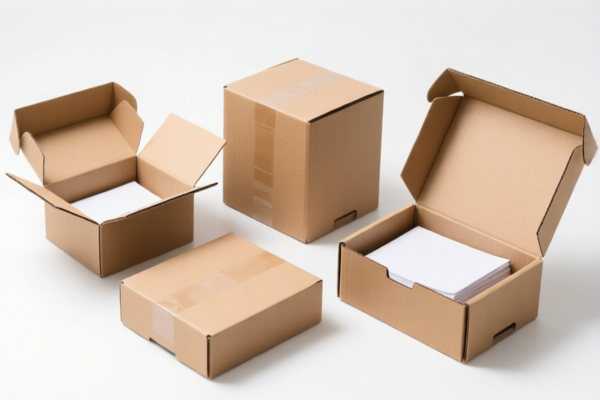
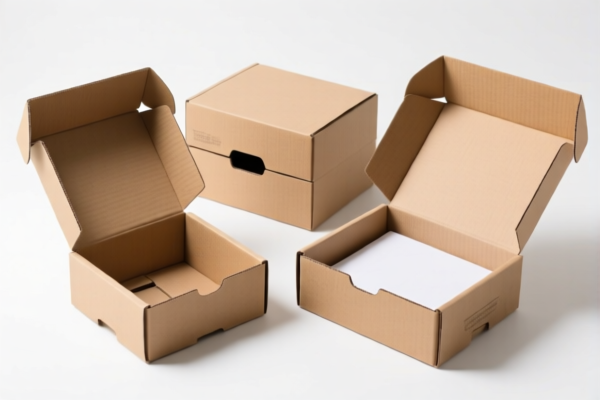
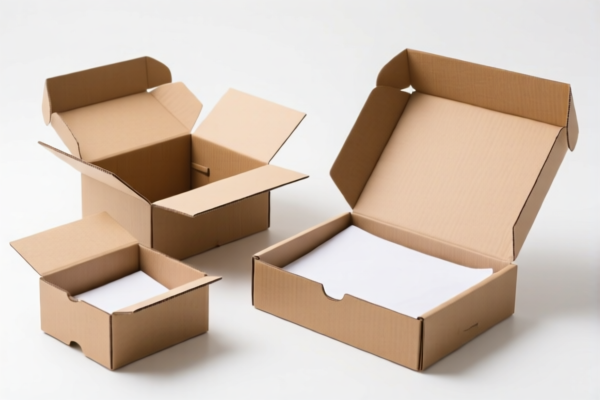
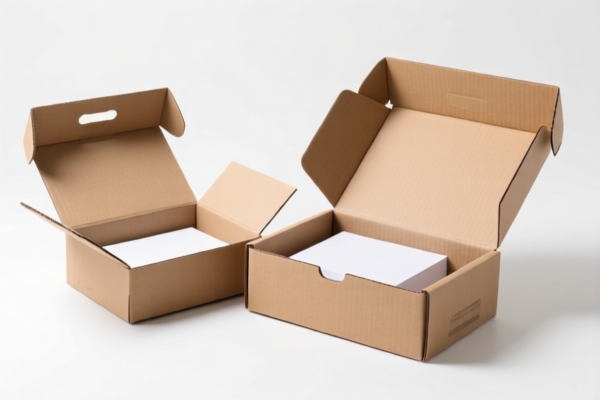
AI Analysis
📦 Craft Packaging (Kraft Paper Packaging & Labels)
🌐 HS Code Reference & Customs Clearance Guide | 2026 Latest Tariff Analysis | Professional-Level Clearance Strategy
📌 I. Product Definition & Classification: Do You Really Understand “Craft Packaging”?
Craft Packaging is not a single monolithic category in international trade. It is broadly split into two distinct functional groups based on form (shape) and usage:
- Labels/Stickers: Thin, adhesive or non-adhesive kraft paper used for branding, labeling boxes, or tagging.
- Storage/Containers: Rigid or semi-rigid kraft paper boxes, bags, or folders used for actual storage and transport.
⚠️ Key Distinction Point: * If the item is a thin sheet/roll primarily used for labeling/branding → It falls under Heading 4823 (Other paper/paperboard) or 4821 (Paper labels). * If the item is a box/bag/folder primarily used for storage/packaging → It falls under Heading 4819 (Cartons, boxes, bags, etc.).
📦 II. HS Code Classification Details (2026 Latest Tariff Authority Comparison)
Based on the provided data for US Imports from China, here are the precise classifications:
| HS Code | Product Description | Applicable Scenario | Key Material & Form |
|---|---|---|---|
4823.90.10.00 |
Craft Paper Labels | Branding labels, product stickers, tag labels. | Material: Kraft Paper Form: Label/Tag |
4823.90.80.00 |
Other Craft Paper Articles | Non-specific paper goods, specialized shapes not elsewhere specified. | Material: Kraft Paper Form: Other (Miscellaneous) |
4819.60.00.00 |
Craft Paper Storage (Articles) | General paper storage items, not specifically boxes/bags. | Material: Kraft Paper Use: Storage |
4819.50.20.00 |
Craft Paper Containers | Boxes, Folders, Cartons specifically for storage. | Material: Kraft Paper Use: Storage Container |
4821.90.20.00 |
Other Paper Labels/Tags | Paper labels/labels made of paper (broad category). | Material: Kraft Paper Use: Paper Product/Label |
🔍 Critical Reminder: * Do not confuse "Labels" with "Containers". A kraft paper box is NOT a label. Misclassifying a box as a label (
4823or4821) can lead to severe customs penalties or delays. *4819.50.20.00is the most common code for Kraft Paper Boxes. *4823.90.10.00is the most common code for Kraft Paper Labels/Stickers.
💰 III. 2026 Latest Tariff Rate Details (Including Surtaxes & Policy Add-ons)
✅ Applicable Country: United States (US) ✅ Country of Origin: China (CN) ✅ Effective Date: From November 10, 2025 (and subsequent imports)
🎯 1. 4823.90.10.00 & 4823.90.80.00 —— Craft Paper Labels & Other Paper Articles
| Item | Content |
|---|---|
| Base Tariff | 0.0% (Ad Valorem) |
| USITC Surtax (Section 301) | +25.0% |
| 122 Provision Surtax (IEEPA) | +10.0% |
| Total Effective Tax Rate | 35.0% |
| Tax Calculation | CIF Value × 35% |
| De Minimis Exemption | ❌ Not Applicable (Section 321 exemption usually does not apply to goods subject to Section 301/122 surtaxes) |
| Legal Basis Path | USITC:4823.90 → FOOTNOTE:301 → IEEPA:122 |
📌 Explanation: * "Base Tariff 0%": Paper products generally have low base duties under normal trade terms. * "301 Surtax 25%": The standard US-China Section 301 tariff on most Chinese goods. * "122 Provision 10%": Specific additional tariff under International Emergency Economic Powers Act (IEEPA) targeting certain categories. * Total 35% is a HIGH burden for low-margin paper products. Cost control is critical.
🎯 2. 4819.60.00.00, 4819.50.20.00, 4821.90.20.00 —— Craft Paper Containers & Labels
| Item | Content |
|---|---|
| Base Tariff | 0.0% |
| USITC Surtax (Section 301) | +25.0% |
| 122 Provision Surtax (IEEPA) | +10.0% |
| Total Effective Tax Rate | 35.0% |
| Tax Calculation | CIF Value × 35% |
| De Minimis Exemption | ❌ Not Applicable |
| Legal Basis Path | USITC:4819/4821 → FOOTNOTE:301 → IEEPA:122 |
📌 Note: * All listed HS codes in the data source carry the identical 35% total tax rate. * Whether it’s a box (
4819) or a label (4821/4823), the tariff structure is the same for US imports from China. * Do not assume that "packaging materials" get a different rate. The surtax applies broadly.
🛠️ IV. Customs Clearance Practical Advice (Battlefield Pit-avoidance Guide)
✅ 1. Preparation Checklist (No Missing Items)
| Material | Mandatory? | Description |
|---|---|---|
| ✅ Product Specs | ✔️ | Must clearly state: "Kraft Paper", "Label" or "Box", Dimensions, Weight. |
| ✅ Photos | ✔️ | Clear images of the product showing material texture and form (flat label vs. 3D box). |
| ✅ Commercial Invoice | ✔️ | Must match HS Code description exactly. Avoid vague terms like "Paper Goods". Use "Kraft Paper Box" or "Kraft Paper Label". |
| ✅ Packing List | ✔️ | Detail quantity, net/gross weight. |
| ✅ Origin Certificate | ✔️ | Proof of Chinese origin. |
✅ 2. Declaration Tips (Key Mnemonics)
🔥 “Form Determines Code: Label is 4823/4821, Box is 4819!”
| Scenario | Correct HS Code | Incorrect Practice |
|---|---|---|
| Kraft Paper Sticker/Label | 4823.90.10.00 |
Declaring as "Box" → Delayed clearance |
| Kraft Paper Box/Container | 4819.50.20.00 |
Declaring as "Label" → Risk of penalty |
| Kraft Paper Bag | 4819.20.00.00 (General) or 4819.60.00.00 |
Declaring as "Label" → 100% Error |
| Mixed Container (Labels + Boxes) | Split Declaration | Mixed declaration → Customs may reclassify entire shipment to highest tax or reject |
✅ 3. Special Handling Cases
| Case | Handling Advice |
|---|---|
| Private Label/Branded Packaging | Provide brand authorization letter. Ensure "Label" is clearly described as "Adhesive Label" or "Hang Tag". |
| Packaging with Food Contact | If the craft packaging is for food (e.g., cookie boxes), ensure it meets FDA standards. While not changing HS code, it affects clearance speed. |
| Composite Materials | If the kraft paper has plastic windows or adhesive layers, ensure the primary material is still paper. If >50% plastic by weight/value, it may shift to Chapter 39 (Plastics) → Different Tariff! |
| De Minimis (Section 321) | ❌ Warning: Even if the value is under $800, Section 301 (25%) and IEEPA (10%) surtaxes often still apply to China-origin goods. Do not assume $800 duty-free entry. |
🌍 V. Global Market Comparison (2026 Latest)
| Country/Region | Recommended HS Code | Base Tariff | Surtax (China) | Total Est. Rate | Remarks |
|---|---|---|---|---|---|
| 🇺🇸 USA | 4819.50.20.00 (Box)4823.90.10.00 (Label) |
0% | 35% (25% + 10%) | 35% | Highest Barrier. Surtax is unavoidable. |
| 🇨🇳 China | 4819.50.20.00 |
5% | 0% | 5% | Low export cost, but import tax applies to destination. |
| 🇪🇺 EU | 4819.10.00 (Cartons)4823.90 (Labels) |
0%~2.5% | 0% (Most Favoured Nation) | <5% | No 301 Surtax. Much better than US market. |
| 🇦🇺 Australia | 4819.10.00 |
5% | 0% | 5% | No punitive surtaxes on paper products. |
| 🇯🇵 Japan | 4819.10.00 |
0%~3% | 0% | <5% | Stable market with low duties. |
📌 Conclusion: * The US market is exceptionally expensive for craft packaging from China due to the 35% total tariff. * EU, Australia, and Japan are significantly more favorable for tax purposes. * Consider supply chain diversification (e.g., manufacturing in Vietnam or Thailand) if targeting the US market to mitigate 301/122 tariffs.
📌 VI. Common Errors & Pitfall Guide (Blood & Tears Lessons)
❌ Error 1: Declaring Kraft Boxes as "Paper Labels" (4823) to save space or simplify description.
👉 Consequence: Customs officer detects 3D shape/photos mismatch → Seizure, Fine, or Return.
❌ Error 2: Assuming "Packaging Materials" are exempt from Surtx Tax. 👉 Consequence: Underpayment of 35% → Back Taxes + Interest + Penalties.
❌ Error 3: Vague Description: "Paper Goods". 👉 Consequence: Customs assigns worst-case HS code (e.g., from a higher taxed chapter) → Unpredictable Costs.
❌ Error 4: Using "De Minimis" ($800) for US shipments without checking surtax applicability. 👉 Consequence: Package held at border, importer charged duties unexpectedly → Customer Complaints.
✅ Correct Approach:
"100% Kraft Paper Corrugated Box, Size 10x10x10, for Shipping, Model XYZ, HS: 4819.50.20.00"
🎯 VII. Conclusion: Professional Declaration, Save Money & Time!
🎯 Remember the Mnemonic:
🔹 "Labels go to 4823/4821, Boxes go to 4819, Tax is 35%, Don't Lie!"
🔹 "HS Code is Life, 35% is Pain, Declare Correct, Keep It Clean!"
📌 Pro Tip:
If you are exporting craft packaging to the US, calculate the 35% surtax into your pricing model immediately. Consider pre-classification rulings from CBP if your product is innovative (e.g., hybrid material boxes). For non-US markets, leverage the low tariff advantage (0-5%) to compete on price.
📣 Immediate Action:
📞 Contact your customs broker + Provide clear product photos + Declare accurate HS Code. 🚀 Let your craft packaging clear smoothly, stay profitable, and reach global customers!
✨ Professional Clearance Starts with Accurate Classification!
💼 Every cent of tax paid should be justified, not wasted!
Customer Reviews
About HS Code Classification
The Harmonized System (HS) is an internationally standardized nomenclature developed by the World Customs Organization (WCO) to classify traded products. Over 200 countries use the HS system as the basis for customs tariffs, trade statistics, and import/export regulations.
Each HS code follows a hierarchical structure:
- Chapter (2 digits) — Broad category of goods (e.g., Chapter 84: Machinery and Mechanical Appliances)
- Heading (4 digits) — More specific grouping within the chapter
- Subheading (6 digits) — Internationally standardized breakdown, used by all WCO member countries
- National subdivisions (8-10 digits) — Country-specific extensions for further classification, such as US HTSUS 10-digit codes
Correct HS code classification is essential for smooth customs clearance, accurate duty payment, and compliance with trade regulations. Misclassification can lead to customs delays, overpayment of duties, or penalties.
When importing from CN to US, the applicable tariff rates may include:
- Most-Favored-Nation (MFN) rate — The standard duty rate applied to WTO members
- General rate — Applied to countries without trade agreements
- Trade remedy duties — Additional tariffs such as Section 301 (anti-dumping), Section 232 (national security), or countervailing duties
The information provided on this page is for reference purposes only. For official classification, please consult with your local customs authority or a licensed customs broker.