Crankshaft Positioning Tool
CN → US| HS Code | Tariff Rate | Origin | Destination | Doc |
|---|---|---|---|---|
| 8205598000 | 38.7% | CN | US | Official Doc |
| 8483105000 | 35.0% | CN | US | Official Doc |
| 8409999990 | 35.0% | CN | US | Official Doc |
| 8409919990 | 37.5% | CN | US | Official Doc |
| 8205595560 | 40.3% | CN | US | Official Doc |
Product Images
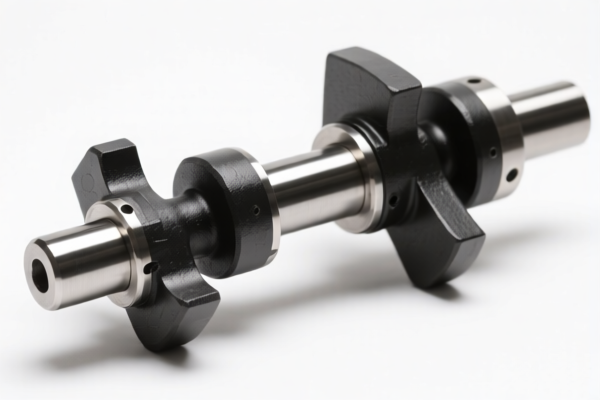
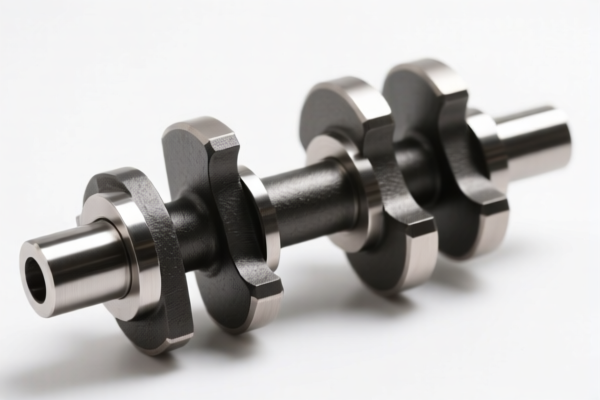
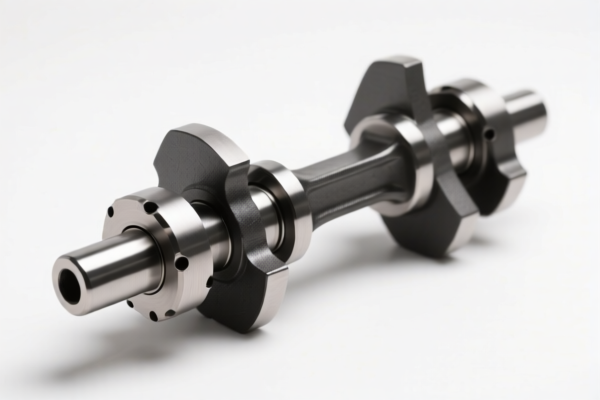
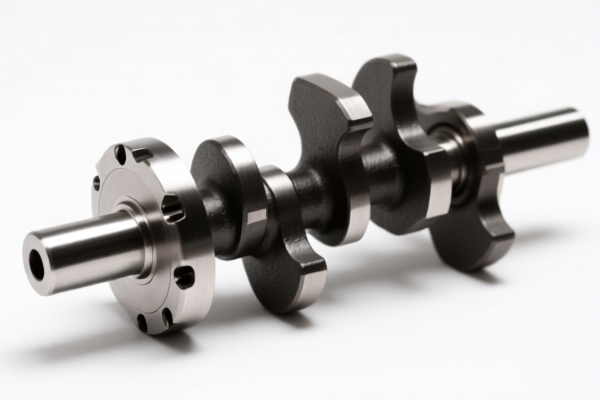
AI Analysis
🔧 Crankshaft Positioning Tool (Crankshaft Aligning Pin/Tool)
🌐 HS Code Reference & Customs Clearance Guide | 2026 Latest Tariff Analysis | Professional-Level Strategy for US Imports
📌 I. Product Definition & Classification: What Exactly Is a "Crankshaft Positioning Tool"?
A Crankshaft Positioning Tool is a specialized mechanical aid used during engine assembly, repair, or overhaul. Its primary function is to align the crankshaft with the engine block or transmission housing to ensure proper bearing installation and timing.
In international trade, these tools are generally categorized in two ways: 1. As General Hand Tools/Accessories: If viewed as a standalone manual accessory (clamps, jigs, fixtures) used to assist in mechanical work. 2. As Engine Parts/Accessories: If viewed as a specific component designed exclusively for the internal combustion engine system.
⚠️ Key Distinction:
- If the tool is a generic mechanical jig/fixture used for alignment (not integral to engine operation) → Often falls under Chapter 82 (Tools) or Chapter 84 (General Machinery Parts) depending on specificity.
- If it is a specific engine component (like a bearing locator integral to the block) → Falls under Chapter 84 (Engine Parts).
- Note: For "positioning pins" used in installation, Customs often debates between "Hand Tools" and "Engine Parts." The data below reflects the most common classifications for importers from China.
📦 II. HS Code Classification Matrix (2026 Latest Tariff Rules)
Based on the provided data, here are the five most likely HS Codes and their corresponding tax implications for goods originating from China.
| HS Code | Product Description & Logic | Total Tax Rate | Tax Breakdown |
|---|---|---|---|
8205.59.80.00 |
Hand Tools: Other hand tools, including jigs, fixtures, and auxiliary tools. Logic: Classified as a manual mechanical aid (fixture/jig). |
38.7% | Base: 3.7% Section 301: 25.0% IEEPA: 10.0% |
8483.10.50.00 |
Crankshafts/Axles: Parts of crankshafts or axles. Logic: Classified as a part of the crankshaft assembly itself. |
35.0% | Base: 0.0% Section 301: 25.0% IEEPA: 10.0% |
8409.99.99.90 |
Engine Parts: Other parts suitable for spark-ignition internal combustion piston engines. Logic: Classified as a general engine repair/installation part. |
35.0% | Base: 0.0% Section 301: 25.0% IEEPA: 10.0% |
8409.91.99.90 |
Specific Engine Parts: Other parts for spark-ignition engines. Logic: Specific classification for engine core components/accessories. |
37.5% | Base: 2.5% Section 301: 25.0% IEEPA: 10.0% |
8205.59.55.60 |
Hand Tools: Metal hand tools. Logic: Classified strictly as a metal hand tool/accessory. |
40.3% | Base: 5.3% Section 301: 25.0% IEEPA: 10.0% |
🔍 Critical Insight:
- The lowest tax rate (35.0%) applies if the tool is classified as an Engine Part (8409.99.99.90) or a Crankshaft Component (8483.10.50.00).
- The highest tax rate (40.3%) applies if Customs views it strictly as a Metal Hand Tool (8205.59.55.60).
- Section 301 (25%) and IEEPA (10%) are mandatory for Chinese-origin goods in most cases, adding up to 35% in additional duties regardless of the base rate.
💰 III. Detailed Tax Analysis for US Imports (China Origin)
✅ Applicable Market: United States (US)
✅ Country of Origin: China (CN)
✅ Effective Period: 2026 (Post-2025 policy updates)
🎯 Scenario A: Best Case for Importers (8409.99.99.90 or 8483.10.50.00)
| Item | Details |
|---|---|
| HS Code | 8409.99.99.90 or 8483.10.50.00 |
| Base Duty | 0.0% (Most engine parts have 0% MFN rate) |
| Section 301 Duty | +25.0% (Trade War Tariff) |
| IEEPA Duty | +10.0% (National Emergency Surcharge) |
| Total Landed Duty | 35.0% |
| De Minimis Eligibility | ❌ No (Value usually exceeds $800; even if under, these categories are often scrutinized). |
| Legal Basis | USITC Section 301 Footnotes + IEEPA Proclamations. |
📌 Explanation:
This is the most favorable classification. By arguing that the tool is an integral part of the engine assembly process (not just a generic wrench), you can qualify for the 0% base rate. However, you still pay the full 35% in附加 taxes.
🎯 Scenario B: Mid-Range (8409.91.99.90)
| Item | Details |
|---|---|
| HS Code | 8409.91.99.90 |
| Base Duty | 2.5% |
| Section 301 Duty | +25.0% |
| IEEPA Duty | +10.0% |
| Total Landed Duty | 37.5% |
| Legal Basis | Specific subheading for spark-ignition engine parts. |
🎯 Scenario C: Worst Case (8205.59.55.60)
| Item | Details |
|---|---|
| HS Code | 8205.59.55.60 |
| Base Duty | 5.3% (Metal hand tools have higher base rates) |
| Section 301 Duty | +25.0% |
| IEEPA Duty | +10.0% |
| Total Landed Duty | 40.3% |
| Legal Basis | Chapter 82 General Hand Tools. |
📌 Warning:
If Customs determines the tool is not specific to the engine but a general "jig" or "fixture," they may force this classification. The 5.3% base rate significantly hurts profitability.
🛠️ IV. Customs Clearance Practical Advice (Avoiding Pitfalls)
✅ 1. Documentation Checklist (Must-Haves)
| Document | Requirement | Why It Matters |
|---|---|---|
| Product Photos | High-res images showing the tool in use (aligning a crankshaft) | Proves it is an engine-specific tool, not a generic wrench. |
| User Manual/Spec Sheet | Explicitly state: "Used for aligning crankshafts in engine assembly" | Supports HS Code 8409 (Engine Parts) over 8205 (Hand Tools). |
| Commercial Invoice | Description: "Crankshaft Alignment Tool, Engine Part" | Avoid vague terms like "Metal Tool" which trigger higher base rates. |
| Country of Origin Certificate | Must state China | Required for IEEPA/Section 301 calculation. |
| Bill of Lading/Air Waybill | Standard shipping docs | Ensure weight and volume match invoice. |
✅ 2. Declaration Strategy (The "Golden Rule")
🔥 "Describe by Function, Not Just Material"
| Scenario | Recommended Declaration | Risk Level |
|---|---|---|
| Engine Assembly Tool | "Crankshaft Alignment Jig for Spark Ignition Engines" | ⭐⭐ Low (Supports 8409) |
| Generic Fixture | "Metal Aligning Pin" | ⭐⭐⭐ Medium (Customs may reclassify to 8205) |
| Hand Tool | "Hand Tool for Engine Repair" | ⭐⭐⭐⭐ High (High risk of 8205 classification) |
💡 Pro Tip:
If you want the 35.0% rate, do NOT describe the item as "Hand Tool" or "Wrench" on the invoice. Use terms like "Alignment Jig," "Positioning Pin," or "Engine Assembly Fixture." This aligns better with Chapter 84 (Machinery/Engine Parts).
✅ 3. Common Errors & Consequences
| Error | Consequence |
|---|---|
| Under-declaring Value | Seizure, fines, and possible detention of goods. |
| Misdeclaring Origin | If it says "Made in China" but origin certificate says otherwise → Penalty + Back Taxes. |
| Using Vague Descriptions | "Metal Tool" → Customs may choose the highest tariff class (8205.59.55.60 @ 40.3%) automatically. |
| Ignoring IEEPA | Failure to account for the additional 10% IEEPA tariff → Underpayment of Duty. |
🌍 V. Global Market Comparison (2026)
| Market | Likely HS Code | Est. Total Tax (China Origin) | Notes |
|---|---|---|---|
| 🇺🇸 USA | 8409.99.99.90 |
35.0% | High Section 301 + IEEPA. |
| 🇨🇳 China (Import) | 8409.99.99.90 |
0% - 5% | Low base duty, no Section 301. |
| 🇪🇺 EU | 8409.99.99 |
~4.5% | No Section 301. Standard MFN rates apply. |
| 🇨🇦 Canada | 8409.99.99 |
~5.0% | CUSMA/FITC may apply if from US/Mexico. |
📌 Conclusion:
The US market is the most expensive for Chinese-engineered tools due to the 35-40% total duty burden.
- Strategy: If possible, source from non-China countries (e.g., Vietnam, Thailand) to avoid Section 301 (25%) and potentially IEEPA (10%).
- If sourcing from China: Ensure you classify under8409or8483to save the 2.5-5.3% base duty difference.
📌 VI. FAQ & Quick Reference
Q1: Can I use the De Minimis ($800) exemption?
A: No. Even if the value is under $800, Section 301 and IEEPA duties often apply, and CBP frequently scrutinizes "mechanical tools" from China. Better to declare formally.
Q2: Is there a way to get a lower tax rate?
A: Yes.
1. Pre-Ruling: Apply for an International Trade Commission (ITC) Ruling or CBP Pre-Ruling to lock in the 8409.99.99.90 (35%) classification.
2. Supply Chain Diversification: Source from countries not subject to Section 301 (e.g., Mexico under USMCA, or ASEAN countries).
Q3: What if the tool is plastic?
A: Plastic tools may fall under different subheadings in Chapter 84, but if it's still an engine part, the tax rate may remain similar. However, if it's a generic plastic jig, it might go to Chapter 39 or 82, which could have different base rates. Always specify material.
🎯 VII. Final Verdict: Strategic Recommendation
🚀 To minimize costs and ensure smooth clearance:
- Declare as an Engine Part: Use HS Code
8409.99.99.90or8483.10.50.00.- Tax Target: Aim for the 35.0% total rate (Base 0% + 25% + 10%).
- Avoid: Do not declare as "Hand Tool" (
8205.59.55.60) unless necessary, as it incurs a 40.3% rate.- Documentation: Include clear photos showing the tool being used on a crankshaft in the engine block.
- Legal Check: Confirm IEEPA applicability for your specific supplier and product type, as policies can evolve.
✨ Professional Clearance Starts with Accurate Classification!
💼 Every percentage point of duty saved is pure profit!
Customer Reviews
About HS Code Classification
The Harmonized System (HS) is an internationally standardized nomenclature developed by the World Customs Organization (WCO) to classify traded products. Over 200 countries use the HS system as the basis for customs tariffs, trade statistics, and import/export regulations.
Each HS code follows a hierarchical structure:
- Chapter (2 digits) — Broad category of goods (e.g., Chapter 84: Machinery and Mechanical Appliances)
- Heading (4 digits) — More specific grouping within the chapter
- Subheading (6 digits) — Internationally standardized breakdown, used by all WCO member countries
- National subdivisions (8-10 digits) — Country-specific extensions for further classification, such as US HTSUS 10-digit codes
Correct HS code classification is essential for smooth customs clearance, accurate duty payment, and compliance with trade regulations. Misclassification can lead to customs delays, overpayment of duties, or penalties.
When importing from CN to US, the applicable tariff rates may include:
- Most-Favored-Nation (MFN) rate — The standard duty rate applied to WTO members
- General rate — Applied to countries without trade agreements
- Trade remedy duties — Additional tariffs such as Section 301 (anti-dumping), Section 232 (national security), or countervailing duties
The information provided on this page is for reference purposes only. For official classification, please consult with your local customs authority or a licensed customs broker.