Credit Card Holder
CN → US| HS Code | Tariff Rate | Origin | Destination | Doc |
|---|---|---|---|---|
| 3926909989 | 22.8% | CN | US | Official Doc |
| 4202399000 | 55.0% | CN | US | Official Doc |
| 3926908700 | 40.3% | CN | US | Official Doc |
| 4823908680 | 35.0% | CN | US | Official Doc |
Product Images


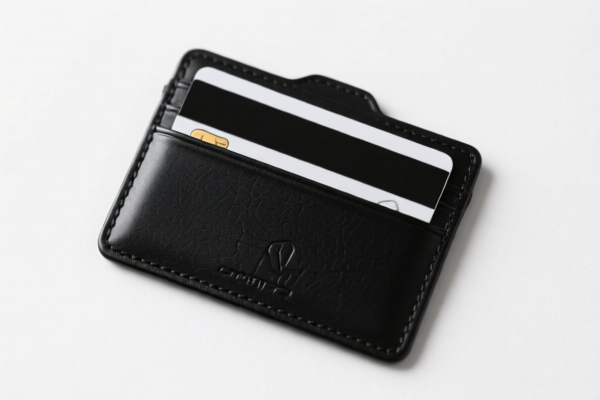
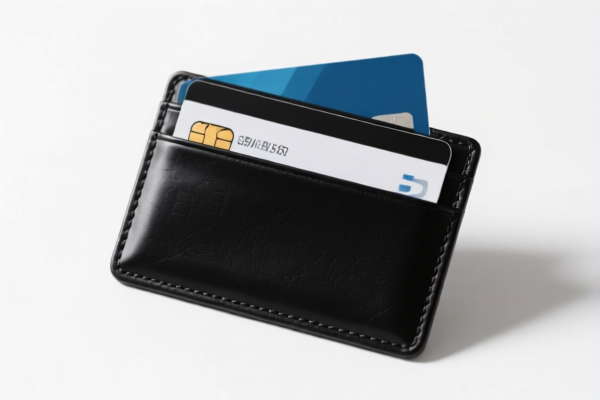
AI Analysis
💳 Credit Card Holder (Cards Wallet / Card Case)
🌐 HS Code Reference & Customs Clearance Guide | 2026 Latest Tariff Analysis | Professional Entry Strategy
📌 I. Product Definition & Classification: Do You Truly Understand "Card Holders"?
A credit card holder is a small, portable container designed for storing plastic cards, cash, and identification. In international trade, its classification depends heavily on material composition and functional intent. It is generally categorized into two main branches:
Synthetic Material Items (Plastic/Resin): Non-leather, non-textile items made primarily of plastic or other synthetic materials, often classified under general plastics. Travel/Toiletry/Satchel Categories (Leather/Textile/Plastic-lined): Portable containers intended for carrying personal items, often classified under specific heading 4202.
⚠️ Key Distinction Point:
- If the item is strictly a rigid plastic folder/shield for documents → May fall under 3926 (Other plastic articles).
- If the item is a foldable pouch/wallet designed to carry money/cards → Usually falls under 4202 (Articles of apparel accessories, satchels).
- Note: Misclassification leads to significant duty discrepancies. See below for detailed breakdown.
📦 II. HS Code Classification Details (2026 Latest Tariff Authority Comparison)
| HS Code | Product Description | Applicable Scenario | Material/Feature Key |
|---|---|---|---|
3926.90.99.89 |
Other articles of plastics and articles of other materials | Simple plastic card sleeves, rigid plastic organizers, generic "other" plastic items | ✅ Plastic/Synthetic, General Purpose |
4202.39.90.00 |
Other containers, satchels, and cases for carrying articles | Wallets, cardholders made of leather, plastic, textile, or mixed materials designed for carrying cash/cards | ✅ Portable Container, Carrying Function |
3926.90.87.00 |
Other articles of plastics | Plastic card holders specifically categorized under file binding/storage plastics | ✅ Plastic, Document/File Organization Feature |
4823.90.86.80 |
Other paper articles | Card holders made entirely of paper or cardboard | ✅ Paper/Cardboard Material |
🔍 Important Reminder:
- "Card Holder" is not a single HS Code. It varies by material. - Plastic vs. Leather/Textile: Plastic-only items often fall under 3926, while multi-material or fabric-lined items fall under 4202. - Function Matters: Is it a "container" (4202) or a "finished plastic article" (3926)?
💰 III. 2026 Latest Tariff Rate Breakdown (Including Additional Taxes & Policy Surcharges)
✅ Applicable Country: United States (US)
✅ Origin: China (CN)
✅ Effective Date: From November 10, 2025 (for subsequent imports)
🎯 1. 3926.90.99.89 —— Other Articles of Plastics (General Category)
| Item | Content |
|---|---|
| Basic Duty Rate | 5.3% (ad valorem) |
| Section 301 Surcharge | +7.5% |
| Section 301 (Section 122) Surcharge | +10% |
| Total Tariff Rate | 22.8% |
| Tax Calculation | CIF Value × 22.8% |
| De Minimis Eligibility | ❌ Not Eligible (Subject to full duty collection) |
| Legal Basis Path | USITC:3926.90.99.89 → Section 301: 7.5% → Section 122: 10% |
📌 Explanation:
- This code is used for generic plastic card holders that do not fit specific sub-categories. - Total burden: 22.8%. This is a moderate-to-high effective rate compared to basic duties but lower than the 4202 category. - Why so high? Section 301 tariffs are applied to most Chinese-made plastic consumer goods.
🎯 2. 4202.39.90.00 —— Other Containers (Wallets/Card Cases)
| Item | Content |
|---|---|
| Basic Duty Rate | 20.0% (ad valorem) |
| Section 301 Surcharge | +25.0% |
| Section 301 (Section 122) Surcharge | +10% |
| Total Tariff Rate | 55.0% |
| Tax Calculation | CIF Value × 55.0% |
| De Minimis Eligibility | ❌ Not Eligible (Subject to full duty collection) |
| Legal Basis Path | USITC:4202.39.90.00 → Section 301: 25% → Section 122: 10% |
📌 Critical Warning:
- This is the most expensive classification for credit card holders. - It applies if the item is considered a "portable container" (wallet-style) made of leather, plastic, or textile. - Base duty is already high (20%), plus a massive 25% Section 301 surcharge. - Risk: Many importers mistakenly use this code, paying nearly double the necessary tax.
🎯 3. 3926.90.87.00 —— Other Plastic Articles (File/Storage Specific)
| Item | Content |
|---|---|
| Basic Duty Rate | 5.3% (ad valorem) |
| Section 301 Surcharge | +25.0% |
| Section 301 (Section 122) Surcharge | +10% |
| Total Tariff Rate | 40.3% |
| Tax Calculation | CIF Value × 40.3% |
| De Minimis Eligibility | ❌ Not Eligible |
| Legal Basis Path | USITC:3926.90.87.00 → Section 301: 25% → Section 122: 10% |
📌 Explanation:
- This code is for plastic items specifically classified as "file binding" or "storage" articles. - Total burden: 40.3%. Higher than3926.90.99.89due to the higher Section 301 surcharge (25% vs 7.5%). - Strategy: If your product is purely plastic and not a "wallet," try to argue for3926.90.99.89(22.8%) instead of this code.
🎯 4. 4823.90.86.80 —— Other Paper Articles
| Item | Content |
|---|---|
| Basic Duty Rate | 0.0% (ad valorem) |
| Section 301 Surcharge | +25.0% |
| Section 301 (Section 122) Surcharge | +10% |
| Total Tariff Rate | 35.0% |
| Tax Calculation | CIF Value × 35.0% |
| De Minimis Eligibility | ❌ Not Eligible |
| Legal Basis Path | USITC:4823.90.86.80 → Section 301: 25% → Section 122: 10% |
📌 Note:
- Only applies to paper or cardboard card holders. - While the base duty is 0%, the Section 301 surcharge is still 25%. - Strategy: If your product is eco-friendly paper-based, this is the most cost-effective option among the 301-tariffed codes.
🛠️ IV. Customs Clearance Practical Advice (Real-World Pitfall Avoidance)
✅ 1. Preparation Checklist (Missing Items = Delay/Rejection)
| Material | Must Provide | Explanation |
|---|---|---|
| ✅ Product Specifications | ✔️ | List materials (e.g., "100% PVC", "PU Leather", "Cardboard") |
| ✅ Product Photos | ✔️ | Clear images of front, back, and interior structure |
| ✅ Commercial Invoice | ✔️ | Clearly state "Credit Card Holder" and material composition |
| ✅ Packing List | ✔️ | Weight and dimensions of each package |
| ✅ Material Certificate | ✔️ | If claiming paper, provide proof of paper content |
✅ 2. Declaration Tips (Key Mantra)
🔥 "Material Dictates Code, Function Confirms Class, Avoid 'Wallet' if Plastic!"
| Scenario | Correct Declaration | Incorrect Action |
|---|---|---|
| Plastic Card Sleeve | 3926.90.99.89 (22.8%) |
Declaring as 4202 → 55% |
| Leather/Polyester Wallet | 4202.39.90.00 (55.0%) |
Declaring as 3926 → Illegal Misclassification |
| Paper Card Holder | 4823.90.86.80 (35.0%) |
Declaring as 4202 → Higher Tax |
| Plastic File/Folder Holder | 3926.90.87.00 (40.3%) |
Declaring as 3926.90.99 → Risk of Audit |
💡 Strategic Insight:
- If your product is plastic, try to classify it under3926.90.99.89(22.8%) rather than4202(55%). Argue that it is a "plastic article" rather than a "container/wallet." - If your product is paper,4823.90.86.80is the only valid option, but it’s still cheaper than leather-based classifications.
✅ 3. Special Cases
| Situation | Handling Advice |
|---|---|
| Mixed Material (e.g., Plastic + Fabric) | Usually classified under 4202 if the primary function is carrying. Risk of 55% duty. |
| OEM Custom Card Holder | Provide design drawings to prove material composition. |
| Sample Imports | Even samples are subject to these tariffs if shipped via standard commercial channels. |
🌍 V. Global Market Customs Comparison (2026 Latest)
| Country/Region | Recommended HS Code | Tariff (China Origin) | Certification | Notes |
|---|---|---|---|---|
| 🇺🇸 USA | 3926.90.99.89 |
22.8% | None specific | Highest risk zone due to 301/122 tariffs |
| 🇨🇳 China | 3926.90.99.89 |
5.3% | CCC (if applicable) | Lower domestic duty |
| 🇪🇺 EU | 3926.90.99 |
4.7% | CE (if electronic components) | No Section 301 equivalent |
| 🇬🇧 UK | 3926.90.99 |
4.7% | UKCA | Post-Brexit tariffs apply |
| 🇦🇺 Australia | 3926.90.99 |
5.0% | ACMA | No major surcharges |
📌 Conclusion:
- USA is the most costly market for credit card holders due to Section 301 and Section 122 tariffs. - Material Selection: Choosing plastic over leather can sometimes lower the base duty, but Section 301 applies to both. However,3926codes generally have lower total rates than4202.
📌 VI. Common Errors & Pitfalls (Lessons Learned from Blood)
❌ Error 1: Declaring a Leather Wallet as Plastic (3926)
👉 Consequence: Customs audit, penalty, and possible seizure.
👉 Fix: Declare accurately based on outer material.
❌ Error 2: Declaring a Plastic Card Holder as Wallet (4202)
👉 Consequence: Paying 55% instead of 22.8%. Overpayment of $32.2 per $100!
👉 Fix: Argue for "Plastic Article" classification if it lacks traditional wallet features (zipper, foldable, cash slot).
❌ Error 3: Ignoring Section 122 (10%)
👉 Consequence: Unexpected tax bill upon entry.
👉 Fix: Always factor in the 10% Section 122 tariff for all Chinese imports.
✅ Correct Declaration Example:
"Plastic Credit Card Holder, Rigid, for Storage, 100% PVC, No Electronic Components, Model XYZ"
➡️ Target HS:3926.90.99.89(22.8%)
🎯 VII. Conclusion: Professional Declaration Saves Money!
🎯 Remember the Mantra:
🔹 "Plastic is 22.8%, Leather is 55%, Paper is 35%. Choose wisely!"
🔹 "Don't call it a wallet if it's just a plastic sleeve!"
📌 Pro Tip:
If your credit card holder is made of fabric or textile, it may fall under different codes (e.g., 6307), which could have different tariff structures. Always verify material content.
📣 Immediate Action:
📞 Contact your customs broker with material specs
🚀 Optimize your HS Code to minimize the 301 + 122 impact!
✨ Professional Customs Clearance Starts with Accurate Classification!
💼 Every Percentage Point Saved is Profit Gained!
Customer Reviews
About HS Code Classification
The Harmonized System (HS) is an internationally standardized nomenclature developed by the World Customs Organization (WCO) to classify traded products. Over 200 countries use the HS system as the basis for customs tariffs, trade statistics, and import/export regulations.
Each HS code follows a hierarchical structure:
- Chapter (2 digits) — Broad category of goods (e.g., Chapter 84: Machinery and Mechanical Appliances)
- Heading (4 digits) — More specific grouping within the chapter
- Subheading (6 digits) — Internationally standardized breakdown, used by all WCO member countries
- National subdivisions (8-10 digits) — Country-specific extensions for further classification, such as US HTSUS 10-digit codes
Correct HS code classification is essential for smooth customs clearance, accurate duty payment, and compliance with trade regulations. Misclassification can lead to customs delays, overpayment of duties, or penalties.
When importing from CN to US, the applicable tariff rates may include:
- Most-Favored-Nation (MFN) rate — The standard duty rate applied to WTO members
- General rate — Applied to countries without trade agreements
- Trade remedy duties — Additional tariffs such as Section 301 (anti-dumping), Section 232 (national security), or countervailing duties
The information provided on this page is for reference purposes only. For official classification, please consult with your local customs authority or a licensed customs broker.