Creosote treated Non Coniferous Wood Poles
CN → US| HS Code | Tariff Rate | Origin | Destination | Doc |
|---|---|---|---|---|
| 4407990295 | 35.0% | CN | US | Official Doc |
| 4407990263 | 35.0% | CN | US | Official Doc |
Product Images
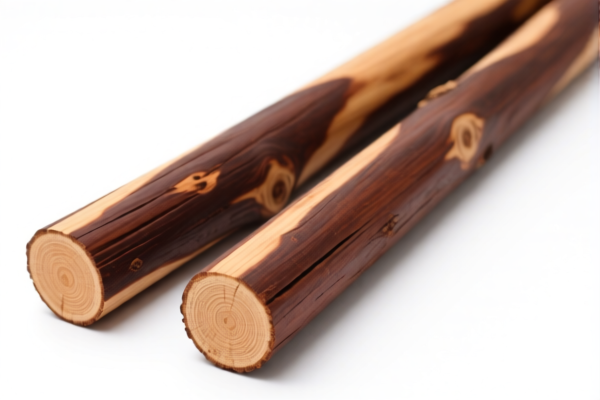
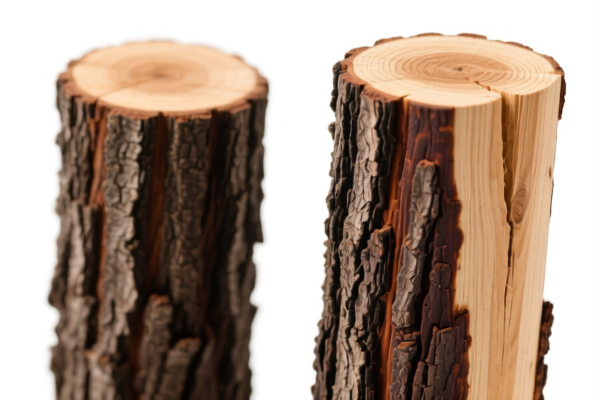
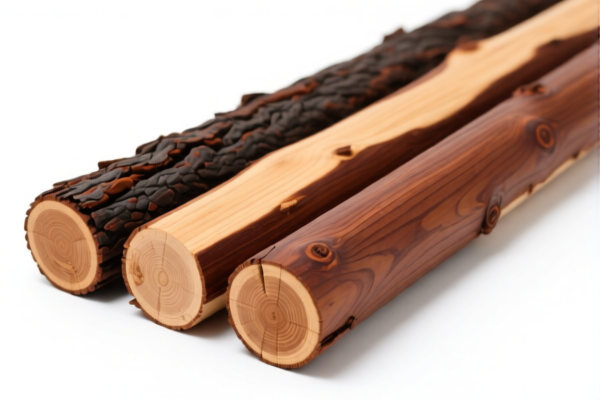
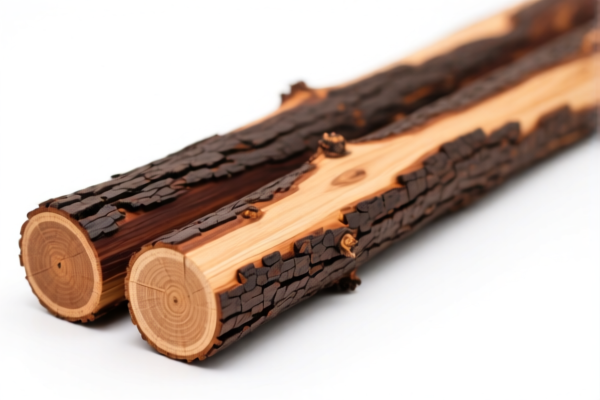
AI Analysis
🌲 Creosote Treated Non-Coniferous Wood Poles (The "Redwood/Alder" Special)
🌐 HS Code Reference & Customs Clearance Guide | 2026 Latest Tariff Analysis | Professional-Level Strategy for Wood Products
📌 I. Product Definition & Classification: Do You Really Understand "Non-Coniferous Wood Poles"?
Creosote-treated wood poles are critical infrastructure components used in telecommunications, power distribution, and construction. Unlike coniferous woods (pine, spruce, fir), non-coniferous woods (hardwoods) such as Western Red Alder, Redwood, or Oak have different density, decay resistance, and treatment absorption characteristics.
Key Classification Point:
When these poles are sawn, chipped, sliced, or peeled to a thickness exceeding 6 mm, they fall under Chapter 44 (Wood and articles of wood). If they are simple logs (<6mm or unprocessed), they might fall elsewhere, but processed poles are definitely 4407.
⚠️ Critical Distinction:
- Treated vs. Untreated: The treatment (creosote) does not change the HS Code from 4407 to 4403 (unless it's specifically classified as "wood treated with preservatives" under specific national interpretations, but generally, US HTSUS 4407 covers sawn wood regardless of treatment if it meets the description). However, the Tariff is heavily impacted by the country of origin and trade remedies.
- Non-Coniferous: Must exclude Pine, Spruce, Fir, etc. If your wood is Western Red Alder (Alnus rubra), it is explicitly listed. If it is other non-coniferous, it falls under the general "Other" category.
📦 II. HS Code Classification Details (2026 Latest Tariff Authority Reference)
Based on the provided data, here are the precise HS Codes for Creosote Treated Non-Coniferous Wood Poles:
| HS Code | Product Description | Applicable Scenario | Wood Type |
|---|---|---|---|
4407.99.02.63 |
Wood sawn or chipped lengthwise... thickness > 6mm: Other: Western red alder (Alnus rubra) | Poles made specifically from Western Red Alder | ✅ Specific Non-Coniferous |
4407.99.02.95 |
Wood sawn or chipped lengthwise... thickness > 6mm: Other: Other (Other non-coniferous) | Poles made from Redwood, Oak, Eucalyptus, or any non-coniferous wood NOT listed above | ✅ General Non-Coniferous |
🔍 Key Reminders:
- Both codes require the wood to be sawn, chipped, sliced, or peeled and thickness > 6 mm.
- Planing, sanding, or end-joining does not exclude it from this category.
- Creosote treatment is noted in the description but does not change the HS Code in the US HTSUS 4407 structure for sawn wood.
- Do not confuse with 4403 (Wood treated with preservatives): In the US, 4407 is typically used for sawn timber including treated wood, while 4403 is often for round timber. However, always verify with the latest HTSUS notes. The provided data explicitly points to 4407.
💰 III. 2026 Latest Tariff Rate Details (Including Supplementary Taxes, Policy Add-ons)
✅ Applicable Country: United States (US)
✅ Origin: China (CN) (Assumed based on typical trade context; if from other countries, rates may vary)
✅ Effective Date: 2025 November 10 and onwards (for subsequent imports)
🎯 1. 4407.99.02.63 —— Western Red Alder (Alnus rubra)
| Item | Content |
|---|---|
| Base Tariff | 0.0% (Ad Valorem) |
| Section 301 Supplementary Tariff | +25.0% |
| Total Tariff | 25.0% |
| Tax Calculation | CIF Value × 25% |
| De Minimis Exemption | ❌ Not Applicable (Deny De Minimis) |
| Legal Basis Path | USITC:4407.99.02.63 → USITC:Footnote 9903.88.01 (Section 301) |
📌 Explanation:
- The base duty is 0%, which is favorable for standard trade.
- However, due to Section 301 trade actions, an additional 25% is applied to Chinese-origin goods.
- Total Effective Rate: 25%. This is a significant cost factor.
🎯 2. 4407.99.02.95 —— Other Non-Coniferous Wood
| Item | Content |
|---|---|
| Base Tariff | 0.0% (Ad Valorem) |
| Section 301 Supplementary Tariff | +25.0% |
| Total Tariff | 25.0% |
| Tax Calculation | CIF Value × 25% |
| De Minimis Exemption | ❌ Not Applicable (Deny De Minimis) |
| Legal Basis Path | USITC:4407.99.02.95 → USITC:Footnote 9903.88.01 (Section 301) |
📌 Note:
- Identical tax treatment to Western Red Alder.
- This code captures all non-coniferous woods not specifically listed as Western Red Alder, Redwood, etc. (if any specific listing exists).
- Common Non-Coniferous Woods: Redwood, Eucalyptus, Oak, Teak, etc.
🛠️ IV. Customs Clearance Practical Advice (Combat Pitfall Guide)
✅ 1. Required Documents Checklist (Non-Negotiable)
| Document | Mandatory | Description |
|---|---|---|
| ✅ Commercial Invoice | ✔️ | Must clearly state "Creosote Treated Non-Coniferous Wood Poles" and specify wood species (e.g., Alnus rubra). |
| ✅ Packing List | ✔️ | Detail dimensions, weight, and number of poles per bundle. |
| ✅ Wood Treatment Certificate | ✔️ | Proof of creosote treatment. Some countries have strict phytosanitary rules, but for US import, the treatment ensures it's considered "processed." |
| ✅ Species Declaration | ✔️ | Explicitly state if it is Western Red Alder or Other Non-Coniferous. Misclassification leads to penalties. |
| ✅ Bill of Lading/Air Waybill | ✔️ | Standard shipping document. |
| ✅ ISPM 15 Mark (if applicable) | ✔️ | Although treated, some customs officials still look for phytosanitary marks. Ensure compliance. |
✅ 2. Declaration Tips (Key Mantra)
🔥 "Species First, Treatment Second, Thickness Check, Tariff Clear!"
| Scenario | Correct Declaration | Incorrect Practice |
|---|---|---|
| Western Red Alder Poles | HS: 4407.99.02.63Description: "Western Red Alder Poles, Creosote Treated" |
Using "Other Wood" → 4407.99.02.95 (May trigger audit for species verification) |
| Redwood/Oak Poles | HS: 4407.99.02.95Description: "Non-Coniferous Wood Poles (Other), Creosote Treated" |
Using Coniferous code (e.g., 4407.91.xx) → High Risk of Rejection |
| Thickness < 6mm | ❌ Not 4407 | Trying to force into 4407 → Misclassification |
| Untreated Poles | Still 4407 if sawn >6mm | Assuming treatment changes HS Code significantly |
✅ 3. Special Circumstances Handling
| Situation | Handling Advice |
|---|---|
| Mixed Loads (Coniferous + Non-Coniferous) | Strictly Separate! Coniferous wood (e.g., Pine) has different HS Codes (e.g., 4407.91.xx). Mixing them in one declaration line leads to rejection. |
| Origin Verification | Provide Certificate of Origin. If the wood is grown in China, the 25% tariff applies. If grown in USA/Canada but processed in China, rules of origin may differ. |
| Creosote Safety | Ensure packaging is labeled correctly for hazardous materials if required by DOT (Department of Transportation), though creosote-treated wood is often exempt from full hazmat if solid. |
🌍 V. Global Market Comparison (2026 Latest)
| Country/Region | Recommended HS Code | Tariff Rate (China Origin) | Notes |
|---|---|---|---|
| 🇺🇸 USA | 4407.99.02.63 / 4407.99.02.95 |
25% (Total: 0% Base + 25% 301) | Section 301 Tariff applies. |
| 🇨🇳 China | 4407 (Import) | ~0% - 5% | Depends on specific trade agreements. |
| 🇪🇺 EU | 4407 (Varies by wood) | ~0% - 6.5% | No Section 301 equivalent. |
| 🇨🇦 Canada | 4407 | 0% (CUSMA Eligible if Canadian) | Check CUSMA rules for Chinese goods. |
📌 Conclusion:
- USA is the primary market facing high tariffs (25%) on Chinese non-coniferous wood poles.
- Cost Implication: A $100,000 shipment will incur $25,000 in tariffs.
- Mitigation: Consider Country of Origin verification. If wood is sourced from non-China countries (e.g., USA, Canada), tariffs may be 0%.
📌 VI. Common Mistakes & Pitfall Guide (Blood Lessons)
❌ Mistake 1: Classifying as Coniferous Wood (e.g., Pine)
👉 Consequence: Wrong HS Code (e.g., 4407.91.xx), leading to penalties, delays, and potential back-taxes. Non-coniferous and coniferous are strictly separated in Chapter 44.
❌ Mistake 2: Ignoring the Thickness > 6mm Rule
👉 Consequence: If the poles are thin (<6mm), they may not fit 4407. Ensure dimensions are clearly stated.
❌ Mistake 3: Failing to Declare Species
👉 Consequence: If you declare "Other Non-Coniferous" but the wood is actually Western Red Alder, Customs may audit and reassess based on the specific code 4407.99.02.63. While the tariff is the same, the misdeclaration can lead to false statement penalties.
✅ Correct Action:
"Western Red Alder Poles, 8-inch diameter, 20-foot length, Creosote Treated, Origin: China"
🎯 VII. Conclusion: Professional Declaration, Save Money, Avoid Delays!
🎯 Remember the Mantra:
🔹 "Non-Coniferous? Check 4407.99.02.63/95.
🔹 "25% Tariff for China? Yes, plan for it.
🔹 "Species Matters! Don't Guess!"
📌 Pro Tip:
If you are exporting from China, the 25% tariff is unavoidable for these HS codes.
Consider:
1. Pre-Arrival Review (PARS): Get an advance ruling from CBP to confirm classification.
2. Supply Chain Diversification: If possible, source wood from non-China countries to avoid the 25% Section 301 tariff.
📣 Immediate Action:
📞 Consult your customs broker with wood species certificates and dimensions.
🚀 Accurate HS Code = Accurate Tariff = Smooth Clearance!
✨ Professional Clearance Starts with Precise Classification!
💼 Every penny of tariff cost must be calculated accurately!
Customer Reviews
About HS Code Classification
The Harmonized System (HS) is an internationally standardized nomenclature developed by the World Customs Organization (WCO) to classify traded products. Over 200 countries use the HS system as the basis for customs tariffs, trade statistics, and import/export regulations.
Each HS code follows a hierarchical structure:
- Chapter (2 digits) — Broad category of goods (e.g., Chapter 84: Machinery and Mechanical Appliances)
- Heading (4 digits) — More specific grouping within the chapter
- Subheading (6 digits) — Internationally standardized breakdown, used by all WCO member countries
- National subdivisions (8-10 digits) — Country-specific extensions for further classification, such as US HTSUS 10-digit codes
Correct HS code classification is essential for smooth customs clearance, accurate duty payment, and compliance with trade regulations. Misclassification can lead to customs delays, overpayment of duties, or penalties.
When importing from CN to US, the applicable tariff rates may include:
- Most-Favored-Nation (MFN) rate — The standard duty rate applied to WTO members
- General rate — Applied to countries without trade agreements
- Trade remedy duties — Additional tariffs such as Section 301 (anti-dumping), Section 232 (national security), or countervailing duties
The information provided on this page is for reference purposes only. For official classification, please consult with your local customs authority or a licensed customs broker.