Crepe Paper / Embossed Paper
CN → US| HS Code | Tariff Rate | Origin | Destination | Doc |
|---|---|---|---|---|
| 4823901000 | 35.0% | CN | US | Official Doc |
Product Images

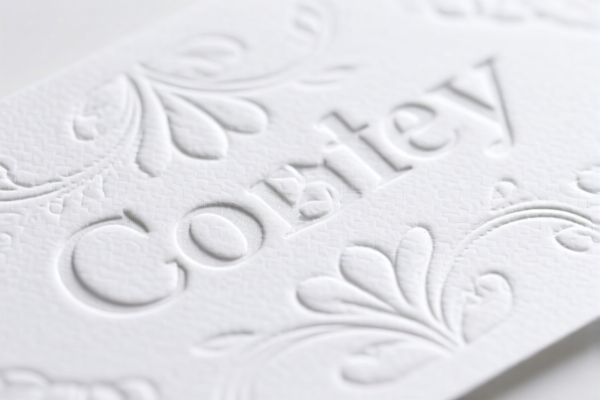
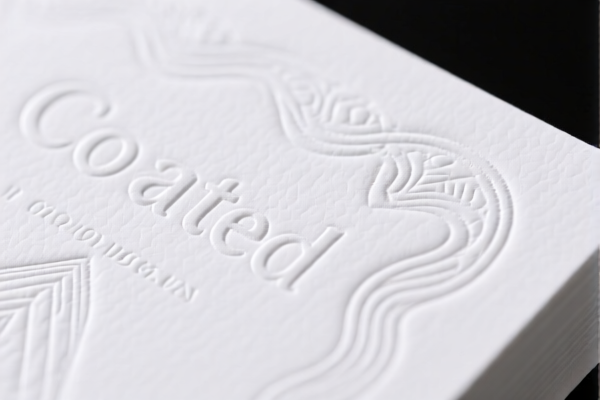
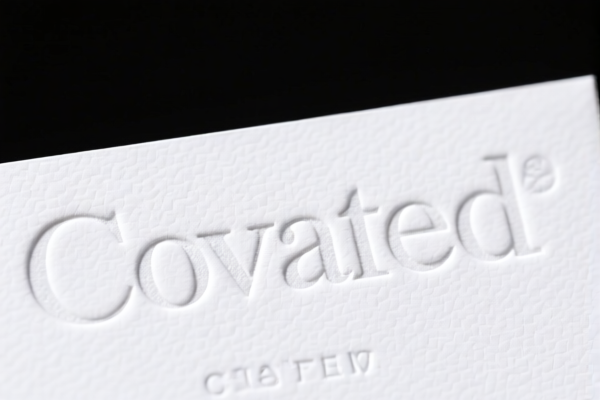
AI Analysis
🎀 Crepe Paper / Embossed Paper: The Ultimate Guide to Classification & Customs Clearance
🌐 HS Code Reference & Customs Strategy | 2026 Latest Tariff Analysis | Professional Entry Strategy
📌 I. Product Definition & Classification: Do You Really Understand "Crepe Paper"?
Crepe paper (also known as crêpe paper) and embossed paper are versatile paper products characterized by their textured surface. They are distinct from standard printing or writing paper due to their physical structure and intended use. In international trade, they are primarily categorized under Chapter 48 (Paper and Paperboard).
The key to correct classification lies in the finish and form:
1. Crepe Paper / Embossed Paper (Uncoated, Textured): * Surface: Characterized by wrinkles, creases, or embossed patterns. * Structure: Usually uncoated, non-printed (unless specified otherwise), and designed for craft, decoration, or packaging. * Primary Classification: 4802.61 or 4802.64 (if in sheets) OR 4823.90 (if cut to size/shape or specific articles).
2. Cut-to-Size/Shape Papers: * If the paper is cut into specific shapes (e.g., confetti, banners, specific packaging inserts) or sized for non-standard use, it may fall under Chapter 48, Heading 4823.
⚠️ Critical Distinction Point:
- If the paper is plain, unprinted, and in rolls/sheets primarily for writing/printing but has a crepe texture → Look at 4802.
- If the paper is cut to size, embossed for decoration, or used as finished articles (like crepe flowers) → Look at 4823.
- Data Provided Context: The provided data specifically points to Heading 4823, implying these are "other articles" or "cut to size/shape" items, not just raw rolls for printing.
📦 II. HS Code Classification Details (2026 Latest Tariff Alignment)
Based on the <DATA> provided, the specific HS Code and Tax structure are as follows:
| HS Code | Product Description | Applicable Scenario | Key Feature |
|---|---|---|---|
| 4823.90.86.80 | Other paper, paperboard, cellulose wadding and webs... cut to size or shape; other articles... | Craft supplies, decorative crepe paper strips, embossed paper cutouts, specific packaging materials | ✅ Cut to size/shape or specific article |
| 4823.90.10.00 | Other paper, paperboard... cut to size or shape; other articles... Of paper pulp | Specific paper pulp articles, possibly rigid molded items or specific pulp-based crepe products | ✅ Made of paper pulp |
🔍 Note on Data Provided:
The input data explicitly lists:
-hsCode: "4823.90.86.80"
-description: "Other paper, paperboard, cellulose wadding and webs of cellulose fibers, cut to size or shape; other articles of paper pulp, paper, paperboard, cellulose wadding or webs of cellulose fibers: Other: Other: Other: Other: Other Other"
-tax: {"tax_detail": "基础关税: 0.0%, 加征关税: 25.0%", "total_tax": "25.0%"}We must stick to this classification. The product is considered an "Other article" or "Cut to size/shape" item, not a standard roll of printing paper (which would be 4802).
💰 III. 2026 Latest Tariff Rate Detail (Including Surcharges)
✅ Applicable Country: United States (US)
✅ Origin: China (CN) (Implied by the 25% surcharge, typical for US-China Section 301 tariffs)
✅ Effective Date: Current (2026 Tariff Schedule)
🎯 1. 4823.90.86.80 —— Other Paper Articles / Cut-to-Size Crepe Paper
| Item | Content |
|---|---|
| Base Tariff Rate | 0% (ad valorem) |
| Section 301 Surcharge (USITC) | +25% |
| Total Effective Rate | 25.0% |
| Tax Calculation | CIF Value × 25% |
| De Minimis Exemption? | ❌ No (Not eligible for de minimis if value exceeds threshold or if restricted) |
| Legal Basis Path | USITC:4823.90.86.80 → Section 301: Footnote 9903.88.01 (Typical for Paper Articles) |
📌 Explanation:
- Base Rate (0%): Paper and paperboard articles often have low or zero base MFN (Most Favored Nation) rates.
- Surcharge (25%): This is the critical cost driver. Many paper products from China are subject to the 25% additional duty under Section 301 of the Trade Act of 1974.
- Total Cost: Importers must budget for a 25% total duty on the CIF value. This significantly impacts profit margins for decorative craft papers and embossed packaging.
🛠️ IV. Customs Clearance Practical Advice (Real-World Pitfall Guide)
✅ 1. Documentation Checklist (Essential)
| Document | Required? | Description |
|---|---|---|
| ✅ Commercial Invoice | ✔️ | Must clearly state: "Crepe Paper, Embossed, Cut to Size", HS Code 4823.90.86.80, Origin: China. |
| ✅ Packing List | ✔️ | Detail weight, dimensions, and number of pieces. Ensure "Cut to Size" is reflected. |
| ✅ Product Specifications | ✔️ | Include material composition (e.g., 100% Virgin Wood Pulp), basis weight (gsm), and embossing pattern details. |
| ✅ Proof of Origin | ✔️ | Critical for verifying eligibility for any potential exemptions (though unlikely for CN origin here). |
| ✅ Labeling | ✔️ | Packages should be labeled with country of origin ("Made in China") to avoid customs holds. |
✅ 2. Classification Strategy (Key Rules)
🔥 “Don’t Call It ‘Printing Paper’! If It’s Cut or Decorative, It’s 4823!”
| Scenario | Correct HS Code | Incorrect HS Code | Risk |
|---|---|---|---|
| Crepe paper sold in rolls for general craft use | 4802.61/64 | 4823.90.86.80 | Misclassification → Potential audit |
| Crepe paper strips cut for decorations | 4823.90.86.80 | 4802... | Correct per Data |
| Embossed paper sheets for wrapping | 4823.90.86.80 | 4823.90.10.00 | If not pulp-based, 4823.90.10.00 is wrong |
| Paper pulp molded articles | 4823.90.10.00 | 4823.90.86.80 | Specific to "Paper Pulp" |
📌 Key Takeaway:
The provided data mandates 4823.90.86.80 for "Other" articles/cut items. Do not classify as 4802 (printing/writing paper) unless it is strictly in rolls/sheets for printing purposes. If it is cut, embossed for decoration, or used as a finished article, 4823 is the correct chapter.
✅ 3. Special Considerations
| Situation | Handling Advice |
|---|---|
| Embossed vs. Unembossed | Both fall under 4823 if cut to size. If in rolls, embossing might still keep it in 4802, but the data suggests a focus on "Other Articles." |
| Multi-material Packaging | If crepe paper is bonded to plastic or foil, classification may change to Chapter 39 or 4821. Ensure pure paper classification. |
| De Minimis (Section 321) | For shipments under $800, de minimis may apply, but Section 301 tariffs (25%) are often still enforced on de minimis imports from China. Check current CBP guidance. |
🌍 V. Global Market Comparison (2026)
| Country/Region | Recommended HS Code | Tariff (China Origin) | Notes |
|---|---|---|---|
| 🇺🇸 United States | 4823.90.86.80 |
25% (0% Base + 25% Surcharge) | High cost due to Section 301 |
| 🇨🇳 China | 4823.90.86.80 |
0–5% | Import duty varies, but export is free |
| 🇪🇺 European Union | 4823.90.90 |
6.5% | No Section 301 equivalent, but higher base rate |
| 🇬🇧 United Kingdom | 4823.90.90 |
6.5% | Post-Brexit tariffs apply |
| 🇯🇵 Japan | 4823.90.900 |
0–3% | FTAA benefits may apply |
📌 Conclusion:
- The United States is the most expensive market for these goods due to the 25% additional duty.
- Importers should consider supply chain diversification (e.g., sourcing from Vietnam or Mexico if feasible) to mitigate the 25% surcharge.
📌 VI. Common Errors & Pitfalls (Lessons Learned)
❌ Error 1: Classifying cut crepe paper as 4802 (Printing Paper)
👉 Consequence: Underpayment of duties. If misclassified, the 25% surcharge may still be applied, plus penalties for misdeclaration.
❌ Error 2: Ignoring the "Cut to Size" aspect
👉 Consequence: If paper is cut into strips or shapes, it is not "plain paper in rolls" (4802). It becomes an "Article" (4823).
❌ Error 3: Assuming De Minimis Exemption from Tariffs
👉 Consequence: Section 301 tariffs (25%) apply to de minimis shipments from China. Do not assume $800 exemption means 0% tax.
✅ Correct Practice:
Clearly describe goods as: "Crepe Paper Strips, Embossed, Cut to 1cm Width, For Decorative Use, HS 4823.90.86.80"
🎯 VII. Conclusion: Smart Classification, Lower Costs!
🎯 Remember the Rule:
🔹 "If it’s cut, crepe, or decorated, it’s 4823, not 4802!"
🔹 "25% Surcharge is Real – Plan Your Pricing Accordingly!"
🔹 "De Minimis Doesn’t Save You from Section 301!"
📌 Pro Tip:
If your volume is high, consider applying for an Exclusion under Section 301 if the product is not available in the US or Mexico. However, exclusions are often time-limited and product-specific.
📣 Immediate Action:
📞 Verify if your crepe paper is "In Rolls" (4802) or "Cut/Article" (4823).
🚀 Use HS Code 4823.90.86.80 as per the provided data to ensure compliance with the 25% total tax rate.
💼 Consult a Customs Broker to confirm if your specific embossed paper fits the "Other Article" definition.
✨ Accurate Classification, Seamless Clearance!
💼 Every Percent Counts in the Paper Trade!
Customer Reviews
About HS Code Classification
The Harmonized System (HS) is an internationally standardized nomenclature developed by the World Customs Organization (WCO) to classify traded products. Over 200 countries use the HS system as the basis for customs tariffs, trade statistics, and import/export regulations.
Each HS code follows a hierarchical structure:
- Chapter (2 digits) — Broad category of goods (e.g., Chapter 84: Machinery and Mechanical Appliances)
- Heading (4 digits) — More specific grouping within the chapter
- Subheading (6 digits) — Internationally standardized breakdown, used by all WCO member countries
- National subdivisions (8-10 digits) — Country-specific extensions for further classification, such as US HTSUS 10-digit codes
Correct HS code classification is essential for smooth customs clearance, accurate duty payment, and compliance with trade regulations. Misclassification can lead to customs delays, overpayment of duties, or penalties.
When importing from CN to US, the applicable tariff rates may include:
- Most-Favored-Nation (MFN) rate — The standard duty rate applied to WTO members
- General rate — Applied to countries without trade agreements
- Trade remedy duties — Additional tariffs such as Section 301 (anti-dumping), Section 232 (national security), or countervailing duties
The information provided on this page is for reference purposes only. For official classification, please consult with your local customs authority or a licensed customs broker.