Crochet Blazer
CN → US| HS Code | Tariff Rate | Origin | Destination | Doc |
|---|---|---|---|---|
| 6104332000 | 45.7% | CN | US | Official Doc |
| 6104392090 | 17.5% | CN | US | Official Doc |
| 6103398060 | 23.1% | CN | US | Official Doc |
| 6103398020 | 23.1% | CN | US | Official Doc |
| 6103391000 | 32.4% | CN | US | Official Doc |
Product Images
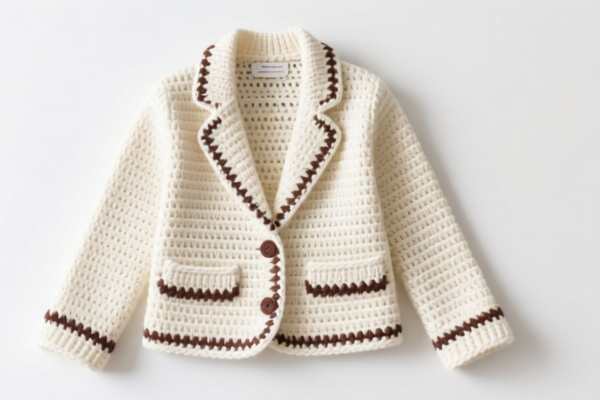
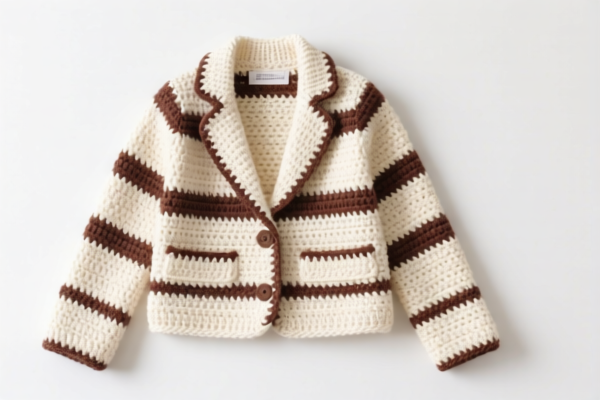
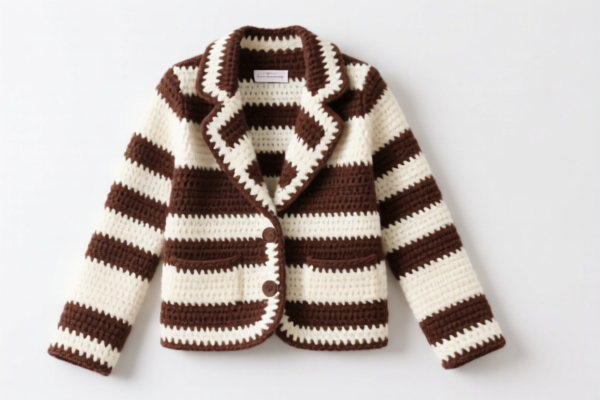

AI Analysis
🧶 Crochet Blazer: HS Code Classification & US Customs Clearance Guide (2026)
🌐 HS Code Reference & Customs Clearance Guide | 2026 Latest Tariff Analysis | Strategic Entry for Handmade Knitwear
📌 I. Product Definition & Classification: Is it a "Suit" or a "Fancy Top"?
A Crochet Blazer is a unique intersection of traditional tailoring and artisanal textile techniques. In international trade, the classification hinges on two critical factors: 1. Construction Method: Is it knitted (looping yarn with needles) or crocheted (looping yarn with a hook)? Both generally fall under Chapter 61 (Articles of Apparel and Clothing Accessories, Knitted or Crocheted). 2. Garment Type: Does it constitute a "Blazer" (jacket with lapels, buttons, often lined/unlined but structured) or simply a "Jacket"?
⚠️ Key Distinction Point: - If the item is knitted/crocheted and has the structure of a jacket/blazer (lapels, front opening, long sleeves) → It falls under Heading 6103 (Men's or Boys' Suits, Ensembles, Suits, jackets...) or 6104 (Women's or Girls'...). - Note on Data Provided: The dataset suggests classifications under both 6103 (Men's) and 6104 (Women's). For a generic "Blazer," you must determine the intended gender or unisex nature. If unisex, importers often default to 6104 (Women's) for broader availability, or 6103 if marketed to men. However, the material is the primary driver for the subheading.
📦 II. HS Code Classification Details (Based on Provided Data)
The following HS Codes are derived from the specific analysis of "Crochet Blazer" characteristics, focusing on the fabric composition (synthetic, other textile, etc.) and gender category.
| HS Code | Product Description | Material Inference | Intended Gender | Key Characteristics |
|---|---|---|---|---|
6104.33.20.00 |
Women's/Girls' Blouses, Shirts & Blazer-type jackets, Synthetic Fibers, Knitted/Crocheted | Synthetic Fibers (Polyester, Acrylic, etc.) | Female | Matches crochet morphology & blazer use; high likelihood for mass-produced crochet blends. |
6104.39.20.90 |
Women's/Girls' Blouses, Shirts & Blazer-type jackets, Other Textile Materials, Knitted/Crocheted | Other Textiles (Cotton, Wool, Rayon, etc.) | Female | Matches crochet morphology & blazer use; generic "other" category for natural or blended fibers not specified elsewhere. |
6103.39.80.60 |
Men's/Boys' Suits, Ensembles, Blazer-type Jackets, Other Textile Materials, Knitted/Crocheted | Other Textiles | Male | Matches knit/crochet blazer morphology; broad category for men's knit jackets not made of wool/cotton/synthetics specifically listed. |
6103.39.80.20 |
Men's/Boys' Suits, Ensembles, Blazer-type Jackets, Other Textile Materials (Non-Cotton/Non-Wool), Knitted/Crocheted | Other Textiles (Excl. Cotton/Wool) | Male | Matches crochet morphology & blazer use; specific exclusion for cotton/wool points to synthetics or man-made fibers. |
6103.39.10.00 |
Men's/Boys' Suits, Ensembles, Blazer-type Jackets, Man-Made Fibers, Knitted/Crocheted | Man-Made Fibers | Male | Matches crochet morphology & blazer use; specific subheading for synthetic/man-made fibers in men's wear. |
🔍 Critical Analysis: - Gender Matters: If your blazer is marketed as unisex, choose the category with the lowest tariff or most favorable supply chain precedent. Often, 6104 (Women's) codes have simpler material classifications (
33,39). - Material is Key: - If your crochet is Acrylic/Polyester (common for cheap crochet): Look at6104.33.20.00(Synthetic) or6103.39.10.00(Man-Made). - If your crochet is Cotton/Wool: It may fall into6104.39.20.90(Other) or require specific cotton/wool codes not listed here (but the data implies "Other" covers these if not specific). - Warning: Do not misdeclare. If it's 100% Acrylic, do not use "Other" codes if a "Synthetic" code exists, as customs may reclassify and penalize.
💰 III. 2026 US Tariff Rate Breakdown (Including Additional Taxes)
✅ Applicable Country: United States (US)
✅ Origin: China (CN)
✅ Effective Date: Rates apply as per the provided dataset (reflecting current Section 301 and IEEPA implications).
The dataset highlights a three-component tax structure: 1. Base Duty (MFN): Standard World Trade Organization rate. 2. Section 301 Tariff (7.5%): Additional tariff on Chinese goods (Trade War). 3. Section 122 / IEEPA Tariff (10%): Additional tariff targeting China/Hong Kong under International Emergency Economic Powers Act.
🎯 1. 6104.33.20.00 – Women’s Synthetic Crochet Blazer
Highest Risk / Highest Cost
| Item | Detail |
|---|---|
| Base Duty | 28.2% |
| Section 301 | +7.5% |
| Section 122/IEEPA | +10.0% |
| Total Rate | 45.7% |
| Calculation | CIF Value × 45.7% |
| De Minimis Exemption | ❌ Denied |
| Legal Basis | Standard HTSUS + USITC Footnotes + IEEPA Orders |
📌 Explanation:
- This is the most expensive classification.
- Synthetic fibers (polyester/acrylic) often attract higher base duties than natural fibers in some contexts, or the specific subheading33has a higher MFN rate.
- Strategy: Avoid this code if possible. See alternatives below.
🎯 2. 6104.39.20.90 – Women’s Other Textile Crochet Blazer
Best Option for Women’s Garments
| Item | Detail |
|---|---|
| Base Duty | 0.0% |
| Section 301 | +7.5% |
| Section 122/IEEPA | +10.0% |
| Total Rate | 17.5% |
| Calculation | CIF Value × 17.5% |
| De Minimis Exemption | ❌ Denied |
| Legal Basis | Standard HTSUS + USITC Footnotes + IEEPA Orders |
📌 Why This is Critical:
- Zero Base Duty is a massive advantage.
- If your crochet blazer is made of Cotton, Wool, Linen, or Blends (classified as "Other" because it's not strictly "Synthetic" in the tariff schedule's primary breakdown), use this code.
- Strategy: If you can prove the material is NOT 100% synthetic (e.g., 60% Cotton/40% Polyester might sometimes be argued, but strict rules apply), fight for this 17.5% rate instead of 45.7%.
🎯 3. 6103.39.80.60 & 6103.39.80.20 – Men’s Other Textile Blazers
Moderate Cost for Men’s Garments
| Item | Detail |
|---|---|
| Base Duty | 5.6% |
| Section 301 | +7.5% |
| Section 122/IEEPA | +10.0% |
| Total Rate | 23.1% |
| Calculation | CIF Value × 23.1% |
| De Minimis Exemption | ❌ Denied |
📌 Explanation:
- For men's blazers, the "Other Textiles" codes have a 5.6% base duty.
- Total Cost: 23.1%. This is lower than the synthetic women's code (45.7%) but higher than the "other" women's code (17.5%).
- Strategy: If the garment is truly unisex, declaring as Women's (6104.39.20.90) yields 17.5%, while Men's (6103) yields 23.1%. Women's classification is more tax-efficient for "Other Textiles."
🎯 4. 6103.39.10.00 – Men’s Man-Made Fiber Blazer
High Cost for Men’s Synthetics
| Item | Detail |
|---|---|
| Base Duty | 14.9% |
| Section 301 | +7.5% |
| Section 122/IEEPA | +10.0% |
| Total Rate | 32.4% |
| Calculation | CIF Value × 32.4% |
| De Minimis Exemption | ❌ Denied |
📌 Explanation:
- Men's synthetic blazers are taxed at 32.4%.
- This is better than Women's Synthetic (45.7%) but worse than Women's "Other" (17.5%).
🛠️ IV. Customs Clearance Practical Advice (Avoid Pitfalls)
✅ 1. Documentation Checklist (Non-Negotiable)
| Document | Requirement | Purpose |
|---|---|---|
| Product Composition Label | Must state % of each fiber (e.g., "100% Cotton Crochet") | Determines if you use 6104.33 (Synthetic) or 6104.39 (Other). Crucial for saving 28% tax. |
| Construction Diagram | Show crochet method (hook vs. needle) | Proves it is Chapter 61 (Knitted/Crocheted) and not Chapter 60 (Knitted Fabric) or Chapter 62 (Non-Knitted). |
| Commercial Invoice | Explicitly describe as "Women's/Men's Crochet Blazer" | Avoid vague terms like "Fancy Shirt" or "Jacket Part." |
| Packing List | List weight, dimensions, and item count | Ensure no hidden accessories (like belts) that could change classification. |
| Country of Origin | China (CN) | Triggers 7.5% + 10% additional tariffs. |
✅ 2. Classification Strategy (The "Save Tax" Algorithm)
| Scenario | Recommended HS Code | Total Tax | Why? |
|---|---|---|---|
| Women's Blazer, Cotton/Linen/Wool Blend | 6104.39.20.90 |
17.5% | Best Rate. Base duty is 0%. |
| Men's Blazer, Cotton/Linen/Wool Blend | 6103.39.80.60 |
23.1% | Moderate rate. Base duty 5.6%. |
| Women's Blazer, 100% Polyester/Acrylic | 6104.33.20.00 |
45.7% | Avoid if possible. High base duty. |
| Men's Blazer, 100% Polyester/Acrylic | 6103.39.10.00 |
32.4% | High base duty, but better than Women's Synthetic. |
🔥 Pro Tip:
If you are selling a Unisex Crochet Blazer made of Cotton, declare it as Women's (6104.39.20.90).
- Why? The tax rate is 17.5% vs. 23.1% (Men's).
- Legal Risk? Low, as crochet blazers are frequently worn by women, and the "Other Textiles" category is broad.
- Result: You save 5.6% on the Base Duty.
✅ 3. Special Considerations for Crochet Items
| Issue | Solution |
|---|---|
| "Is it Knitted or Crocheted?" | Both are Chapter 61. Ensure your supplier confirms it is not a "weave" (which would be Chapter 62, with different rates). Crochet is looped, not woven. |
| "Is it a Blazer or a Top?" | If it has lapels, buttons, and a structured front, it is a Blazer (6103/6104). If it’s just a loose knit top with a collar, it might be a "Shirt" (also 6104/6103, but subheadings may differ). Use "Blazer" in description to be safe. |
| "Origin Marking" | Must clearly say "Made in China" on the garment or label. Failure to mark results in penalties and rejection. |
🌍 V. Global Market Comparison (2026)
| Market | HS Code (Example) | Total Tariff (China Origin) | Key Requirement |
|---|---|---|---|
| 🇺🇸 USA | 6104.39.20.90 |
17.5% (Women's Other) / 45.7% (Women's Syn) | Section 301 + IEEPA apply. No De Minimis. |
| 🇨🇳 China | 6104.39.20.90 |
~5-10% (Import Duty) | No additional tariffs. VAT 13%. |
| 🇪🇺 EU | 6104.44.00 (Approx) |
~12% | No Section 301. CE marking not required for apparel. |
| 🇬🇧 UK | 6104.44.00 |
~12% | Post-Brexit rules apply. No IEEPA. |
📌 Conclusion:
- The US market is the most expensive due to trade tariffs.
- China is the cheapest for import.
- EU/UK are moderate, with no political tariffs.
📌 VI. Common Mistakes & Pitfalls (Learn from Others' Losses)
❌ Mistake 1: Declaring a Polyester Crochet Blazer as 6104.39.20.90 ("Other Textiles").
👉 Consequence: Customs reclassifies it as Synthetic (6104.33.20.00), back taxes 28.2% + penalties.
✅ Fix: Accurately test fiber content.
❌ Mistake 2: Calling it a "Jacket" instead of "Blazer."
👉 Consequence: Minor, but "Blazer" is more specific. If it has lapels, it’s a blazer. If it’s a simple cardigan, it’s a "Jacket."
✅ Fix: Use precise terminology.
❌ Mistake 3: Ignoring the 10% IEEPA Tariff.
👉 Consequence: Underestimating Landed Cost.
✅ Fix: Always add 17.5% (min) to CIF cost for US clearance.
🎯 VII. Final Recommendation: How to Clear Smarter
- Audit Your Material: If your crochet blazer is Cotton, push for
6104.39.20.90(17.5%). This is your best-case scenario. - Gender Labeling: If the garment is versatile, label and declare as Women's to access the lower "Other Textile" duty rate.
- Avoid Synthetic Declarations: If it’s 100% Acrylic/Polyester, expect 45.7%. Consider if the margin supports this tax.
- Pre-Arrival Ruling: For large shipments, apply for an ISF (10+2) and consider a Customs Ruling if the material blend is complex.
📌 Final Warning:
🚫 Do NOT use De Minimis (Section 321) for crochet blazers valued over $800. The data explicitly states
deny_de_minimis. All shipments are subject to full customs entry and duties.
✨ Professional Clearance, From Precise Classification.
💼 Your Profit Margin Depends on the 0% vs. 45% Difference!
Customer Reviews
About HS Code Classification
The Harmonized System (HS) is an internationally standardized nomenclature developed by the World Customs Organization (WCO) to classify traded products. Over 200 countries use the HS system as the basis for customs tariffs, trade statistics, and import/export regulations.
Each HS code follows a hierarchical structure:
- Chapter (2 digits) — Broad category of goods (e.g., Chapter 84: Machinery and Mechanical Appliances)
- Heading (4 digits) — More specific grouping within the chapter
- Subheading (6 digits) — Internationally standardized breakdown, used by all WCO member countries
- National subdivisions (8-10 digits) — Country-specific extensions for further classification, such as US HTSUS 10-digit codes
Correct HS code classification is essential for smooth customs clearance, accurate duty payment, and compliance with trade regulations. Misclassification can lead to customs delays, overpayment of duties, or penalties.
When importing from CN to US, the applicable tariff rates may include:
- Most-Favored-Nation (MFN) rate — The standard duty rate applied to WTO members
- General rate — Applied to countries without trade agreements
- Trade remedy duties — Additional tariffs such as Section 301 (anti-dumping), Section 232 (national security), or countervailing duties
The information provided on this page is for reference purposes only. For official classification, please consult with your local customs authority or a licensed customs broker.