Crochet Coverall Workwear
CN → US| HS Code | Tariff Rate | Origin | Destination | Doc |
|---|---|---|---|---|
| 6210109010 | 26.0% | CN | US | Official Doc |
| 6211339010 | 33.5% | CN | US | Official Doc |
| 6211325010 | 25.6% | CN | US | Official Doc |
| 6114303044 | 32.4% | CN | US | Official Doc |
| 6210402540 | 24.6% | CN | US | Official Doc |
| 6114200048 | 28.3% | CN | US | Official Doc |
Product Images
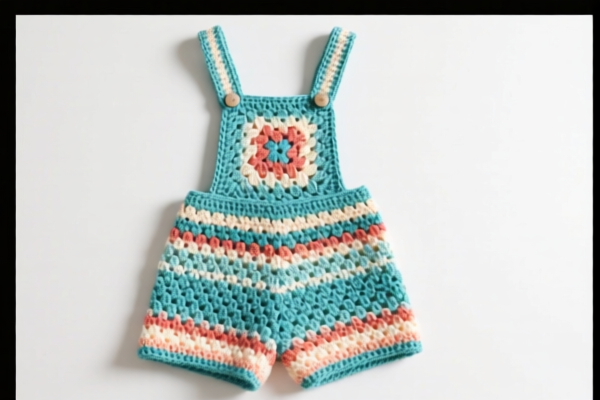
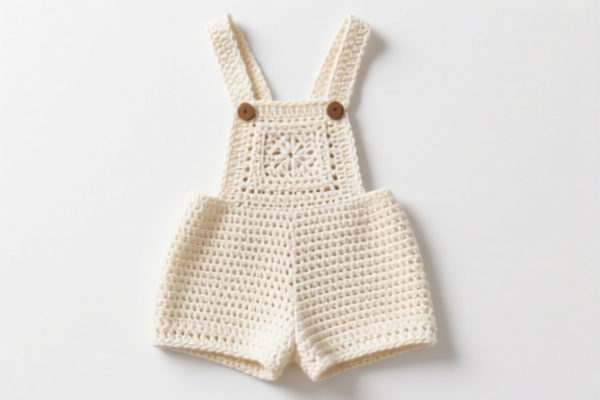
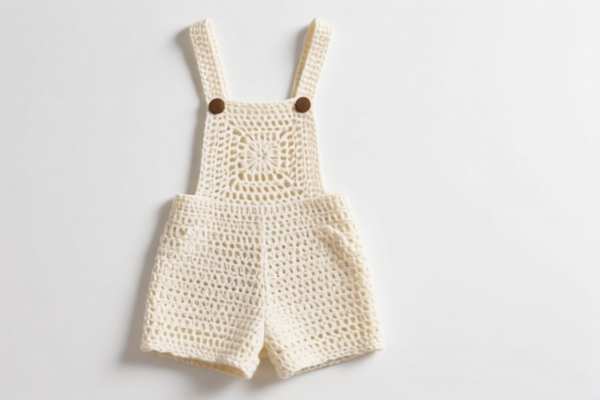

AI Analysis
🧶 Crochet Coverall Workwear
---
🌐 HS Code Reference & Customs Clearance Guide | 2026 Latest Tariff Analysis | Professional Compliance Strategy
📌 I. Product Definition & Classification: Understanding "Crochet Coverall Workwear"
Crochet Coverall Workwear refers to a one-piece garment (coverall/overall) designed for work or industrial use, manufactured specifically using the crochet technique (a form of needlework where a hooked needle is used to interlock loops of yarn, thread, or strands of other materials).
In international trade, the classification depends heavily on: 1. Material Composition (Cotton, Synthetic, Artificial Fiber). 2. Construction Type (Knitted/Crocheted vs. Woven). 3. Function (Workwear/Overall).
⚠️ Critical Distinction:
- Crochet/Knitted Goods fall under Chapter 61 (Articles of apparel and clothing accessories, knitted or crocheted).
- Woven Workwear (sewn from cut fabric) falls under Chapter 62.
- Note: Standard "coveralls" are often woven (Ch. 62), but if explicitly stated as crochet, it must be classified under Ch. 61 unless the crochet structure is purely decorative on a woven base (which still might lean towards Ch. 61 depending on binding material).
📦 II. HS Code Classification Details (2026 Latest Tariff Authority Cross-Reference)
Based on the provided data, here are the specific classifications for Coverall Workwear depending on material and specific form:
| HS Code | Product Description | Material Type | Application/Shape |
|---|---|---|---|
6210.10.90.10 |
Coverall Workwear, matching work purpose and overall shape | Not specified in summary* | Woven/Overall form |
6211.33.90.10 |
Coverall Workwear, categorized as "Overall/Jumpsuit", Material: Artificial Fiber | Artificial Fiber | Overall/Jumpsuit form |
6211.32.50.10 |
Coverall Workwear, matching overall shape and purpose, Material: Cotton or Synthetic Fiber | Cotton or Synthetic | Overall form |
6114.30.30.44 |
Coverall Workwear, matching "Overall" and "Workwear", Material: Artificial Fiber | Artificial Fiber | Knitted/Crocheted Overall |
6210.40.25.40 |
Coverall Workwear, matching "Jumpsuit/Pant" and "Workwear", Material: Synthetic or Coated Fabric | Synthetic/Coated | Jumpsuit form |
6114.20.00.48 |
Coverall Workwear, matching overall shape and purpose, Material: Cotton | Cotton | Knitted/Crocheted Overall |
🔍 Key Insight:
- If the item is truly crocheted, it is technically a knitted/crocheted article. HS Codes starting with61(e.g.,6114.30,6114.20) are the most accurate for crochet goods.
- HS Codes starting with62(e.g.,6210,6211) typically refer to woven garments. If your "crochet" coverall is actually a woven garment with crochet details, it may fall under Ch. 62. However, pure crochet structures are Ch. 61.
- Recommendation: For genuine crochet workwear, prioritize6114.30.30.44(Artificial Fiber) or6114.20.00.48(Cotton) to avoid misclassification penalties for "Woven" vs. "Knitted" errors.
💰 III. 2026 Latest Tariff Rate Breakdown (Including Surcharges & Policy Add-ons)
✅ Applicable Country: United States (US)
✅ Origin: China (CN)
✅ Effective Time: Includes subsequent imports under current trade policies
🎯 1. 6114.30.30.44 —— Coverall Workwear, Artificial Fiber (Knitted/Crocheted)
| Item | Details |
|---|---|
| Base Tariff | 14.9% (ad valorem) |
| USITC Surcharge | +7.5% (Section 301 / Additional Duties) |
| 122 Clause Tariff | +10% (Specific Clause 122) |
| Total Tax Rate | 32.4% |
| Tax Calculation | CIF Value × 32.4% |
| De Minimis Eligibility | ❌ No (High tax rate, below $800 exemption does not apply) |
| Legal Basis Path | Base: 14.9% + Surcharge: 7.5% + Clause 122: 10% |
📌 Explanation:
- This code represents artificial fiber coveralls (knitted/crocheted).
- The 32.4% total rate is significant. The 7.5% surcharge is a standard Section 301 add-on for many textiles from China.
- Clause 122 adds an additional 10%, bringing the effective burden to nearly 1/3 of the product value.
🎯 2. 6114.20.00.48 —— Coverall Workwear, Cotton (Knitted/Crocheted)
| Item | Details |
|---|---|
| Base Tariff | 10.8% (ad valorem) |
| USITC Surcharge | +7.5% |
| 122 Clause Tariff | +10% |
| Total Tax Rate | 28.3% |
| Tax Calculation | CIF Value × 28.3% |
| De Minimis Eligibility | ❌ No |
| Legal Basis Path | Base: 10.8% + Surcharge: 7.5% + Clause 122: 10% |
📌 Note:
- Cotton-based crochet coveralls have a lower base tariff (10.8%) compared to artificial fibers (14.9%).
- However, with surcharges, the total is still 28.3%.
- Advantage: Slightly cheaper than the artificial fiber version by 4.1%.
🎯 3. 6211.33.90.10 —— Coverall Workwear, Artificial Fiber (Woven/Overall Category)
| Item | Details |
|---|---|
| Base Tariff | 16.0% |
| USITC Surcharge | +7.5% |
| 122 Clause Tariff | +10% |
| Total Tax Rate | 33.5% |
| Tax Calculation | CIF Value × 33.5% |
| De Minimis Eligibility | ❌ No |
| Legal Basis Path | Base: 16.0% + Surcharge: 7.5% + Clause 122: 10% |
📌 Warning:
- If misclassified as "Woven" (6211) instead of "Knitted/Crocheted" (6114), the base tariff jumps to 16.0%, leading to the highest total rate of 33.5%.
- Ensure your customs broker distinguishes between Crochet/Knitted (Ch. 61) and Woven (Ch. 62).
🎯 4. 6211.32.50.10 —— Coverall Workwear, Cotton or Synthetic (Woven)
| Item | Details |
|---|---|
| Base Tariff | 8.1% |
| USITC Surcharge | +7.5% |
| 122 Clause Tariff | +10% |
| Total Tax Rate | 25.6% |
| Tax Calculation | CIF Value × 25.6% |
| De Minimis Eligibility | ❌ No |
| Legal Basis Path | Base: 8.1% + Surcharge: 7.5% + Clause 122: 10% |
📌 Observation:
- This code offers the lowest total tax rate (25.6%) among the provided options.
- It applies to cotton or synthetic fiber workwear in the woven category.
- Caution: Only use this if the item is woven, not crochet. Misdeclaring crochet as woven to save tax is customs fraud.
🎯 5. 6210.40.25.40 —— Coverall Workwear, Synthetic or Coated Fabric (Woven)
| Item | Details |
|---|---|
| Base Tariff | 7.1% |
| USITC Surcharge | +7.5% |
| 122 Clause Tariff | +10% |
| Total Tax Rate | 24.6% |
| Tax Calculation | CIF Value × 24.6% |
| De Minimis Eligibility | ❌ No |
| Legal Basis Path | Base: 7.1% + Surcharge: 7.5% + Clause 122: 10% |
📌 Best Rate for Woven Synthetic/Coated:
- If the workwear is made of synthetic or coated fabric and is woven, this is the cheapest option at 24.6%.
- Do not confuse "Coated Fabric" with "Crochet". Coated fabrics are laminated or treated woven materials.
🎯 6. 6210.10.90.10 —— Coverall Workwear, General Overall Shape
| Item | Details |
|---|---|
| Base Tariff | 16.0% |
| USITC Surcharge | +7.5% |
| 122 Clause Tariff | +10% |
| Total Tax Rate | 26.0% |
| Tax Calculation | CIF Value × 26.0% |
| De Minimis Eligibility | ❌ No |
| Legal Basis Path | Base: 16.0% + Surcharge: 7.5% + Clause 122: 10% |
📌 Generic Woven Workwear:
- A catch-all for woven coveralls that don't fit other specific subheadings.
- Total rate is 26.0%, which is moderate.
🛠️ IV. Customs Clearance Practical Advice (Combat Pitfalls Guide)
✅ 1. Essential Documentation Checklist (None Can Be Missing)
| Document | Mandatory? | Explanation |
|---|---|---|
| ✅ Product Specification Sheet | ✔️ | Must clearly state "Crochet" or "Knitted/Crocheted" technique. |
| ✅ Material Composition Label | ✔️ | Exact % of Cotton, Polyester, Nylon, etc. |
| ✅ Product Photos (Front/Back/Detail) | ✔️ | Must show the crochet stitch pattern to prove Ch. 61 classification. |
| ✅ Commercial Invoice | ✔️ | Description: "Crochet Coverall Workwear, 100% Cotton, Knitted/Crocheted". |
| ✅ Packing List | ✔️ | Weight, dimensions, quantity. |
| ✅ Origin Certificate | ✔️ | Proof of China origin to calculate accurate surcharges. |
✅ 2. Declaration Tips (Key Mantras)
🔥 "Declare Material, Declare Technique, Avoid 'Woven' Trap!"
| Scenario | Correct Declaration | Wrong Declaration |
|---|---|---|
| Genuine Crochet Coverall | 6114.30.30.44 (Artificial) or 6114.20.00.48 (Cotton) |
6211... (Woven codes) → Penalty for Misclassification |
| Woven Coverall with Crochet Trim | 6211... (Woven codes) → Base Tariff applies |
Claiming "100% Crochet" → Audit Risk |
| Coated Synthetic Workwear | 6210.40.25.40 |
Claiming "Crochet" → Reject |
📌 Critical Note:
- Crochet is a form of Knitting/Crocheting. It belongs in Chapter 61.
- Using Chapter 62 codes for crochet items can lead to back taxes + penalties because the duty rates and legal definitions differ.
✅ 3. Special Circumstances Handling
| Situation | Handling Advice |
|---|---|
| Mixed Material | If >50% is Cotton, use 6114.20...; if >50% Artificial, use 6114.30.... |
| Decorative Crochet on Woven Base | If the base is woven and crochet is only decorative, it may still be classified as Woven (Ch. 62). Provide construction diagrams. |
| Customs Audit | Be prepared to show video of the crochet process or microscopic fiber analysis if challenged. |
| De Minimis Exemption | ❌ Not Applicable. With rates >24.6%, shipments under $800 will still be taxed. |
🌍 V. Global Market Comparison (2026 Latest)
| Country/Region | Recommended HS Code | Tariff (China Origin) | Certification | Notes |
|---|---|---|---|---|
| 🇺🇸 USA | 6114.30.30.44 / 6114.20.00.48 |
28.3% - 32.4% | CPSIA (if for children), ISO | High surcharges due to Section 301 & Clause 122 |
| 🇨🇳 China | 6114... |
Low/Zero (Import) | CCC (if applicable) | Domestic production may have different codes |
| 🇪🇺 EU | 6114... |
~12% (MFN) | CE (if PPE) | No Section 301 surcharges |
| 🇬🇧 UK | 6114... |
~12% | UKCA | Post-Brexit rules apply |
| 🇯🇵 Japan | 6114... |
~15% | JIS | No major surcharges |
📌 Conclusion:
- USA is the most expensive market for Chinese-made crochet workwear due to political surcharges.
- Consider supply chain diversification (e.g., produce in Vietnam or Bangladesh) to avoid US surcharges if targeting the US market.
📌 VI. Common Mistakes & Pitfalls (Blood Lessons)
❌ Mistake 1: Classifying Crochet items under Chapter 62 (Woven)
👉 Consequence: Underpayment of duty → Customs audit, back taxes, fines.
❌ Mistake 2: Ignoring Material Composition
👉 Consequence: Cotton (8.1% base) vs. Artificial (14.9% base) leads to 6.8% difference in base tax.
❌ Mistake 3: Assuming De Minimis ($800) applies
👉 Consequence: All shipments under $800 will be taxed at 24-33% in the US. No exemption.
❌ Mistake 4: Vague Description ("Coverall")
👉 Consequence: Customs officer may assign worst-case HS code with highest duty.
✅ Correct Description:
"Crochet Coverall Workwear, 100% Cotton, Knitted/Crocheted, Unisex, Model XYZ, Origin: China"
🎯 VII. Conclusion: Professional Declaration, Save Cost, Ensure Compliance!
🎯 Remember the Mantra:
🔹 "Crochet is Ch. 61, Woven is Ch. 62. Misclassifying costs big!"
🔹 "Cotton is cheaper than Artificial, but both get hit by surcharges!"
🔹 "No De Minimis for US Textiles from China!"
📌 Pro Tip:
If your crochet coveralls are originating from Vietnam, Mexico, or Bangladesh, you can avoid US surcharges and reduce total tax to 0-15%.
Recommend Advance Ruling from US Customs (CBP) to confirm the Crochet vs. Woven classification before large shipments.
📣 Immediate Action:
📞 Contact a licensed customs broker.
📸 Provide clear photos of the crochet stitch.
📄 Apply for HS Code Pre-Ruling.
🚀 Ensure your Crochet Coveralls clear customs smoothly, efficiently, and profitably!
✨ Professional customs clearance starts with accurate classification!
💼 Every cent of your cost deserves precise calculation!
Customer Reviews
About HS Code Classification
The Harmonized System (HS) is an internationally standardized nomenclature developed by the World Customs Organization (WCO) to classify traded products. Over 200 countries use the HS system as the basis for customs tariffs, trade statistics, and import/export regulations.
Each HS code follows a hierarchical structure:
- Chapter (2 digits) — Broad category of goods (e.g., Chapter 84: Machinery and Mechanical Appliances)
- Heading (4 digits) — More specific grouping within the chapter
- Subheading (6 digits) — Internationally standardized breakdown, used by all WCO member countries
- National subdivisions (8-10 digits) — Country-specific extensions for further classification, such as US HTSUS 10-digit codes
Correct HS code classification is essential for smooth customs clearance, accurate duty payment, and compliance with trade regulations. Misclassification can lead to customs delays, overpayment of duties, or penalties.
When importing from CN to US, the applicable tariff rates may include:
- Most-Favored-Nation (MFN) rate — The standard duty rate applied to WTO members
- General rate — Applied to countries without trade agreements
- Trade remedy duties — Additional tariffs such as Section 301 (anti-dumping), Section 232 (national security), or countervailing duties
The information provided on this page is for reference purposes only. For official classification, please consult with your local customs authority or a licensed customs broker.