Crochet Doll
CN → US| HS Code | Tariff Rate | Origin | Destination | Doc |
|---|---|---|---|---|
| 9503000073 | 10.0% | CN | US | Official Doc |
| 9503000071 | 10.0% | CN | US | Official Doc |
Product Images
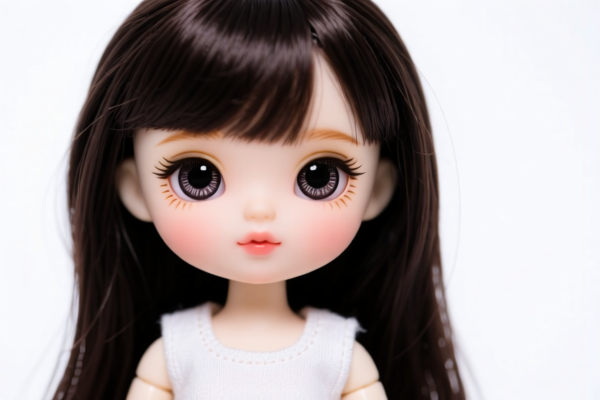
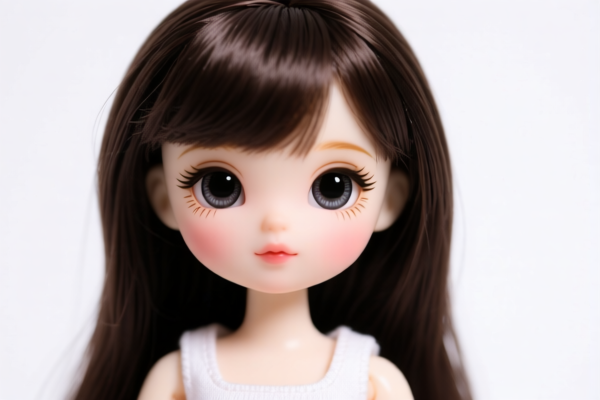
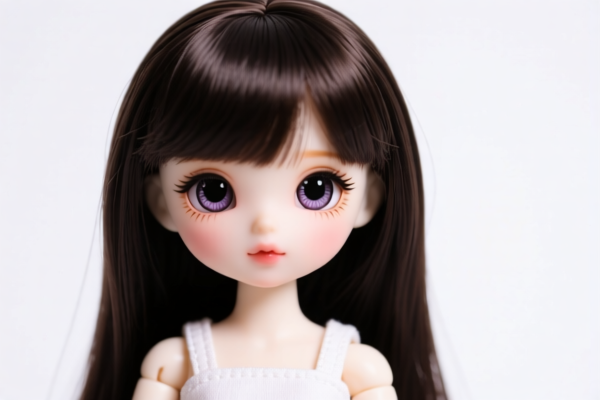
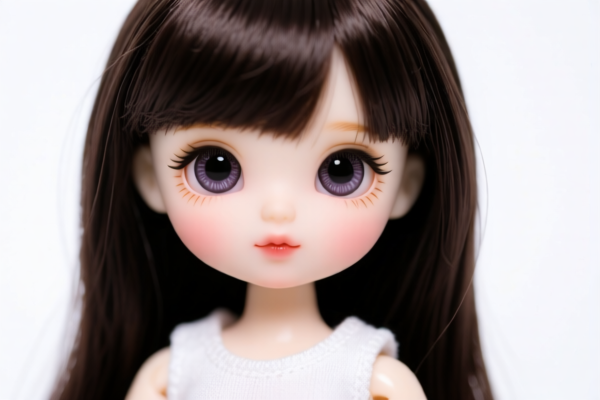
AI Analysis
🧸 Crochet Dolls (Handmade or Mass-Produced Textile Toys)
🌐 HS Code Reference & Customs Clearance Guide | 2026 Latest Tariff Analysis | Professional Clearance Strategy
📌 I. Product Definition & Classification: What Exactly Is a "Crochet Doll"?
A crochet doll is a toy constructed primarily from yarn or thread using the crochet technique. In international trade, these items fall squarely under Chapter 95: Toys, Games, and Sport requisites. However, the specific classification and customs treatment depend heavily on the age group for which the doll is intended and labeled.
The provided data distinguishes two critical categories based on the U.S. Consumer Product Safety Improvement Act (CPSIA) definition of "Children’s Products" (15 U.S.C. § 2052):
1. For Children Under 3 Years of Age (9503.00.00.71):
- Includes dolls designed for babies and toddlers.
- Strict Safety Requirements: Must comply with CPSIA standards (lead content, small parts, choke hazards).
- Labeling: Must bear tracking labels and age grading.
2. For Children Aged 3 to 12 Years (9503.00.00.73):
- Includes older dolls, fashion dolls, or collectible crocheted figures.
- Safety Requirements: Less stringent than under-3 categories, but still regulated for general toy safety.
⚠️ Critical Distinction:
- If the doll is marketed, labeled, or clearly intended for children under 3, it MUST be classified under 9503.00.00.71.
- If intended for ages 3–12, it falls under 9503.00.00.73.
- Misclassification can lead to severe penalties, product seizure, or refusal of entry due to non-compliance with safety laws (CPSIA).
📦 II. HS Code Classification Details (Based on Provided Data)
| HS Code | Product Description | Age Group | Safety Classification |
|---|---|---|---|
9503.00.00.71 |
Tricycles, scooters, pedal cars... dolls, other toys... "Children’s products" as defined in 15 U.S.C. § 2052: Labeled or determined by importer as intended for use by persons: Under 3 years of age | Under 3 | High Regulation (CPSIA, Tracking Labels, Lead/Phthalate Tests) |
9503.00.00.73 |
Tricycles, scooters, pedal cars... dolls, other toys... "Children’s products" as defined in 15 U.S.C. § 2052: Labeled or determined by importer as intended for use by persons: 3 to 12 years of age | 3–12 Years | Standard Regulation (General Toy Safety) |
🔍 Key Insight:
- Both codes fall under HTS 9503 ("Tricycles, scooters, pedal cars... dolls, other toys...").
- The last two digits (71 vs. 73) are critical for age-specific regulatory compliance.
- Crochet dolls are explicitly included under "dolls, other toys" in Chapter 95.
💰 III. 2026 Tariff Rate Breakdown (Detailed Tax Explanation)
✅ Applicable Country: United States (US)
✅ Origin: China (CN) (Assumed based on typical trade context; rates may vary if origin is different)
✅ Effective Date: Current as per provided data
🎯 1. HS Code 9503.00.00.71 – Dolls for Children Under 3 Years
| Item | Detail |
|---|---|
| Base Tariff (Basic Duty) | 0.0% |
| Section 301 / Additional Tariff | 0.0% |
| Total Tax Rate | 0.0% |
| Tax Calculation | CIF Value × 0.0% = $0 |
| Notes | Despite the 0% tariff, this category is subject to strict non-tariff barriers: - CPSIA compliance is mandatory. - CPSC acceptance number required on label. - Children’s Product Certificate (CPC) must be issued by an accredited lab. |
🎯 2. HS Code 9503.00.00.73 – Dolls for Children 3–12 Years
| Item | Detail |
|---|---|
| Base Tariff (Basic Duty) | 0.0% |
| Section 301 / Additional Tariff | 0.0% |
| Total Tax Rate | 0.0% |
| Tax Calculation | CIF Value × 0.0% = $0 |
| Notes | Lower regulatory burden compared to under-3 dolls, but still requires general toy safety compliance (ASTM F963 or equivalent). |
📌 Explanation:
- The provided data explicitly states: "基础关税: 0.0%, 加征关税: 0.0%, Total Tax: 0.0%" for both codes.
- This means no customs duty is owed on these goods, regardless of origin (unless other specific trade agreements or sanctions apply, which are not indicated here).
- However, "0% duty" does NOT mean "0% cost" – Compliance costs (testing, labeling, CPC issuance) can be significant, especially for under-3 products.
🛠️ IV. Customs Clearance Practical Advice (Pitfall Avoidance Guide)
✅ 1. Essential Documentation Checklist (Non-Negotiable)
| Document | Required For | Description |
|---|---|---|
| ✅ Children’s Product Certificate (CPC) | Under 3 Years (9503.00.00.71) |
Issued by the importer/manufacturer, based on test results from a CPSC-accepted lab. Mandatory for under-3 dolls. |
| ✅ General Certificate of Conformity (GCC) | Ages 3–12 (9503.00.00.73) |
Self-issued or lab-issued, attesting compliance with general toy safety rules (ASTM F963). |
| ✅ Product Label with Tracking Info | Under 3 Years | Must include: Manufacturer name, production date, batch number, and age recommendation (e.g., "0-24 months"). |
| ✅ Test Reports | Both | Must cover: - Lead content (≤100 ppm in substrate, ≤90 ppm in surface coatings) - Phthalates (≤0.1% for 8 specific phthalates) - Small parts/choking hazards - Flammability (if applicable) |
| ✅ Commercial Invoice & Packing List | Both | Clearly state: "Crochet Doll – Handmade/Machine-Made," HS Code, Age Group, Country of Origin. |
| ✅ CPSIA Compliance Statement | Both | Confirm that the product has been tested and complies with CPSIA. |
✅ 2. Declaration Tips (Key Mnemonics)
🔥 “Age Dictates Code, Compliance Dictates Clearance!”
| Scenario | Correct Declaration | Mistake to Avoid |
|---|---|---|
| Doll labeled "For Toddlers (18M)" | 9503.00.00.71 + CPC + Tracking Label |
Use 9503.00.00.73 → Rejected for lack of CPC |
| Doll labeled "For Ages 5+" | 9503.00.00.73 + GCC |
Use 9503.00.00.71 → Over-declare, delay in clearance |
| Crochet doll with removable eyes | Must pass small parts test | Assume handmade = exempt from safety tests → Seizure Risk |
| Mixed shipment (Under 3 + 3-12) | Split HS Codes | Declare all as 73 → Penalties for under-3 non-compliance |
✅ 3. Special Considerations for Crochet Dolls
| Situation | Advice |
|---|---|
| Handmade vs. Mass-Produced | Both are subject to CPSIA. Handmade does not exempt you from testing or labeling requirements. |
| Natural Fibers (Wool/Cotton) | Still must meet flammability and chemical safety standards. No special exemption. |
| Accessories (Clothes/Hats) | If sold with the doll, they are part of the "toy" and must comply with the same safety standards. |
| Collectible Dolls (Not for Play) | If explicitly labeled "Not for Children Under 14" and marketed as collectibles, they may be classified under 9503.00.00.00.00 (General Toys), but borderline cases are risky. Consult a customs broker. |
🌍 V. Global Customs Comparison (2026 Update)
| Country/Region | Recommended HS Code | Duty Rate | Certification Required | Notes |
|---|---|---|---|---|
| 🇺🇸 USA | 9503.00.00.71 (Under 3) 9503.00.00.73 (3-12) |
0% | CPC (Under 3) GCC (3-12) ASTM F963 |
Strict CPSIA enforcement. 0% duty is offset by high compliance costs. |
| 🇨🇳 China | 9503.00.90.00 |
~9% | CCC (for some toys) | Higher duty, but lower import barriers for non-safety-critical aspects. |
| 🇪🇺 EU | 9503.00.30 (Dolls) |
4.5% | CE Mark EN71 |
Higher duty than US, but CE certification is standardized across EU. |
| 🇬🇧 UK | 9503.00.30 |
4.5% | UKCA Mark BS EN 71 |
Post-Brexit, UKCA replaces CE. |
| 🇨🇦 Canada | 9503.00.00.00 |
0% | CPSIA-equivalent | Similar to US, but no Section 301 tariffs. |
📌 Conclusion:
- The USA offers 0% duty, but imposes the highest regulatory burden for under-3 toys.
- Crochet dolls for under-3 must be meticulously documented with CPC and tracking labels.
- For ages 3–12, clearance is smoother, but GCC and ASTM compliance are still mandatory.
📌 VI. Common Errors & Pitfalls (Lessons Learned)
❌ Mistake 1: Assuming "Handmade" = No Testing Required
👉 Consequence: CBP detains shipment for lack of CPC. Fines up to $13,000 per violation.
❌ Mistake 2: Using 9503.00.00.73 for a doll marketed to toddlers
👉 Consequence: Rejection at border due to missing CPSIA compliance for under-3 products.
❌ Mistake 3: Omitting tracking labels on under-3 dolls
👉 Consequence: Product recall liability, even if 0% duty. Tracking labels are mandatory.
❌ Mistake 4: Mislabeling "Collectible" to avoid CPSIA
👉 Consequence: If the product is reasonably expected to be used by children under 3, it is still a "Children’s Product." False declaration = Fraud.
✅ Best Practice:
"Crochet Doll, 12-inch, Cotton Yarn, Labeled 'For Ages 3+', Model XYZ, GCC Compliant"
"Crochet Baby Rattle Doll, 8-inch, BPA-Free, Labeled '0-24 Months', CPC Attached, Tracking Label Included"
🎯 VII. Conclusion: Precision in Classification, Profit in Compliance
🎯 Remember These Key Points:
🔹 "0% Duty Does Not Mean 0% Effort" – Compliance costs for under-3 dolls can exceed duty savings elsewhere.
🔹 "Age Determines Code, Code Determines Compliance" –71= CPC + Strict Labels;73= GCC + Standard Safety.
🔹 "Handmade is Not a Loophole" – CPSIA applies to all children’s products, regardless of production method.
📌 Pro Tip:
If your crochet dolls are collectibles and not intended for children under 14, consider labeling them explicitly as "Collector’s Item – Not for Children Under 14." This may allow you to classify under general toys (
9503.00.00.00.00) and avoid CPSIA, but consult a customs attorney to ensure this classification holds up under CPSC scrutiny.
📣 Immediate Action:
📞 Contact a CPSC-accredited lab for testing if under-3.
📋 Prepare CPC & GCC before shipment.
🏷️ Print tracking labels for under-3 products.
🚀 Ensure 0% duty compliance by avoiding 100% duty pitfalls!
✨ Professional Clearance Starts with Accurate Classification!
💼 Every Crochet Doll Tells a Story – Let It Tell the Right One to Customs!
Customer Reviews
About HS Code Classification
The Harmonized System (HS) is an internationally standardized nomenclature developed by the World Customs Organization (WCO) to classify traded products. Over 200 countries use the HS system as the basis for customs tariffs, trade statistics, and import/export regulations.
Each HS code follows a hierarchical structure:
- Chapter (2 digits) — Broad category of goods (e.g., Chapter 84: Machinery and Mechanical Appliances)
- Heading (4 digits) — More specific grouping within the chapter
- Subheading (6 digits) — Internationally standardized breakdown, used by all WCO member countries
- National subdivisions (8-10 digits) — Country-specific extensions for further classification, such as US HTSUS 10-digit codes
Correct HS code classification is essential for smooth customs clearance, accurate duty payment, and compliance with trade regulations. Misclassification can lead to customs delays, overpayment of duties, or penalties.
When importing from CN to US, the applicable tariff rates may include:
- Most-Favored-Nation (MFN) rate — The standard duty rate applied to WTO members
- General rate — Applied to countries without trade agreements
- Trade remedy duties — Additional tariffs such as Section 301 (anti-dumping), Section 232 (national security), or countervailing duties
The information provided on this page is for reference purposes only. For official classification, please consult with your local customs authority or a licensed customs broker.