Crochet Knitted Jacket/Clothing Parts
CN → US| HS Code | Tariff Rate | Origin | Destination | Doc |
|---|---|---|---|---|
| 6110909090 | 23.5% | CN | US | Official Doc |
| 6114909070 | 15.6% | CN | US | Official Doc |
| 6117909055 | 32.1% | CN | US | Official Doc |
| 6117909040 | 32.1% | CN | US | Official Doc |
| 6110909088 | 23.5% | CN | US | Official Doc |
Product Images
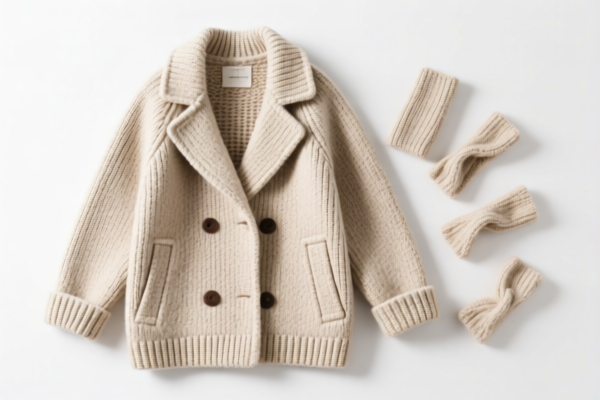
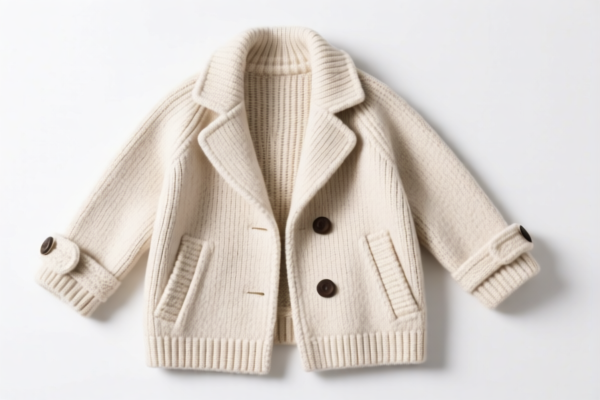
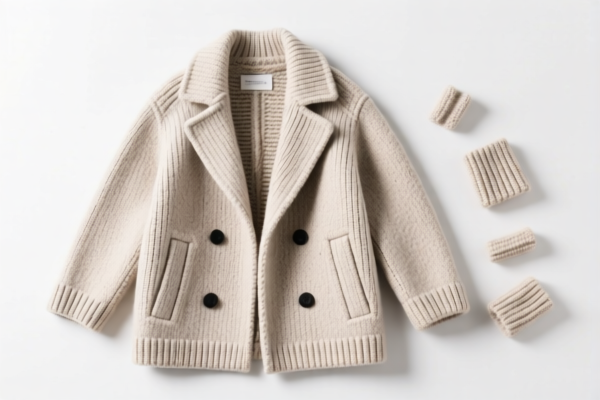
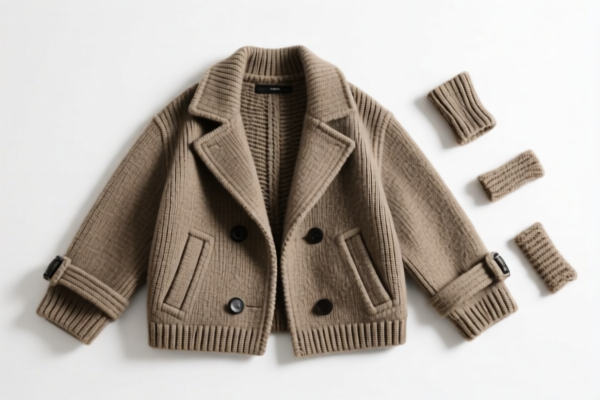
AI Analysis
🧶 Crochet Knitted Jacket / Clothing Parts (Knitted/Jcrochet Garment Components)
🌐 HS Code Reference & Customs Clearance Guide | 2026 Latest Tariff Analysis | Professional Clearance Strategy
📌 I. Product Definition & Classification: Do You Really Understand "Crochet Jacket Parts"?
Crochet knitted jacket components are specialized textile articles used in the manufacturing or repair of outerwear. In international trade, they are classified based on their state of processing (finished vs. semi-finished) and material composition (though material is inferred in the provided data as cotton or generic fiber).
Key Distinction: * Garment Parts (Semi-finished): Pieces cut and sewn but not yet assembled into a complete wearable jacket (e.g., sleeves, collars, front panels). These fall under headings 6110 (Sweaters) or 6117 (Other made-up clothing accessories). * Knitted vs. Crocheted: The term "Crochet Knitted" is often used interchangeably in logistics, but technically, crochet (6113/6117) and knitting (6110/6114) have different HS codes. However, the data provided groups them under general "knitted/crocheted" categories.
⚠️ Critical Note:
- If the item is a complete jacket, it should generally fall under 6102/6103.
- Since the description specifies "Parts/Components", it is classified under 6110 (Sweaters) or 6117 (Other made-up clothing articles).
- The provided data suggests four possible classifications depending on the specific sub-category logic applied by customs brokers.
📦 II. HS Code Classification Details (Based on Provided Data)
The following table lists the five specific HS codes identified in the source data for "Crochet Knitted Jacket/Clothing Parts." Note that the tax rates vary significantly due to different tariff classifications and potential trade remedy applications.
| HS Code | Product Description Summary | Key Characteristics | Total Tax Rate |
|---|---|---|---|
| 6110.90.90.90 | Crochet jacket parts, shape conforms to crochet, apparel use, spare parts category. | No material conflict; default match for spare parts. | 23.5% |
| 6114.90.90.70 | Crochet jacket parts, fits "knitted/crocheted" & "other" category features. | Default match for parts category; lower base tariff. | 15.6% |
| 6117.90.90.55 | Crochet jacket parts, shape/use fits knitted/crocheted garment parts description. | Material inferred as cotton or fiber-based. | 32.1% |
| 6117.90.90.40 | Crochet jacket parts, shape and use fully comply. | Material inferred as cotton or other classification logic. | 32.1% |
| 6110.90.90.88 | Crochet jacket parts, shape conforms to crochet, apparel use, spare parts. | Default match for spare parts when no material conflict. | 23.5% |
🔍 Analysis:
- Lowest Risk:6114.90.90.70(15.6% total tax) is the most cost-effective classification if the goods strictly fit the "Other" knitted/crocheted category.
- Higher Risk:6117codes (32.1%) and6110codes (23.5%) incur higher duties due to different tariff headings for "sweaters" vs. "other clothing accessories."
- Material Ambiguity: The descriptions for 6117 codes explicitly mention "material inferred as cotton," which may trigger higher duties if the actual material is different (e.g., synthetic fibers).
💰 III. 2026 Latest Tariff Rate Breakdown (Including Additional Taxes)
✅ Applicable Market: United States (US)
✅ Country of Origin: China (CN)
✅ Applicable Regulations: Section 301 Tariffs & Section 122 Measures
All provided HS codes are subject to a complex tax structure involving Base Tariff, Section 301 Additional Tariff, and Section 122 Tariff.
🎯 1. 6110.90.90.90 & 6110.90.90.88 — Sweater Category (Spare Parts)
| Item | Content |
|---|---|
| Base Tariff | 6.0% (ad valorem) |
| Section 301 Additional Tariff | 7.5% |
| Section 122 Tariff | 10% |
| Total Tax Rate | 23.5% |
| Calculation | CIF Value × 23.5% |
| De Minimis Exemption? | ❌ No (Deny de minimis) |
| Legal Basis | Base HS Code + Section 301 Footnotes + Section 122 Provisions |
📌 Explanation:
- These codes fall under Heading 6110 (Sweaters, pullovers, etc.).
- Even though they are "parts," they are often classified under sweater headings if they resemble sweater components.
- Total 23.5% is a significant cost driver.
🎯 2. 6114.90.90.70 — Other Knitted/Crocheted Articles ("Other" Category)
| Item | Content |
|---|---|
| Base Tariff | 5.6% (ad valorem) |
| Section 301 Additional Tariff | 0.0% |
| Section 122 Tariff | 10% |
| Total Tax Rate | 15.6% |
| Calculation | CIF Value × 15.6% |
| De Minimis Exemption? | ❌ No (Deny de minimis) |
| Legal Basis | Base HS Code + Section 122 Provisions |
📌 Advantage:
- This code has no Section 301 additional tariff (0%), making it the cheapest option.
- It relies on the "Other" category under Heading 6114.
- Recommendation: Verify if the goods truly fit the "Other" description to avoid misclassification penalties.
🎯 3. 6117.90.90.55 & 6117.90.90.40 — Other Made-Up Clothing Accessories
| Item | Content |
|---|---|
| Base Tariff | 14.6% (ad valorem) |
| Section 301 Additional Tariff | 7.5% |
| Section 122 Tariff | 10% |
| Total Tax Rate | 32.1% |
| Calculation | CIF Value × 32.1% |
| De Minimis Exemption? | ❌ No (Deny de minimis) |
| Legal Basis | Base HS Code + Section 301 Footnotes + Section 122 Provisions |
📌 Warning:
- Heading 6117 covers "Other made-up clothing accessories."
- This classification has the highest base tariff (14.6%) plus the full Section 301 and Section 122 taxes.
- Only use if the goods are definitively not sweaters (6110) or "other" articles (6114), and are clearly accessories (e.g., cuffs, collars, trim).
🛠️ IV. Customs Clearance Practical Advice (Field Avoidance Guide)
✅ 1. Required Documentation Checklist
| Document | Must Provide | Purpose |
|---|---|---|
| ✅ Product Spec Sheet | ✔️ | Detail dimensions, stitch type (crochet vs. knit), and intended use. |
| ✅ Composition Label | ✔️ | Crucial: Specify material (Cotton, Polyester, etc.). Mislabeling triggers 6117 codes (32.1%). |
| ✅ Photos | ✔️ | Show clear images of the parts (e.g., sleeve, collar) and overall shape. |
| ✅ Commercial Invoice | ✔️ | Describe as "Crochet Jacket Components" or "Knitted Garment Parts," NOT "Complete Jacket." |
| ✅ Packing List | ✔️ | List each component separately if shipped disassembled. |
✅ 2. Declaration Tips (Key Mantras)
🔥 "Declare Parts, Not Jackets; Match Material, Avoid 6117!"
| Scenario | Correct Declaration | Incorrect Practice |
|---|---|---|
| Sleeve/Collar Pieces | "Crochet Jacket Parts, 100% Cotton" → 6114.90.90.70 (15.6%) |
"Jacket Sleeves" → Risk of 6117 (32.1%) |
| Sweater-like Parts | "Knitted Sweater Components" → 6110.90.90.90 (23.5%) |
"Jacket Parts" → Ambiguous |
| Complete Jacket | "Crochet Jacket, Women's" → 6102/6103 (Different Rates) |
"Parts" → Misclassification |
| Mixed Materials | Specify each layer's material | "Generic Fiber" → High Risk |
✅ 3. Special Handling Scenarios
| Scenario | Recommendation |
|---|---|
| Cotton Content > 85% | Likely falls under 6114.90.90.70 or 6110.90.90.90. Verify if it fits "Other" for lower tax. |
| Synthetic Fiber | May trigger different subheadings. Ensure description matches the inferred material in the data. |
| Section 122 Eligibility | All provided codes include a 10% Section 122 tariff. This is a fixed additional cost for China-origin textile parts. |
| De Minimis (Section 321) | ❌ Not Applicable. Textile apparel/clothing parts from China are excluded from the $800 de minimis exemption. |
🌍 V. Global Market Clearance Comparison (2026)
| Country/Region | Recommended HS Code | Tariff Estimate | Certification | Notes |
|---|---|---|---|---|
| 🇺🇸 USA | 6114.90.90.70 |
15.6% (Lowest) | No special certs | Avoid 6117 (32.1%) |
| 🇨🇳 China | 6114.90.90.70 |
~5-10% (Import) | CCC (if applicable) | Lower base duties |
| 🇪🇺 EU | 6114.90.90.70 |
0-12% (General) | CE (if functional) | No Section 301/122 |
| 🇬🇧 UK | 6114.90.90.70 |
0-12% | UKCA | Post-Brexit rules apply |
📌 Conclusion:
- USA is the most challenging market due to Section 301 and Section 122 tariffs.
-6114.90.90.70(15.6%) is the optimal classification for cost-saving, provided the goods qualify as "Other" knitted/crocheted articles.
📌 VI. Common Errors & Pitfalls (Lessons Learned)
❌ Error 1: Declaring "Crochet Jacket Parts" as "Sweaters" (6110) when they are "Other" (6114).
👉 Consequence: Tax jumps from 15.6% to 23.5%.
👉 Fix: Clearly define if the item is a sweater component or a general garment part.
❌ Error 2: Declaring "Clothing Accessories" (6117) for simple jacket parts.
👉 Consequence: Tax spikes to 32.1%.
👉 Fix: "Jacket parts" are often classified under 6110 or 6114, not 6117, unless they are true accessories (e.g., belts, scarves).
❌ Error 3: Ignoring Section 122 Tariff.
👉 Consequence: All provided codes include a 10% Section 122 tariff. Failure to account for this leads to underpayment.
👉 Fix: Include Section 122 in all cost calculations.
✅ Correct Approach:
"Crochet Knitted Jacket Parts, Cotton, 100% Knitted, For Apparel Manufacturing, Model XYZ"
🎯 VII. Conclusion: Professional Declaration, Cost Optimization
🎯 Key Takeaways:
🔹 "Parts, Not Jackets: Aim for 6114 (15.6%), Avoid 6117 (32.1%)."
🔹 "Section 122 is a Must: 10% Extra on All Textile Parts from China."
🔹 "No De Minimis: All values are taxed."
📌 Pro Tip:
If your goods are shipped in bulk (e.g., sleeves, collars) and are not ready-to-wear, emphasize the "Parts/Components" nature in your invoice and use 6114.90.90.70 to minimize duties.
📣 Immediate Action:
📞 Consult a customs broker to verify if your specific "crochet parts" fit
6114.90.90.70or6110.90.90.90.
📄 Prepare detailed product descriptions to support the lower 15.6% tariff rate.
✨ Professional clearance starts with accurate classification!
💼 Your profit margin depends on the right HS code!
Customer Reviews
About HS Code Classification
The Harmonized System (HS) is an internationally standardized nomenclature developed by the World Customs Organization (WCO) to classify traded products. Over 200 countries use the HS system as the basis for customs tariffs, trade statistics, and import/export regulations.
Each HS code follows a hierarchical structure:
- Chapter (2 digits) — Broad category of goods (e.g., Chapter 84: Machinery and Mechanical Appliances)
- Heading (4 digits) — More specific grouping within the chapter
- Subheading (6 digits) — Internationally standardized breakdown, used by all WCO member countries
- National subdivisions (8-10 digits) — Country-specific extensions for further classification, such as US HTSUS 10-digit codes
Correct HS code classification is essential for smooth customs clearance, accurate duty payment, and compliance with trade regulations. Misclassification can lead to customs delays, overpayment of duties, or penalties.
When importing from CN to US, the applicable tariff rates may include:
- Most-Favored-Nation (MFN) rate — The standard duty rate applied to WTO members
- General rate — Applied to countries without trade agreements
- Trade remedy duties — Additional tariffs such as Section 301 (anti-dumping), Section 232 (national security), or countervailing duties
The information provided on this page is for reference purposes only. For official classification, please consult with your local customs authority or a licensed customs broker.