Crochet Set and Cotton Sweater
CN → US| HS Code | Tariff Rate | Origin | Destination | Doc |
|---|---|---|---|---|
| 6110202010 | 34.0% | CN | US | Official Doc |
| 6114200010 | 20.8% | CN | US | Official Doc |
| 6112110040 | 32.4% | CN | US | Official Doc |
| 6112110030 | 32.4% | CN | US | Official Doc |
| 6110202020 | 34.0% | CN | US | Official Doc |
Product Images
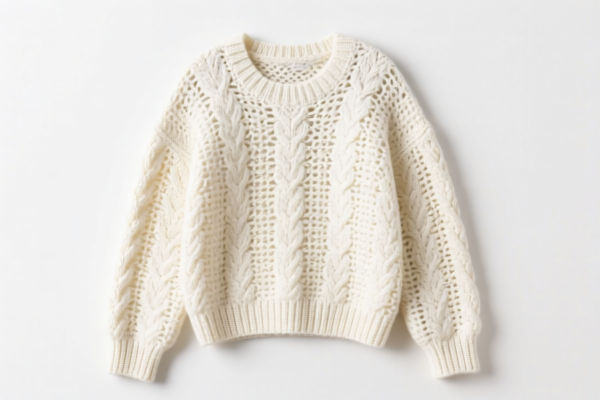
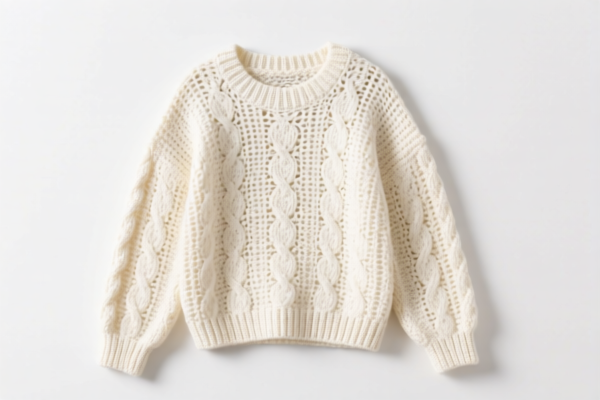
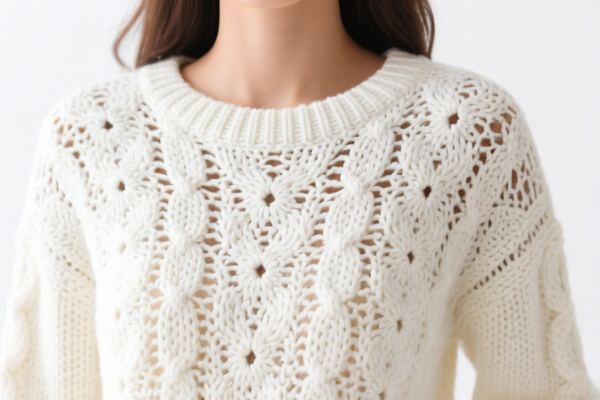
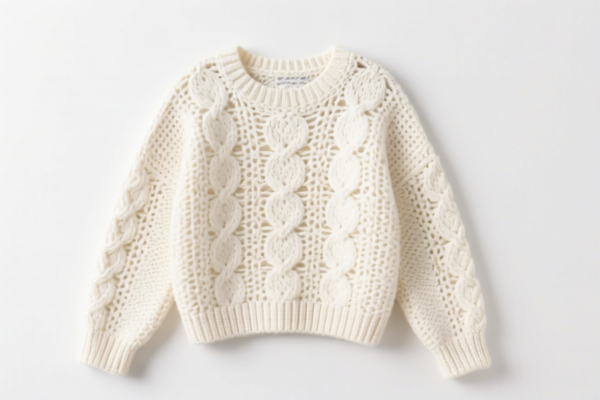
AI Analysis
🧶 Crochet Set & Cotton Sweater (钩编套装和棉质限制毛衣)
🌐 HS Code Reference & Customs Clearance Guide | 2026 Latest Tariff Analysis | Professional Customs Strategy
📌 I. Product Definition & Classification: What Exactly Is a "Crochet Set"?
The "Crochet Set and Cotton Sweater" is a composite textile item, typically consisting of a top and bottom (or top and accessory) made primarily of cotton, featuring crochet or knitting techniques. In international trade, especially regarding exports to the United States, classification is critical because it determines the applicability of Section 301 (122 Clause) tariffs and base rates.
Key Classification Distinctions: * Sweaters (Headings 6110): Knitted/crocheted pullovers, cardigans, vests, and similar articles. * Other Knitted/Crocheted Apparel (Headings 6114): Articles of apparel, not elsewhere specified or included. * Sports Apparel (Heading 6112): Specific garments designed for physical sport (e.g., ski suits, swimming trunks, special gymnastic garments).
⚠️ Critical Classification Point:
- If the item is a standard pullover/cardigan/set, it generally falls under 6110.
- If it is marketed specifically as sportswear (e.g., yoga set, gym wear), it may fall under 6112.
- If it does not fit the specific definition of a "sweater" or "sportswear" but is still knitted/crocheted, it may fall under 6114.
📦 II. HS Code Classification Details (Latest 2026 Tariff对照)
Below are the specific HS Codes derived from the provided data, along with their descriptions and tax implications.
| HS Code | Product Description | Applicable Scenario | Total Tax Rate (China Origin → US) |
|---|---|---|---|
6110.20.20.10 |
Crochet Sets & Cotton Sweaters, matching form, material, and use requirements | Standard cotton knit/crochet sets | 34.0% |
6114.20.00.10 |
Crochet Sets & Cotton Sweaters, complying with cotton knitted upper wear category | General knitted upper garments not classified as sweaters | 20.8% |
6112.11.00.40 |
Crochet Sets & Cotton Sweaters, under Sportswear/Apparel category, reasonable use | Sport-specific knit/crochet sets | 32.4% |
6112.11.00.30 |
Crochet Sets & Cotton Sweaters, under Knitted/Crocheted Apparel category | General sportswear category | 32.4% |
6110.20.20.20 |
Crochet Sets & Cotton Sweaters, form and material meet classification requirements | Alternative cotton knit/crochet sets | 34.0% |
🔍 Key Insight:
- The lowest tax rate is 20.8% for6114.20.00.10.
- The highest tax rate is 34.0% for6110.20.20.10and6110.20.20.20.
- Sports-related classifications (6112) incur 32.4%.
💰 III. 2026 Latest Tariff Rate Details (Detailed Breakdown)
✅ Applicable Country: United States (US)
✅ Origin: China (CN)
✅ Effective Date: Current trade policies (2025-2026)
🎯 1. 6110.20.20.10 & 6110.20.20.20 — Cotton Sweaters & Crochet Sets
Total Tax Rate: 34.0%
| Item | Detail |
|---|---|
| Base Tariff | 16.5% |
| Section 301 (Trade War) Tariff | 7.5% |
| Section 122 Tariff (Specific Clause) | 10% |
| Total Rate | 34.0% |
| Tax Calculation | CIF Value × 34.0% |
| De Minimis Exemption | ❌ Not Applicable (High-value textiles usually excluded) |
| Legal Basis Path | HTSUS 6110.20.20 → Section 301 Footnote → Section 122 Provision |
📌 Explanation:
- Base Tariff (16.5%): Standard US MFN rate for cotton sweaters.
- Section 301 (7.5%): Additional tariff imposed on Chinese goods under the US Trade Act.
- Section 122 (10%): Specific tariff clause applied to certain textile/apparel items.
- Total: These rates combine to create a significant cost burden.
🎯 2. 6114.20.00.10 — Other Knitted/Crocheted Apparel
Total Tax Rate: 20.8%
| Item | Detail |
|---|---|
| Base Tariff | 10.8% |
| Section 301 Tariff | 0.0% |
| Section 122 Tariff | 10% |
| Total Rate | 20.8% |
| Tax Calculation | CIF Value × 20.8% |
| De Minimis Exemption | ❌ Not Applicable |
| Legal Basis Path | HTSUS 6114.20.00 → Section 122 Provision |
📌 Explanation:
- Base Tariff (10.8%): Lower than sweater category.
- Section 301 (0.0%): Key Advantage! This code is exempt from the 7.5% Section 301 tariff.
- Section 122 (10%): Still applicable.
- Total: This is the most cost-effective classification if the product fits the description of "Other Knitted/Crocheted Apparel" rather than "Sweater."
🎯 3. 6112.11.00.40 & 6112.11.00.30 — Sportswear
Total Tax Rate: 32.4%
| Item | Detail |
|---|---|
| Base Tariff | 14.9% |
| Section 301 Tariff | 7.5% |
| Section 122 Tariff | 10% |
| Total Rate | 32.4% |
| Tax Calculation | CIF Value × 32.4% |
| De Minimis Exemption | ❌ Not Applicable |
| Legal Basis Path | HTSUS 6112.11.00 → Section 301 → Section 122 |
📌 Explanation:
- Base Tariff (14.9%): Moderate rate for sportswear.
- Section 301 (7.5%): Applies to this category.
- Section 122 (10%): Applies.
- Total: Higher than the6114category due to the Section 301 tax.
🛠️ IV. Customs Clearance Practical Advice (Risk Avoidance Guide)
✅ 1. Documentation Checklist (All Items Required)
| Document | Required | Notes |
|---|---|---|
| ✅ Product Specification Sheet | ✔️ | Must detail material (100% Cotton?), fiber content, and construction (crochet vs. knit). |
| ✅ High-Resolution Photos | ✔️ | Front, back, label, and texture shots to prove "Crochet" or "Knit" nature. |
| ✅ Commercial Invoice | ✔️ | Clearly state "Crochet Set" or "Cotton Sweater" and HS Code. |
| ✅ Packing List | ✔️ | Item quantity, weight, and dimensions. |
| ✅ Certificate of Origin (CO) | ✔️ | Required for Section 301 determination. |
| ✅ Labeling | ✔️ | US Fiber Content, Country of Origin (China), and Care Instructions are mandatory. |
✅ 2. Declaration Tips (Key Mantra)
🔥 "Material Determines Category, Use Determines Heading, Code Chooses Tax!"
| Scenario | Correct Declaration | Incorrect Practice |
|---|---|---|
| Standard Sweater/Set | 6110.20.20.10 |
Misclassifying as "General Apparel" → 34% |
| General Knitted Top (Not a Sweater) | 6114.20.00.10 |
Misclassifying as "Sweater" → 34% (Loss of $13.2% savings!) |
| Sportswear (Yoga/Gym) | 6112.11.00.xx |
Misclassifying as "Sweater" → 34% (Loss of $1.6% savings, but risk of audit) |
| Mixed Material | Check % of Cotton | If <50% cotton, different HTSUS applies (e.g., Synthetic blends) |
📌 Critical Warning:
- Do NOT misclassify a "Sweater" as "Other Apparel" (6114) if it clearly fits the legal definition of a sweater. Customs may audit and backcharge.
- However, if the item is a "crochet top" that doesn't qualify as a "sweater" (e.g., open-weave, non-insulated, not primarily for warmth),6114.20.00.10is a strong candidate for lower tax.
✅ 3. Special Case Handling
| Scenario | Advice |
|---|---|
| OEM Custom Sets | Provide design drawings and material breakdowns to prove classification. |
| Sample vs. Bulk | Ensure sample declaration matches bulk shipment in HS Code and description. |
| Transshipment | Avoid routing through Vietnam/Mexico to evade Section 301. US Customs strictly enforces Rules of Origin. |
| De Minimis (Section 321) | Most textile items >$800 are not eligible for de minimis exemption if they are subject to Section 301 or 122 duties. Check current thresholds. |
🌍 V. Global Market Comparison (2026)
| Country/Region | Recommended HS Code | Tax Rate (China Origin) | Notes |
|---|---|---|---|
| 🇺🇸 USA | 6114.20.00.10 (Best) |
20.8% | Includes Section 122; Exempt from Section 301 |
| 🇺🇸 USA | 6110.20.20.10 |
34.0% | Includes Section 301 + Section 122 |
| 🇪🇺 EU | 6110 or 6114 | ~12% | No Section 301/122; Lower base rates |
| 🇨🇳 China | 6110 or 6114 | 8-16% | Import duties apply; No Section 301 |
| 🇬🇧 UK | 6110 or 6114 | ~12% | Post-Brexit tariffs apply |
📌 Conclusion:
- USA is the most challenging market due to Section 301 and Section 122 tariffs.
- Strategic Classification: If your product can legally be classified under 6114.20.00.10, you save 13.2% compared to6110.
- Compliance Risk: Misclassification to achieve lower taxes can lead to severe penalties. Ensure the product description matches the HTSUS definition.
📌 VI. Common Mistakes & Pitfalls (Lessons Learned)
❌ Mistake 1: Calling a "Sweater" an "Other Knitted Apparel" to get 20.8% instead of 34%.
👉 Result: Customs audit, backcharges, and penalties if the item clearly fits "Sweater" definition (warmth, thickness, style).
❌ Mistake 2: Ignoring Section 122 Tariff (10%).
👉 Result: Unexpected costs. All three categories above include this 10% duty.
❌ Mistake 3: Using "De Minimis" for high-value shipments.
👉 Result: Textiles are often excluded from Section 321 de minimis benefits if they are subject to additional duties.
❌ Mistake 4: Poor Labeling.
👉 Result: Rejection by US Customs if fiber content or country of origin is not clearly marked.
✅ Correct Approach:
"Crochet Set, Cotton, Knitted, Women's, For General Wear" → Consider
6114.20.00.10(if not a sweater).
"Cotton Sweater, Knitted, Women's" → Use6110.20.20.10(34.0%).
"Yoga Set, Knitted, Women's" → Use6112.11.00.xx(32.4%).
🎯 VII. Conclusion: Professional Declaration, Cost Savings, Risk Reduction
🎯 Remember the Mantra:
🔹 "Check the Definition, Choose the Code, Save 13%, Avoid the Penalty!"
🔹 "Section 122 Applies to All, Section 301 Applies to Most, Only 6114 Escapes 301!"
📌 Pro Tip:
- Apply for a Binding Ruling with US Customs (CBP) if the classification is ambiguous. This provides legal certainty.
- Work with a Licensed Customs Broker to review your product's physical characteristics against HTSUS definitions.
- Consider Supply Chain Diversification: If the 13.2% tax difference is critical, evaluate production in countries not subject to Section 301 (e.g., Vietnam, Bangladesh, India), but ensure Substantial Transformation occurs there.
📣 Act Now:
📞 Contact a Customs Broker + Provide Product Photos + Apply for CBP Binding Ruling
🚀 Clear Your Goods Smoothly, Reduce Costs, and Maximize Profits!
✨ Professional Customs Clearance Starts with Precise Classification!
💼 Every Percentage Point Counts in Global Trade!
Customer Reviews
About HS Code Classification
The Harmonized System (HS) is an internationally standardized nomenclature developed by the World Customs Organization (WCO) to classify traded products. Over 200 countries use the HS system as the basis for customs tariffs, trade statistics, and import/export regulations.
Each HS code follows a hierarchical structure:
- Chapter (2 digits) — Broad category of goods (e.g., Chapter 84: Machinery and Mechanical Appliances)
- Heading (4 digits) — More specific grouping within the chapter
- Subheading (6 digits) — Internationally standardized breakdown, used by all WCO member countries
- National subdivisions (8-10 digits) — Country-specific extensions for further classification, such as US HTSUS 10-digit codes
Correct HS code classification is essential for smooth customs clearance, accurate duty payment, and compliance with trade regulations. Misclassification can lead to customs delays, overpayment of duties, or penalties.
When importing from CN to US, the applicable tariff rates may include:
- Most-Favored-Nation (MFN) rate — The standard duty rate applied to WTO members
- General rate — Applied to countries without trade agreements
- Trade remedy duties — Additional tariffs such as Section 301 (anti-dumping), Section 232 (national security), or countervailing duties
The information provided on this page is for reference purposes only. For official classification, please consult with your local customs authority or a licensed customs broker.