Crocheted Blazer
CN → US| HS Code | Tariff Rate | Origin | Destination | Doc |
|---|---|---|---|---|
| 6104332000 | 45.7% | CN | US | Official Doc |
| 6104392090 | 17.5% | CN | US | Official Doc |
| 6103398060 | 23.1% | CN | US | Official Doc |
| 6103398020 | 23.1% | CN | US | Official Doc |
| 6103391000 | 32.4% | CN | US | Official Doc |
Product Images
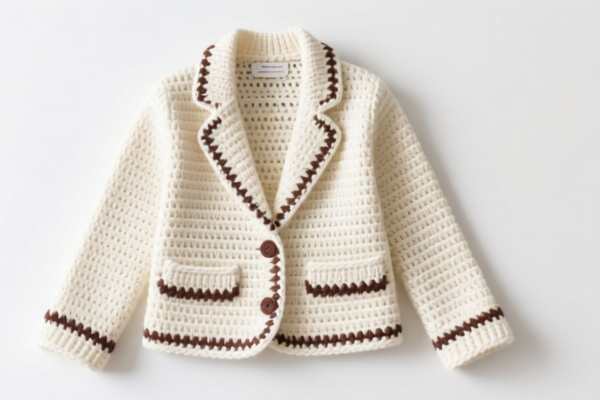
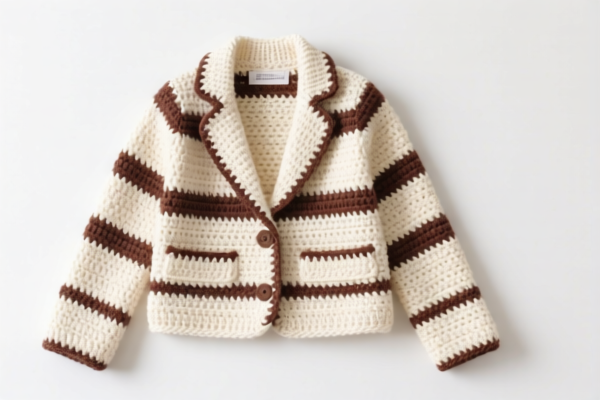
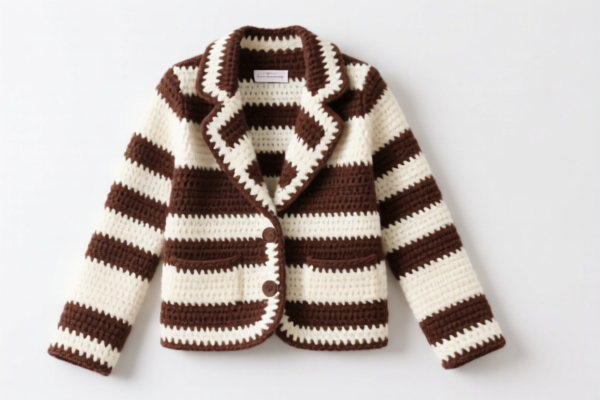

AI Analysis
🧶 Crocheted Blazer: HS Code Classification & US Customs Clearance Guide
🌐 HS Code Reference & Clearance Strategy | 2026 Latest Tariff Analysis | Professional Entry Strategy
📌 I. Product Definition: What Exactly is a "Crocheted Blazer"?
A Crocheted Blazer is a unique garment that blends traditional tailoring aesthetics (lapels, structured fit, single/double-breasted) with artisanal or industrial knitting techniques (crochet/hook-knit construction).
In international trade, the classification depends heavily on two factors:
1. Construction Method: Is it truly "crocheted" (hooked) or "knitted" (looped)?
2. Material Composition: What is the fiber content? (Synthetic, Cotton, Wool, Other Textile Materials)
⚠️ Key Classification Distinction:
- If the garment retains the structure and formality of a suit jacket (blazer) and is made of knitted/crocheted fabric → It falls under Chapter 61 (Articles of Apparel and Clothing Accessories, Knitted or Crocheted).
- Misclassifying it as "Woven" (Chapter 62) will result in severe penalties and delays.
📦 II. HS Code Classification Matrix (2026 US Tariff Schedule)
Based on the provided data, here are the 5 most likely HS Codes for a Crocheted Blazer imported into the United States from China:
| HS Code | Summary Description | Material Inference | Key Classification Logic |
|---|---|---|---|
| 6104.33.20.00 | Women’s Suit-Type Jacket, Crocheted/Knit | Synthetic Fibers or Blends | Matches crochet form & blazer use; inferred as synthetic/mixed fiber |
| 6104.39.20.90 | Other Women’s Knitted/Crocheted Suits | Other Textile Materials (Non-synthetic/non-cotton) | Matches crochet form & blazer use; material is "other" |
| 6103.39.80.60 | Men’s/Unisex Knitted/Crocheted Suits | Other Materials | Matches knit/crochet suit form; material category "other" |
| 6103.39.80.20 | Men’s/Unisex Knitted/Crocheted Suits | Non-Cotton, Non-Wool Textile | Matches crochet form & blazer use; inferred as non-cotton/non-wool |
| 6103.39.10.00 | Men’s/Unisex Knitted/Crocheted Jackets | Artificial Fibers | Matches crochet form & blazer use; inferred as man-made/artificial fiber |
🔍 Critical Note:
- 6104 = Women’s Knitted/Crocheted Suits & Suits-Type Jackets
- 6103 = Men’s/Boys’ Knitted/Crocheted Suits & Suits-Type Jackets
- 6104.33 = Specifically for Synthetic Fibers
- 6104.39 = Other Textile Materials (Cotton, Wool, Viscose, etc.)
💰 III. 2026 US Tariff Rate Breakdown (China-Origin Goods)
✅ Applicable Country: United States (US)
✅ Origin: China (CN)
✅ Effective Date: Post-2024 Trade Policy (Section 301 & IEEPA)
🎯 1. 6104.33.20.00 — Women’s Crocheted Blazer (Synthetic Fibers)
| Item | Detail |
|---|---|
| Base Duty | 28.2% (Most Favored Nation Rate) |
| Section 301 Additional Duty | +7.5% (Trade Remedy) |
| IEEPA Section 122 Duty | +10% (Specific China Trade Measure) |
| Total Landed Duty Rate | 45.7% |
| Calculation Basis | CIF Value (Cost + Insurance + Freight) × 45.7% |
| De Minimis Exemption? | ❌ NO — Not eligible for $800 de minimis exemption due to Section 301/IEEPA |
📌 Explanation:
- This is the highest tariff bracket in the dataset.
- 28.2% is the standard MFN rate for synthetic knit blazers.
- 7.5% is the Section 301 tariff on many textile/apparel items.
- 10% is the specific IEEPA 122 duty added for certain Chinese goods.
- Total: 45.7% — This significantly impacts profit margins.
🎯 2. 6104.39.20.90 — Women’s Crocheted Blazer (Other Materials)
| Item | Detail |
|---|---|
| Base Duty | 0.0% |
| Section 301 Additional Duty | +7.5% |
| IEEPA Section 122 Duty | +10% |
| Total Landed Duty Rate | 17.5% |
| Calculation Basis | CIF Value × 17.5% |
| De Minimis Exemption? | ❌ NO |
📌 Why 0% Base Duty?
- Certain "other textile materials" (e.g., specific natural fibers or blends not classified as synthetic) may have lower MFN rates.
- However, the 17.5% total is still significant due to the mandatory additional duties.
🎯 3. 6103.39.80.60 — Men’s/Unisex Crocheted Blazer (Other Materials)
| Item | Detail |
|---|---|
| Base Duty | 5.6% |
| Section 301 Additional Duty | +7.5% |
| IEEPA Section 122 Duty | +10% |
| Total Landed Duty Rate | 23.1% |
| Calculation Basis | CIF Value × 23.1% |
| De Minimis Exemption? | ❌ NO |
🎯 4. 6103.39.80.20 — Men’s/Unisex Crocheted Blazer (Non-Cotton/Non-Wool)
| Item | Detail |
|---|---|
| Base Duty | 5.6% |
| Section 301 Additional Duty | +7.5% |
| IEEPA Section 122 Duty | +10% |
| Total Landed Duty Rate | 23.1% |
| Calculation Basis | CIF Value × 23.1% |
| De Minimis Exemption? | ❌ NO |
📌 Note: Same rate as
6103.39.80.60due to similar material classification under "Other."
🎯 5. 6103.39.10.00 — Men’s/Unisex Crocheted Blazer (Artificial Fibers)
| Item | Detail |
|---|---|
| Base Duty | 14.9% |
| Section 301 Additional Duty | +7.5% |
| IEEPA Section 122 Duty | +10% |
| Total Landed Duty Rate | 32.4% |
| Calculation Basis | CIF Value × 32.4% |
| De Minimis Exemption? | ❌ NO |
🛠️ IV. Customs Clearance Practical Advice
✅ 1. Required Documentation Checklist
| Document | Mandatory? | Notes |
|---|---|---|
| ✅ Commercial Invoice | ✔️ | Must clearly state: "Women’s Crocheted Blazer, 100% Polyester" (or actual material) |
| ✅ Packing List | ✔️ | Include dimensions, weight, and item count |
| ✅ Product Photos | ✔️ | Clear images showing crochet texture, lapels, buttons, and interior lining |
| ✅ Material Composition Tag | ✔️ | Photo of the care label inside the garment |
| ✅ Labeling Compliance | ✔️ | FTC Fiber Content Label, Country of Origin (Made in China) |
| ✅ Test Reports | ⚠️ Optional | For fiber content verification if requested by CBP |
🔥 Key Tip:
Do NOT use vague terms like "Knit Jacket." Use "Crocheted Blazer" or "Knitted Suit-Type Jacket" with precise material composition.
✅ 2. Classification Strategy: How to Avoid Misclassification
| Scenario | Correct HS Code | Risk of Misclassification |
|---|---|---|
| Blazer with lapels, single-breasted, crochet texture | 6104.33.20.00 (Synthetic) |
❌ Do NOT classify as 6203 (Woven) → 2x+ tax difference |
| Unstructured "Cardigan-Style" Blazer | May be 6110 (Sweaters) |
⚠️ Risk: CBP may still classify as Blazer if it has formal structure |
| Men’s Crochet Blazer | 6103.39.xxxx |
❌ Do NOT use 6104 codes → Gender-specific error |
📌 Critical Warning:
- Crochet ≠ Woven: Even if the blazer has a stiff interlining, if the outer shell is crocheted/knitted, it must be classified under Chapter 61.
- Section 301 Applies: All these HS codes are subject to additional 7.5% duty.
- IEEPA 122 Applies: Additional 10% duty applies to most textile imports from China.
✅ 3. Cost-Saving & Clearance Tips
| Strategy | Description |
|---|---|
| 1. Optimize Material Declaration | If possible, use materials classified under 6104.39 (0% base duty) instead of 6104.33 (28.2% base duty). Example: Use cotton blends if structurally feasible. |
| 2. Accurate Fiber Content | Provide exact fiber percentages. Misdeclaring "Cotton" as "Polyester" can lead to audits, fines, and cargo hold. |
| 3. Use Advance Rulings | Apply for a CBP Advance Ruling if importing high volumes. This locks in the HS code and duty rate, preventing unexpected audits. |
| 4. Bundle Shipping? | ❌ Avoid combining with de minimis-eligible items if the total value exceeds $800. Section 301 goods do not benefit from de minimis. |
🌍 V. Global Market Comparison (2026)
| Market | Recommended HS Code | Base Duty | Additional Duties (China) | Total Est. Duty |
|---|---|---|---|---|
| 🇺🇸 USA | 6104.33.20.00 |
28.2% | +7.5% (301) + 10% (IEEPA) | 45.7% |
| 🇨🇳 China | 6104.33.20.00 |
11.5% | None | 11.5% |
| 🇪🇺 EU | 6104.33.20.00 |
12% | None (if non-origin) | 12% |
| 🇬🇧 UK | 6104.33.20.00 |
12% | None | 12% |
📌 Insight:
- The US is the most expensive market for crocheted blazers from China due to Section 301 and IEEPA duties.
- Consider transshipment (not recommended due to fraud risks) or sourcing from ASEAN countries (Vietnam, Cambodia) to avoid US additional tariffs.
- If selling in the EU/UK, ensure REACH compliance and EPR registration for packaging/textiles.
📌 VI. Common Pitfalls & Blood-Success Lessons
❌ Pitfall 1: Classifying a Crocheted Blazer as a Woven Blazer (6204.33)
👉 Consequence: CBP flags inconsistency between product photos (knit texture) and description (woven). Detention, fines, and possible seizure.
👉 Correct Action: Always classify under Chapter 61 for knit/crochet.
❌ Pitfall 2: Ignoring Section 301 & IEEPA
👉 Consequence: Underpaying duty by 17.5%–32.4%. Back taxes + penalties.
👉 Correct Action: Always add +7.5% and +10% to base duty for China-origin goods.
❌ Pitfall 3: Vague Material Description ("Knit Blazer")
👉 Consequence: CBP requests additional info, delaying clearance by 7–14 days.
👉 Correct Action: Specify "Crocheted Blazer, 100% Acrylic" or "Polyester Blend".
❌ Pitfall 4: Assuming De Minimis Applies
👉 Consequence: Packages under $800 are still subject to duties if they contain Section 301/IEEPA goods.
👉 Correct Action: Do NOT use de minimis shipping for these items from China.
🎯 VII. Conclusion: Precision Classification = Profit Protection
🎯 Remember These Key Points:
🔹 "Crochet = Chapter 61. Never Woven."
🔹 "China Origin = Base Duty + 7.5% (301) + 10% (IEEPA)."
🔹 "Synthetic Blazer = 45.7% Total Duty. Other Materials = 17.5%–23.1%."
🔹 "De Minimis Does NOT Apply to Section 301 Goods."
📌 Pro Tip:
If you are importing large volumes, apply for a CBP Advance Ruling to confirm the correct HS code. This provides legal certainty and prevents costly audits.
📣 Action Item:
📞 Consult a licensed customs broker.
📄 Provide clear product photos + material tags.
📉 Calculate total landed cost: CIF Value × (1 + Total Duty Rate).
✨ Smart Clearance Starts with Accurate Classification!
💼 Protect Your Margins. Avoid Audits. Ship with Confidence.
Customer Reviews
About HS Code Classification
The Harmonized System (HS) is an internationally standardized nomenclature developed by the World Customs Organization (WCO) to classify traded products. Over 200 countries use the HS system as the basis for customs tariffs, trade statistics, and import/export regulations.
Each HS code follows a hierarchical structure:
- Chapter (2 digits) — Broad category of goods (e.g., Chapter 84: Machinery and Mechanical Appliances)
- Heading (4 digits) — More specific grouping within the chapter
- Subheading (6 digits) — Internationally standardized breakdown, used by all WCO member countries
- National subdivisions (8-10 digits) — Country-specific extensions for further classification, such as US HTSUS 10-digit codes
Correct HS code classification is essential for smooth customs clearance, accurate duty payment, and compliance with trade regulations. Misclassification can lead to customs delays, overpayment of duties, or penalties.
When importing from CN to US, the applicable tariff rates may include:
- Most-Favored-Nation (MFN) rate — The standard duty rate applied to WTO members
- General rate — Applied to countries without trade agreements
- Trade remedy duties — Additional tariffs such as Section 301 (anti-dumping), Section 232 (national security), or countervailing duties
The information provided on this page is for reference purposes only. For official classification, please consult with your local customs authority or a licensed customs broker.