Crocheted Shirt (Other Textile Materials) Wool Ribbon
CN → US| HS Code | Tariff Rate | Origin | Destination | Doc |
|---|---|---|---|---|
| 5806391000 | 41.6% | CN | US | Official Doc |
| 6117909015 | 32.1% | CN | US | Official Doc |
| 6117909035 | 32.1% | CN | US | Official Doc |
| 6109908020 | 33.5% | CN | US | Official Doc |
| 6109901520 | 23.1% | CN | US | Official Doc |
Product Images
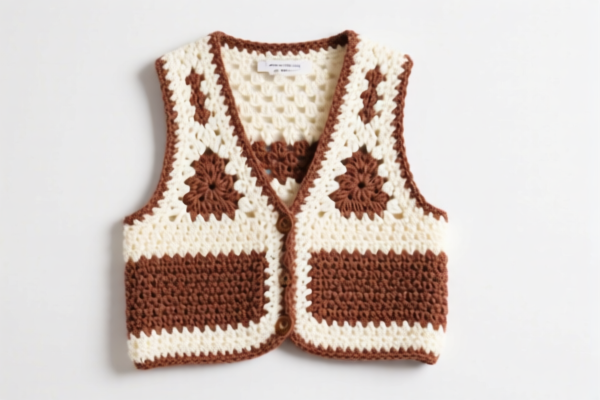
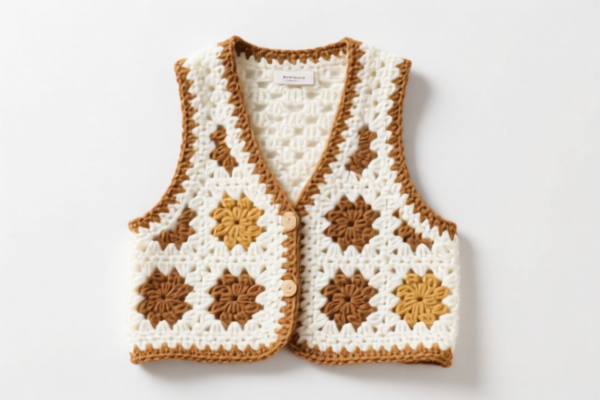
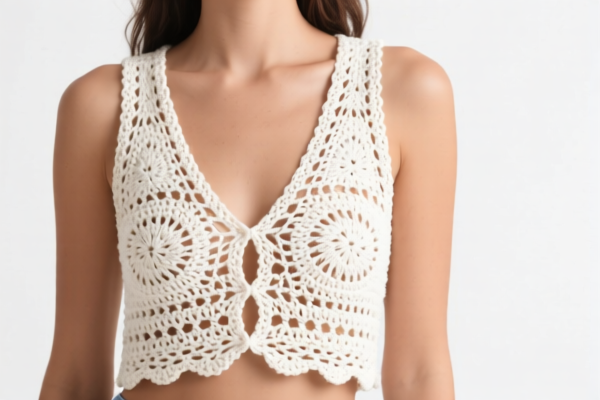

AI Analysis
🧶 Crocheted Shirt Parts & Wool Ribbons (Other Textile Materials)
🌐 HS Code Reference & Customs Clearance Guide | 2026 Latest Tariff Analysis | Professional Compliance Strategy
📌 1. Product Definition & Classification: Decoding the Ambiguity of "Textile Accessories"
In international trade, the distinction between a "finished garment part" and a "textile accessory/ribbon" is critical. These items fall under Chapter 61 (Articles of apparel and clothing accessories, knitted or crocheted) or Chapter 58 (Special woven fabrics; tufted fabrics; lace; tapestry; trimmings; embroidery).
The Core Distinction: * Crocheted Shirt Parts (Chapter 61): Items that are clearly identifiable as components of a shirt (e.g., collars, cuffs, yokes, or decorative panels) even if not fully assembled. They are classified as "parts of garments." * Wool Ribbons/Trim (Chapter 58 & 61): Narrow strips of fabric used for decoration, binding, or edging. If made of wool and crocheted, they often fall under specific subheadings for "Other Made-Up Textile Articles" or "Trimmings."
⚠️ Critical Classification Point:
- If the item is a functional or decorative part of a shirt (e.g., a crocheted yoke) → Chapter 61.
- If the item is a strip of fabric used for trim/decoration → Chapter 58 (Woven) or Chapter 61 (Knitted/Crocheted specific subheadings).
- Material: All items in are specified as "Other Textile Materials" or "Wool," meaning they are NOT Cotton or Man-Made Fibers. This impacts the base tariff rates significantly.
📦 2. HS Code Classification Details (2026 Latest Tariff Authority Match)
Based on the provided data, here are the precise HS Codes, their summaries, and tax details.
| HS Code | Summary | Product Description & Scope | Material Note |
|---|---|---|---|
5806.39.10.00 |
Wool Ribbon, other textile materials | Woven/Textile Ribbons primarily used for trimming. Defined as ribbons of other textile materials (including wool). | Wool / Other |
6117.90.90.15 |
Crocheted Ribbon, non-cotton/non-synthetic | Crocheted Ribbons/Trims. Specifically excludes cotton and man-made fibers. | Other Textile |
6117.90.90.35 |
Crocheted Shirt Parts, Wool | Garment Parts. Crocheted components intended for shirts. | Wool |
6109.90.80.20 |
Crocheted Wool Decorative Band, other textile | Decorative Bands. Crocheted items for decoration, not strictly shirt parts. | Other Textile |
6109.90.15.20 |
Crocheted Shirt-Type Wool Articles, other textile | Shirt-Type Articles. Crocheted articles resembling shirts or parts thereof. | Other Textile |
🔍 Key Insight:
-5806.39.10.00is the highest tax bracket (41.6%), reflecting the specific classification of "Wool Ribbons" under Chapter 58.
-6117and6109subheadings for "Crocheted" items have lower base rates (14.6% - 16.0%) but still carry significant trade war penalties.
- Do not confuse "Ribbon" (5806) with "Crocheted Trim" (6117/6109). The manufacturing process (woven vs. crocheted) determines the chapter.
💰 3. 2026 Latest Tariff Rate Breakdown (Including Surtaxes & Policy Add-ons)
✅ Applicable Country: United States (US)
✅ Origin: China (CN)
✅ Effective Date: 2025 November 10 onwards (and subsequent imports)
🎯 1. 5806.39.10.00 —— Wool Ribbon (Other Textile Materials)
| Item | Details |
|---|---|
| Base Rate | 6.6% |
| Section 301 Surtax | +25.0% |
| Section 122 Tariff | +10.0% |
| Total Effective Rate | 41.6% |
| Tax Calculation | CIF Value × 41.6% |
| De Minimis Eligibility | ❌ Denied (High value items typically exceed $800 threshold; even if under, Section 301 often applies) |
| Legal Basis | Section 301 (USITC Footnote 9903.88.01) + Section 122 (IEEPA/Trade Expansion Act) |
📌 Explanation:
- This is the most expensive item in the list.
- The 25% Section 301 tariff is standard for many textile accessories from China.
- The additional 10% Section 122 tariff is applied on top, creating a heavy cost burden.
🎯 2. 6117.90.90.15 & 6117.90.90.35 —— Crocheted Ribbons & Shirt Parts
| Item | Details |
|---|---|
| Base Rate | 14.6% |
| Section 301 Surtax | +7.5% |
| Section 122 Tariff | +10.0% |
| Total Effective Rate | 32.1% |
| Tax Calculation | CIF Value × 32.1% |
| De Minimis Eligibility | ❌ Denied |
| Legal Basis | Section 301 + Section 122 |
📌 Explanation:
- These two HS codes share the same tax structure.
- The base rate (14.6%) is higher than wool ribbons (6.6%) but the Section 301 surtax is lower (7.5% vs 25%).
- Optimization Note: If your product is a "Crocheted Shirt Part," ensure it is clearly documented as such to avoid being misclassified as a generic "Ribbon" (which might fall into the 41.6% bracket if deemed woven).
🎯 3. 6109.90.80.20 —— Crocheted Wool Decorative Band
| Item | Details |
|---|---|
| Base Rate | 16.0% |
| Section 301 Surtax | +7.5% |
| Section 122 Tariff | +10.0% |
| Total Effective Rate | 33.5% |
| Tax Calculation | CIF Value × 33.5% |
| De Minimis Eligibility | ❌ Denied |
| Legal Basis | Section 301 + Section 122 |
📌 Explanation:
- Slightly higher than the6117codes due to a higher base rate (16.0% vs 14.6%).
- Used for decorative bands that are not strictly "shirt parts" but are crocheted.
🎯 4. 6109.90.15.20 —— Crocheted Shirt-Type Wool Articles
| Item | Details |
|---|---|
| Base Rate | 5.6% |
| Section 301 Surtax | +7.5% |
| Section 122 Tariff | +10.0% |
| Total Effective Rate | 23.1% |
| Tax Calculation | CIF Value × 23.1% |
| De Minimis Eligibility | ❌ Denied |
| Legal Basis | Section 301 + Section 122 |
📌 Explanation:
- This is the MOST COST-EFFICIENT code in the dataset.
- The base rate is very low (5.6%).
- Strategy: If your product can be legitimately classified as "Crocheted Shirt-Type Article" (e.g., a loose-fitting crocheted top or a clear shirt component), use this code to save 18.5% compared to the wool ribbon (5806.39.10.00).
🛠️ 4. Customs Clearance Practical Advice (Real-World Pitfall Guide)
✅ 1. Documentation Checklist (Non-Negotiable)
| Document | Required? | Purpose |
|---|---|---|
| ✅ Product Specification Sheet | YES | Must clearly state: "Crocheted," "Wool/Other Material," "Intended Use: Shirt Part/Decoration." |
| ✅ Photos (Flat & Worn) | YES | Visual proof of "Crocheted" texture (distinct from woven) and "Shirt-like" shape. |
| ✅ Material Composition Label | YES | Must say "100% Wool" or "Other Textile Materials." NO COTTON. |
| ✅ Commercial Invoice | YES | Description must match HS Code summary exactly (e.g., "Crocheted Wool Shirt Yoke"). |
| ✅ Packing List | YES | Separate items if they have different HS Codes. |
✅ 2. Classification Strategy (Key Mnemonics)
🔥 "Crochet vs. Woven: Check the Texture! Shirt Part vs. Ribbon: Check the Function!"
| Scenario | Correct HS Code | Why? |
|---|---|---|
| Woven wool strip for trimming | 5806.39.10.00 |
Chapter 58 covers woven ribbons. High tax (41.6%). |
| Crocheted strip for trimming | 6117.90.90.15 |
Chapter 61 covers knitted/crocheted goods. Lower tax (32.1%). |
| Crocheted part of a shirt (e.g., collar) | 6117.90.90.35 |
Clearly a "part of apparel." |
| Crocheted item shaped like a shirt | 6109.90.15.20 |
"Shirt-Type" article. Lowest tax (23.1%). |
| Crocheted decorative band (not shirt part) | 6109.90.80.20 |
"Decorative" use. Mid-range tax (33.5%). |
⚠️ Common Mistake:
- Calling a crocheted item a "ribbon" and classifying it under5806(Woven) → Overpaying 9.5% tax.
- Fix: Always emphasize "Crocheted" in the description to shift to Chapter 61.
🌍 5. Global Market Comparison (2026 Update)
| Country/Region | Recommended HS Code | Tariff (China Origin) | Notes |
|---|---|---|---|
| 🇺🇸 USA | See Table Above | 23.1% - 41.6% | Heavy Section 301 + 122 duties. |
| 🇨🇳 China | Same HS Codes | 5% - 16% | Low base rates, no trade war surtaxes. |
| 🇪🇺 EU | Similar HS Codes | 12% - 17% | No Section 301/122. Standard MFN rates. |
| 🇦🇺 Australia | Similar HS Codes | 5% - 10% | Free Trade Agreement (ChAFTA) may apply. |
| 🇯🇵 Japan | Similar HS Codes | 10% - 15% | JETPAs may reduce rates. |
📌 Conclusion:
- USA is the hardest market due to the combination of Section 301 (25% or 7.5%) AND Section 122 (10%).
- Total duties in the US are nearly double or triple those in the EU or Asia-Pacific.
- Cost Optimization: Use6109.90.15.20(23.1%) if possible. Avoid5806.39.10.00(41.6%) unless absolutely necessary.
📌 6. Common Errors & Pitfalls (Lessons Learned)
❌ Error 1: Classifying a crocheted item as woven ribbon (5806)
👉 Result: Pay 41.6% instead of 32.1% or 23.1%. Overpayment!
👉 Fix: Provide photos showing the knit/crochet loop structure.
❌ Error 2: Calling a shirt part a "decoration" (6109.90.80.20)
👉 Result: Pay 33.5% instead of 23.1% (6109.90.15.20).
👉 Fix: If it’s a component of a shirt (collar, cuff, yoke), declare it as a shirt part.
❌ Error 3: Ignoring the Section 122 Tariff
👉 Result: Budget fails. Many importers forget the extra 10%.
👉 Fix: Always add 10% to your cost model for China-origin textiles.
🎯 7. Conclusion: Professional Clearance, Save Costs!
🎯 Remember the Key Takeaway:
🔹 "Crochet is Chapter 61, Woven is Chapter 58."
🔹 "Shirt Parts are cheaper than Ribbons if classified correctly."
🔹 "Total US Tax = Base + 7.5%/25% (301) + 10% (122)."
📌 Pro Tip:
If your product is a crocheted item that is not a shirt part but looks like one (e.g., a crocheted vest, top, or decorative panel), try to classify it under 6109.90.15.20 (23.1%) instead of 6117 or 6109 decorative bands. Consult a customs broker with clear photos to support this "shirt-type" classification.
📣 Immediate Action:
📞 Contact your freight forwarder with the exact material composition and photos.
🚀 Request a Pre-Ruling from CBP if the volume is high.
💰 Calculate landed cost using the highest applicable rate (41.6%) as a conservative estimate, but aim for 23.1% with correct documentation.
✨ Precision in Classification = Profit in Your Pocket!
💼 Don’t let 18% tax differences erase your margin!
Customer Reviews
About HS Code Classification
The Harmonized System (HS) is an internationally standardized nomenclature developed by the World Customs Organization (WCO) to classify traded products. Over 200 countries use the HS system as the basis for customs tariffs, trade statistics, and import/export regulations.
Each HS code follows a hierarchical structure:
- Chapter (2 digits) — Broad category of goods (e.g., Chapter 84: Machinery and Mechanical Appliances)
- Heading (4 digits) — More specific grouping within the chapter
- Subheading (6 digits) — Internationally standardized breakdown, used by all WCO member countries
- National subdivisions (8-10 digits) — Country-specific extensions for further classification, such as US HTSUS 10-digit codes
Correct HS code classification is essential for smooth customs clearance, accurate duty payment, and compliance with trade regulations. Misclassification can lead to customs delays, overpayment of duties, or penalties.
When importing from CN to US, the applicable tariff rates may include:
- Most-Favored-Nation (MFN) rate — The standard duty rate applied to WTO members
- General rate — Applied to countries without trade agreements
- Trade remedy duties — Additional tariffs such as Section 301 (anti-dumping), Section 232 (national security), or countervailing duties
The information provided on this page is for reference purposes only. For official classification, please consult with your local customs authority or a licensed customs broker.